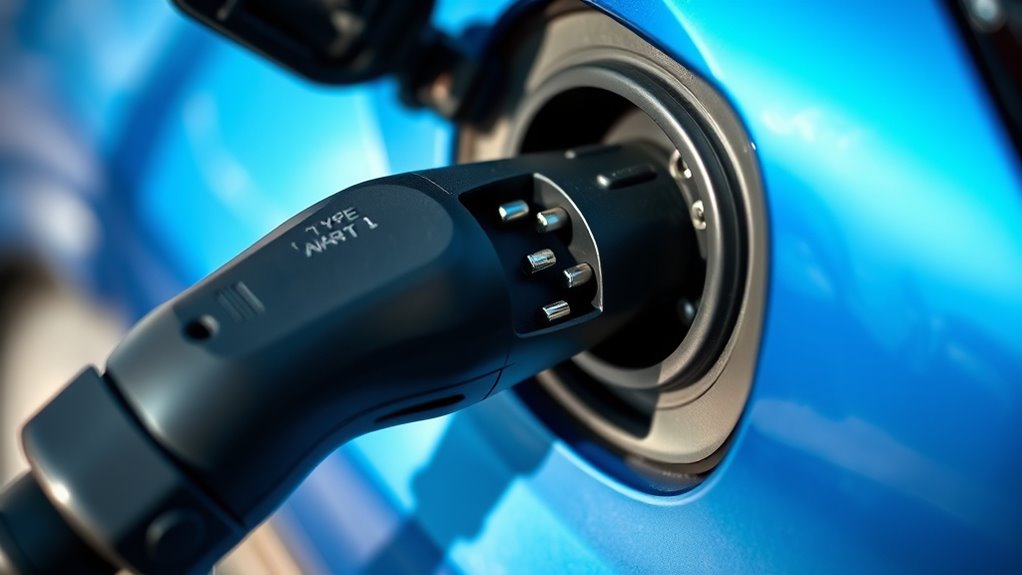
A Type 1 EV charging connector, also called SAE J1772 or a J plug, is the AC charging plug used by many non-Tesla electric vehicles and plug-in hybrids in North America and Japan. It is a 5-pin connector for Level 1 and Level 2 charging, not a DC fast-charging plug by itself. If you drive an older or current J1772-equipped EV, understanding its speed, limits, adapters, and safety features helps you choose the right charging setup.
Quick Answer
A Type 1 EV charging connector is the SAE J1772 AC plug used for Level 1 and Level 2 charging on many North American and Japanese EVs. It supports single-phase AC charging up to 19.2 kW under the standard, but real charging speed depends on your vehicle, charger, circuit, and cable rating.
Key Takeaways
- Type 1, SAE J1772, and J plug usually refer to the same 5-pin AC charging connector.
- It works with Level 1 charging at 120 V and Level 2 charging at 208 to 240 V.
- The standard supports up to 80 amps and 19.2 kW, but many EVs charge at lower onboard charger limits.
- A plain Type 1 connector does not provide DC fast charging. DC fast charging needs CCS Combo 1, CHAdeMO, or NACS, depending on the vehicle.
- North America is moving toward SAE J3400/NACS on many newer EVs, but J1772 remains common on existing Level 2 chargers.
What Is a Type 1 EV Charging Connector?
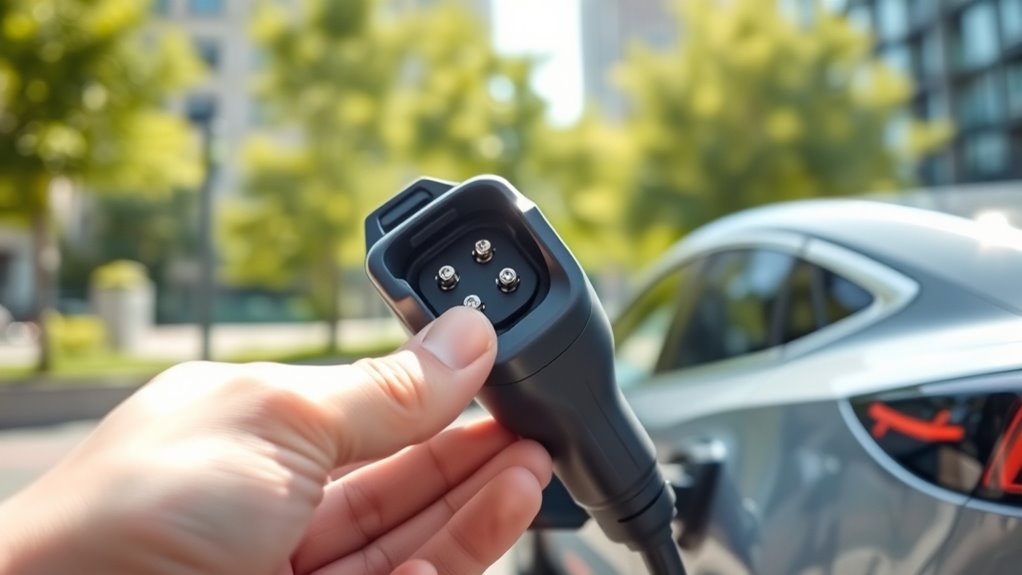
The Type 1 EV charging connector is the physical plug used for SAE J1772 AC charging. It is common on many electric vehicles and plug-in hybrids sold in North America and Japan, especially models built before the wider shift toward NACS ports.
The connector has five contact positions. Two carry AC power, one is protective earth or ground, and two handle signaling between the vehicle and the charging equipment. That signaling matters because the charging station does not simply push full power into the car. The car and the electric vehicle supply equipment, often called EVSE, communicate first so the vehicle knows how much current it may safely draw.
Technically, the official standard is published by SAE International as SAE J1772. In everyday use, drivers may hear it called Type 1, J1772, J plug, or the North American AC plug.
Note: A “charger” cable for Level 1 or Level 2 AC charging is usually EVSE. The vehicle’s onboard charger converts that AC power into DC power for the battery.
Type 1 Connector at a Glance
| Common names | Type 1, SAE J1772, J1772, J plug |
| Primary use | AC charging for electric vehicles and plug-in hybrids |
| Pin count | 5 pins: two AC conductors, ground, control pilot, proximity pilot |
| Charging levels | AC Level 1 and AC Level 2 |
| Standard maximum | Up to 80 amps at 240 V, or 19.2 kW, when the vehicle and EVSE both support it |
| DC fast charging | Not through the plain Type 1 AC plug. DC fast charging uses CCS Combo 1, CHAdeMO, or NACS, depending on the vehicle. |
| Common regions | North America and Japan, especially on older and current J1772-equipped EVs |
Essential Features of Type 1 Connectors
The Type 1 connector is simple, durable, and easy to use. Its main features include a keyed round shape, a thumb-operated latch, and built-in signaling that helps the EV and EVSE start and stop charging safely.
Five-Pin Design
A Type 1 connector uses five contact positions:
- L1: AC line conductor.
- L2/N: AC neutral for 120 V Level 1 charging or the second AC line for 208 to 240 V Level 2 charging.
- PE: Protective earth, also called ground.
- CP: Control pilot, which helps the EVSE tell the vehicle how much current is available.
- PP: Proximity pilot, which helps detect the plug and latch state.
The control pilot signal is one reason J1772 charging is safer than simply plugging a high-current device into a wall outlet. The vehicle uses that signal to stay within the charger’s allowed current and to stop drawing power when charging should end.
Manual Latch and Safety Shutoff
Type 1 connectors use a manual latch on the plug handle. Pressing the latch release tells the vehicle and charging equipment that the connector is about to be removed. This helps stop current before the power pins separate.
Unlike many Type 2 public AC sockets in Europe, Type 1 does not rely on the same socket-side automatic locking style. Still, some vehicles with J1772 inlets can lock or block latch release while charging. That means “anyone can unplug it” is not always true, but cable security and station placement still matter.
Single-Phase AC Only
The Type 1 connector is designed for single-phase AC charging. That fits North American household and commercial electrical service well, but it does not offer the three-phase AC flexibility found with Type 2 connectors in many European installations.
Charging Levels Supported by Type 1 Connectors
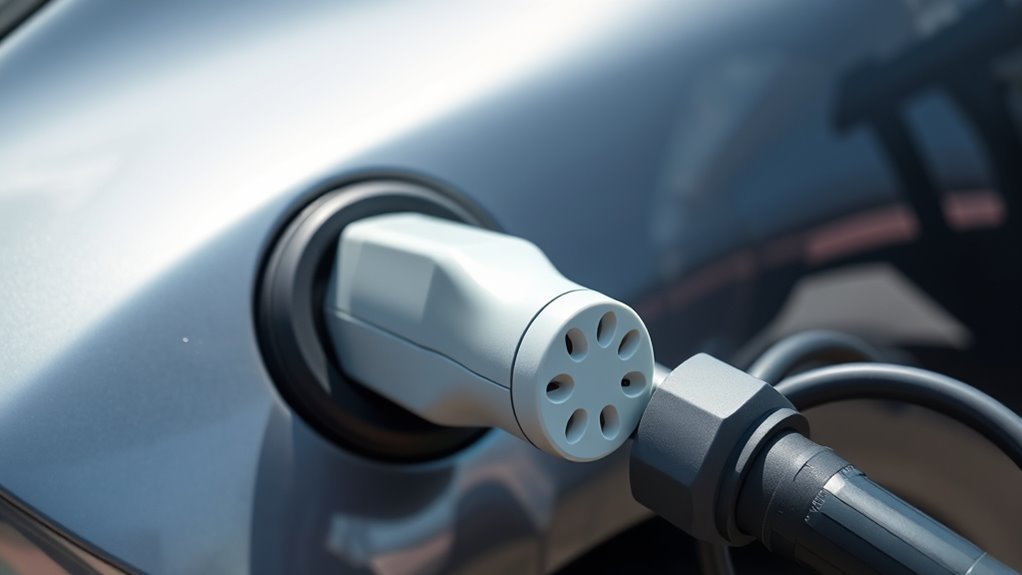
Type 1 connectors support two common AC charging levels: Level 1 and Level 2. The plug may look the same, but the voltage, circuit, and charging speed can be very different.
- AC Level 1 charging: Uses a standard 120 V outlet in North America. It is convenient for overnight or low-mileage charging, but it is slow.
- AC Level 2 charging: Uses 208 to 240 V power. It is the common choice for home wall connectors, workplaces, hotels, parking lots, and many public AC stations.
- Maximum current: The SAE J1772 standard can support up to 80 amps for AC Level 2 charging, but many home chargers are set lower, such as 32, 40, or 48 amps.
- Vehicle limit: The car’s onboard charger sets the final ceiling. A vehicle with a 7.2 kW onboard charger will not charge at 19.2 kW even if the station can provide more.
The 19.2 kW figure is a connector and standard maximum, not a promise that every Type 1 vehicle will charge at 19.2 kW.
Does Type 1 Support DC Fast Charging?
A plain Type 1 SAE J1772 plug does not provide DC fast charging. It supplies AC power to the vehicle, and the vehicle’s onboard charger converts that AC power into DC power for the battery.
For DC fast charging, the vehicle needs a different fast-charge inlet or a combined inlet. Common examples include:
- CCS Combo 1: Adds two large DC pins below the J1772 AC section. This is common on many non-Tesla North American EVs built before the NACS transition.
- CHAdeMO: Used on some older Japanese EVs, including many Nissan Leaf models for DC fast charging.
- NACS / SAE J3400: The connector many newer North American EVs are adopting for both AC and DC charging.
Warning: Do not try to force a connector or use an unrated adapter to access DC fast charging. AC adapters and DC fast-charging adapters are not interchangeable, and the wrong adapter can create overheating, arcing, or equipment damage.
Vehicles That Use Type 1 Connectors
Many EVs and plug-in hybrids sold in North America use, or have used, a Type 1 J1772 inlet for AC charging. Exact connector equipment can vary by model year, region, trim, and fast-charging option, so always check the charge-port label and owner’s manual.
Common Type 1 Model Examples
Examples of vehicles that commonly use J1772 for AC charging include:
- Nissan Leaf, many North American model years, with CHAdeMO on many models for DC fast charging
- Chevrolet Bolt EV and Bolt EUV, with CCS Combo 1 on many models for DC fast charging
- Ford Focus Electric
- Mitsubishi i-MiEV
- Mitsubishi Outlander PHEV, depending on market and model year
- BMW i3 in North America
- Toyota Prius Prime and RAV4 Prime in North America
- Kia Niro EV and Hyundai Kona Electric in earlier North American versions
Tesla vehicles in North America historically used Tesla/NACS-style charge ports, but many came with or supported J1772 adapters for AC Level 2 charging. Newer non-Tesla EVs may also use NACS/SAE J3400 instead of J1772 as the native port.
How to Identify a Type 1 Port
A Type 1 inlet is round with five contact areas and usually sits behind a charge-port door. If your vehicle also has two larger pins below the round J1772 section, that is a CCS Combo 1 inlet. The upper part handles AC charging through J1772, while the lower pins handle DC fast charging at compatible CCS stations.
Pro Tip: When shopping for a home charger, match the plug to your car’s native port or to a manufacturer-approved adapter. Also check your vehicle’s maximum AC charging rate before paying extra for a higher-amp EVSE.
Type 1 vs. Type 2 Connectors: What’s the Real Difference?
Type 1 and Type 2 are both AC charging connector families, but they were designed around different regional electrical systems and public-charging practices.
| Feature | Type 1 / SAE J1772 | Type 2 / IEC 62196-2 |
|---|---|---|
| Common region | North America and Japan | Europe and many other markets outside North America |
| Pin count | 5 pins | Up to 7 pins |
| AC phases | Single-phase AC | Single-phase or three-phase AC, depending on station and vehicle |
| Common AC speed | Up to 19.2 kW under the J1772 standard, often lower in practice | Often up to 22 kW on three-phase public AC in Europe, with higher or lower limits depending on equipment |
| Locking | Manual latch on plug; some vehicles add inlet locking | Often supports station or vehicle-side locking, especially on public AC sockets |
The practical takeaway is simple: Type 1 is the common J1772 AC plug for North America and Japan, while Type 2 is the common AC plug in Europe. Adapters can help in some AC situations, but they do not change your vehicle’s maximum charging rate or magically add DC fast charging.
Type 1 vs. CCS1 vs. NACS
Connector names can get confusing because some plugs share shapes, adapters, or charging locations. Here is the clean breakdown:
- Type 1 / SAE J1772: AC Level 1 and Level 2 charging only.
- CCS Combo 1: Adds two DC pins below the J1772 section for DC fast charging.
- NACS / SAE J3400: A North American connector system that can support AC and DC charging through a compact connector.
As more new North American EVs adopt SAE J3400, drivers will see more adapters and mixed connector sites. That does not make J1772 obsolete overnight. Millions of Level 2 charging sessions still use J1772-style AC equipment, especially at homes, workplaces, hotels, and older public stations.
Are Type 1 Adapters Safe?
Type 1 adapters can be safe when they are correctly rated, properly certified, and used only for the charging type they are designed for. Problems happen when drivers use low-quality adapters, use AC adapters for the wrong purpose, exceed amp ratings, or connect worn equipment.
Common adapter situations include:
- Type 2 station to Type 1 vehicle: Common for AC charging in regions where Type 2 public stations serve Type 1 vehicles through a proper cable or adapter.
- NACS or Tesla destination charger to J1772 vehicle: Can work for AC Level 2 charging with the right adapter, but not every Tesla connector or Supercharger situation is compatible.
- DC fast-charging adapters: Must be manufacturer-approved and designed for the exact connector family, such as CCS1 to NACS. A basic J1772 AC adapter is not a DC fast-charging adapter.
Warning: Stop charging if the plug, cable, adapter, or vehicle inlet becomes hot to the touch, smells burned, sparks, will not seat fully, or shows cracked plastic, bent pins, corrosion, or moisture inside the contacts.
Common Issues With Type 1 Connectors and How to Fix Them
Most J1772 charging problems come from fit, signaling, dirt, moisture, damaged cables, charger settings, or vehicle charging limits. Start with the simple checks before assuming the car or station is broken.
| Issue | Likely Cause | What to Do |
|---|---|---|
| Charging will not start | Plug not fully seated, station not activated, vehicle schedule active, or payment/app issue | Push the connector in firmly, check the latch, confirm station activation, and check vehicle charge settings. |
| Connection failure | Dirt, moisture, or damaged contact area | Inspect both ends. Use only a clean, dry cloth on the outside. Do not insert tools into the contacts. |
| Charging stops early | Vehicle charge limit reached, schedule ended, station timeout, heat, or weak connection | Check the vehicle app, station screen, and cable temperature. Try another station if the problem repeats. |
| Connector gets hot | Loose fit, worn contacts, undersized adapter, damaged cable, or overloaded circuit | Stop charging and do not reuse that cable or adapter until it is inspected or replaced. |
| Adapter does not work | Wrong adapter type, incompatible station, or amp rating mismatch | Verify that the adapter supports AC Level 2 and your vehicle. For DC fast charging, use only approved DC adapters. |
| Latch will not release | Vehicle inlet lock active or plug under tension | Unlock the vehicle, stop the session, support the cable weight, and follow the manual release steps in the owner’s manual. |
Choosing a Home Charger for a Type 1 Vehicle
If your EV has a Type 1/J1772 inlet, a Level 2 home EVSE with a J1772 connector is usually the most convenient setup. Before buying one, check three things:
- Your vehicle’s maximum AC charging rate: This is often lower than the connector’s 19.2 kW maximum.
- Your electrical panel and circuit capacity: Higher-amp charging needs the right breaker, wiring, and installation.
- Cable reach and parking layout: Choose a cable long enough to reach the charge port without pulling tight or creating a trip hazard.
For hardwired Level 2 charging, use a qualified electrician and follow local electrical code. If you use a plug-in EVSE, match the outlet, breaker, and EVSE rating exactly. Do not use household extension cords for EV charging unless the vehicle manufacturer explicitly allows a specific cord type, which is uncommon.
Frequently Asked Questions
What is the difference between Type 1 and Type 2 EV chargers?
Type 1, or SAE J1772, is a 5-pin single-phase AC connector common in North America and Japan. Type 2, or IEC 62196-2, is a 7-pin AC connector common in Europe and many other markets. Type 2 can support three-phase AC charging where the vehicle and station allow it.
Is J1772 the same as Type 1?
In most EV charging conversations, yes. Type 1 usually refers to the SAE J1772 AC connector, also called the J plug. It is the common AC Level 1 and Level 2 connector for many non-Tesla EVs and plug-in hybrids in North America.
Can Type 1 charge at a Tesla charger?
Sometimes, but it depends on the charger. A J1772 vehicle may use some Tesla-style AC destination chargers with the correct NACS-to-J1772 adapter. That does not mean it can use every Tesla Supercharger. DC fast charging requires compatible vehicle hardware, network access, and an approved DC adapter where supported.
Are Type 1 to Type 2 EV adapters safe?
They can be safe for AC charging when they are properly rated, certified, and matched to the vehicle, station, and current limit. Do not use a damaged, hot, loose, or unknown adapter. Also remember that a Type 1 to Type 2 AC adapter does not add DC fast-charging capability.
Why is my Type 1 EV charging slower than the station rating?
Charging speed is limited by the weakest link in the chain. Even if a station can provide high power, your vehicle’s onboard charger, the circuit, the EVSE setting, battery temperature, state of charge, or adapter rating may reduce the actual charging rate.
Does a Type 1 connector lock while charging?
The Type 1 plug has a manual latch. Some vehicles add inlet-side locking that prevents the latch from being lifted while the vehicle is locked or charging. Others may not. For public installations, cable security and station placement still matter.
Conclusion
The Type 1 EV charging connector is a practical and widely used AC charging plug for many EVs and plug-in hybrids in North America and Japan. Its SAE J1772 design supports Level 1 and Level 2 charging, with a standard maximum of 19.2 kW, though real-world speed depends on your car and charging equipment.
The most important point is to understand its limits. Type 1 is an AC connector, not a DC fast-charging connector by itself. For fast charging, your vehicle needs CCS Combo 1, CHAdeMO, NACS, or another compatible DC system. As North America moves toward SAE J3400/NACS on many newer vehicles, J1772 will still matter for existing cars, home chargers, workplaces, and public Level 2 charging for years.
Sources
- SAE International: SAE J1772 Standard — backs the Type 1/J1772 conductive charge coupler and standard reference.
- U.S. Department of Energy / PNNL: Vehicle Communications and Charging Control — backs the J1772 control pilot and charging-control explanation.
- SAE International: SAE J3400 Recommended Practice — backs the current NACS/SAE J3400 transition context.
- SAE International: SAE J3400/2 Charging Connector — backs the newer North American connector standard family.