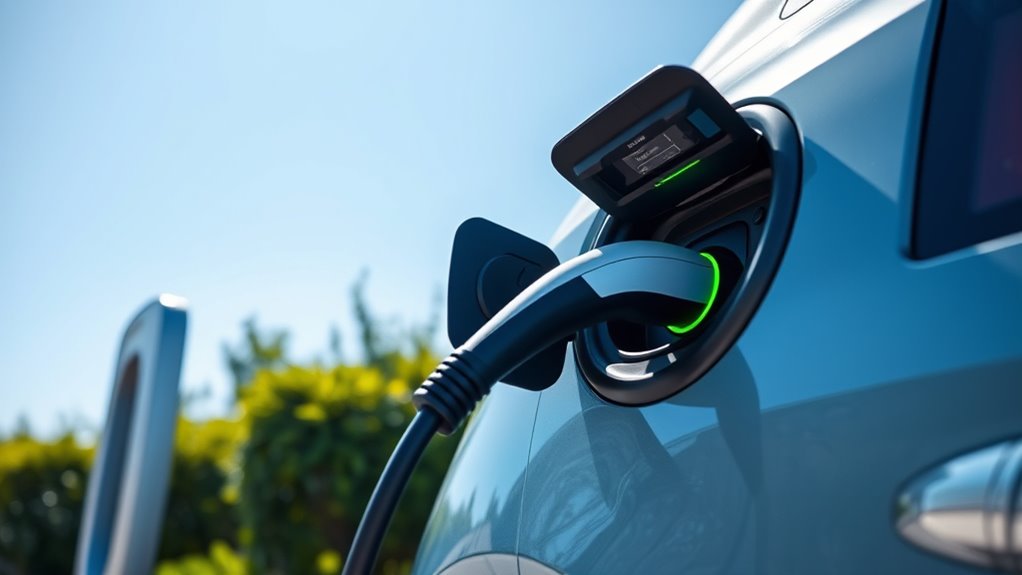
Plug & Charge makes public EV charging feel closer to fueling a gas car: you plug in, the charger recognizes an eligible vehicle, and the session starts without tapping a screen, swiping a card, or opening a charging app. The important catch is compatibility. Your vehicle, charging network, software, account, and payment setup all need to support the same automatic charging system.
Quick Answer
Plug & Charge is an EV charging feature that automatically identifies an eligible vehicle at a compatible charger and starts billing through an enrolled account. It is commonly based on the ISO 15118 standard, but support depends on your car, software, charging network, and account setup.
Key Takeaways
- Plug & Charge can start a charging session automatically after a one-time enrollment.
- Not every EV supports it, even if the charger does. Check your exact model year and network eligibility.
- ISO 15118 uses digital communication between the vehicle and charger, including certificate-based identification for Plug & Charge.
- Autocharge and Autocharge+ can feel similar to drivers, but they are not the same as ISO 15118 Plug & Charge.
- If automatic charging fails, you can usually fall back to the app, RFID card, or credit card reader.
Understanding Plug & Charge Technology
Plug & Charge is a charging feature that lets an electric vehicle and charging station communicate automatically after you plug in. Instead of starting the session with an app, RFID card, or credit card, the charger identifies the vehicle and links the session to an enrolled charging account.
The technology is commonly tied to the ISO 15118 family of standards, which covers high-level communication between an EV and electric vehicle supply equipment. In simple terms, the car and charger exchange secure messages so the charger can confirm that the vehicle is allowed to charge and that payment can be handled through the right account.
That does not mean every EV or every public charger will work the same way. Plug & Charge depends on several pieces working together: the vehicle hardware, vehicle software, charger software, charging network, certificate system, and your active billing setup.
Note: Plug & Charge is not just “payment saved in an app.” The key difference is that the charger can identify an eligible vehicle through the cable connection and start the session automatically after enrollment.
How Plug & Charge Works
The driver experience is simple, but several steps happen in the background:
- You enroll first. You activate Plug & Charge through your vehicle app, charging-network app, or a charging benefit tied to your EV.
- The account is linked. Your vehicle, charging contract, and payment method are associated with the charging provider.
- You plug in at a compatible charger. The charger and vehicle exchange digital information through the charging cable.
- The charger authorizes the session. If the vehicle, account, and charger all match, the charger starts automatically.
- Billing is handled in the background. The session appears in your charging account or app after charging ends.
In the best case, you only plug in and check that charging has started. In the real world, you should still watch the charger screen or your vehicle display for the first minute to confirm the session is active.
Benefits for Charging Operators
For charging operators, Plug & Charge can reduce friction at the station. Fewer manual steps can mean fewer failed starts caused by app issues, payment screens, card readers, or RFID problems. It also gives networks a cleaner way to connect the charging session to a known account.
It can also support better interoperability as the EV market grows. CharIN, for example, describes Plug & Charge as a way to support automated communication and billing without external identification, while also supporting high IT security. CharIN also notes that newer work such as Open Plug & Charge Network Communication is meant to improve interoperability across different PKI and mobility-provider systems.
For operators, the business value is not only convenience. It can also improve station throughput, reduce customer support requests, and make public charging feel more predictable for drivers who are new to EVs.
Key Benefits of Plug & Charge for EV Owners
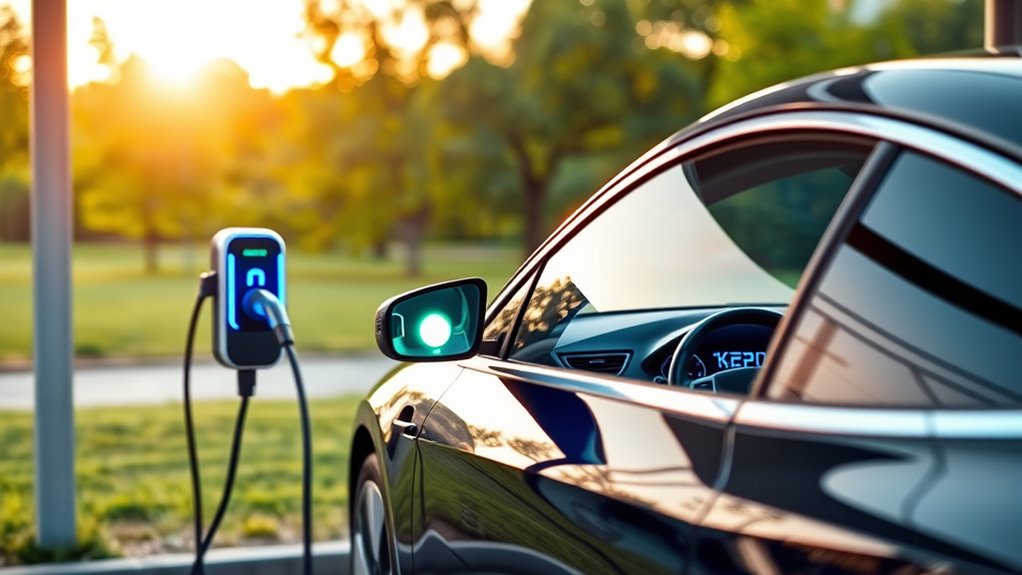
For EV owners, the biggest benefit is fewer steps. That matters most when you are road-tripping, charging in bad weather, arriving at a busy station, or using a charger where cell service is weak.
- Less app juggling: You do not need to open the network app every time once enrollment is complete.
- Faster session starts: The vehicle and charger can handle authentication automatically.
- Cleaner billing: Sessions can post directly to the linked charging account.
- Better road-trip confidence: Automatic starts can reduce the stress of unfamiliar public chargers.
- Improved accessibility: Fewer screen taps and payment steps can help drivers who find charger interfaces difficult to use.
Still, Plug & Charge is not a universal guarantee. Always keep the charging app, a payment card, or another backup method ready in case a specific station or account does not authorize automatically.
Checking Your Vehicle’s Plug & Charge Compatibility
To check whether your EV supports Plug & Charge, do not rely on the model year alone. Some vehicles support it across all model years, some only support certain years, and some require a software update or a specific charging plan.
| Checkpoint | What to Confirm |
|---|---|
| Vehicle eligibility | Check your exact make, model, model year, trim, and charging hardware. |
| Vehicle software | Install available vehicle updates before relying on automatic charging. |
| Network support | Confirm the station and charging network support Plug & Charge for your vehicle. |
| Account enrollment | Make sure Plug & Charge is activated in the required app or vehicle account. |
| Payment method | Add a valid payment method or active charging benefit before your trip. |
For example, Electrify America says its chargers are Plug&Charge capable, but not all vehicles are eligible. Its current list includes specific model-year ranges for brands such as Audi, BMW, Ford, Lucid, Mercedes-Benz, Nissan, Porsche, Rivian, and Volkswagen. That is why the safest answer is always to check the network’s current eligibility page and your automaker’s app before you depend on the feature.
How to Activate Plug & Charge
The exact steps vary by automaker and network, but the setup usually looks like this:
- Update your EV software. Install available over-the-air updates or ask your dealer if a charging-related update is required.
- Open the automaker or charging-network app. Look for “Plug & Charge,” “Plug&Charge,” “Autocharge,” “automatic charging,” or a charging-benefit section.
- Confirm your vehicle is listed. The app may verify your VIN, model year, charging hardware, or account status.
- Add or confirm payment. Some plans require a saved card, while others use a complimentary charging plan tied to the vehicle.
- Activate the feature. Follow the app prompts and wait for the account to show as enrolled or active.
- Test it locally before a road trip. Try a compatible DC fast charger near home so you know what the charger screen should show.
Pro Tip: Keep the charging network app installed even after activation. It helps you monitor charging speed, view receipts, stop a session, or use a backup start method if automatic authorization fails.
Plug & Charge vs Autocharge and Tesla-Style Charging
Several automatic charging systems can feel similar at the plug, but they do not all work the same way.
- ISO 15118 Plug & Charge: Uses certificate-based communication between an eligible EV and compatible charging equipment.
- Autocharge or Autocharge+: Uses a simpler vehicle-identification method on eligible vehicles and networks. EVgo Autocharge+, for example, lets eligible CCS vehicles start charging after enrollment, but EVgo describes it separately from its GM Plug and Charge support.
- Tesla Supercharger automatic charging: Tesla drivers have long had a plug-in-and-charge experience on Tesla Superchargers, but that system began as a Tesla ecosystem feature rather than a universal ISO 15118 public-network setup.
For the driver, all three may feel like “plug in and walk away.” For compatibility, billing, and security, the differences matter.
Why Plug & Charge Sometimes Fails
If Plug & Charge does not start, the problem is usually one of five things: the vehicle is not eligible, the charger does not support your vehicle’s automatic charging setup, enrollment is incomplete, the payment method failed, or the charger has a communication fault.
Try these fixes in order:
- Unplug, wait 10 seconds, and plug in again firmly.
- Check the charger screen to see whether it asks for app, RFID, or card payment.
- Open the network app and confirm your account, plan, and payment method are active.
- Confirm that Plug & Charge is still enabled in your vehicle or automaker app.
- Move to another stall if the charger screen shows an error.
- Use the app, RFID card, or credit card reader as a backup.
- Call the network’s support number if the cable locks, the session will not stop, or billing looks wrong.
Warning: Do not assume automatic billing means the station is charging correctly. Always confirm that the session has started and that the vehicle is receiving power before leaving the charger.
Security and Privacy Considerations
Plug & Charge is designed to support secure authentication, but it should not be described as fraud-proof. ISO 15118-based systems depend on digital certificates, public key infrastructure, charger software, vehicle software, and network back-end systems. Each part has to be implemented and maintained correctly.
The security benefit is clear: a properly supported Plug & Charge setup can reduce exposed card-reader use and make it harder for someone to start a session from an unrelated account. The privacy tradeoff is also worth knowing: automatic charging systems need a way to connect your vehicle or contract certificate to a billing account. Drivers who are sensitive about charging-location data should review the privacy policies of their automaker and charging provider.
The Future of Plug & Charge Technology
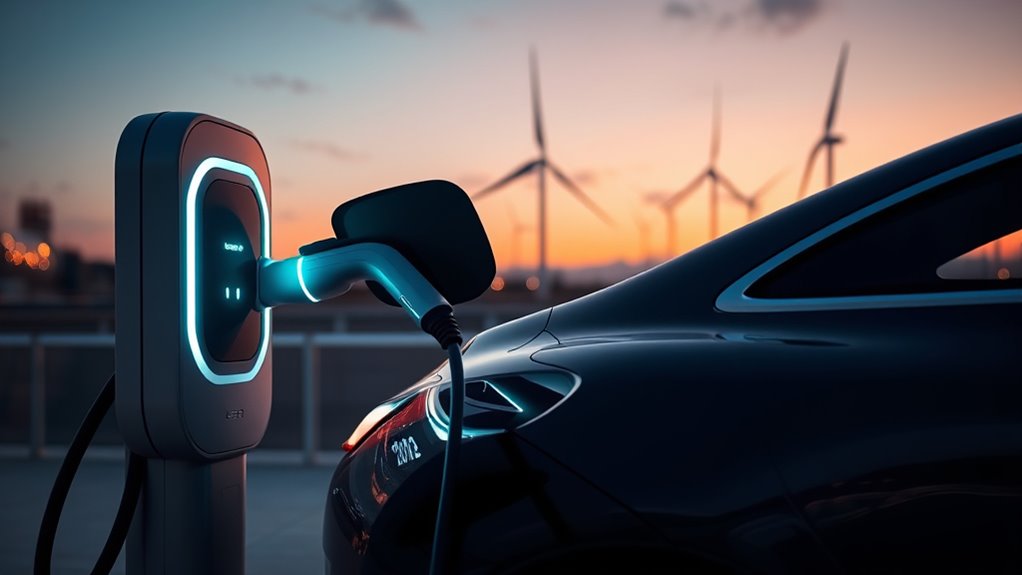
The future of Plug & Charge is broader than one network or one connector. ISO 15118-20:2022 adds second-generation communication requirements and supports more advanced use cases, including bidirectional power transfer. That matters because future EVs may do more than charge. They may also support smart charging, vehicle-to-home, or vehicle-to-grid features when the vehicle, charger, utility, and local rules allow it.
Interoperability is the main challenge. Today, a driver may still need different apps, different accounts, and different adapters depending on the vehicle and charger. Industry work from groups such as CharIN aims to make Plug & Charge easier to scale across multiple charging networks, automakers, and PKI systems.
The North American connector shift also affects the charging experience. More automakers are moving toward NACS or SAE J3400-style ports and adapters, while many existing EVs still use CCS. Plug & Charge is separate from the physical plug shape, but both must work together for a smooth public charging session.
Frequently Asked Questions
What does Plug and Charge mean for an EV?
Plug and Charge means an eligible EV can identify itself to a compatible charger and start the charging session automatically after enrollment. You usually do not need to tap the charger screen, swipe a credit card, or open the app each time, although you should still confirm the session has started.
Is Plug & Charge available on every EV?
No. Support depends on the exact vehicle, model year, software version, charging hardware, charging network, and account setup. Some networks may support Plug & Charge at the charger, but only for certain vehicles.
Is Plug & Charge the same as Autocharge+?
No. They can feel similar because both can start a session after you plug in, but they are different systems. ISO 15118 Plug & Charge uses certificate-based communication. Autocharge or Autocharge+ usually relies on a simpler vehicle-identification method and is controlled by the network offering it.
What is better, an EV or a PHEV?
An EV is usually better if you want all-electric driving, no tailpipe emissions, and simpler routine maintenance. A PHEV can be better if you want electric driving for short trips but still need gasoline backup for long drives or limited charging access. The better choice depends on your commute, home charging access, budget, and road-trip needs.
Should I charge my EV to 100% every night?
For many EVs, daily charging to a lower limit such as 80% or 90% is better for routine use, while 100% can be saved for longer trips. Follow your owner’s manual because battery chemistry matters. Some LFP-battery vehicles may have different manufacturer guidance.
Is it worth getting an EV charger for a PHEV?
It can be worth it if you drive on electric power often and want faster, more convenient charging at home. Many PHEVs can refill overnight from a standard outlet, so a Level 2 charger is not always necessary. Compare your electric range, daily mileage, utility rates, installation cost, and available rebates.
Conclusion
Plug & Charge can make EV charging much easier, but it is not universal yet. The best experience comes when your vehicle, charger, network account, payment method, and software all support the same automatic charging setup. Before a long trip, check your exact vehicle eligibility, activate the feature in the right app, and test it once at a compatible station. When it works, charging is simple: plug in, confirm the session starts, and let the car and charger handle the rest.
Sources
- CharIN Plug & Charge — automated communication, billing, ISO 15118 connection, PKI, and interoperability context.
- ISO 15118-1:2019 — general information and use-case definition for vehicle-to-grid communication.
- ISO 15118-20:2022 — second-generation network/application requirements and bidirectional power-transfer communication.
- Electrify America Plug&Charge — current Plug&Charge eligibility, enrollment, and usage guidance.
- EVgo Autocharge+ — automatic charging enrollment and eligibility details for EVgo’s Autocharge+ system.
- U.S. DOE AFDC: All-Electric Vehicles and Plug-In Hybrid Electric Vehicles — EV and PHEV definitions, range, emissions, and charging considerations.