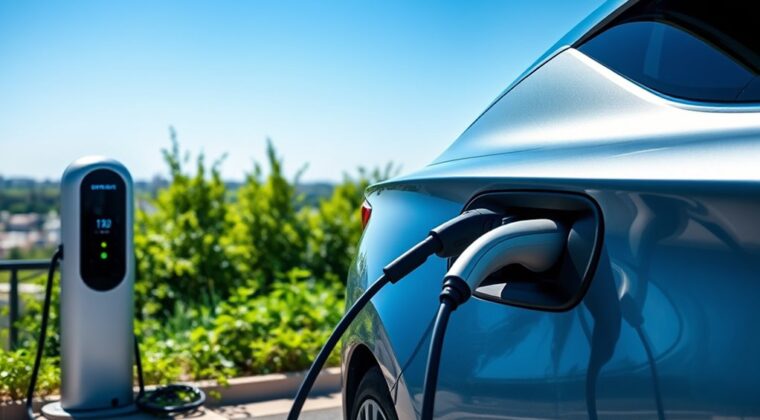
An EV charging station, also called electric vehicle supply equipment or EVSE, safely delivers electricity from the grid to your electric vehicle. Level 1 and Level 2 stations supply AC power that your car converts to DC inside the vehicle, while DC fast chargers convert power inside the station and send DC power directly to the battery. The right charger depends on your daily driving, parking setup, vehicle connector, budget, and how quickly you need to recharge.
Quick Answer
An EV charging station is the equipment that connects your electric vehicle to electricity, controls the charging session, and helps protect the vehicle, charger, and user. Level 1 is slow, Level 2 is best for home and daily use, and DC fast charging is best for road trips and quick stops.
Key Takeaways
- Level 1 uses a standard 120-volt outlet and is slow but simple for short daily driving.
- Level 2 uses 240 volts at home or 208 volts in many commercial settings and is the best daily charging option for most EV owners.
- DC fast charging is designed for road trips, urban charging hubs, and quick top-ups, but charging usually slows as the battery gets close to full.
- Connector compatibility matters. In North America, common connectors include J1772, CCS, CHAdeMO, and SAE J3400/NACS.
- Home charging should use proper, safety-certified equipment installed according to local electrical codes.
At a Glance
| Best Daily Option | Level 2 home charging for most drivers |
| Fastest Option | DC fast charging at public highway or urban charging sites |
| Main Things to Check | Connector type, charger power, app status, payment method, parking rules, and cable reach |
| Typical Cost Factors | Electricity rate, charger speed, network fees, idle fees, home installation needs, and local incentives |
What Is an EV Charging Station and Why Do You Need One?
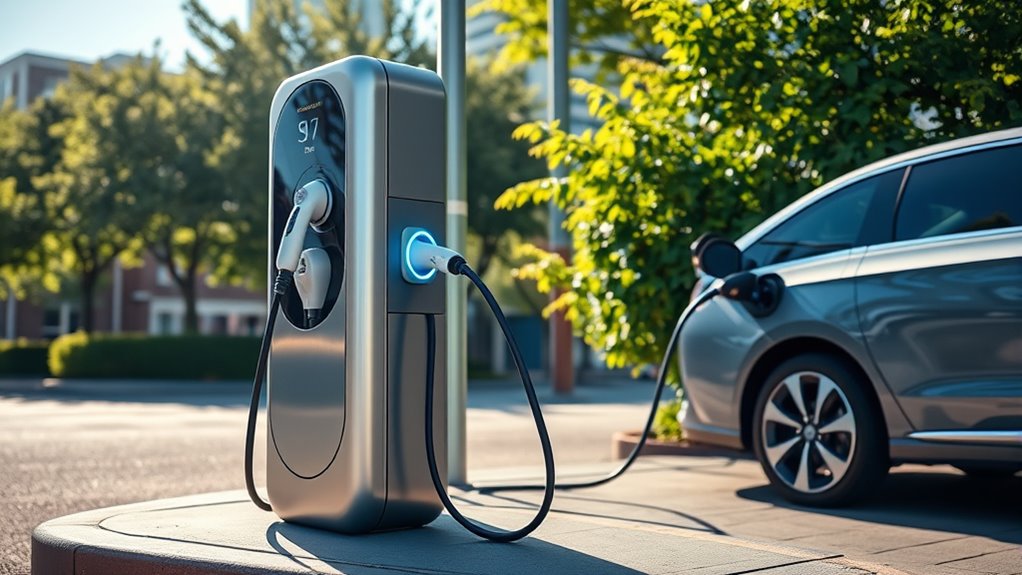
An EV charging station is the equipment that connects your electric vehicle to an electrical supply. The U.S. Department of Energy’s Alternative Fuels Data Center uses the term EVSE port, or EV charging port, for the charger that provides power to one vehicle at a time. A station location may have one port or many ports, and each port may have one or more connectors.
You need charging access because an EV does not refuel like a gasoline vehicle. Most drivers charge at home for daily use, then rely on workplace, destination, or public fast chargers when they need extra range. Public chargers also matter for renters, apartment residents, road trips, rideshare drivers, and anyone who cannot install a home charger.
NREL’s 2030 national charging analysis estimates that a mid-adoption U.S. scenario could require about 28 million charging ports to support 33 million plug-in electric vehicles.
What Are the Different Types of EV Chargers?
EV chargers are usually grouped by charging level. The level tells you the power source, charging speed, and best use case. Your actual charging speed still depends on the charger output, your vehicle’s onboard charger, battery size, state of charge, weather, and battery temperature.
| Charger Type | Power Source | Typical Speed | Best For |
| Level 1 | 120-volt AC outlet | About 3 to 5 miles of range per hour | Short commutes, plug-in hybrids, overnight top-ups |
| Level 2 | 240-volt residential or 208-volt commercial AC service | Often about 10 to 25 miles of range per hour | Home, work, hotels, apartments, shopping areas |
| DC Fast Charging | High-power DC output from the station | Can add about 100 to 200+ miles in 30 minutes on compatible vehicles | Road trips, quick stops, urban fast-charging hubs |
Charger Levels Explained
Level 1 charging uses a standard household-style 120-volt outlet. It is the slowest option, but it can work well if you drive short distances, own a plug-in hybrid, or can leave the car plugged in for many hours.
Level 2 charging is the most practical everyday setup for many EV owners. It usually requires a dedicated circuit and a proper charger, but it can refill most daily driving overnight. It is also common at workplaces, apartments, hotels, and public parking areas.
DC fast charging, sometimes called Level 3 charging, is different because the charging station converts AC electricity to DC before sending it to the vehicle. This bypasses the car’s onboard AC charger and allows much higher power, as long as the vehicle and charger are compatible.
Charging Speed Comparisons
Charging speed is not fixed. A 250 kW charger will not always give your car 250 kW, because the vehicle controls how much power it can safely accept. Speed also drops as the battery fills.
- Level 1 chargers: Best when time is not urgent. Expect slow overnight or all-day charging.
- Level 2 chargers: Best for routine charging because they balance speed, cost, and battery friendliness.
- DC fast chargers: Best when you need range quickly. They are usually more expensive than home charging and work best from a lower state of charge up to around 80%.
- Battery tapering: The last part of charging can take much longer because the battery management system slows power to protect the battery.
Pro Tip: On a road trip, it is often faster to stop twice and charge from about 10% to 70% or 80% than to wait for one session to reach 100%.
How Does Electric Car Charging Work?
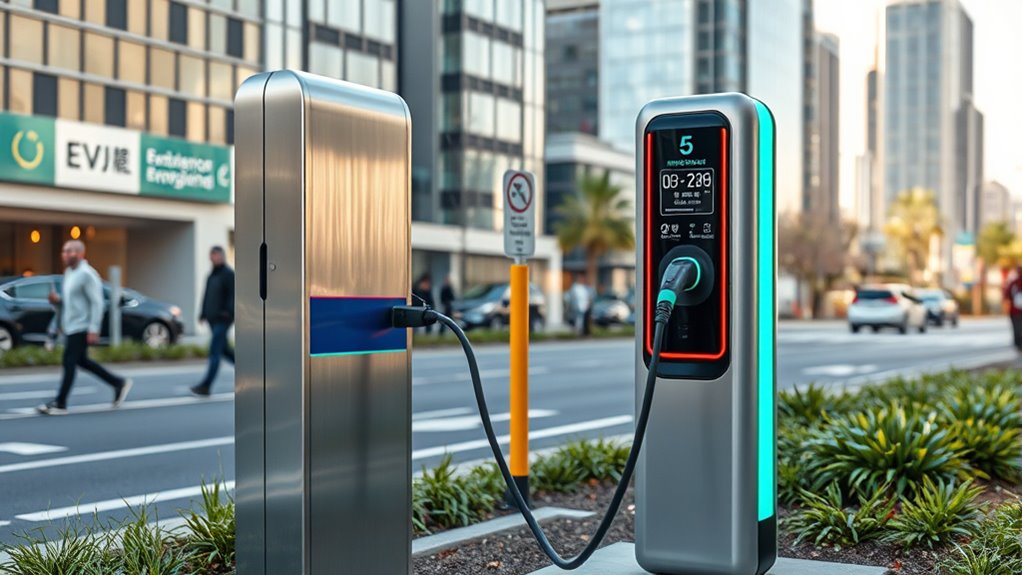
Electric car charging starts when you plug the connector into the vehicle’s charge port. The charger and car communicate before full power flows. That handshake helps confirm connection status, available power, safety conditions, and sometimes payment or user authorization.
With AC charging, the station sends alternating current to the car. The vehicle’s onboard charger converts that AC power into direct current, because EV batteries store energy as DC. This is how most Level 1 and Level 2 charging works.
With DC fast charging, the station converts AC grid power to DC inside the charging cabinet. It then sends DC power directly to the battery through a compatible connector. The vehicle still manages the session, monitors battery temperature and state of charge, and reduces power when needed.
The charging session ends when you stop it through the vehicle, station screen, app, or charging network, or when the car reaches the charge limit you set. Many EV owners set daily charging limits below 100% to reduce waiting time and battery stress, then charge higher before a long trip.
Essential Components of EV Charging Stations
An EV charging station is more than a plug. It includes hardware, safety systems, communication controls, cables, connectors, and sometimes payment and networking equipment.
Key Charger Hardware
- Power electronics: Manage electricity flow. DC fast chargers include larger conversion equipment than AC chargers.
- Charging cable: Carries power from the charger to the vehicle. Cable thickness and cooling can affect high-power DC charging.
- Connector: The plug that fits your vehicle’s charge port. Multiple connector types can appear at one station, but one port usually charges only one vehicle at a time.
- Control pilot and communication systems: Help the vehicle and station exchange safety and charging information.
- Network and payment system: Used on many public chargers for apps, RFID cards, credit cards, pricing, maintenance alerts, and station status.
Connector Types You Should Know
Connector compatibility is one of the most important details when using a public EV charging station.
- J1772: Common for Level 1 and Level 2 AC charging on many non-Tesla EVs in North America.
- CCS: A DC fast-charging connector that builds on the J1772 shape by adding two larger DC pins.
- CHAdeMO: A DC fast-charging connector used on some older or specific models, but less common on newer North American EVs.
- SAE J3400 / NACS: The North American Charging System based on Tesla’s connector design. SAE International has standardized SAE J3400, and many automakers have been moving toward this connector for North American EVs.
Note: Adapters can help in some cases, but they are not universal. Always check your vehicle manual, charging network rules, adapter rating, and whether the station supports your vehicle.
Power Supply Types
There are two main power types: AC and DC. Level 1 and Level 2 chargers use AC power and rely on the vehicle’s onboard charger. DC fast chargers convert power in the station and can deliver much higher power to compatible EVs.
Power is measured in kilowatts (kW), while energy is measured in kilowatt-hours (kWh). A charger’s kW rating tells you how quickly it can deliver power. A battery’s kWh capacity tells you how much energy it can store. Your final charging time depends on both.
How Do Public EV Chargers Work?
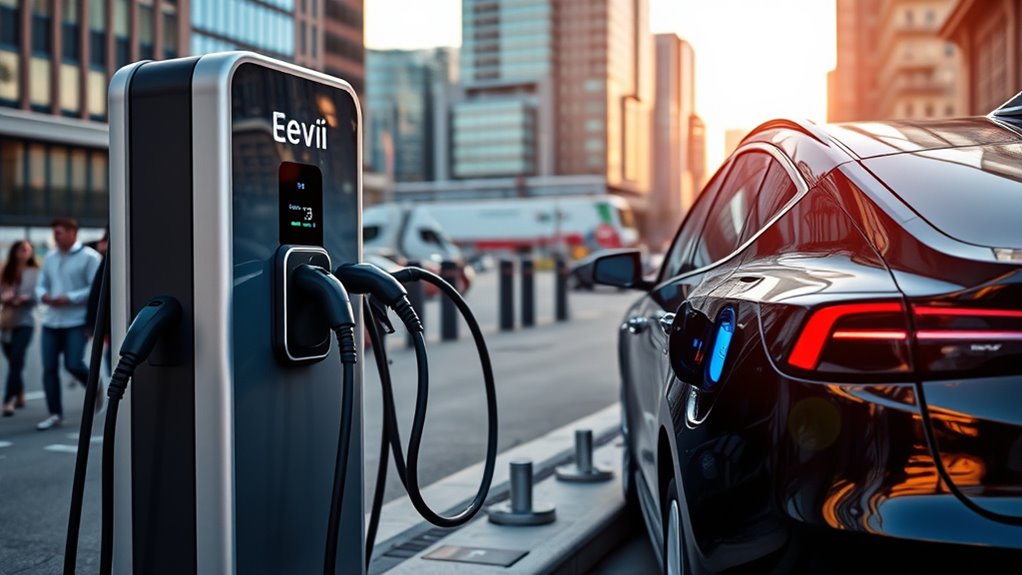
Public EV charging usually uses Level 2 or DC fast charging. Level 2 public stations are best where cars stay parked for a while, such as hotels, offices, airports, downtown garages, and shopping centers. DC fast chargers are best along highways, busy travel corridors, and urban hubs where drivers need range quickly.
Many public chargers are networked. That means they can show availability in an app, collect payment, report faults, and send session data to the charging provider. You may start a session with a mobile app, RFID card, QR code, credit card, contactless payment, or Plug & Charge on compatible vehicles and networks.
- Find a compatible station: Check connector type, charging speed, app status, price, and recent driver comments.
- Park carefully: Make sure the cable can reach your charge port without stretching across traffic or walkways.
- Start the session: Follow the station instructions. Some stations require payment before plugging in, while others ask you to plug in first.
- Monitor charging: Watch the charger screen, app, or vehicle display for charging speed, battery percentage, and cost.
- Move when finished: Unplug and leave the space so the next driver can charge. Some networks charge idle fees after your session ends.
Costs of EV Charging Stations: Free or Paid?
EV charging can be free, paid by the kWh, paid by the minute, included with parking, billed through a membership, or priced with idle fees after charging stops. Home charging is often cheaper than public charging, especially if your utility offers off-peak or time-of-use rates.
Public DC fast charging usually costs more than Level 2 or home charging because the equipment, utility demand charges, site rent, networking, and maintenance costs are higher. The price can also vary by state, charger network, time of day, and membership status.
Free EV charging still exists at some hotels, workplaces, stores, municipal lots, and dealerships, but it is not something to rely on for every trip. Always check station pricing in the app or on the station screen before you start.
For home charging, the charger and installation are separate costs. According to the AFDC charging infrastructure guidance, residential Level 2 equipment can cost several hundred dollars, while installation costs vary widely based on wiring, panel capacity, permits, labor, and site conditions.
Warning: Do not rely on undersized extension cords, damaged outlets, or improvised wiring for EV charging. Use safety-certified equipment, follow your vehicle manual, and hire a qualified electrician when installing Level 2 charging.
How to Use an EV Charging Station Effectively
Using an EV charging station is easy once you know the order of steps. The exact process varies by vehicle and network, but this workflow covers most public stations.
- Check your route before you leave. Use your car’s navigation or a charging app to find compatible stations with recent successful check-ins.
- Arrive with a backup plan. Public chargers can be occupied, blocked, derated, or temporarily out of service.
- Confirm the connector. Match your vehicle port with J1772, CCS, CHAdeMO, or J3400/NACS as needed.
- Start the session correctly. Follow the station prompt, app, or vehicle screen. If the charger fails, unplug, wait a moment, and restart the session.
- Stop at the right charge level. For DC fast charging, leaving around 70% to 80% is often faster than waiting for 100% unless you need the full range.
- Move after charging. Avoid idle fees and free the charger for the next driver.
What to Do If a Public Charger Won’t Start
- Check that the connector is fully seated and locked.
- Try starting from the app instead of the screen, or from the screen instead of the app.
- Move to another port at the same station if one is available.
- Call the support number on the charger if payment or communication fails.
- Report broken equipment in the charging app so other drivers know.
- Use your backup station if the charger is offline, blocked, or repeatedly fails.
A 2022 study of open public DC fast chargers in the Greater Bay Area found that some chargers failed because of screen, payment, communication, or connector problems. That does not mean every public network has the same failure rate, but it does show why checking live status and having a backup stop matters.
Key Considerations for Home EV Charging
Home charging is the most convenient option for many EV owners because the car can recharge while parked overnight. The AFDC home charging guidance notes that many drivers charge overnight at home with Level 1 or Level 2 equipment.
Before installing a home EV charger, check these points:
- Daily mileage: If you drive only a short distance each day, Level 1 may be enough.
- Charging time: If you need a full overnight recharge, Level 2 is usually better.
- Electrical capacity: A qualified electrician can check whether your panel and wiring can support the charger.
- Dedicated circuit: Many Level 2 installations need a dedicated circuit sized for continuous load.
- Permits and code: Local rules may require permits, inspections, and compliance with electrical code.
- Outdoor installation: Use outdoor-rated equipment if the charger will be exposed to weather.
- Cord length: Make sure the cord reaches your charge port without creating a trip hazard.
Some utilities offer rebates, off-peak rates, or smart-charging programs. These can lower your long-term charging cost, especially if you schedule charging during cheaper overnight hours.
Choosing the Right EV Charger for Your Needs
The best EV charger is the one that fits your driving pattern, parking setup, electrical capacity, and budget.
- Choose Level 1 if: You drive short distances, own a plug-in hybrid, or can leave the vehicle plugged in for long periods.
- Choose Level 2 if: You want reliable overnight charging for a battery-electric vehicle or have a longer commute.
- Use DC fast charging if: You are on a road trip, cannot charge at home, or need range quickly.
- Check connector compatibility: Do not assume every public charger works with every EV.
- Look beyond price: Consider safety certification, cord length, weather rating, app reliability, warranty, and customer support.
If you are buying a home charger, confirm the maximum AC charging rate your vehicle can accept. Paying for a charger that greatly exceeds your vehicle’s onboard charger limit may not make your car charge any faster.
Frequently Asked Questions
How much does it cost to charge an electric car at a public charging station?
Public charging costs vary by charger speed, location, network, electricity rate, and pricing model. Some stations bill by the kWh, some bill by time, and some add idle or session fees. DC fast charging usually costs more than Level 2 charging because the equipment and site costs are higher.
How do you pay at an EV charging station?
You may pay with a charging network app, RFID card, QR code, credit card, contactless payment, or Plug & Charge if your vehicle and network support it. Check the station screen or app before starting so you know the price and any idle-fee rules.
How much does it cost to drive 100 miles in an electric car?
The cost depends on your EV’s efficiency and your electricity price. If your EV uses 30 kWh per 100 miles and electricity costs $0.15 per kWh, that 100-mile drive costs about $4.50 in electricity. Public fast charging may cost more than charging at home.
What happens if you run out of charge in an EV?
If the battery runs too low, the vehicle will reduce power and eventually stop. You will usually need roadside assistance, towing to a charger, or a mobile charging service if available. To avoid this, plan charging stops early and keep a reserve range in unfamiliar areas.
Do I need a Level 2 charger at home?
Not always. Level 1 can work if you drive short distances and can charge for many hours. Level 2 is better if you drive more, need faster overnight charging, own a larger-battery EV, or want more flexibility.
Can every EV use every public charging station?
No. Your EV must be compatible with the connector, charging level, network access method, and any adapter you use. Check your vehicle manual and the charging app before relying on a station, especially for DC fast charging.
Conclusion
Understanding EV charging stations is easier when you separate the basics: charger level, power type, connector, cost, and location. Level 1 is simple but slow, Level 2 is the everyday workhorse for home and destination charging, and DC fast charging is the best choice when you need range quickly. Before you plug in, check compatibility, pricing, station status, and safety. With the right setup, charging an EV can become a simple part of your daily routine instead of a source of stress.
Sources
- U.S. Department of Energy Alternative Fuels Data Center: Electric Vehicle Charging Stations — charger levels, EVSE terminology, charging speeds, and connector types.
- U.S. Department of Energy Alternative Fuels Data Center: Charging Electric Vehicles at Home — home charging setup, electrical capacity, safety-certified equipment, and code considerations.
- U.S. Department of Energy Alternative Fuels Data Center: Charging Electric Vehicles in Public — public Level 2 and DC fast charging use cases.
- U.S. Department of Energy Alternative Fuels Data Center: Procurement and Installation for EV Charging Infrastructure — equipment costs, installation variables, certification, permits, and site planning.
- National Renewable Energy Laboratory: The 2030 National Charging Network — U.S. charging infrastructure needs and 2030 charging-port estimates.
- Reliability of Open Public Electric Vehicle Direct Current Fast Chargers — public DC fast charger reliability findings from the Greater Bay Area study.