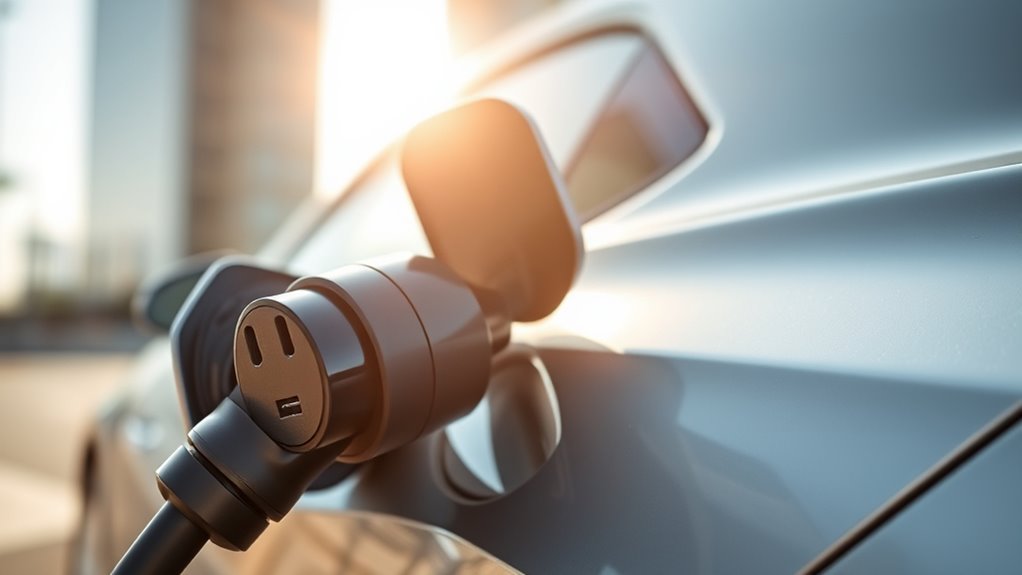
The J1772 connector is the standard plug many North American electric vehicles use for AC charging at home, work, hotels, and public Level 2 stations. It is not the same as a DC fast-charging plug, but it is the upper part of the CCS Combo 1 inlet used by many EVs for both AC and DC charging.
Quick Answer
A J1772 connector is a five-pin AC charging plug used for Level 1 and Level 2 EV charging in North America. It works with many non-Tesla EVs and plug-in hybrids, while Tesla and newer NACS/J3400 vehicles can usually use J1772 stations with the right adapter.
Key Takeaways
- J1772 is mainly for AC Level 1 and Level 2 charging, not DC fast charging.
- Level 1 uses a 120-volt outlet, while Level 2 uses 208-240 volts and is much faster.
- Many non-Tesla EVs built before the NACS/J3400 transition use J1772 for AC charging.
- CCS Combo 1 adds two large DC pins below the J1772-style section for DC fast charging.
- Use only vehicle-approved adapters and listed charging equipment, especially for home Level 2 charging.
What Is the J1772 Connector and Why Is It Important?
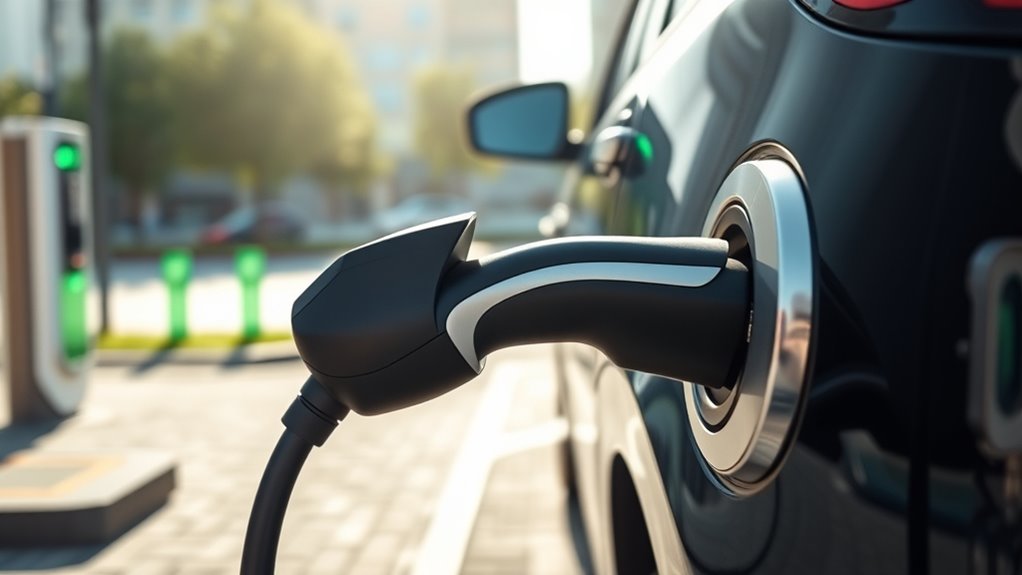
The SAE J1772 connector, often called the J plug, is a common AC charging connector for electric vehicles and plug-in hybrids in North America. You see it on portable Level 1 chargers, home wall units, workplace chargers, hotel chargers, and many public Level 2 stations.
Its main job is simple: it lets the charging station safely send AC power to the car. The car’s onboard charger then converts that AC power into DC power for the battery. This is why a plain J1772 plug is different from a DC fast charger.
Note: J1772 is an AC charging connector. If you are looking for highway fast charging, you are usually dealing with CCS Combo 1, NACS/J3400, or CHAdeMO instead.
J1772 still matters because so much Level 2 infrastructure uses it. Even as more new vehicles move toward the SAE J3400 connector based on NACS, J1772 stations remain useful for older EVs, many plug-in hybrids, and adapter-equipped Tesla or NACS vehicles.
Essential Features of the J1772 Connector
The J1772 connector uses a five-contact layout. Each contact has a specific role in safe AC charging:
- AC Line 1: Carries part of the AC power supply.
- AC Line 2 or Neutral: Works as neutral on 120-volt Level 1 charging or as the second line on 208-240-volt Level 2 charging.
- Protective Earth: Provides the safety ground connection.
- Control Pilot: Lets the EV and charging equipment communicate charging readiness and current limits.
- Proximity Pilot: Helps the vehicle detect that the plug is inserted and can support a controlled stop when the latch is pressed.
This design helps the car and charging station confirm that the connector is seated, the vehicle is ready, and the charging equipment can provide a safe current level. The connector also has a physical latch, which helps keep it seated during a session.
Warning: Do not use a damaged connector, loose outlet, burned plug, uncertified adapter, or household extension cord for EV charging. For a Level 2 home charger, use a qualified electrician and charging equipment listed by a recognized testing lab.
J1772 Charging Speeds: Level 1 vs Level 2
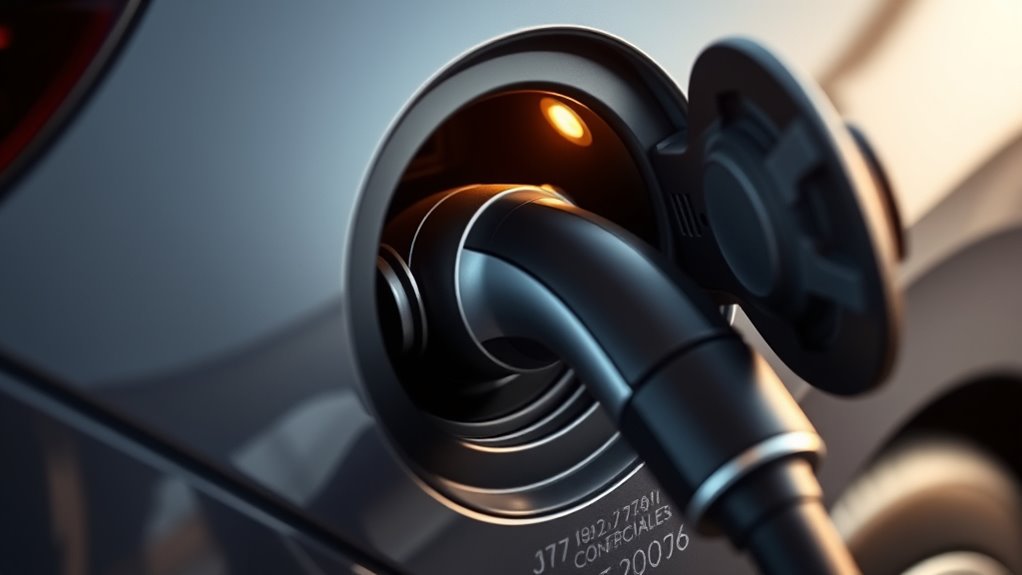
J1772 supports two common AC charging levels. Level 1 is slower but works from a regular 120-volt household outlet. Level 2 is faster and uses 208-240-volt service, which is common for home wall chargers and public charging stations.
| Charging Level | Voltage | Typical Power | Best Use |
|---|---|---|---|
| Level 1 AC | 120 V | About 1.4-1.9 kW | Overnight top-ups, plug-in hybrids, low daily mileage |
| Level 2 AC | 208-240 V | About 2.9-19.2 kW | Home wall chargers, workplaces, public Level 2 stations |
The U.S. Department of Energy’s Alternative Fuels Data Center lists Level 2 equipment as ranging from 2.9 kW to 19.2 kW. Your real charging speed may be lower because the vehicle’s onboard charger, the charger’s amperage, the circuit, power sharing at a public station, and battery temperature can all limit charging.
Pro Tip: If a public J1772 station feels slow, check both the station rating and your vehicle’s onboard AC charging limit. A car with a 7.2 kW onboard charger will not pull 11.5 kW from a Level 2 station, even if the station can provide it.
Which EVs Use the J1772 Connector?
Many North American EVs and plug-in hybrids use a J1772 inlet for AC charging. This includes many model years of the Nissan Leaf, Chevrolet Bolt EV and EUV, Ford Mustang Mach-E, Volkswagen ID.4, Hyundai IONIQ 5 and IONIQ 6, Kia EV6, Toyota bZ4X, Subaru Solterra, and several plug-in hybrid models.
The exact answer depends on model year and market. Many non-Tesla EVs built before the NACS/J3400 transition use J1772 for AC charging and CCS Combo 1 for DC fast charging. Some newer vehicles are moving to a native NACS/J3400 inlet, which means they may need an adapter to use a J1772 Level 2 station.
- J1772-only or J1772 plus CCS vehicles: Plug directly into most J1772 Level 1 and Level 2 stations.
- Tesla vehicles: Use the Tesla/NACS-style inlet but can use many J1772 Level 2 stations with a J1772-to-Tesla adapter.
- Newer NACS/J3400 vehicles: May use native NACS for AC and DC charging, with adapters for some J1772 or CCS equipment depending on the vehicle and adapter type.
- Plug-in hybrids: Often use J1772 for AC charging and may not support DC fast charging at all.
Rivian is a good example of why model-year context matters. Earlier R1T and R1S vehicles use a CCS Combo 1 inlet, which includes the J1772-style AC section. Newer North American EV releases are increasingly moving toward NACS/J3400, so always confirm your exact vehicle and model year.
Comparing J1772 With Other EV Charging Connectors
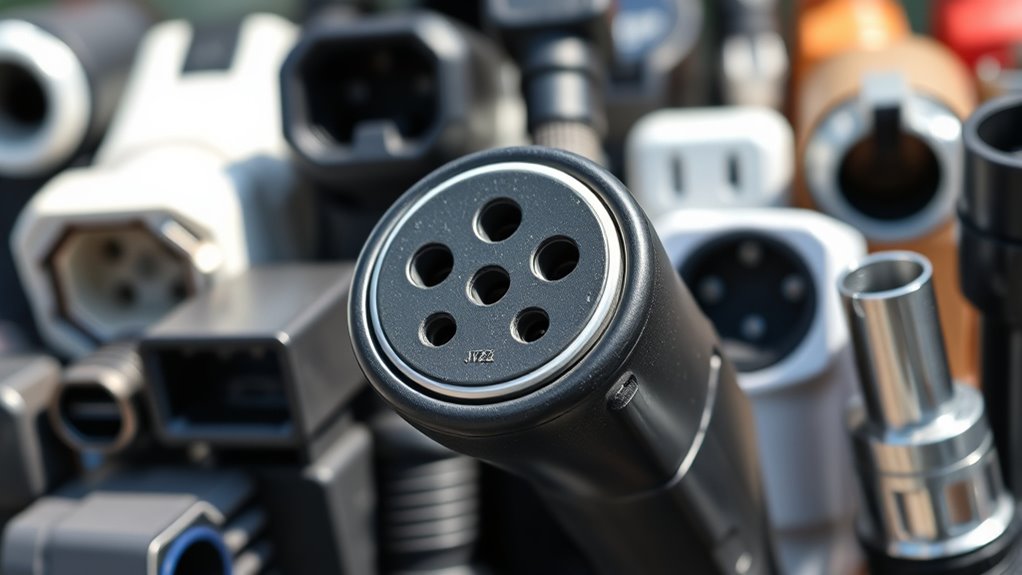
J1772 is only one part of the charging picture. The easiest way to compare connectors is to separate AC charging from DC fast charging.
| Connector | Main Use | AC Charging | DC Fast Charging | What to Know |
|---|---|---|---|---|
| J1772 | Level 1 and Level 2 charging | Yes | No | Common on public Level 2 stations and many older non-Tesla EVs. |
| CCS Combo 1 | AC plus DC fast charging | Yes, through the J1772-style upper section | Yes | Adds two large DC pins below the J1772-style portion. |
| NACS / SAE J3400 | AC and DC charging through a smaller connector | Yes | Yes | Used by Tesla and increasingly adopted by other automakers in North America. |
| CHAdeMO | Legacy DC fast charging | No | Yes | Most common on older Nissan Leaf models and some older Japanese-market designs. |
Think of J1772 as the common AC charging plug, CCS Combo 1 as J1772 plus DC fast-charging pins, and NACS/J3400 as the newer compact connector that can handle both AC and DC charging.
How to Tell Which Plug You Need
Before you drive to a charger, match the station connector to your vehicle inlet and the kind of charging you want.
- Check your charge port shape. A J1772 inlet is round with five contact openings and a notch. A CCS Combo 1 inlet looks like J1772 on top with two large DC openings below it. A NACS/J3400 inlet is smaller and oval-shaped.
- Check the charging level. Use J1772 for AC Level 1 or Level 2 charging. Use CCS, NACS/J3400, or CHAdeMO for DC fast charging, depending on your vehicle.
- Use the vehicle app or manual. Your owner’s manual will tell you which adapters are approved and which stations your EV can use.
- Filter charging apps by connector type. Public charging apps usually let you filter by J1772, CCS, NACS, or CHAdeMO.
- Do not assume every adapter works both ways. A J1772-to-NACS Level 2 adapter is not the same as a DC fast-charging adapter.
Safety, Locking, and Unplugging
The J1772 system includes communication and safety features that help the vehicle and EVSE coordinate charging. The control pilot signal tells the car how much current is available, and the proximity signal helps the car detect the connector and latch state.
Still, the connector alone does not guarantee that nobody can unplug your vehicle. Some vehicles lock the inlet while charging. Some stations use connector locks or session controls. Others rely mostly on the mechanical latch and the vehicle’s own locking behavior.
To reduce unwanted unplugging, lock your vehicle, check your charge-port lock settings, start the session through the station app when required, and park so the cable is not stretched across a walkway. If the connector will not release, stop the session first, unlock the vehicle, and follow the station or vehicle instructions. Do not force the handle.
For federally funded public charging, 23 CFR Part 680 includes requirements for connector types, power levels, payment access, equipment certification, maintenance, and physical and cybersecurity planning. These requirements are one reason J1772 remains important at public AC Level 2 sites.
Common J1772 Problems and Fixes
Most J1772 problems are simple, but the cause can be the vehicle, station, adapter, payment system, or charging schedule.
- The session will not start: Reseat the connector, check whether the latch clicked, confirm payment or app activation, and make sure the vehicle is not set to delayed charging.
- Charging is slower than expected: Check the station rating, your vehicle’s onboard AC charger limit, power sharing at the site, cold battery conditions, and whether the vehicle is near a high state of charge.
- The plug will not release: Stop charging in the app or station screen, unlock the vehicle, press the latch only after current has stopped, and use the vehicle’s manual release only if the owner’s manual allows it.
- The adapter fails: Remove and reconnect it, inspect for damage, confirm it is rated for your vehicle and charging level, and avoid third-party adapters that are not approved by the vehicle maker.
- The station shows an error: Try another connector on the same station if available, report the fault in the charging app, and avoid repeated attempts if you smell heat or see damage.
Future of J1772 in North America
J1772 is not disappearing overnight. It is built into a large base of home chargers, workplace chargers, public Level 2 stations, plug-in hybrids, and older EVs. It is also still referenced in public charging requirements for AC Level 2 infrastructure.
At the same time, the North American market is moving toward NACS as SAE J3400. That shift means new EV shoppers should pay close attention to model year, charge-port type, and included adapters. During the transition, many drivers will use a mix of native connectors and adapters.
The practical takeaway is simple: J1772 remains one of the most useful connectors for everyday AC charging, especially away from highway fast chargers. For road trips and fast charging, your vehicle’s DC connector matters more.
Frequently Asked Questions
What vehicles use the J1772 plug?
Many North American non-Tesla EVs and plug-in hybrids use J1772 for AC Level 1 and Level 2 charging. Examples include many model years of the Nissan Leaf, Chevrolet Bolt EV and EUV, Ford Mustang Mach-E, Volkswagen ID.4, Hyundai IONIQ models, Kia EV models, and many plug-in hybrids. Always check your exact model year because newer vehicles may use NACS/J3400 instead.
Is J1772 the same as CCS?
No. J1772 is an AC charging connector. CCS Combo 1 uses a J1772-style upper section for AC charging and adds two large lower pins for DC fast charging. A plain J1772 plug will not fit into the full lower DC section and will not provide DC fast charging.
What stops someone from unplugging your electric car?
The J1772 handle has a latch, and many EVs can lock the charge port while the vehicle is locked or actively charging. Public stations may also control the session through an app or account. The exact behavior depends on the vehicle and charger, so check your charge-port lock settings.
What type of charger plug does Rivian use?
Many earlier Rivian R1T and R1S vehicles use a CCS Combo 1 inlet, which includes the J1772-style section for AC Level 1 and Level 2 charging. Newer North American EVs are moving toward NACS/J3400, so Rivian owners should confirm charging details for their exact model year and adapter program.
Does J1772 support fast charging?
J1772 supports Level 1 and Level 2 AC charging. Level 2 can be fast enough for daily use and overnight home charging, but it is not DC fast charging. For highway fast charging, most compatible vehicles use CCS Combo 1, NACS/J3400, or CHAdeMO.
What does a J1772 plug look like?
A J1772 plug has a round, keyed face with five contact openings and a latch on the handle. It is larger than a NACS/Tesla-style plug and smaller than a CCS Combo 1 connector because CCS adds two large DC pins below the J1772-style section.
Conclusion
The J1772 connector is still one of the most important EV charging plugs in North America because it powers everyday AC charging at homes, workplaces, hotels, and many public Level 2 stations. It is common, simple to use, and widely supported across many EVs and plug-in hybrids.
The key is knowing its limits. J1772 is for AC Level 1 and Level 2 charging. For DC fast charging, you need the connector your vehicle supports, such as CCS Combo 1, NACS/J3400, or CHAdeMO. As the market shifts toward NACS/J3400, J1772 will remain useful through existing stations, older vehicles, plug-in hybrids, and approved adapters.
Sources
- U.S. Department of Energy Alternative Fuels Data Center – Electric Vehicle Charging Stations – charging levels, J1772 use, CCS, power ranges, and DC fast-charging overview.
- Joint Office of Energy and Transportation – SAE J3400 Charging Connector – NACS/J3400 standardization, CCS1 terminology, and connector transition context.
- SAE International – J1772 Standard – official SAE standard page for the electric vehicle conductive charge coupler.
- SAE International – J3400 Recommended Practice – official SAE standard page for the North American Charging System connector.
- eCFR – 23 CFR Part 680 – federal EV charging infrastructure standards, connector requirements, certification, and security requirements.