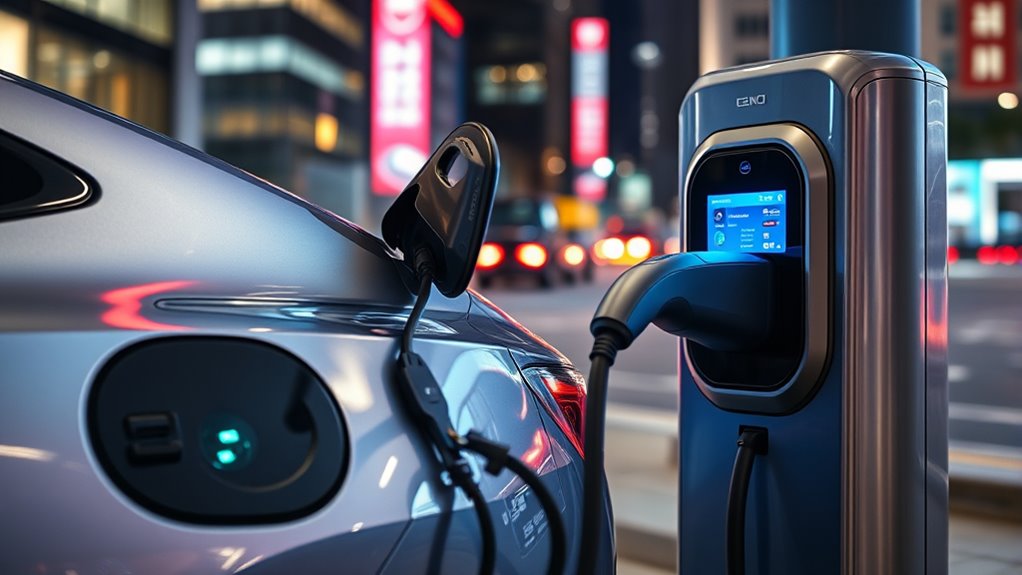
CHAdeMO is a DC fast-charging standard used by many older electric vehicles, especially Japanese models such as earlier Nissan LEAFs and some Mitsubishi plug-in hybrids. It is still useful in the right region and with the right vehicle, but in North America most new EVs are moving toward CCS or NACS/J3400 instead.
Quick Answer
CHAdeMO is a DC fast-charging connector and communication protocol for electric vehicles. It can charge compatible EVs faster than Level 2 AC charging, supports bidirectional charging in certain markets, and is still common on some legacy vehicles. Before buying a CHAdeMO EV, check local charger availability because CCS and NACS now dominate many new networks.
Key Takeaways
- CHAdeMO is a DC fast-charging standard, not a home Level 1 or Level 2 plug.
- It is best known for older Nissan LEAF models, Mitsubishi i-MiEV, and the Mitsubishi Outlander PHEV.
- CHAdeMO supports bidirectional charging, but you need a compatible vehicle, charger, software, and local utility program.
- The latest CHAdeMO protocol updates are powerful, but your real charging speed depends on the car, charger, battery temperature, and state of charge.
- In North America, CHAdeMO is now mostly a legacy connector, while CCS and NACS/J3400 are the main fast-charging paths for newer EVs.
What Is CHAdeMO and How Does It Work?
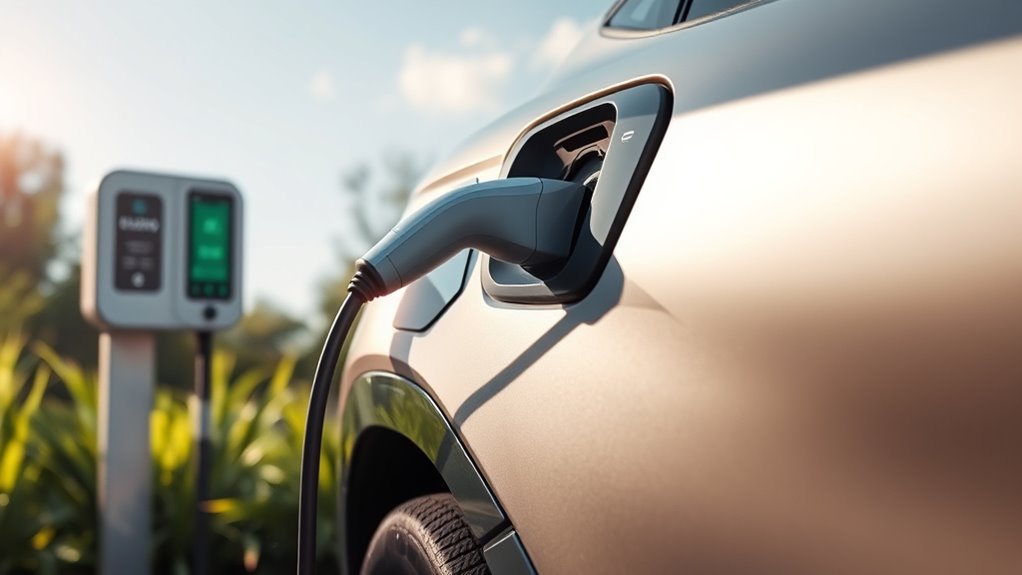
CHAdeMO is both the name of a DC charging technology and the association that develops it. Unlike Level 1 or Level 2 charging, which sends alternating current to your car’s onboard charger, CHAdeMO uses an off-board DC fast charger to send direct current to the battery pack.
Before power flows, the car and charger communicate. The vehicle tells the charger what voltage and current it can accept, and the charger adjusts output during the session. This communication helps protect the battery and stop charging when limits are reached.
In real life, a CHAdeMO session usually looks simple:
- Park so the cable can reach your charge port.
- Select the CHAdeMO connector on the charger screen or app.
- Plug the CHAdeMO connector into the vehicle’s DC fast-charge port.
- Start the session with the app, card, payment terminal, or network account.
- Unplug when the car reaches your target charge or the charging curve slows.
Note: CHAdeMO fast charging is different from the smaller J1772 plug many North American EVs use for Level 1 and Level 2 AC charging. Some vehicles have both ports side by side.
The Historical Development of CHAdeMO
CHAdeMO grew out of early Japanese EV charging work and became one of the first widely deployed DC fast-charging systems. It was strongly associated with early mass-market electric cars such as the Nissan LEAF and Mitsubishi i-MiEV.
The standard has evolved through several protocol generations. Early CHAdeMO hardware was commonly associated with lower-power DC fast charging, while later protocol versions added higher power, better thermal protections, and broader vehicle support.
The most important point for today’s reader is this: protocol capability is not the same thing as the charging speed your car will receive. A charger may advertise a high maximum output, but your vehicle’s battery system, battery temperature, state of charge, and software decide how much power it can actually accept.
Understanding CHAdeMO’s Current Market Presence
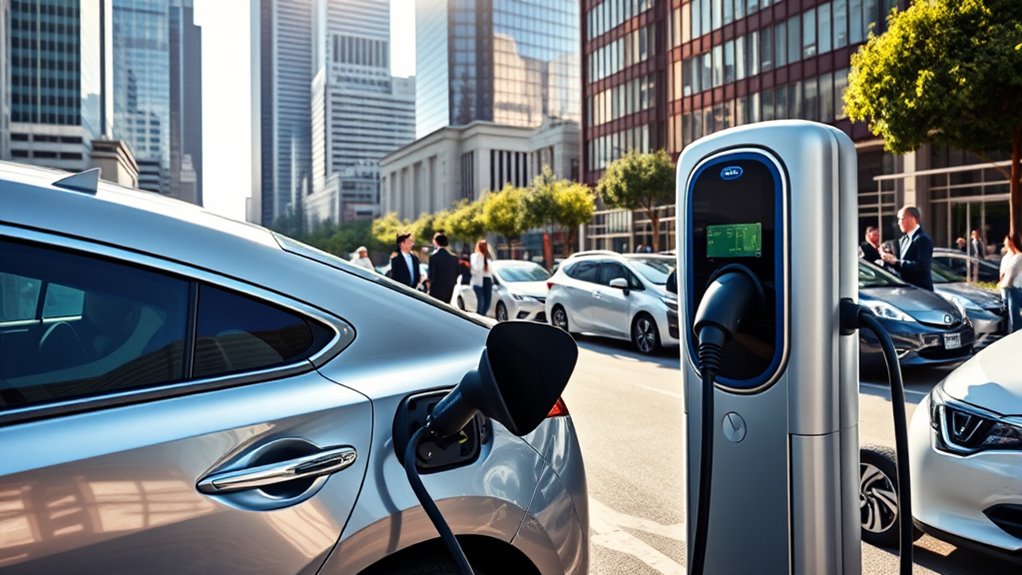
CHAdeMO’s market position depends heavily on where you live. It remains most relevant in Japan and for drivers who already own CHAdeMO-equipped vehicles. In North America, it is increasingly a legacy connector because most new EVs use CCS or NACS/J3400 for DC fast charging.
The U.S. Department of Energy lists CCS, CHAdeMO, and J3400 as DC fast-charging systems, but it also notes that most EV models on the market can charge with CCS. That is why many new charging sites prioritize CCS and NACS/J3400, while some older stations still include CHAdeMO.
Current User Adoption Rates
CHAdeMO adoption is strongest among existing vehicle owners, not new-car buyers in North America. Older Nissan LEAF models, Mitsubishi i-MiEV models, and some Mitsubishi plug-in hybrids still need CHAdeMO for DC fast charging.
The redesigned 2026 Nissan LEAF now advertises an integrated NACS port and access to Tesla Superchargers, which marks a major shift away from CHAdeMO for new LEAF buyers in North America. At the same time, the 2026 Mitsubishi Outlander PHEV still states that its DC fast charging is available only with CHAdeMO charging systems.
Regional Infrastructure Distribution
CHAdeMO stations are not evenly distributed. A driver in Japan may find CHAdeMO much more useful than a driver planning road trips across rural North America. Europe has had many multi-standard chargers with CHAdeMO and CCS, but newer EVs and newer high-power corridors often favor CCS.
Pro Tip: Before buying a used CHAdeMO EV, search your actual commute, weekend routes, and backup charging locations in a live charger map. Do not rely on national averages.
Essential Features of CHAdeMO Technology and Their Benefits
CHAdeMO’s main benefits are DC fast charging, proven compatibility with many legacy EVs, and support for bidirectional energy flow in certain setups. Its main weakness is not the technology itself, but the direction of the new-vehicle and new-infrastructure market outside Japan.
Fast Charging Capabilities
CHAdeMO charging can be much faster than Level 2 AC charging, especially when your battery is low and warm enough to accept higher power. However, many older CHAdeMO vehicles peak far below the newest protocol limits.
In May 2026, the CHAdeMO Association released CHAdeMO 2.1, which specifies higher charging current, improved safety behavior, and Plug and Charge readiness. That update matters for the future of the standard, but it does not mean an older CHAdeMO car will suddenly charge at the newest maximum rate.
Bidirectional Charging Advantages
One reason CHAdeMO still matters is bidirectional charging. In the right setup, an EV can send power outward for vehicle-to-home, vehicle-to-building, vehicle-to-load, or vehicle-to-grid use.
| Feature | What It Means | Important Limitation |
|---|---|---|
| DC fast charging | Adds range faster than Level 2 AC charging. | Speed depends on the vehicle, charger, battery temperature, and state of charge. |
| Bidirectional charging | Can support V2H, V2B, V2L, or V2G applications. | Requires compatible hardware, software, utility rules, and installation. |
| Legacy EV support | Keeps older CHAdeMO-equipped EVs usable on public DC chargers. | New stations may not include CHAdeMO. |
Warning: Do not assume bidirectional charging works just because a vehicle has a CHAdeMO port. The car, bidirectional charger, home electrical system, utility approval, and software must all support the same use case.
How Does CHAdeMO Compare to Other Charging Standards?
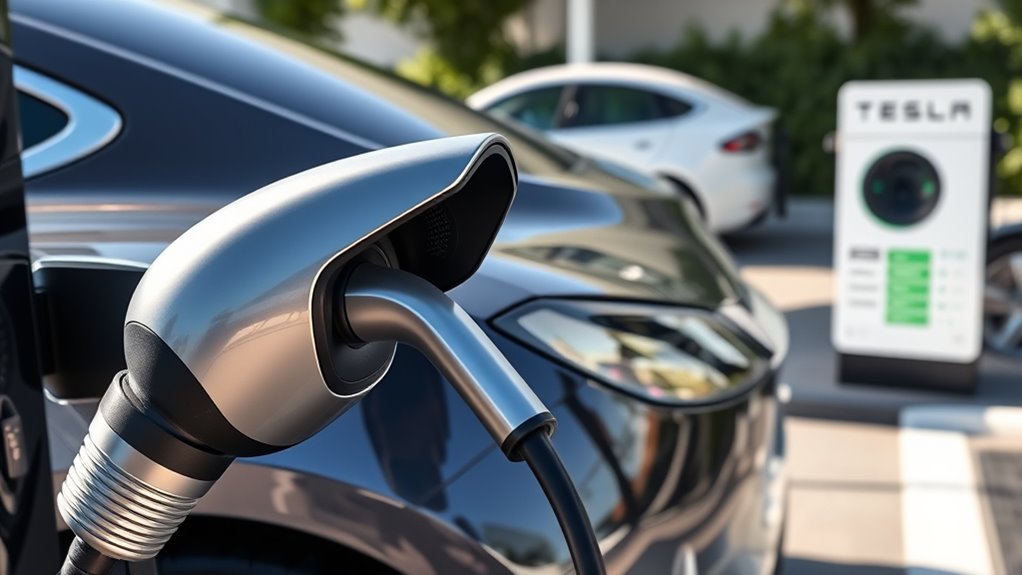
CHAdeMO, CCS, and NACS/J3400 all support DC fast charging, but they differ in vehicle adoption, regional support, and connector design. The best connector is not just the one with the highest theoretical power. It is the one your vehicle and local charging network actually support.
| Standard | Common Use | Strength | Weakness |
|---|---|---|---|
| CHAdeMO | Older Japanese EVs and some plug-in hybrids. | Strong legacy support and mature bidirectional charging ecosystem. | Declining new-vehicle support in North America. |
| CCS | Many non-Tesla EVs from the 2010s and 2020s. | Broad public-network support and high-power charging availability. | North America is transitioning many future models toward NACS/J3400. |
| NACS/J3400 | Tesla vehicles and a growing number of North American EVs. | Compact connector and growing new-vehicle adoption. | Adapter and site compatibility can vary during the transition. |
Can You Use a CHAdeMO Adapter?
Adapter support is one of the most confusing parts of CHAdeMO ownership. Some charging adapters exist for specific vehicles and directions, but you should not assume that any CHAdeMO car can use CCS or NACS fast chargers through a simple adapter.
DC fast charging requires more than matching plug shapes. The vehicle and charger must communicate correctly, handle high current safely, and follow the right protocol. That is why many CHAdeMO-to-CCS or CHAdeMO-to-NACS solutions are limited, expensive, vehicle-specific, or unsupported by the automaker.
If you own a CHAdeMO EV, the safest approach is to use charging equipment approved for your exact model and market. If you are shopping for a used EV, treat adapter availability as a bonus, not as the foundation of your charging plan.
CHAdeMO’s Role in Asia’s EV Landscape
CHAdeMO remains most important in Japan, where it has long-standing infrastructure and stronger historical support from domestic automakers. It also matters in places where older CHAdeMO-equipped EVs are common or where charging sites still provide multi-standard cables.
The picture is different in North America. There, CHAdeMO is mostly a support connector for legacy vehicles and a few current exceptions. The broader market is moving toward CCS for many existing non-Tesla EVs and NACS/J3400 for many newer models.
Future Developments: What’s Next for CHAdeMO?
CHAdeMO is not frozen in the past. The standard continues to evolve through new protocol work, high-power charging development, Plug and Charge readiness, and light electric vehicle charging initiatives.
The key is to separate future protocol development from your practical charging experience today. A future standard may support very high power, but a used LEAF, i-MiEV, or Outlander PHEV will still be limited by its own onboard battery system and charge-control software.
For everyday drivers, the future of CHAdeMO looks like this:
- Japan: CHAdeMO remains relevant because of existing infrastructure and vehicle history.
- North America: CHAdeMO is mainly legacy support, while new EVs increasingly use CCS or NACS/J3400.
- Europe: Many older multi-standard chargers include CHAdeMO, but CCS is the dominant new-vehicle fast-charging path.
- Bidirectional charging: CHAdeMO remains important for V2G and V2H learning, but consumer availability varies by market.
Is a CHAdeMO-Compatible Vehicle Worth Your Investment?
A CHAdeMO-compatible vehicle can still be worth buying if the price is right and your charging needs match the connector. It is less attractive if you rely heavily on long road trips or live in an area where new fast chargers no longer include CHAdeMO.
| A CHAdeMO EV Makes Sense If… | Think Twice If… |
|---|---|
| You mostly charge at home or work on Level 2. | You depend on public DC fast charging every week. |
| Your local CHAdeMO stations are reliable and convenient. | Nearby fast chargers are mostly CCS or NACS only. |
| The vehicle is inexpensive enough to offset charging limitations. | You care strongly about resale value and future fast-charging access. |
| You want a used commuter EV and have a backup charging plan. | You need one vehicle for frequent long-distance travel. |
How to Check CHAdeMO Compatibility Before You Buy
Before buying a CHAdeMO-equipped vehicle, check three things:
- The vehicle port: Confirm the car has a CHAdeMO DC fast-charge inlet, not only a J1772 AC inlet.
- Your local chargers: Look for CHAdeMO connectors at stations you would actually use, not just stations somewhere in your region.
- Recent reviews: A charger listed online may be broken, blocked, removed, or limited to a network account you do not have.
Also compare the car’s battery health and maximum DC charge rate. A cheap used EV can still be a smart commuter, but only if its range and charging options fit your real driving pattern.
Frequently Asked Questions
What cars still use CHAdeMO?
Common CHAdeMO vehicles include older Nissan LEAF models, Mitsubishi i-MiEV, Mitsubishi Outlander PHEV, and some older or region-specific EVs from Japanese and Korean brands. In North America, the redesigned 2026 Nissan LEAF moved to NACS for DC fast charging, while the 2026 Mitsubishi Outlander PHEV still lists CHAdeMO for DC fast charging.
Is CHAdeMO being phased out?
CHAdeMO is being reduced on many new vehicles and charging sites outside Japan, especially in North America. It is not disappearing overnight because many existing EVs still need it, but new fast-charging growth is increasingly focused on CCS and NACS/J3400.
Which is faster, CHAdeMO or CCS?
Do not compare them only by theoretical maximums. A newer high-power CCS station may charge some modern EVs faster than an older CHAdeMO car can accept. CHAdeMO protocol updates support high power, but your actual speed depends on your specific vehicle, charger, battery temperature, and state of charge.
Is Tesla CCS or CHAdeMO?
In North America, Tesla vehicles use the Tesla/NACS connector, now standardized as SAE J3400. They are not native CHAdeMO vehicles. Some adapters have existed for certain situations, but adapter support depends on the vehicle, region, charger, and manufacturer rules.
Can I charge a CHAdeMO car at a CCS or NACS charger?
Usually not without a compatible, vehicle-approved DC adapter, and many simple plug adapters will not work for DC fast charging. CHAdeMO, CCS, and NACS/J3400 use different connector designs and communication requirements. Always check your vehicle manual and charging-network support before relying on an adapter.
Should I avoid a used EV because it has CHAdeMO?
Not always. A used CHAdeMO EV can be a good value if you mostly charge at home, drive predictable distances, and have nearby CHAdeMO backup stations. It is a weaker choice if you need frequent public fast charging or plan long road trips in areas where CHAdeMO is disappearing.
Conclusion
CHAdeMO is still an important EV charging standard, especially for older Japanese EVs, some Mitsubishi plug-in hybrids, and bidirectional charging use cases. It is proven technology, but its role has changed. In North America, it is now mostly a legacy fast-charging connector, while CCS and NACS/J3400 carry most new-vehicle momentum.
If you already own a CHAdeMO vehicle, it can still serve you well with home charging and reliable local CHAdeMO stations. If you are shopping for a used EV, check your real charging routes first. A low purchase price can make sense, but only if the connector fits your daily life.
Sources
- CHAdeMO Association: What is CHAdeMO? — definition of CHAdeMO as a DC charging technology and organization.
- CHAdeMO Association: CHAdeMO 2.1 released — 2026 protocol update, higher current, safety updates, and Plug and Charge readiness.
- CHAdeMO Association: V2G/VGI — bidirectional charging, V2H, V2B, V2L, and V2G context.
- U.S. Department of Energy AFDC: Electric Vehicle Charging Stations — DC fast-charging systems, connector terminology, and U.S. charging context.
- Nissan USA: 2026 Nissan LEAF — current LEAF charging and NACS/Tesla Supercharger access information.
- Mitsubishi Motors: 2026 Outlander PHEV — current Outlander PHEV DC fast-charging connector information.