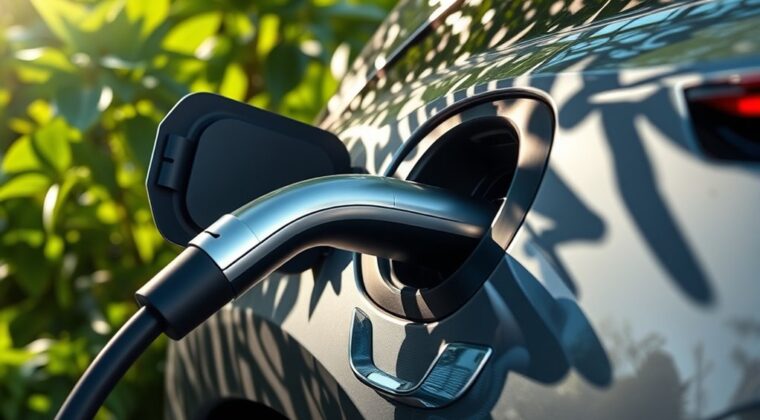
The North American Charging Standard (NACS), developed by Tesla, offers a streamlined solution for electric vehicle charging. Its compact connector supports both AC and DC charging, delivering rates up to 250 kW. With major automakers like Ford and GM adopting NACS, you’ll soon find greater compatibility across brands. This standard simplifies your charging experience and enhances efficiency at public stations. Curious about how NACS can transform the EV landscape? There’s plenty more to explore.
What Is the North American Charging Standard (NACS)?
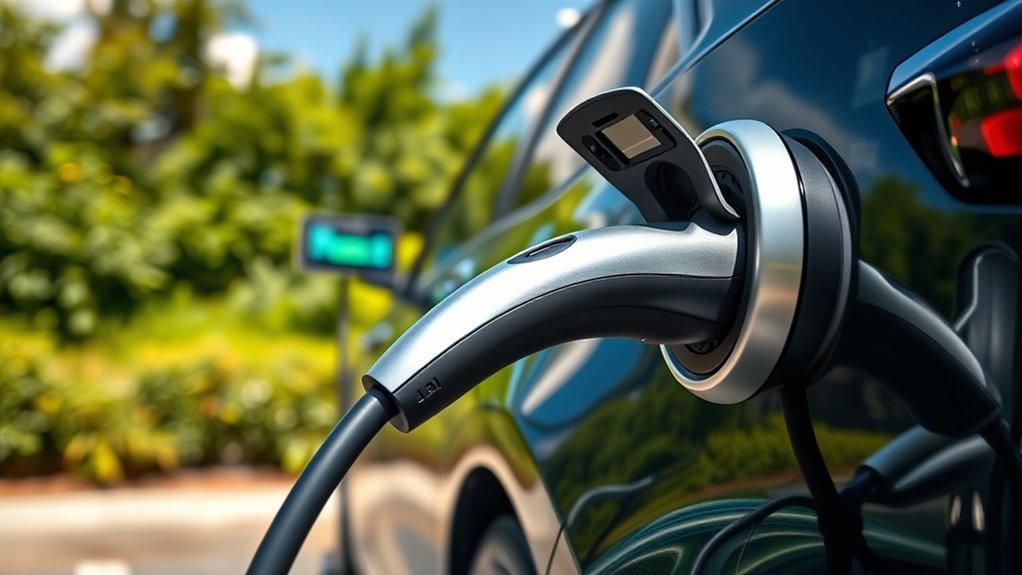
The North American Charging Standard (NACS) is revolutionizing the way electric vehicles (EVs) charge. Originally developed by Tesla, this innovative DC fast charging connector was made available to other manufacturers in November 2022.
NACS supports both AC and DC charging, boasting a compact design that allows for impressive charging rates of up to 250 kW at Tesla Supercharger stations. By early 2026, major automotive manufacturers like Ford and GM are set to equip their future EVs with NACS-compatible ports, paving the way for a more unified charging experience.
With the publication of SAE J3400, the dimensions and specifications for connectors and inlets are now standardized. This shift toward NACS is expected to reshape the EV landscape, enhancing access to Tesla’s extensive Supercharger network and promoting a seamless, liberated charging experience for all EV users.
NACS vs. Other EV Charging Standards: Key Differences
When comparing NACS to other EV charging standards, you’ll notice distinct differences in design and compatibility.
NACS’ compact connector supports both AC and DC charging through shared pins, unlike CCS, which relies on separate connectors.
Additionally, while NACS offers impressive charging rates of up to 250 kW, CCS pushes the boundaries with capabilities exceeding 800 V, highlighting varying power delivery potentials.
Design and Compatibility
Charging infrastructure plays a critical role in the shift to electric vehicles, and understanding the differences between NACS and other standards like CCS is essential.
NACS features a compact design that uses the same pins for both AC and DC charging, making it more versatile than CCS, which has separate connectors. The smaller NACS connector supports higher charging rates, allowing Tesla vehicles to charge up to 250 kW, while CCS typically offers lower speeds.
Both standards share communication protocols, ensuring compatibility between vehicles and charging stations.
Though CCS remains the standard for many non-Tesla EVs, the rapid adoption of NACS by automakers like Ford and GM is changing the landscape, particularly with Tesla’s Magic Dock bridging the gap for CCS1 adapters.
Charging Speed Variations
While many EV owners are keen for quick charging solutions, understanding the nuances in charging speeds between NACS and other standards like CCS is essential.
NACS supports charging rates of up to 250 kW, enabling faster charging times for most applications. In contrast, CCS can reach 350 kW with DC fast chargers, but it may be slower for some EVs.
The compact design of NACS enhances the charging experience, while CCS’s bulkier connectors can be cumbersome. Plus, NACS simplifies the architecture by using the same pins for both AC and DC charging.
As more manufacturers adopt NACS, you might find improved charging speeds and accessibility, creating a more unified and efficient EV charging landscape.
Key Automakers Adopting NACS
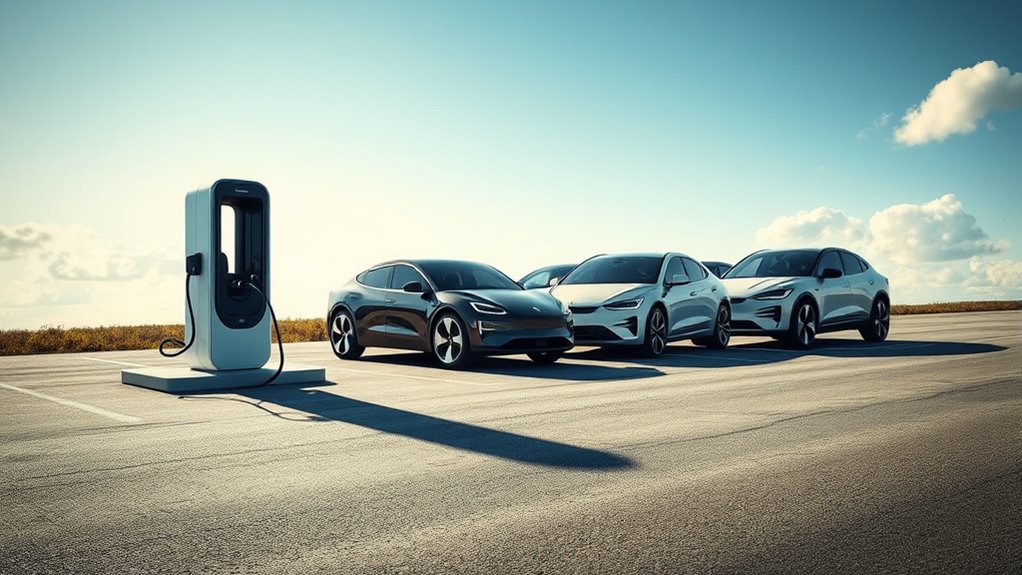
As you explore the landscape of electric vehicles, you’ll notice a growing number of major automakers embracing the North American Charging Standard (NACS).
Ford led the charge in June 2023, and now brands like Stellantis, General Motors, and Mercedes-Benz are following suit, signaling a notable shift in industry standards.
Major Automakers Adopting NACS
The shift toward the North American Charging Standard (NACS) marks a pivotal moment in the electric vehicle landscape, with major automakers leading the charge.
Ford was the first to announce its change in June 2023, setting a precedent for others like General Motors, Mercedes-Benz, Polestar, Rivian, and Volvo.
This collective move towards NACS reflects a growing acceptance, especially as about 60% of direct-current fast chargers in the U.S. now support it.
By adopting NACS, these automakers gain seamless access to Tesla’s proprietary Supercharger network, with around 1,800 sites available.
As more brands plan to equip future models with NACS-compatible charging ports by early 2026, the infrastructure for EV charging is set to expand appreciably, fostering liberation for electric vehicle users.
Future Vehicle Compatibility Plans
With major automakers committing to the North American Charging Standard (NACS), the landscape for future electric vehicle compatibility is set to evolve rapidly. Ford kicked things off, paving the way for Stellantis, Rivian, Mercedes-Benz, and Volvo to follow suit, enhancing compatibility with existing charging stations. This shift not only simplifies your charging experience but also opens doors to a wider array of future EV options.
| Automaker | NACS Adoption Year |
|---|---|
| Ford | 2024 |
| Stellantis | 2025 |
| Rivian | 2025 |
| Mercedes-Benz | 2026 |
| Volvo | 2026 |
How NACS Makes Charging Easier for You
While traversing the world of electric vehicle charging can sometimes feel overwhelming, the North American Charging Standard (NACS) simplifies the process considerably. By utilizing a single connector for both AC and DC charging, NACS eliminates the hassle of juggling multiple adapters. This compact design not only makes connections quicker but also enhances your overall charging experience at stations.
With major automakers like Ford and GM embracing NACS, you’re gaining access to a growing network of compatible charging options. Plus, Tesla’s extensive Supercharger network, primarily built around NACS, supports over 1.3 million EVs in the U.S., streamlining your charging needs.
The implementation of NACS aims to unify charging standards, reducing confusion and empowering you as an electric vehicle owner. Embracing this standard means you can focus less on the logistics of charging and more on enjoying the freedom of your electric vehicle journey.
Impact of NACS on Public Charging

As more automakers adopt the North American Charging Standard (NACS), public charging networks are rapidly evolving to meet the needs of a growing electric vehicle (EV) market. By integrating Tesla’s extensive Supercharger infrastructure, NACS offers you access to around 1,800 Tesla charging sites across the U.S. This evolution enhances your charging experience, especially with the introduction of NACS-compatible fast chargers from networks like EVgo.
Here’s a quick look at the impact:
| Aspect | NACS | CCS |
|---|---|---|
| Charging Sites | 1,800+ Tesla sites | Various network sites |
| EV Adoption | 1.3 million Tesla EVs | Broad range of manufacturers |
| Compatibility | Magic Dock for CCS users | Required for NEVI funding |
The coexistence of NACS and CCS empowers you with greater choice, making it easier to keep EVs on the road while expanding charging availability.
Technical Specifications of NACS
The North American Charging Standard (NACS) isn’t just about expanding charging infrastructure; it also introduces a sophisticated technical framework that enhances the EV charging experience. By utilizing a compact plug design, NACS supports both AC and DC charging using the same pins, streamlining the connector architecture.
The North American Charging Standard (NACS) revolutionizes EV charging with a compact plug design for seamless AC and DC compatibility.
Key technical specifications include:
- Voltage and Power: Operating at 400 volts, NACS enables charging rates up to 250 kW—significantly higher than many existing connectors.
- Control Electronics: These manage power switching between AC and DC modes, ensuring safe and efficient operation.
- Connector Design: Requires onboard chargers (OBC) and power distribution devices to facilitate effective battery connections.
Developed in collaboration with SAE International, the NACS connector aims to simplify proprietary charging, making it easier for you to charge your EV without hassle.
This framework not only enhances compatibility but also empowers you to embrace the future of electric mobility.
Safety Features Integrated Into NACS
Ensuring your safety during EV charging is paramount, and NACS integrates a range of robust safety features to address this concern. The design of the NACS connector incorporates essential safety mechanisms that adhere to industry standards, preventing overheating and enhancing operational safety.
Here’s a quick overview of the key safety features:
| Feature | Description | Benefit |
|---|---|---|
| Overheating Prevention | Functional safety specs to avoid heat build-up | Enhanced user safety |
| Power Management | Control electronics for AC/DC switching | Optimized charging efficiency |
| High-Voltage Protocols | Safety protocols for high-voltage wiring | Safe installation practices |
| Compliance Standards | Adherence to established safety mechanisms | User protection |
| Connector Design | Ergonomic design with safety in mind | Reliable connectivity |
Future of NACS Adoption and Industry Impact
With major automakers like Ford, GM, and Mercedes-Benz embracing NACS, the future of electric vehicle (EV) charging is set for a significant evolution. This standardization is essential for simplifying the charging infrastructure, and here’s what you can expect:
- Increased Compatibility: By 2026, a majority of new EVs will feature NACS ports, making cross-brand charging seamless.
- Enhanced User Experience: The compact design of NACS is set to improve the overall charging process, making it more intuitive and efficient.
- Broader Adoption: With around 1.3 million Tesla EVs adopting NACS, public charging networks will increasingly integrate this standard, reinforcing its presence.
The growing acceptance of NACS not only promotes reliability but also encourages more people to shift to electric vehicles, paving the way for a cleaner, more liberated future in transportation.
This change promises to reshape the EV landscape as we understand it.
Frequently Asked Questions
What Does the NACS Stand For?
NACS stands for North American Charging Standard. As you explore its benefits, consider the technology’s implementation, challenges, and future potential. Embracing NACS could revolutionize charging infrastructure, enhancing convenience and accessibility for electric vehicle users.
How Much Does It Cost to Attend NACS?
Attending NACS can cost you around $75 in registration fees, plus travel expenses and accommodation costs. Consider sponsorship opportunities to boost visibility and enjoy networking events, which can enhance your experience and connections.
Is NACS Better Than J1772?
NACS offers a charging efficiency of up to 250 kW, making it superior to J1772. With growing industry adoption and broader compatibility, it’s paving the way for future trends in electric vehicle charging infrastructure.
What Happens at the NACS Show?
At the NACS Show, you’ll explore NACS innovations with over 1,200 exhibitors, engage in insightful NACS workshops, connect through NACS networking, and discover emerging NACS trends shaping the convenience retail industry’s future.
Conclusion
To sum up, the North American Charging Standard (NACS) is set to revolutionize your EV charging experience, making it as seamless as a walk in the park. With major automakers on board and a focus on safety and efficiency, you’ll find charging stations popping up everywhere. As NACS gains traction, it’ll not only simplify your life but also reshape the entire EV landscape. The future of electric mobility is brighter than a thousand suns with NACS leading the way!
