A six-cylinder diesel can have a longevity advantage when its greater capacity means it works less hard, but cylinder count alone does not determine engine life. Engine design, maintenance and the demands placed on the vehicle matter more. A well-maintained four-cylinder can be a better long-term purchase than a neglected six-cylinder.
The clearest trade-off is between economy and refinement. Four-cylinder diesels generally cost less to buy and maintain and use less fuel. Six-cylinder diesels usually provide more power, stronger torque and smoother operation, particularly in an inline-six layout.
Choosing well means matching the engine to the vehicle, your driving and your ownership budget, rather than assuming the larger option is automatically better.
Key Takeaways
- Engine design and maintenance matter more to diesel longevity than cylinder count alone.
- Four-cylinder diesels generally offer lower purchase costs, cheaper maintenance and better fuel economy.
- Inline-six diesels provide smoother operation, while larger six-cylinder engines usually offer more torque.
- Regular towing and heavy loads make a six-cylinder diesel’s extra capacity more valuable.
Table of Contents
- 4-Cylinder vs 6-Cylinder Diesel at a Glance
- Which Diesel Engine Lasts Longer?
- Reliability: Compare Engine Families, Not Just Cylinder Counts
- How Much More Does a Six-Cylinder Diesel Cost?
- Fuel Economy: Is the Four-Cylinder Much Cheaper to Run?
- What Does the Six-Cylinder Upgrade Feel Like?
- Which One Should You Buy?
- The Bottom Line
4-Cylinder vs 6-Cylinder Diesel at a Glance
The basic difference is four cylinders and pistons versus six. However, many real-world comparisons also involve different engine sizes, such as a 2.0-liter four-cylinder and a 3.0-liter six-cylinder. That means displacement and tuning contribute to the differences, not just the number of cylinders.
| Consideration | 4-cylinder diesel | 6-cylinder diesel |
|---|---|---|
| Purchase price | Usually lower | Usually higher |
| Fuel economy | Generally better | Generally uses more fuel, though the gap varies |
| Smoothness | More noticeable vibration and diesel clatter | Typically smoother, especially an inline six |
| Power and torque | Enough for most ordinary driving | Usually stronger, with more performance in reserve |
| Maintenance | Fewer injectors and glow plugs; usually less oil | More components and typically higher servicing costs |
| Long-term durability | Can achieve very high mileage with appropriate care | May benefit from lower relative workload under demanding use |
| Best fit | Smaller cars and cost-conscious ownership | Larger vehicles, regular towing and refinement-focused buyers |
Which Diesel Engine Lasts Longer?
There is no universal mileage winner. The case for a six-cylinder diesel is strongest when comparing a larger engine with a smaller one doing the same demanding job.
Why a larger six-cylinder may have an advantage
In a large car or SUV, a more powerful six-cylinder can climb hills, carry loads or sustain highway driving while using a smaller proportion of its available performance. The four-cylinder alternative may need to operate closer to its limits to deliver similar results.
That reserve capacity can be helpful over a long ownership period, particularly with frequent heavy loads. It is a reason to consider the larger engine for demanding use, not proof that every six-cylinder will outlast every four-cylinder.
Claims that a six-cylinder always runs cooler, turns at lower RPM or experiences less component stress need qualification. Those outcomes depend on the particular engines and how they operate in the vehicle.
Why four-cylinder diesels can still last a long time
Four-cylinder diesels can reach extremely high mileages, including examples around 400,000 miles. Such examples demonstrate what is possible, not a guaranteed service life.
A smaller engine doing ordinary work in a compact car is a different proposition from the same-sized engine repeatedly hauling a heavy vehicle. Maintenance and engine-specific durability remain central to both.
For a used purchase, prioritize these questions:
- Which exact engine is fitted? Compare engine families, not just cylinder counts.
- Is maintenance documented? A reputation for durability does not compensate for poor care.
- What work will the vehicle do? Regular towing and heavy loads make reserve capacity more valuable.
- Can you afford its upkeep? Long engine life is less useful if routine maintenance becomes unaffordable.
Specific output helps explain the comparison
A 2.0-liter diesel producing 190 horsepower delivers 95 horsepower per liter. A 3.0-liter diesel producing 265 horsepower delivers approximately 88 horsepower per liter.
The larger engine makes more total power while extracting slightly less power from each liter of displacement. This illustrates why displacement and tuning deserve attention alongside cylinder count. Specific output is context, not a reliability score.
Reliability: Compare Engine Families, Not Just Cylinder Counts
Several older six-cylinder diesels have strong reputations for durability:
- BMW M57: A 3.0-liter inline-six diesel associated with very high-mileage use.
- Mercedes-Benz OM606 and OM648: Inline-six diesels known for long-term durability.
- Cummins 6BT: A truck diesel with a reputation for exceptional longevity.
High-mileage accounts include BMW M57 examples exceeding 500,000 miles and Cummins 6BT examples exceeding one million miles. Treat those as exceptional outcomes, not expected replacement intervals or promises of repair-free ownership.
The engineering qualities behind durable diesels include robust crankshafts and blocks, conservative power outputs and effective oil cooling. Those qualities matter more than the badge or cylinder count.
Modern four-cylinder families such as the BMW B47, Mercedes-Benz OM654 and Volkswagen EA288 can also be reliable when maintained properly. Their emphasis on efficiency and emissions compliance differs from the heavily built older engines often used as longevity benchmarks.
Comparing an older truck engine with a modern passenger-car diesel also mixes different applications and design priorities. It does not isolate the effect of having four or six cylinders.
How Much More Does a Six-Cylinder Diesel Cost?
A six-cylinder generally costs more both at purchase and during ownership. Separate those expenses before deciding whether the upgrade is worth it.
Purchase price
An illustrative new-car upgrade from a four-cylinder diesel to a six-cylinder diesel can cost roughly $3,000 to $6,000. The actual premium depends on the vehicle and the options being compared.
Used prices create a different calculation. If similarly maintained cars have only a small price difference, the six-cylinder’s refinement may be attractive. But a low purchase premium does not remove its higher servicing costs.
Injectors, glow plugs and oil changes
A six-cylinder has six fuel injectors and six glow plugs rather than four of each. It also typically has a larger oil capacity, while repair complexity and access can increase labor costs.
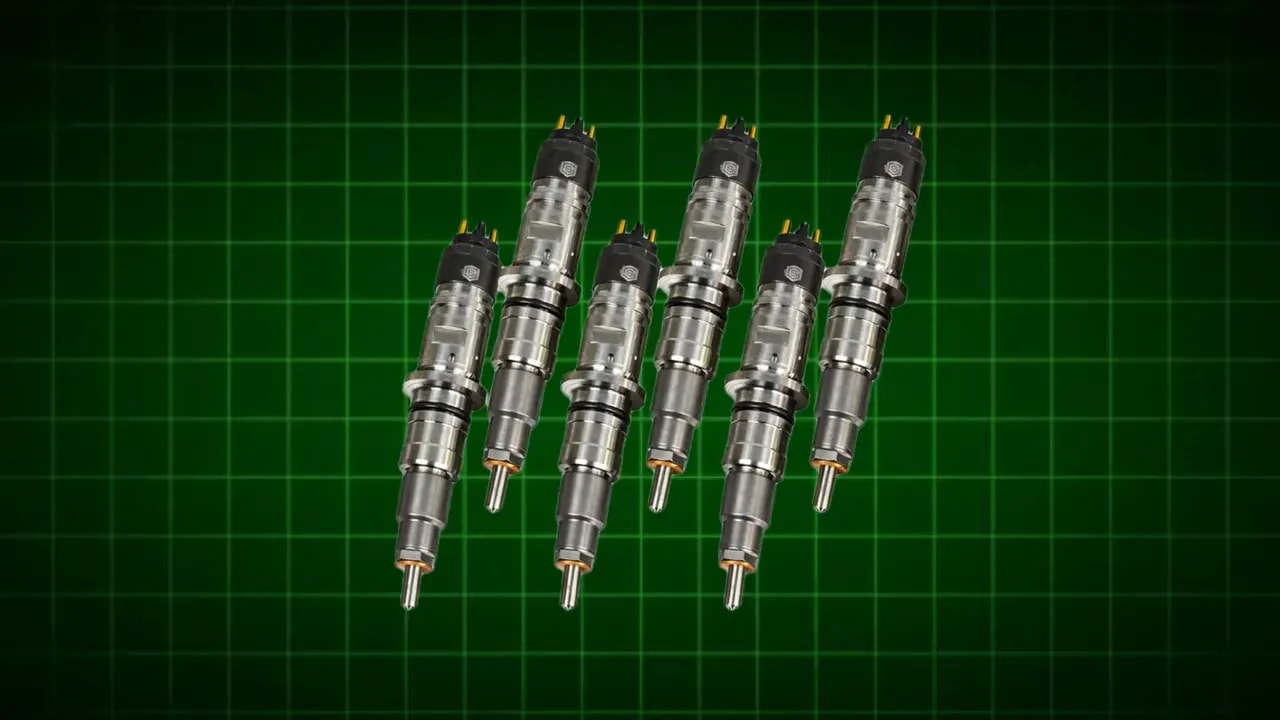
Using an illustrative injector price of $300 to $600 each, replacing a complete set would mean:
| Injector set | Illustrative parts cost |
|---|---|
| Four injectors | $1,200 to $2,400 |
| Six injectors | $1,800 to $3,600 |
| Additional cost for two injectors | $600 to $1,200 |
This example excludes labor and assumes equal prices per injector. The six-injector set costs 50% more in parts, but that does not mean every repair or service costs 50% more.
Five-year costs versus long-term value
An illustrative maintenance premium for a six-cylinder is around $1,000 to $2,000 over five years, with additional fuel spending on top. Broader five-year cost differences can reach several thousand dollars, but estimates are only useful when they clearly distinguish running expenses from the initial purchase premium.
For a 10- or 15-year ownership plan, a durable six-cylinder may offer better value if it avoids major repairs. That remains a possibility, not a predictable saving.
A major repair, such as a turbo replacement, can offset years of lower running costs. However, it would be a mistake to assume that a four-cylinder needs a turbo at a particular mileage or that a six-cylinder will never need one.
Fuel Economy: Is the Four-Cylinder Much Cheaper to Run?
Four-cylinder diesels generally have the fuel-economy advantage. The size of that advantage depends on the car and how it is driven.
An illustrative comparison is 46 MPG for a four-cylinder versus 40 MPG for a six-cylinder in a comparable vehicle. These figures are examples, not a universal average. They also need to use the same gallon standard to be meaningfully compared.
The gap can narrow during steady highway driving, where the larger engine may operate comfortably within its available performance. That does not mean the difference always disappears.
To turn MPG into a useful budget, use comparable economy figures and your expected mileage:
Annual fuel cost = annual miles ÷ MPG × price per gallon.
Calculate both engines separately, then multiply the difference by your intended ownership period. This is more useful than judging an upgrade by an MPG difference alone.
What Does the Six-Cylinder Upgrade Feel Like?
Smoothness and noise
The smoothness advantage is especially clear with an inline-six diesel. Its piston arrangement naturally balances the principal reciprocating forces, reducing inherent vibration without needing balance shafts for that purpose.
An inline four-cylinder has inherent vibration that balance shafts can reduce. They do not give it the same natural balance as an inline six.
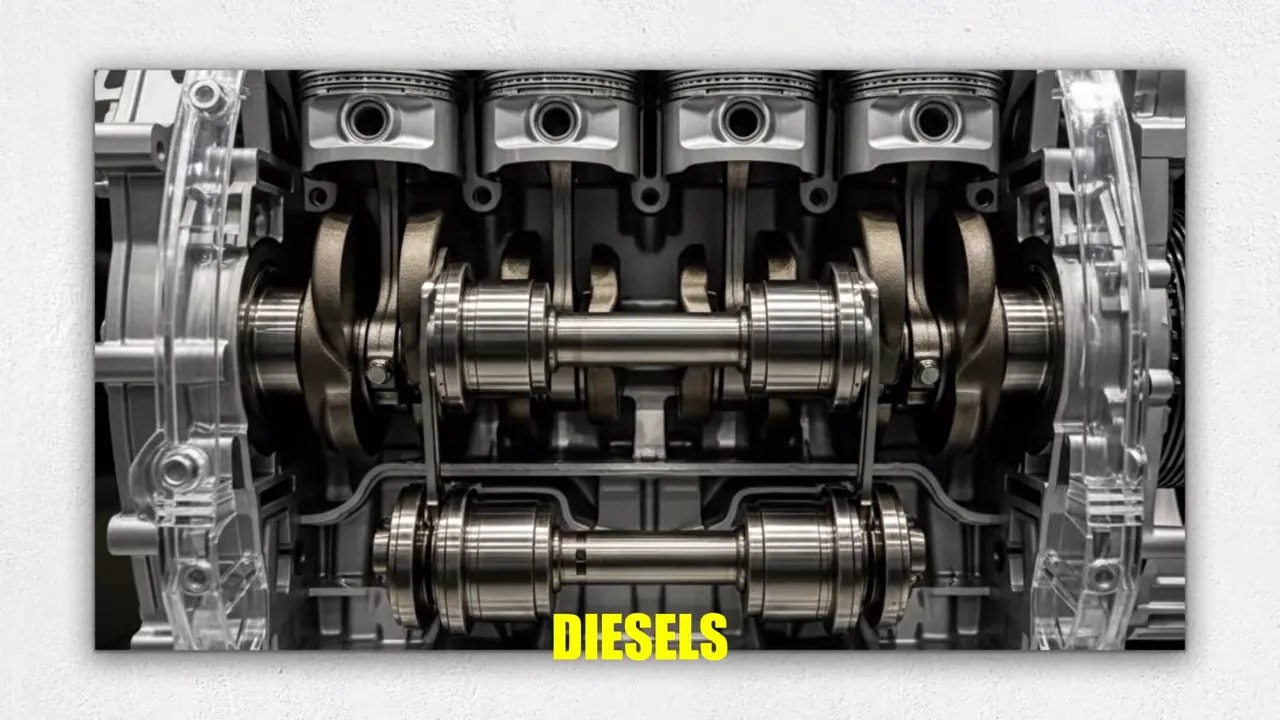
In everyday use, a four-cylinder diesel can feel more vibratory at idle and sound busier, particularly when cold. A six-cylinder typically feels more refined. This distinction may matter more in a large luxury car than in a budget-focused compact.
Do not assume every six-cylinder has the same balance characteristics. Inline-six and V6 describe different layouts. The strongest natural-balance argument applies specifically to the inline six.
Power and torque
A representative 2.0-liter four-cylinder turbo diesel might produce 190 horsepower and 400 Nm of torque. A 3.0-liter six-cylinder alternative might produce 265 horsepower and 620 Nm.
The four-cylinder output is sufficient for most ordinary driving. The six-cylinder offers more reserve for hills, loads and acceleration, often with smoother torque delivery across a broader RPM range.
That can make a larger vehicle feel less strained. Whether it justifies the cost depends on how often you use that extra capability.
Which One Should You Buy?
Choose a four-cylinder diesel when savings come first
- You are buying a smaller car or diesel hatchback.
- You rarely tow or carry heavy loads.
- Lower purchase and maintenance costs are important.
- Fuel economy matters more than maximum refinement.
- Your everyday driving does not require the larger engine’s reserve power.
For a compact car used mainly for ordinary city and suburban driving, the four-cylinder is generally the more economical choice between the two diesel options.
Choose a six-cylinder diesel when capability and refinement matter
- You are buying a large car or SUV.
- You regularly tow or carry heavy loads.
- You spend substantial time on the highway.
- You value smoothness and quieter engine operation.
- You intend to keep the vehicle for many years and reach high mileage.
A large SUV used for towing and kept for 15 years makes a stronger case for a six-cylinder than a lightly loaded hatchback does.
Before paying for the upgrade
- Compare exact engines: Check the engine family, displacement and output.
- Compare condition: For used cars, give maintenance records priority over cylinder count.
- Price the running costs: Include fuel, oil services and engine-specific repairs.
- Test both: Compare cold operation, idle vibration and acceleration on similar routes.
- Pay for benefits you need: Extra torque and refinement have value, but not every driver needs them.
The Bottom Line
Buy the four-cylinder for lower costs; buy the six-cylinder for refinement and demanding use. A six-cylinder may have a durability advantage when its greater capacity reduces relative workload, but it is not automatically more reliable or cheaper over its lifetime.
The best long-term choice is a sound, well-maintained engine that suits the vehicle’s workload and leaves enough room in your budget for proper care.