

Affiliate disclosure: This roundup is reader-supported. When you click through Amazon links, we may earn a referral commission on qualifying purchases.
You rely on power for work, safety and comfort whether you are on the road or preparing for outages at home. A portable solar generator can help with limited EV top-ups, appliance backup and off-grid charging, but only if its battery capacity, continuous output and solar input match your real load.
This guide focuses on higher-output solar generator kits that make the most sense for EV-support use, home backup, RV power and critical appliances. These units are not replacements for a dedicated home EV charger, but they can help you add a small amount of range, run essentials and stay powered during outages.
Quick Verdict
Best overall: Jackery 2000 gives you the strongest mix of capacity, output and solar input for extended outages, RV use and limited EV Level 1 top-ups.
Best home backup: EcoFlow Delta3 is a practical choice if you want high output in a more compact 1,024Wh system.
Best fast-charging option: Jackery 1000 works well for lighter backup needs where portability matters more than long runtime.
Best high-output alternative: STARYLINE 1800 offers strong listed output and capacity for heavier appliance loads, but you should verify current product details before buying.
Top Picks
|
Category |
Product |
Best For |
Amazon |
|---|---|---|---|
|
🏆 Best Overall |
Extended backup, RV power and stronger EV top-up support |
||
|
🎯 Best Home Backup |
Appliances, routers, lights and outage readiness |
||
|
🚀 Best Fast Charging |
Portable backup with enough output for lighter EVSE loads |
||
|
🔋 Best High-Output Alternative |
Heavy appliance loads and off-grid backup |
How We Chose
You need a generator that matches the way you use power, so we focused on usable capacity, continuous output, solar input and practical portability. For EV support, output matters as much as battery size because the generator must safely support the charger’s draw.
We prioritized larger LiFePO4 systems where available because they usually offer longer cycle life and better durability for repeated backup use. We also considered solar panel wattage, recharge speed, AC output, surge capacity, outlet mix and whether each unit makes sense for critical appliances, RV use and limited EV Level 1 charging.
Before You Buy
- For EV charging: Treat these as emergency or convenience top-up tools, not full EV charging systems.
- Check your EVSE: Confirm the charger’s wattage, amperage and plug requirements before connecting it to a portable power station.
- Watch surge loads: Refrigerators, pumps and tools can draw more power at startup than they use while running.
- Verify solar input: A large battery with a small panel may take a long time to recharge in real weather.
- Plan safe setup: Keep the unit ventilated, dry and within the manufacturer’s rated limits.
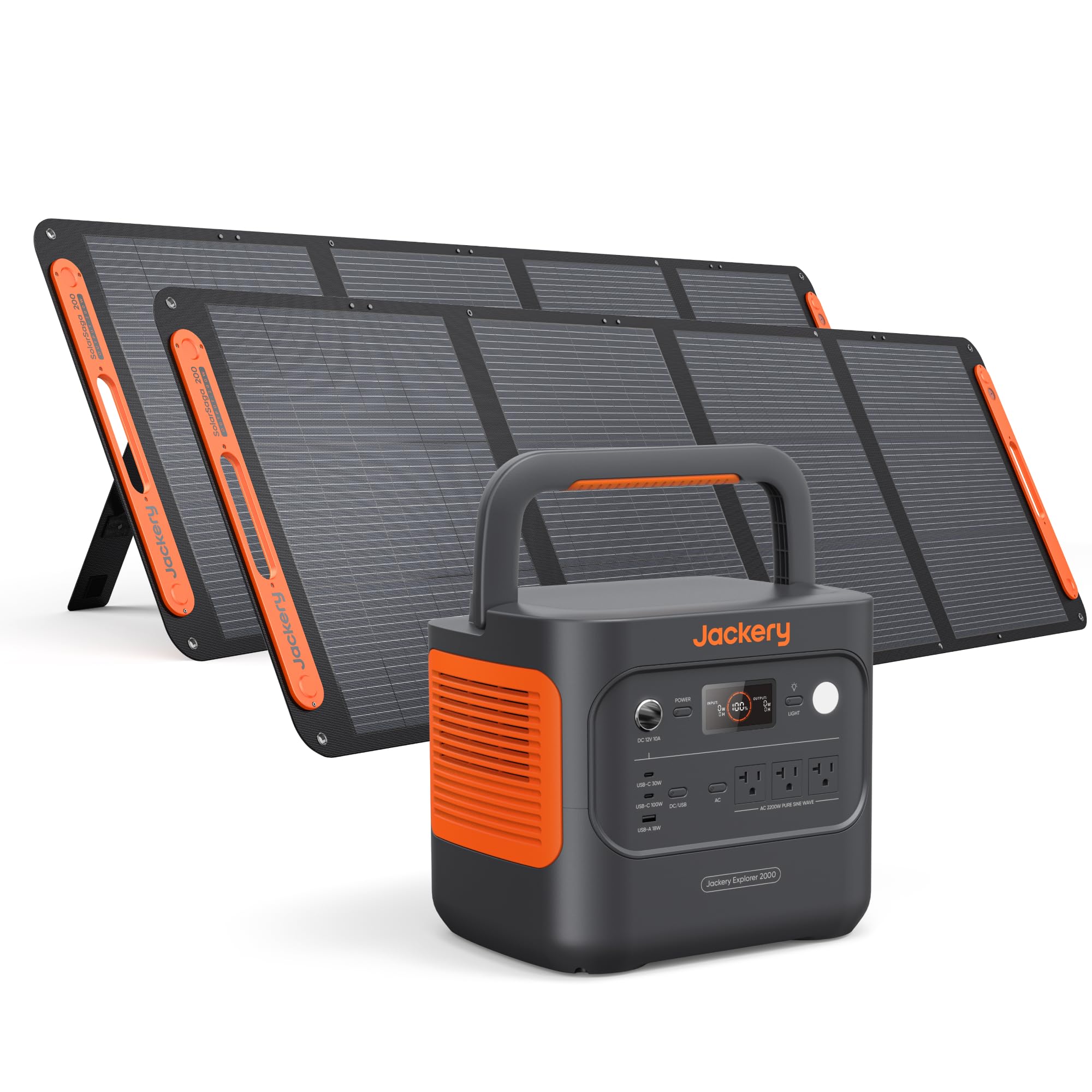
You get the strongest all-around option in this list if your priority is longer runtime and higher output. The 2,042Wh LiFePO4 battery and 2,200W continuous output make this Jackery kit better suited for refrigerators, routers, lights, medical devices, tools and limited Level 1 EV top-ups than smaller portable packs.
The two 200W solar panels give you more useful daytime input, while the USB-C PD 100W port helps with fast laptop charging. It is still a portable power station, not a full EV charging replacement, so expect small range additions rather than a full battery recharge.
What People Say
Users commonly highlight the unit’s real-world capacity and sturdiness, saying it handles heavier loads that smaller packs can’t. Many point to the fast recharge capability and the convenience of the included solar panels, and several mention that the UPS behavior and straightforward controls are useful for protecting electronics during outages.
Overall Sentiment: Positive

Situational Benefits
|
Situation |
How It Helps |
|---|---|
|
Home Power Outages |
Keeps refrigerators, routers, lights and medical devices running long enough to avoid food loss and maintain connectivity until power is restored. |
|
RV And Van Life |
Runs small appliances and charging stations without a gas generator, and recharges from solar while you’re parked. |
|
Limited EV Top-Ups |
Can support small emergency range additions when paired with a compatible low-draw Level 1 EVSE within the unit’s output limit. |
|
Work On The Road |
Delivers steady AC and high-watt USB-C output so you can run laptops, monitors and networking gear for remote work sessions. |
Environmental Benefits
|
Impact |
Benefit |
|---|---|
|
Reduced Generator Use |
Replacing short-run gas generators with solar-charged battery power cuts local emissions and eliminates fuel handling. |
|
Daytime Renewable Charging |
The dual 200W panels let you harvest solar energy during the day, lowering grid dependence for daytime loads. |
|
Durable Battery Chemistry |
LiFePO4 cells provide long cycle life, reducing replacement frequency and the environmental cost of battery turnover. |
Key Benefits
- Large 2,042Wh LiFePO4 battery for extended runtime
- 2,200W continuous AC output with strong surge capability
- Includes 2×200W solar panels for faster solar charging
- 20ms UPS support helps protect sensitive equipment during outages
- USB-C PD 100W for fast laptop and device charging
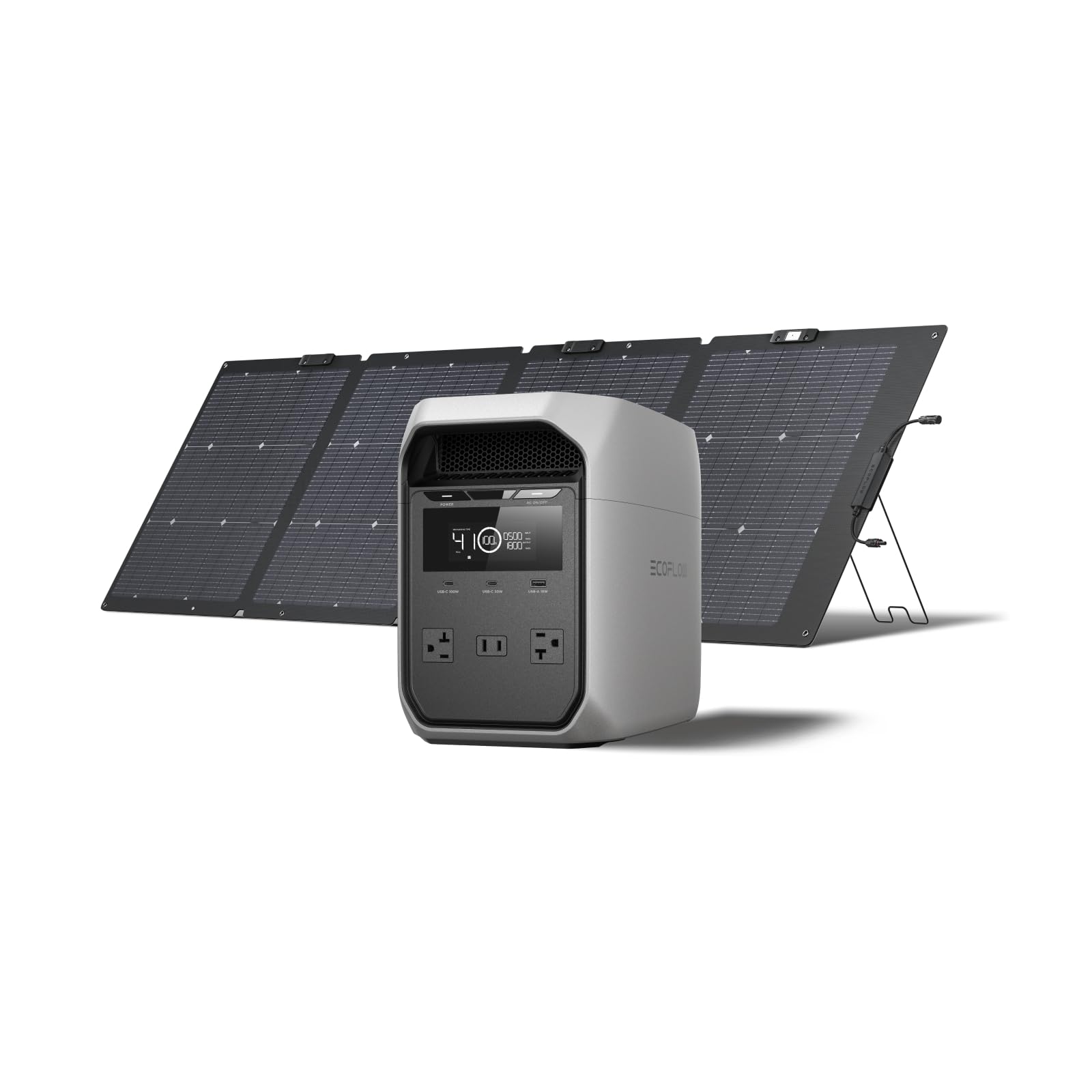
You get a heavy-duty yet portable system built for serious backup and off-grid use. The Delta 3 Classic pairs a 1,024Wh LiFePO4 battery with strong 1,800W continuous output, so it can run refrigerators, medical devices and multiple appliances when the combined load stays within the unit’s rating.
The included 220W solar panel improves daytime recharging, and the fast-charge feature makes it practical to top up between uses. It has less stored energy than the largest unit here, but its output makes it a strong fit for home outage planning and RV use.
What People Say
Most people mention how quickly the unit charges and how well it handles multiple devices at once, calling out the solid balance between battery size and output. Users appreciate the included 220W panel and the convenience of fast recharging, and they often say it provides peace of mind during outages.
Overall Sentiment: Positive

Situational Benefits
|
Situation |
How It Helps |
|---|---|
|
Home Outages |
Keeps refrigerators, routers and lights running long enough to avoid food loss and stay connected while power is restored. |
|
RV Power |
Runs appliances and charging stations in a camper without needing a noisy gas generator, and recharges from solar when parked. |
|
Appliance Backup |
Gives you enough continuous wattage for many household essentials, as long as startup surges stay within the rating. |
|
Limited EV Top-Ups |
Can support short Level 1 EV charging sessions when your EVSE draw matches the generator’s output limits. |
Environmental Benefits
|
Impact |
Benefit |
|---|---|
|
Reduced Generator Use |
Replacing short-run gas generators with solar-charged battery power cuts emissions and noise on-site. |
|
Daytime Renewable Charging |
The 220W panel lets you harvest sunlight during the day so you rely less on grid power for daytime loads. |
|
Durable Battery Chemistry |
LiFePO4 cells last longer over many cycles, which lowers replacement frequency and associated waste. |
Key Benefits
- Large 1,024Wh LiFePO4 battery for extended runtime
- 1,800W continuous AC output with high surge capacity
- Includes 220W solar panel for effective daytime recharging
- 1-hour fast charge reduces downtime between uses
- Designed for home backup, RVs and heavier camping loads
You get a solid blend of capacity and portability with this Jackery kit. The 1,070Wh LiFePO4 battery and 1,500W AC output can handle many essentials, including a fridge, power tools, a CPAP or several devices at once when the load stays within the unit’s rating.
The 1-hour fast charge makes it practical for brief stops on a trip, and the clear front display helps you manage load and input without guessing. For EV use, it is best treated as a limited top-up option for compatible low-draw Level 1 charging, not a primary charging source.
What People Say
You’ll find most users praise the Jackery for being dependable and well built, with the bundled solar panel and fast recharge standing out as real conveniences. People commonly note that it handles camping and short outages with ease and that the unit is straightforward to operate.
Some mention the convenience for medical backup devices and the solid balance of weight versus capacity.
Overall Sentiment: Positive

Situational Benefits
|
Situation |
How It Helps |
|---|---|
|
Weekend Camping |
You can run lights, a small fridge and charge phones while staying off-grid without hauling oversized equipment. |
|
Home Power Outage |
It keeps essentials like your fridge, Wi-Fi and medical devices running long enough to bridge short outages. |
|
RV or Van Life |
You get reliable power for appliances and charging with a compact footprint that fits in storage and recharges from solar when you park. |
|
Light EV Support |
It may support short low-amp Level 1 charging sessions, but runtime and added range will be limited by the 1,070Wh capacity. |
Environmental Benefits
|
Impact |
Benefit |
|---|---|
|
Lower Fuel Generator Use |
You reduce reliance on gas generators by using solar-charged battery power for many routine needs, cutting emissions and noise. |
|
Cleaner On-Trip Power |
Charging from the included solar panel means you’re using renewable energy for devices and small appliances while traveling. |
|
Longer Battery Lifespan |
LiFePO4 chemistry lasts longer, so you replace batteries less often and generate less electronic waste over time. |
Key Benefits
- Large 1,070Wh usable LiFePO4 capacity
- 1,500W continuous AC output with 3 outlets
- 1-hour fast recharge when paired with wall or panel input
- Includes 200W solar panel for off-grid charging
- Compact, easy-to-read front display
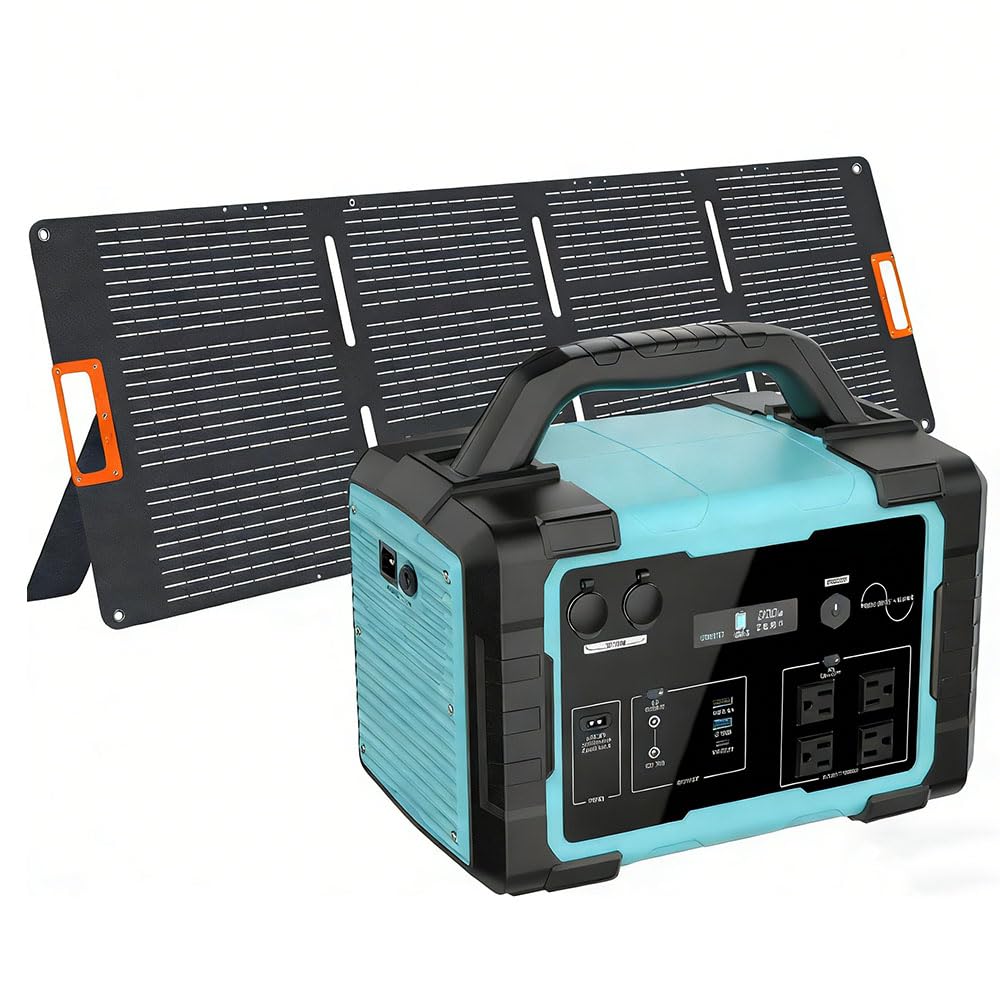
You get a robust portable system that’s built to handle heavier loads without the noise and fuel handling of a gas generator. With a 1,024Wh LiFePO4 battery and 1,800W continuous output, it can support refrigerators, power tools and multiple appliances when your total load stays within the rating.
The 1.5-hour AC fast charge shortens downtime between uses, and the digital display makes monitoring straightforward. Because this is a less familiar brand than some larger power-station names, verify current specifications, warranty coverage and seller details before purchasing.
What People Say
People generally appreciate that it can run larger appliances and provides solid surge capacity when needed, calling out the convenience of the included 200W panel and the faster AC recharge. Many note it feels substantial for RV or home-backup scenarios, while a few mention its size and weight as trade-offs if you plan to move it frequently.
Overall Sentiment: Positive

Situational Benefits
|
Situation |
How It Helps |
|---|---|
|
Home Outages |
Keeps refrigerators, freezers and routers running so you avoid food loss and stay connected during multi-hour outages. |
|
RV And Camping |
Runs small appliances, pumps and entertainment gear, and recharges from solar while you’re parked for longer trips. |
|
Worksites |
Provides steady AC power for tools and charging stations where grid power isn’t available. |
|
Emergency Response |
Offers quiet power for medical devices, communications and lighting during emergency situations. |
Environmental Benefits
|
Impact |
Benefit |
|---|---|
|
Reduced Generator Use |
Using battery and solar power for medium loads lowers the need for gas generators, cutting local emissions and noise. |
|
Daytime Renewable Charging |
The 200W panel harvests sunlight during the day, reducing grid draw for daytime activities. |
|
Longer Battery Life |
LiFePO4 chemistry offers more cycles, meaning fewer replacements and less battery waste over the product lifetime. |
Key Benefits
- 1,024Wh LiFePO4 battery for extended runtime
- 1,800W continuous output with 3,600W surge for heavy loads
- Includes 200W solar panel for effective daytime charging
- 1.5-hour AC fast charge to reduce downtime
- Digital display and enclosed design for simple monitoring
How To Choose The Right Solar Generator For EV Support
Start with the appliance or charger you care about most. If you want to run a refrigerator, check both running wattage and startup surge. If you want to top up an EV, check your Level 1 EVSE draw and compare it with the generator’s continuous output.
Capacity tells you how long the system can run, while output tells you what it can power at one time. For example, a 1,000Wh unit stores about 1kWh before conversion losses, so it may only add a few miles of EV range. A larger 2,000Wh unit gives you more flexibility, but even that remains a top-up solution.
Safety Note
Never exceed the generator’s continuous wattage rating. Use only manufacturer-approved cables, properly rated adapters and compatible EV charging equipment. Do not connect a portable power station to a home electrical panel unless the setup uses code-compliant transfer equipment installed by a qualified professional.
FAQ
Can A Portable Solar Generator Charge An EV?
You can use some portable solar generators to charge an EV, but it’s usually only for small top-ups rather than full charges. The two specs you need to check are usable capacity in watt-hours and continuous output in watts.
Most EV batteries are measured in tens of kilowatt-hours, so a portable pack may only add a few miles of range. Use a compatible Level 1 EVSE rated for the generator’s output, and monitor the load while charging.
What Size Solar Generator Do I Need For EV Top-Ups?
For EV support, look for higher continuous output first, then compare capacity. A unit around 1,000Wh may support short top-ups with a compatible low-draw charger, while a 2,000Wh class unit gives you more useful runtime.
You should not expect portable solar generators to replace a 240V home EV charger. They work best for emergency range, travel flexibility and backup power.
Can These Generators Run A Refrigerator?
Many higher-output units can run a refrigerator, but you need to check both the running wattage and startup surge. Refrigerators often draw more power at startup than they do while running.
Choose a unit with enough surge capacity, then test your setup before relying on it during an outage.
Is LiFePO4 Battery Chemistry Worth It?
LiFePO4 chemistry is worth prioritizing for frequent backup use because it usually offers longer cycle life and better durability than older lithium-ion pack designs. It can also be a good fit for storage-heavy emergency planning.
How Fast Will Solar Panels Recharge These Units?
Solar recharge speed depends on panel wattage, sun angle, weather, shade and the generator’s solar input limit. A 200W or 400W solar setup can be useful, but real-world input often falls below the panel’s maximum rating.
What Should I Check Before Buying?
Check battery capacity, continuous output, surge output, solar input, battery chemistry, warranty coverage, weight and outlet compatibility. For EV support, verify your charger’s wattage and do not assume every portable power station can run every EVSE.
Wrapping Up
You want reliable, portable power that matches your EV charging and backup needs. High-capacity units like the Jackery 2000 and EcoFlow Delta3 give you the runtime and output needed for larger loads, home outage planning and limited Level 1 EV top-ups.
If you want the best overall option, start with the Jackery 2000 because it offers the largest capacity in this narrowed list. If you want strong output in a smaller 1,024Wh setup, compare EcoFlow Delta3 and STARYLINE 1800. If portability and fast recharge matter more than long runtime, Jackery 1000 remains a practical middle-ground pick.
| Product Name | Image | Battery Capacity | Output Wattage | Best Use |
|---|---|---|---|---|
| Jackery Explorer 2000 v2 |
 |
2042Wh | 2200W | Best overall for extended backup and stronger EV top-up support |
| EF ECOFLOW Solar Generator DELTA 3 Classic |
 |
1024Wh | 1800W | Best for home backup and heavy appliance support |
| Jackery Solar Generator 1000 v2 |
 |
1070Wh LiFePO4 | 1500W | Best for fast recharge and lighter backup needs |
| STARYLINE Solar Generator |
 |
1024Wh | 1800W | Best high-output alternative for appliances and off-grid backup |