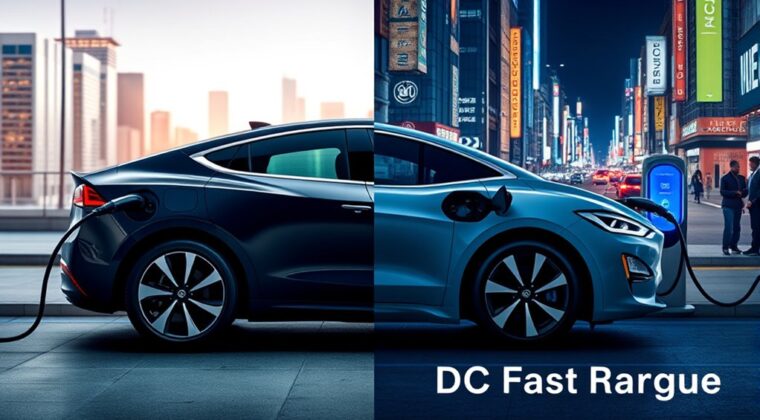
When you compare AC vs DC EV charging, the main difference is where the power conversion happens. AC charging sends alternating current to your car, and the car’s onboard charger converts it to DC for the battery. DC fast charging does that conversion inside the charging station, then sends direct current to the battery for much faster charging.
Quick Answer
AC charging is best for daily home, workplace, and overnight charging because it is simpler, cheaper, and gentler. DC fast charging is best for road trips and quick stops because it bypasses the onboard charger and sends high-power DC energy directly to the battery.
Key Takeaways
- AC charging is the better everyday choice for most EV owners, especially at home overnight.
- DC fast charging is much faster, but it costs more at many public stations and is best saved for travel or urgent top-ups.
- Charging speed depends on the charger, your vehicle’s onboard charger or DC limit, battery temperature, and state of charge.
- Many EVs charge fastest between a low state of charge and about 80%, then slow down to protect the battery.
- Connector type matters, especially as North America shifts from J1772/CCS toward J3400, also known as NACS.
AC vs DC Charging at a Glance
| Best Daily Choice | AC Level 2 charging at home or work |
| Fastest Choice | DC fast charging at a compatible public station |
| Typical Use | AC for overnight charging; DC for road trips, low-battery stops, and short dwell times |
| Battery Impact | AC creates less heat; DC is fine when used as needed, but frequent high-power charging can add more thermal stress |
| Cost Pattern | Home AC usually follows your utility rate; public DC charging often costs more and may include session, parking, or idle fees |
Understanding AC and DC Charging Basics
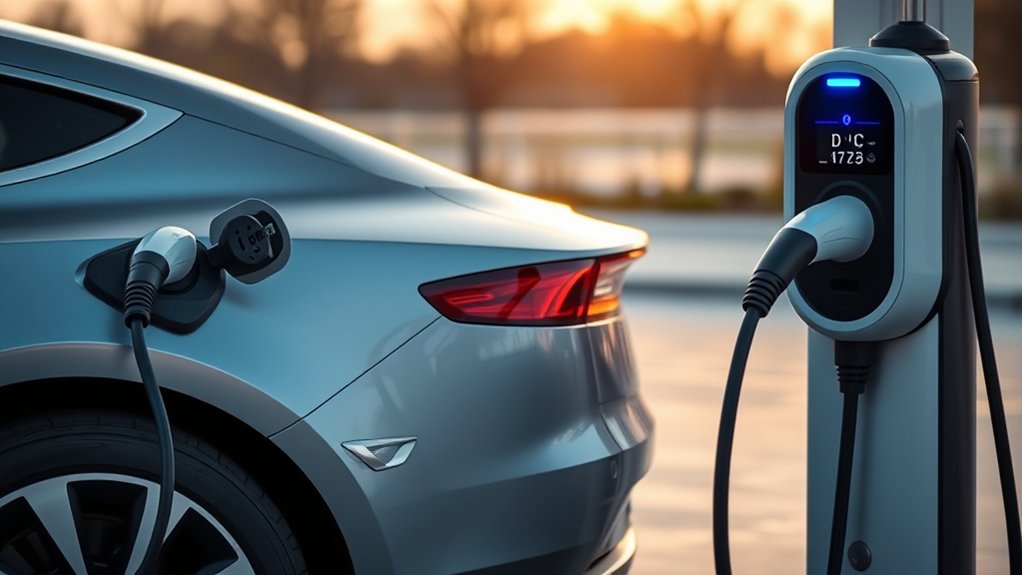
When you plug in an electric vehicle, the battery stores energy as direct current, or DC. The electrical grid and most buildings supply alternating current, or AC. That means every EV charging session needs AC-to-DC conversion somewhere in the process.
With AC charging, the charger sends AC power to your vehicle. Your EV’s onboard charger converts that AC power into DC power before it reaches the battery. This is why AC charging is limited by the onboard charger’s rating, even if the wall unit can supply more power.
With DC fast charging, the charging station converts AC grid power into DC power before it reaches your car. The station then sends DC energy directly to the battery through a compatible DC fast-charge port. Federal EV charging standards define a Direct Current Fast Charger as a charger that delivers DC electricity directly to an EV battery.
The U.S. Department of Energy estimates about 5 miles of range per hour from Level 1 AC, about 25 miles per hour from Level 2 AC, and roughly 100 to 200+ miles in 30 minutes from DC fast charging, depending on the vehicle and equipment.
The simple version: AC charging is slower but convenient. DC charging is faster but more complex and usually more expensive.
How AC Charging Works for Electric Vehicles
AC charging is the method most EV owners use most of the time. It is common at homes, apartments, workplaces, hotels, parking garages, and many public destination chargers.
The U.S. Department of Energy’s Alternative Fuels Data Center breaks AC charging into two main consumer levels:
- Level 1 AC charging: Uses a standard 120-volt outlet. It is slow, but it can work for plug-in hybrids, short commutes, or emergency charging.
- Level 2 AC charging: Uses 240 volts in many homes or 208 volts in many commercial settings. It is the most practical home-charging option for many battery-electric vehicles.
Level 1 charging can take a full day or longer for a large battery if the pack is low. Level 2 charging is much more useful for daily EV ownership because it can usually refill the energy used during a normal commute overnight.
The exact charging speed depends on three limits working together:
- The EVSE or wall charger output: For example, a 32-amp or 48-amp Level 2 unit.
- Your home circuit: The circuit must be properly sized for continuous charging load.
- Your vehicle’s onboard charger: If your car can accept only 7.2 kW AC, a higher-output wall unit will not make it charge faster than that AC limit.
Warning: Do not treat EV charging like a normal appliance load. For Level 2 home charging, use certified equipment and a properly rated circuit installed by a licensed electrician according to local code. Avoid extension cords and improvised adapters unless your vehicle and charger manuals specifically allow them.
Why DC Fast Charging Is Speedier Than AC Charging
DC fast charging is faster because it bypasses the vehicle’s onboard AC charger. Instead of asking the car to convert AC power, the charging station handles the conversion and sends high-power DC energy directly to the battery.
That shortcut matters because onboard chargers are limited in size, cost, cooling, and packaging. A public DC fast charger can use much larger electronics, heavier cables, and active cooling to deliver far more power than a home AC charger.
DC fast charging speed depends on:
- Station power: Public DC chargers may range from lower-power 50 kW units to high-power chargers rated far above 150 kW.
- Vehicle DC limit: Your EV decides how much power it can safely accept.
- Battery temperature: A cold or overheated battery may charge more slowly.
- State of charge: Charging is usually fastest when the battery is low to mid-level and slower as it nears full.
- Shared power: Some sites split available power between multiple vehicles.
For federally funded corridor chargers in the United States, current rules require DC fast-charging ports on designated Alternative Fuel Corridors to support output voltages between 250 and 920 volts DC and provide at least 150 kW per port when serving corridor users. Those rules do not mean every public charger is identical, but they show how public DC charging has moved beyond the older “480V+” shorthand.
Note: A 350 kW charger does not guarantee your EV will receive 350 kW. The car, battery temperature, state of charge, cable rating, and station load all affect the real charging rate.
Which Charging Type Should You Use Day to Day?
The best charging option depends on how you drive, where you park, and how quickly you need range back.
Choose AC charging for normal daily use if you can charge at home, work, or another long-dwell location. It is usually more convenient because the car charges while it is parked anyway. It is also easier on your budget because home charging often uses your residential utility rate or a time-of-use plan.
Choose DC fast charging when speed matters. It is the right tool for road trips, busy travel days, low-battery emergencies, and short stops where waiting several hours is not practical.
A simple routine works for most EV owners:
- Use AC charging for most weekly charging.
- Set a daily charge limit if your vehicle allows it, often around 70% to 90% depending on your driving needs and the owner’s manual.
- Use DC fast charging when you need quick range.
- On road trips, charge to about 80% when possible, then continue driving instead of waiting for the slower final 20%.
Pro Tip: For faster DC sessions, arrive with a lower state of charge and use your EV’s battery preconditioning feature before a fast-charge stop if your model supports it. A warm, prepared battery can often accept power faster than a cold one.
What Do You Need for AC and DC Charging Stations?
AC and DC charging stations have very different equipment needs.
For home AC charging, you typically need a dedicated circuit, a compatible Level 2 EVSE, safe cable routing, and enough electrical-panel capacity. Many homes can support Level 2 charging, but some need panel upgrades, load management, or utility coordination.
For public or commercial DC fast charging, the setup is more demanding. DC fast chargers need high-power electrical service, large power electronics, site planning, network connectivity, payment systems, safety certifications, parking layout, signage, and ongoing maintenance.
For public charging, federal rules for covered projects also require clear price communication, secure payment options, real-time status data, and an average annual charging-port uptime above 97%. This matters because a charger is only useful if it is available, functional, and easy to pay for when drivers arrive.
For homeowners, the practical takeaway is simple: AC Level 2 is usually the right target. DC fast charging is not a normal residential upgrade. It is usually built for public, fleet, highway, and commercial sites.
AC Level 1 vs Level 2 vs DC Fast Charging
Many EV charging articles mix up “AC vs DC” with “Level 1, Level 2, and Level 3.” Here is the clean breakdown:
- Level 1: AC charging through a 120-volt outlet. Slowest, simplest, and best for small daily mileage or backup charging.
- Level 2: AC charging through 208 or 240 volts. Best for home, workplace, hotel, and destination charging.
- DC fast charging: Often called Level 3 in everyday language. Best for rapid public charging on trips or during time-sensitive stops.
The phrase “Level 3” is common in consumer use, but DC fast charging is the clearer term because it tells you the current type and purpose.
Connectors for AC and DC Charging
Connector compatibility is one of the most important real-world differences between AC and DC charging.
In North America, many non-Tesla EVs have used the J1772 connector for AC Level 1 and Level 2 charging, plus a CCS connector for DC fast charging. Tesla vehicles have used the connector now standardized as J3400, commonly known as NACS, for both AC and DC charging.
The U.S. Department of Energy lists CCS, CHAdeMO, and J3400 as DC fast-charging systems. CHAdeMO is now less common on new EVs in North America, while J3400 access is expanding as more automakers adopt the standard.
Before planning a road trip, check three things in your vehicle manual or charging app:
- Your vehicle’s AC connector type.
- Your vehicle’s DC fast-charge connector type.
- Whether an adapter is allowed and what charging power it supports.
How AC and DC Charging Affect Battery Health
Battery health is one reason many owners prefer AC charging for daily use. AC charging usually delivers power more slowly, creates less heat, and gives the battery management system an easier job.
DC fast charging is not “bad” when used properly. EVs are designed for it, and the battery management system controls power to protect the pack. Still, high-power charging can add more heat and stress than slower AC charging, especially in very hot weather, very cold weather, or when repeatedly charging to a high state of charge.
To reduce battery stress, follow these habits:
- Use AC charging for your normal routine when available.
- Use DC fast charging when the speed is worth it.
- Avoid sitting at 100% charge for long periods unless your owner’s manual says your battery chemistry is comfortable with it.
- Use the charge limit settings in your car or app.
- Let the car precondition the battery before DC fast charging when supported.
The right goal is balance. You do not need to avoid DC fast charging completely, but you also do not need to use it for every charge if AC charging fits your life.
Why the 80% Rule Matters
The “80% rule” is a practical charging habit, not a law. It means many EV owners stop DC fast charging around 80% because the battery usually charges much more slowly after that point.
Most EVs charge fastest in the lower and middle part of the battery. As the battery fills, the car reduces charging power to manage heat and protect the cells. That taper makes the last 20% slower and often less useful on a road trip.
For daily driving, many owners set a lower charge limit, such as 70% to 90%, depending on their commute, battery chemistry, and owner’s manual. For long trips, charging to 100% before leaving can make sense if you plan to drive soon after the charge completes.
Real-World Applications of AC and DC Charging
When you consider charging your EV, the choice between AC and DC solutions changes your cost, timing, and convenience.
AC charging works best when your car sits for several hours. DC fast charging works best when you need to keep moving.
Home Charging Solutions
Home charging is usually where AC charging shines. Most owners who can install or access Level 2 charging do not need public fast charging for everyday driving.
- Level 1 AC: Good for plug-in hybrids, low-mileage drivers, or backup use.
- Level 2 AC: Best for most battery-electric vehicles because it can add useful range overnight.
- Smart charging: Many wall chargers and EV apps let you schedule charging during lower-cost utility periods.
- ENERGY STAR equipment: Certified chargers can help you choose efficient, tested equipment for home or commercial use.
Public Charging Infrastructure
Public charging includes both AC and DC options. You might find AC Level 2 chargers at hotels, office buildings, shopping centers, hospitals, campuses, and parking garages. These are useful when your car will sit for an hour or more.
DC fast chargers are more common along highways, travel corridors, charging hubs, and busy retail locations. They are built for shorter stops, higher turnover, and long-distance travel.
Before using a public charger, check the app or station screen for price, connector type, maximum power, real-time status, idle fees, and parking rules.
Fast Charging Stations
Fast charging stations use DC power to reduce downtime. They are especially helpful when you are traveling beyond your normal range or when you cannot charge at home.
However, the best road-trip strategy is not always “charge to full.” Often, it is faster to charge from a lower state of charge to around 70% or 80%, then drive to the next planned stop. This keeps you in the faster part of the charging curve and avoids waiting through a slow taper.
Cost Comparison: AC Charging vs. DC Fast Charging
Cost is one of the biggest differences between AC and DC charging.
Home AC charging usually follows your utility’s electricity rate, plus any taxes, delivery charges, demand charges, or time-of-use rules that apply. According to the U.S. Energy Information Administration, the U.S. average residential electricity price in April 2026 was 18.83 cents per kWh, but state prices varied widely.
Public DC fast charging often costs more because the site owner must pay for high-power equipment, electrical upgrades, networking, maintenance, rent, payment systems, and demand charges. Some stations price by kWh, while others may include idle fees, parking fees, membership discounts, or session fees.
Installation Costs Comparison
AC Level 2 installation is usually far less expensive than DC fast charging because the equipment is smaller and the power demand is lower. A home Level 2 project may involve a wall charger, dedicated circuit, breaker, wiring, permitting, and possible panel upgrades.
DC fast charging is a commercial infrastructure project. It may require utility coordination, transformers, switchgear, concrete work, bollards, networking, payment terminals, lighting, signage, accessibility planning, and ongoing maintenance contracts.
Ongoing Charging Expenses
For most owners, the lowest-cost routine is to charge at home during off-peak hours if the utility offers a time-of-use plan. Workplace charging may also be affordable or free, depending on the employer.
Public DC charging is best treated as a convenience expense. It can save hours when you need speed, but it is not usually the cheapest way to charge every day.
When to Use AC vs DC Charging
Use this simple decision guide:
- You drive a normal commute and park at home: Use AC Level 2.
- You drive very little each day: Level 1 may be enough, especially for a plug-in hybrid.
- You live in an apartment: Look for workplace AC, apartment charging, nearby public Level 2, or occasional DC fast charging.
- You are on a road trip: Use DC fast charging and plan stops around compatible connectors.
- You need the lowest cost: Use home AC charging on the best utility rate available to you.
- You need speed more than savings: Use DC fast charging.
Frequently Asked Questions
Is it better to charge an EV with AC or DC?
AC is better for most daily charging because it is convenient, lower cost, and easier on the battery. DC is better when you need speed, such as on road trips or quick public top-ups. Most EV owners benefit from using AC most of the time and DC when needed.
What is the 80% rule for EV charging?
The 80% rule means you often stop DC fast charging around 80% because charging usually slows after that point. It saves time on road trips and can reduce battery stress. For daily charging, use the charge limit recommended in your owner’s manual or vehicle app.
What kind of charger does the Hyundai Kona Electric use?
Most Hyundai Kona Electric models use AC charging for home and workplace charging and DC fast charging for public quick charging. In North America, many Kona Electric model years use J1772 for AC and CCS for DC fast charging. Always confirm your exact model year, market, and connector type in the owner’s manual before choosing a public station or adapter.
What stops someone from unplugging your electric car?
Many EVs lock the connector during charging, especially during DC fast charging or when the vehicle is locked. Some public stations also tie the session to your account, card, app, or vehicle. Locking behavior varies by EV, connector, and station, so check your vehicle settings if this is a concern.
Can I use DC fast charging every day?
You can use DC fast charging when needed, but it is usually not the best everyday plan if AC charging is available. DC charging often costs more and can create more battery heat. For most owners, AC charging is better for routine use and DC charging is better for travel or urgent range.
Why does DC fast charging slow down near full?
DC fast charging slows near full because the battery management system reduces power to manage heat, voltage, and cell balance. This protects the battery, but it also means the last 20% can take much longer than the middle of the charge.
Conclusion
AC and DC charging both matter, but they solve different problems. AC charging is the smart everyday choice when your EV can sit for several hours at home, work, or a destination charger. DC fast charging is the speed tool you use when you need range quickly, especially on long trips. If you understand charging speed, connector type, cost, battery temperature, and the 80% charging curve, you can build a charging routine that is cheaper, faster, and easier on your EV over time.
Sources
- U.S. Department of Energy Alternative Fuels Data Center — Electric Vehicle Charging Stations — charging levels, estimated range added, connector types, and DC fast charging context.
- eCFR 23 CFR Part 680 — National Electric Vehicle Infrastructure Standards and Requirements — public charging definitions, DCFC requirements, payment, pricing, and uptime standards.
- U.S. Energy Information Administration — Electric Power Monthly Table 5.6.A — current U.S. electricity price context.
- ENERGY STAR — Electric Vehicle Supply Equipment — certified EV charging equipment guidance.
- Degradation-Aware Fast-Charging of Li-Ion Batteries — research context on fast charging, thermal control, and battery degradation risk.
- Quantifying Realizable Flexibility Limits in Fast and Ultra-Fast EV Charging Using Real-World Data — real-world charging-curve context and why charging beyond 80% can add time with limited range benefit.