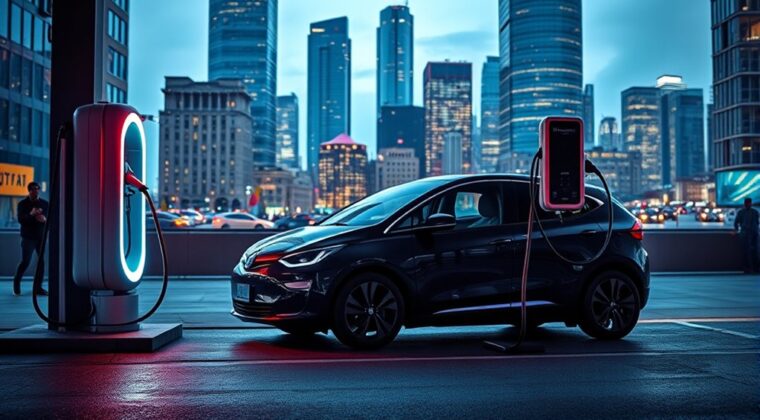
Choosing between Level 2 charging and DC fast charging depends on how long your electric vehicle will be parked, how much range you need, and whether you are charging at home, work, an apartment, a fleet depot, or a highway stop. Level 2 charging is usually the better everyday option because it is slower, less expensive, and easier to install. DC fast charging is best when speed matters most, such as road trips, busy public stations, and fleet turnarounds.
Quick Answer
Use Level 2 charging for daily home, apartment, workplace, and overnight charging. Use DC fast charging when you need a quick stop on a road trip or a high-turnover public charging site. Level 2 is cheaper and gentler for routine use, while DC fast charging is faster but more expensive to install and use.
Key Takeaways
- Level 2 charging uses 208V or 240V AC power and is best when the vehicle can sit for several hours.
- DC fast charging sends DC power directly to the battery and is best for quick stops, highway corridors, and fleets.
- Charging speed depends on the charger, vehicle limit, battery size, state of charge, temperature, and connector type.
- Level 2 usually costs much less to install, while DC fast charging often requires larger electrical service, utility coordination, and higher site costs.
- For battery health and shorter public charging stops, many EV drivers charge from about 20% to 80% for daily use, then charge higher only when they need the range.
What You Need to Know About Level 2 Charging
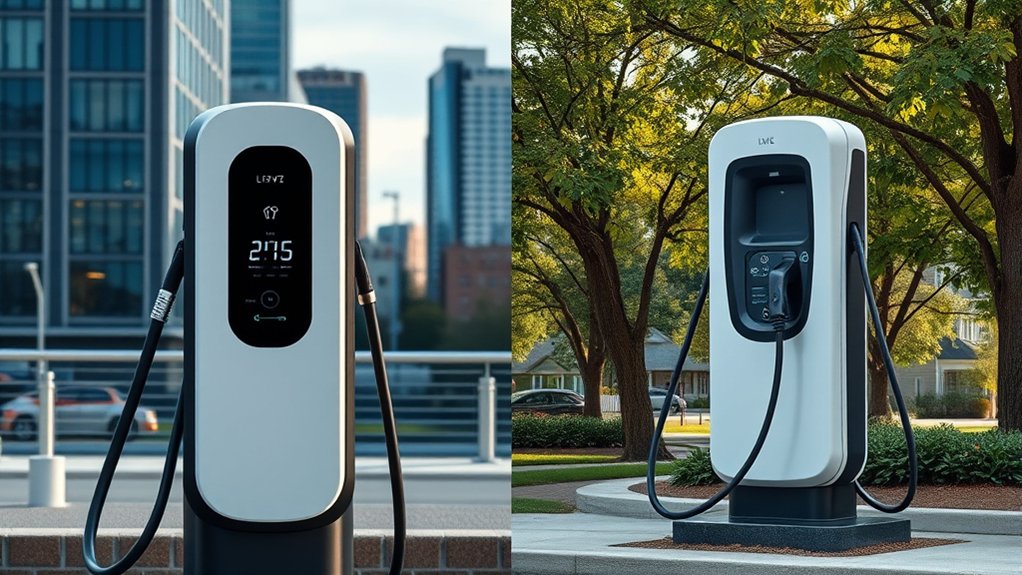
Level 2 charging uses AC power through 240V electrical service in many homes or 208V service in many commercial buildings. According to the U.S. Department of Energy’s Alternative Fuels Data Center, AC Level 2 equipment can range from 2.9 kW to 19.2 kW and is commonly used for home, public, and workplace charging. The DOE estimates Level 2 charging at about 25 miles of range per hour, though real-world range added per hour depends on your vehicle, charger output, weather, and driving efficiency.
Level 2 works best anywhere your EV will sit for a while. That includes your garage, driveway, office parking lot, apartment complex, hotel, school, shopping center, or municipal lot. For many drivers, it is enough to plug in at night and wake up with the range they need for the next day.
Level 2 charging is the practical everyday choice when your EV can stay parked for several hours. DC fast charging is the quick-turnaround choice when time matters more than cost.
Level 2 charging is also easier to plan than DC fast charging. A home installation may be simple if your electrical panel has enough capacity, but it can become more expensive if you need a panel upgrade, a long wire run, trenching, a new circuit, or outdoor equipment. For apartments and workplaces, smart load management can help multiple chargers share limited electrical capacity instead of forcing every charger to draw maximum power at the same time.
Warning: Do not treat EV charger installation as a basic plug-in project unless the equipment is designed for that use. A hardwired or higher-amperage Level 2 charger should be installed by a qualified electrician, permitted when required, and matched to your panel capacity, circuit rating, local code, and outdoor-rating needs.
Demystifying DC Fast Charging
DC fast charging, often called DCFC, is built for speed. Instead of sending AC power to the vehicle’s onboard charger, a DC fast charger converts power inside the station and sends direct current to the battery. This is why DC fast charging can add range much faster than Level 2 charging.
The U.S. Department of Energy notes that DC fast charging equipment can support rapid charging along heavy-traffic corridors and that installed stations can reach power outputs up to 500 kW, although the vehicle and battery state of charge decide how much power the EV can actually accept. AFDC estimates DC fast charging can add about 100 to 200+ miles of range in 30 minutes.
In real life, many EVs charge fastest between a low state of charge and about 80%. After that, the charging rate usually tapers to protect the battery. That is why a 10% to 80% public charging stop may take 20 to 45 minutes in a compatible EV, while charging from 80% to 100% can take much longer than expected.
Here’s what you should know about DC fast charging:
- It is best for road trips, highway corridors, urban fast-charge hubs, ride-share drivers, and fleets.
- It usually costs more per session than home Level 2 charging.
- It requires stronger electrical service and more expensive equipment than Level 2 charging.
- Not every EV can use every DC fast charger, so connector compatibility matters.
- Charging speed drops when the battery is cold, nearly full, very hot, or limited by the vehicle’s charge curve.
Level 2 vs. DC Fast Charging: Key Differences
Level 2 and DC fast charging both refill an EV battery, but they solve different problems. Level 2 is about convenience during long parking sessions. DC fast charging is about short stops when you need range quickly.
| Category | Level 2 Charging | DC Fast Charging |
| Power type | AC power through the vehicle’s onboard charger | DC power sent directly to the battery |
| Typical use | Home, apartment, workplace, hotel, school, long-dwell parking | Highway stops, public fast-charge hubs, urgent charging, fleets |
| Speed | Often adds about 10 to 25 miles of range per hour, sometimes more with higher-output equipment and efficient EVs | Often adds about 100 to 200+ miles in 30 minutes when the EV and charger support it |
| Best charging window | Several hours or overnight | Short stops, often from a low charge to about 80% |
| Installation cost | Lower, but varies by panel capacity, distance, labor, permits, and charger type | Much higher, often requiring utility coordination and larger electrical infrastructure |
Charging Speed Comparison
Level 2 charging speed depends on the charger’s amperage, the EV’s onboard charger limit, and the vehicle’s efficiency. A small plug-in hybrid may finish in a couple of hours, while a large battery electric vehicle may need several hours or overnight to refill from a low state of charge.
DC fast charging speed depends on the charger’s power rating, the EV’s maximum DC acceptance rate, the battery temperature, and the current state of charge. A charger labeled 350 kW or 500 kW does not guarantee your EV will charge at that rate. The car must be designed to accept that much power, and even then it will usually hold peak speed only for part of the session.
Note: Charging from 80% to 100% is usually slower than charging from 20% to 80%. On a road trip, it is often faster to stop twice for shorter sessions than to wait at one charger until the battery is completely full.
Cost and Installation Differences
Cost is one of the biggest differences between Level 2 and DC fast charging. AFDC cost guidance lists residential Level 2 charger equipment at roughly $380 to $690, with installation costs varying by site. Public Level 2 equipment is much higher, and public DC fast charging equipment can cost tens of thousands of dollars per connector before installation.
For commercial sites, the charger itself is only part of the budget. A site host may also need trenching, conduit, concrete work, utility upgrades, transformers, network fees, payment systems, lighting, signage, ADA access planning, parking enforcement, and maintenance. DC fast charging is usually more complex because it draws much more power in a shorter time.
Pro Tip: Match charger speed to parking time. If cars sit for six to ten hours, Level 2 is usually the smarter investment. If cars need to leave in 20 to 45 minutes, DC fast charging may justify the higher cost.
When to Opt for Level 2 Charging Solutions
Choose Level 2 charging when the EV will be parked long enough for slower charging to work. It is usually the right choice for daily driving because most vehicles spend far more time parked than moving.
Level 2 is the better fit for:
- Home charging: You can plug in overnight and start each morning with enough range for your routine.
- Apartment and condo parking: Shared Level 2 chargers can support residents who do not have private garages.
- Workplace charging: Employees can add range during the workday without needing rapid charging.
- Hotels and destination charging: Guests can charge while they sleep, eat, shop, or attend events.
- Lower-cost fleet charging: Vehicles that return to a depot overnight may not need DC fast charging.
Level 2 charging can also support smart charging programs. A smart charger may delay charging until off-peak hours, reduce charging speed when the building is using more power, or help a property manager share power among several vehicles. Bidirectional charging, such as vehicle-to-home or vehicle-to-grid, is possible only when the EV, charger, utility rules, installation, and local code all support it.
Best Scenarios for Using DC Fast Charging
Use DC fast charging when dwell time is short and quick range matters more than low cost. It is the closest EV equivalent to a quick fuel stop, but it still requires planning because chargers, vehicles, prices, and connector types vary.
DC fast charging works best for road trips, highway corridors, ride-share drivers, delivery fleets, emergency top-ups, and busy commercial sites where many drivers need to charge and leave quickly.
| Scenario | Benefit | Best For |
| Long trips | Adds range quickly with less downtime | Highway travel and vacation routes |
| High-traffic areas | Supports quick vehicle turnover | Retail centers, travel plazas, urban charging hubs |
| Fleet operations | Keeps vehicles available between routes | Delivery, logistics, ride-share, municipal fleets |
| Urgent situations | Adds usable range when the battery is low | Unexpected detours or missed home charging |
| Public charging networks | Makes charging practical for drivers without home charging | Dense urban areas and transportation corridors |
Connector Compatibility Before You Plug In
Charging speed is only useful if your EV can connect to the charger. In North America, Level 2 charging often uses the J1772 connector, while Tesla-style J3400/NACS connectors are also used for Tesla home and destination charging. For DC fast charging, common connector types include CCS, CHAdeMO, and J3400/NACS. The DOE notes that DC fast charging systems vary by the charge port on the vehicle, so you should check your EV manual or in-car navigation before planning a trip.
Adapters can help in some cases, but they do not make every charger compatible with every EV or guarantee full charging speed. A route planner that filters by connector type, charger power, and live availability can prevent wasted stops.
Cost Breakdown for Level 2 and DC Fast Charging Solutions
When evaluating charging solutions, separate the cost of equipment from the cost of installation and operation. A charger that looks affordable on paper can become expensive if the site needs panel work, utility upgrades, trenching, networking, or ongoing maintenance.
- Residential Level 2 equipment: AFDC cites a typical range of about $380 to $690 for residential Level 2 charger hardware, before site-specific installation costs.
- Residential Level 2 installation: Installation varies based on wiring distance, panel capacity, permits, labor rates, and whether the charger is hardwired or plug-in.
- Public Level 2 equipment: AFDC cites public charger costs at about $3,500 per connector for Level 2.
- Public DC fast charging equipment: AFDC cites about $38,000 to $90,000 per connector for DC fast charging equipment, with higher costs depending on power output.
- DC fast charging installation: AFDC cites installation costs that can range from about $20,000 to $60,000 per connector, depending on charger power and site design.
- Operating costs: DC fast charging sites may face demand charges, network fees, maintenance costs, and higher electricity service needs.
For a homeowner, Level 2 usually wins on cost and convenience. For a business, the right answer depends on customer dwell time. A restaurant, office, hotel, or apartment building may get more value from Level 2. A travel plaza, highway stop, delivery depot, or ride-share hub may need DC fast charging despite the higher cost.
Battery Health and the 20/80 Rule
The 20/80 rule is a simple charging habit many EV drivers use: avoid letting the battery sit very low, and avoid charging to 100% every day unless you need the range. For daily driving, charging to about 80% can reduce time spent plugged in and may help reduce battery stress. For road trips, charging to 100% before you leave can make sense if your owner’s manual allows it and you need the extra range.
This rule is not the same for every EV. Some battery chemistries and manufacturers recommend different targets. Always follow your owner’s manual, especially for long-term storage, cold weather, and daily charge limits.
Future Trends in EV Charging Technologies
EV charging is moving toward faster public charging, smarter Level 2 charging, and broader connector access. For everyday drivers, the most useful trends are not only higher power numbers. Reliability, better payment systems, accurate station availability, and easier route planning matter just as much.
Expect more Level 2 chargers to include smart features such as scheduling, load sharing, utility demand-response support, and remote monitoring. These features help homes, apartments, and workplaces add charging without always requiring the largest possible electrical upgrade.
DC fast charging is also evolving. Higher-power chargers are appearing in more locations, and connector access is changing as more automakers adopt J3400/NACS. Still, most drivers should plan around the charging speed their own EV can accept, not only the number printed on the charging cabinet.
Emerging technologies such as bidirectional charging, wireless charging, and megawatt-scale charging may become more important over time. Today, bidirectional charging is still dependent on compatible vehicles, chargers, utility programs, and local rules, while megawatt charging is mainly aimed at medium- and heavy-duty electric trucks rather than typical passenger EVs.
Frequently Asked Questions
Which is better, Level 2 or DC fast charging?
Level 2 is better for daily charging at home, work, apartments, hotels, and long-dwell parking. DC fast charging is better for road trips, urgent top-ups, and high-turnover public sites. Most EV owners benefit from using Level 2 most of the time and DC fast charging when they need speed.
What is the 20/80 rule for EV charging?
The 20/80 rule means keeping your EV battery roughly between 20% and 80% for normal daily use. It can reduce time spent charging and may help limit battery stress. You can still charge above 80% when you need extra range for a trip, but check your owner’s manual for your vehicle’s recommended charge limit.
What stops someone from unplugging your electric car?
Many EVs lock the connector while the vehicle is locked or actively charging, but the exact behavior depends on the vehicle, charger, and connector. Public stations may also use app sessions, cable monitoring, cameras, parking rules, or idle-fee policies. Check your EV settings because some vehicles let you change when the plug locks or releases.
What are the three biggest mistakes when charging an EV?
The three biggest mistakes are relying only on DC fast charging when Level 2 would cover daily needs, charging to 100% every day when your vehicle does not require it, and installing a Level 2 charger without checking electrical capacity, permits, circuit rating, and code requirements. Poor route planning is another common mistake on long trips.
Can you install a DC fast charger at home?
For almost all homeowners, DC fast charging is not practical at home because it requires expensive equipment, high-power electrical service, utility coordination, and specialized installation. A properly installed Level 2 charger is the better home solution for most EV owners.
Does frequent DC fast charging hurt an EV battery?
Occasional DC fast charging is normal and expected for modern EVs. Frequent high-power charging can add more heat and stress than slower Level 2 charging, especially in extreme temperatures or at high states of charge. For routine daily use, Level 2 charging is usually the better habit unless your vehicle manufacturer says otherwise.
Conclusion
Level 2 and DC fast charging are not rivals so much as tools for different jobs. Use Level 2 charging when your EV can sit for hours and you want lower cost, easier installation, and everyday convenience. Use DC fast charging when you need range quickly during a trip, a busy workday, or a fleet turnaround. The best charging plan usually combines both: Level 2 for routine charging and DC fast charging for the moments when speed is worth the extra cost.
Sources
- U.S. Department of Energy Alternative Fuels Data Center: Electric Vehicle Charging Stations — charging levels, speeds, connector types, DC fast charging power, and charging-rate caveats.
- U.S. Department of Energy Alternative Fuels Data Center: Charging Electric Vehicles at Home — home charging, outdoor-rated equipment, permits, code compliance, and electrician guidance.
- U.S. Department of Energy Alternative Fuels Data Center: Procurement and Installation for EV Charging Infrastructure — equipment costs, installation costs, planning checklist, and site-host considerations.
- ENERGY STAR: Electric Vehicle Chargers — charger buying guidance, safety-certified equipment, standby energy savings, and Level 2 charging guidance.