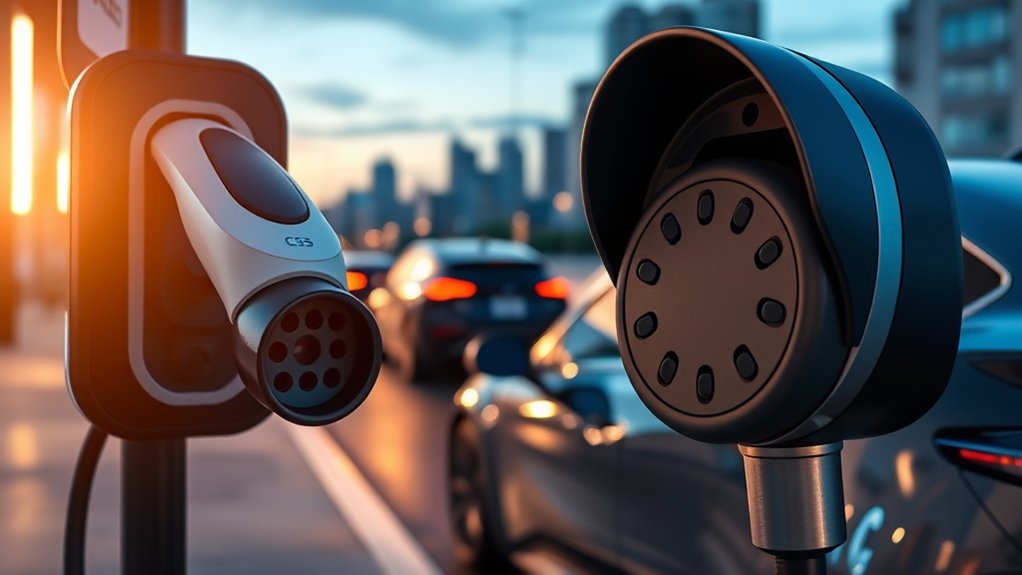
CCS and CHAdeMO are two DC fast-charging standards for electric vehicles, but they are no longer equal choices in most markets. CCS is the broader standard for newer EVs in Europe and many non-Tesla vehicles in North America, while CHAdeMO is now mainly important for older Nissan Leaf models, some Mitsubishi plug-in hybrids, and Japan-market charging infrastructure.
Quick Answer
CCS is usually the better long-term charging standard for most EV buyers because it has wider support on newer vehicles and fast-charging networks. CHAdeMO still matters for legacy EVs and has a strong history with bidirectional charging, but outside Japan its public support is shrinking.
Key Takeaways
- CCS is more future-proof for most newer EVs, especially in Europe and many non-Tesla markets.
- CHAdeMO is now mostly a legacy connector outside Japan, but it still supports many Nissan Leaf models and some Mitsubishi Outlander PHEV models.
- Charging speed depends on the car, charger, battery temperature, and state of charge, not just the connector’s maximum rating.
- CHAdeMO has the longer real-world V2G history, while newer CCS-based systems can support bidirectional charging through ISO 15118-20 when the full system is compatible.
- North America is different from Europe because many automakers are moving toward SAE J3400, also called NACS.
What Are CHAdeMO and CCS Charging Standards?
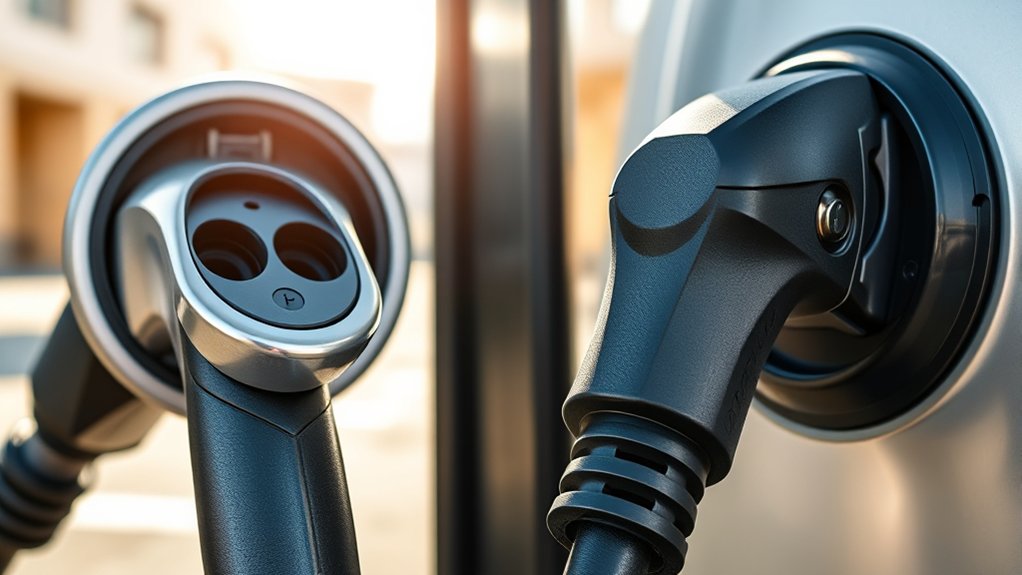
CHAdeMO and CCS are standards used for DC fast charging, which sends direct current to the EV battery so the car can charge faster than it would on a normal AC home charger.
CHAdeMO was developed in Japan and became common on early fast-charging EVs, especially the Nissan Leaf and Mitsubishi models. The CHAdeMO Association helped standardize the system, and CHAdeMO became known for early support of vehicle-to-grid and vehicle-to-home charging.
CCS, short for Combined Charging System, combines AC and DC charging in one vehicle inlet. In North America, CCS1 builds on the J1772-style AC connector. In Europe and many other regions, CCS2 builds on the Type 2 AC connector. The main advantage is convenience: one inlet can handle slower AC charging and high-power DC fast charging.
Note: The connector standard does not guarantee a specific charging speed. Your car’s battery system sets its own charging limit, and that limit often matters more than the plug on the charger.
CHAdeMO vs CCS Comparison Table
| Feature | CHAdeMO | CCS |
| Main use | DC fast charging only | AC and DC charging through a combined inlet |
| Common regions | Japan and legacy networks in North America and Europe | Europe, many global markets, and many non-Tesla EVs in North America |
| Typical vehicle examples | Older Nissan Leaf models, Mitsubishi Outlander PHEV, Japan-market models | Ford Mustang Mach-E, Volkswagen ID.4, Hyundai IONIQ 5, Kia EV6, Chevrolet Bolt EV, Nissan Ariya in North America |
| High-power potential | CHAdeMO 2.0 supports up to 400 kW; ChaoJi targets much higher power | Many public chargers are 50–350 kW; newer hardware can reach 400 kW or more |
| Bidirectional charging | Longer real-world V2G and V2H history | Possible through newer ISO 15118-20 systems, but support depends on vehicle, charger, and utility setup |
| Future outlook | Useful for existing vehicles but declining outside Japan | Strong in Europe and many global markets; North America is shifting toward SAE J3400/NACS |
How Do CHAdeMO and CCS Compare in Speed and Power?
On paper, both standards can support fast DC charging, but the real-world answer is more practical: the vehicle usually decides the speed. A 350 kW charger will not make a 100 kW-limited EV charge at 350 kW.
- CHAdeMO: Early CHAdeMO charging was often 50 kW. Later versions increased the ceiling, with CHAdeMO 2.0 supporting up to 400 kW.
- CCS: CCS fast chargers commonly range from 50 kW to 350 kW. Some newer high-power systems go above that, but many passenger EVs still peak below the charger’s full rating.
- ChaoJi: Also known as CHAdeMO 3.0, ChaoJi is a newer high-power direction developed with China’s charging standard work and is designed for much higher future power levels.
Your actual charging session depends on battery voltage, battery size, state of charge, outside temperature, charger condition, and whether the charger is sharing power with another stall. Most EVs charge fastest when the battery is warm and between roughly 10% and 50% state of charge. Charging usually slows as the battery fills.
A connector’s maximum rating is not a promise. For trip planning, your EV’s peak DC charging rate and charging curve are more useful than the standard’s theoretical limit.
Connector Design: CHAdeMO vs. CCS
The biggest design difference is simple: CHAdeMO uses a separate DC fast-charging connector, while CCS combines AC and DC charging into one vehicle inlet.
CHAdeMO plugs are larger and used only for DC fast charging. A CHAdeMO-equipped EV usually has a separate AC charging port beside it or nearby. This is why older Nissan Leaf models often have one port for Level 1/Level 2 AC charging and a separate CHAdeMO port for DC fast charging.
CCS adds two large DC pins to an existing AC connector design. In North America, CCS1 extends the J1772 connector. In Europe, CCS2 extends the Type 2 connector. This keeps the vehicle-side charging area simpler because one inlet can handle both daily AC charging and road-trip DC fast charging.
Pro Tip: When comparing EVs, look at the charging port on the exact model year and market version. The same model name can use different connectors in different regions.
Which EVs Support CHAdeMO and CCS?
Vehicle support depends on model year and region. This is especially important if you are buying a used EV, importing a vehicle, or comparing North American and European reviews.
Popular EV Models
CHAdeMO examples include many Nissan Leaf models, Mitsubishi i-MiEV, and Mitsubishi Outlander PHEV models that include DC fast charging. These vehicles can still be good used EVs if your local charging network has working CHAdeMO plugs, but you should check station availability before buying.
CCS examples include the Ford Mustang Mach-E, Volkswagen ID.4, Hyundai IONIQ 5, Kia EV6, Chevrolet Bolt EV, BMW i4, Mercedes-Benz EQ models, Audi e-tron models, and many other newer non-Tesla EVs. In Europe, Tesla also moved to CCS2 for many vehicles and Superchargers.
Nissan Ariya note: The Ariya should not be treated as a simple CHAdeMO example for North American or European buyers. In North America, the Ariya uses CCS and may require a specific adapter setup for Tesla Supercharger access where supported.
Regional Availability
In Europe, CCS2 is the main public DC fast-charging connector for modern EVs. European rules and infrastructure planning strongly favor CCS Combo 2 for interoperability, though some older sites may still include CHAdeMO.
In Japan, CHAdeMO remains much more relevant than it is in North America or Europe. Japan-market vehicles and public infrastructure may still support CHAdeMO more widely.
In North America, the situation is changing. CCS1 became the main non-Tesla fast-charging connector, but many automakers are moving toward SAE J3400, often called NACS, for future vehicles and adapter access to Tesla-style charging.
Charging Network Compatibility
Before you buy an EV, check the charging networks you will actually use. A charging standard is only useful if nearby stations have that connector, the station works reliably, and the car can start a session without payment or software problems.
- For a used Nissan Leaf: Confirm nearby CHAdeMO availability before purchase. Do not assume every fast-charging station still has a CHAdeMO cable.
- For a new CCS EV: Check the car’s peak DC charging rate and whether your preferred networks support Plug & Charge, app payment, or credit-card payment.
- For a North American EV with NACS access: Confirm whether the vehicle has a built-in SAE J3400/NACS port or needs an approved adapter.
CCS, CHAdeMO, and NACS in North America
A modern CHAdeMO vs CCS comparison needs a third connector in the discussion: NACS, now standardized by SAE as J3400. Tesla originally used this connector in North America, and many automakers announced plans to adopt it or provide adapter access.
This does not mean CCS is useless. Many current EVs on the road still use CCS1, and many public fast chargers still provide CCS. It does mean that North American shoppers should think in terms of near-term compatibility and long-term access.
- Buying a used CHAdeMO EV: Best if you charge mostly at home and only occasionally need public fast charging.
- Buying a CCS EV: Still practical, especially if the manufacturer offers approved NACS adapter access.
- Buying a future North American EV: Expect SAE J3400/NACS to matter more, especially for road-trip fast charging.
Warning: Use only adapters approved by your vehicle maker, charging network, or adapter manufacturer for that exact use. High-power DC fast charging is not the place to force a connector, use a damaged adapter, or ignore a vehicle warning.
Where Are CHAdeMO and CCS Most Widely Adopted?
Adoption varies by region, and that regional pattern matters more than the technical history of the standards.
Global Adoption Trends
CCS is strongest in Europe and many markets that follow European charging standards. CCS also became the default fast-charging connector for many non-Tesla EVs in North America before the NACS transition gained momentum.
CHAdeMO is strongest in Japan and among older Japanese EVs. It is still useful for many existing vehicles, but fewer new EVs outside Japan are launching with CHAdeMO ports.
Regional Popularity Comparison
If you live in Europe, CCS2 is the practical answer for most newer EVs. If you live in Japan, CHAdeMO may still be more visible than it is elsewhere. If you live in North America, CCS1, CHAdeMO, and NACS can all appear on public charging maps, but their usefulness depends on your vehicle and the network.
For most buyers outside Japan, CHAdeMO is now best viewed as a legacy-support standard. It can still work well for a used EV if local charging coverage is strong, but it is not the safer long-term bet for a new vehicle.
Bidirectional Charging: CHAdeMO’s Unique Advantage
CHAdeMO’s strongest technical legacy is bidirectional charging. CHAdeMO supported vehicle-to-grid and vehicle-to-home use earlier than most competing passenger-car fast-charging systems, which is why many early V2G projects used CHAdeMO-equipped vehicles such as the Nissan Leaf.
Bidirectional charging can allow an EV to send power back to a home, building, or grid program. This can support backup power, reduce peak energy demand, and help balance renewable energy. However, it requires more than a compatible plug. You need a compatible vehicle, bidirectional charger, software, utility approval, and proper electrical installation.
CCS is no longer fairly described as unable to support bidirectional charging. Newer CCS-based systems can use ISO 15118-20 for bidirectional power transfer, but real-world rollout depends on automaker and charger support. So the practical difference is this: CHAdeMO has a longer deployed V2G history, while CCS has newer standards support that is still rolling out unevenly.
Cost Implications for Charging Infrastructure
Charging infrastructure cost depends on much more than the connector. A public fast-charging site may need power cabinets, utility upgrades, transformers, trenching, permits, networking, payment hardware, cooling systems, maintenance contracts, and parking-lot work.
CHAdeMO hardware may be less expensive in some legacy or lower-power setups, but falling vehicle demand can make new CHAdeMO deployment harder to justify outside Japan. CCS and NACS-ready sites may cost more up front when they support higher power, but they match a larger share of newer vehicles in many markets.
For site owners, the decision is not just “which plug is cheaper?” The better question is: which connector will serve enough vehicles over the next five to ten years to justify the installation and maintenance cost?
Adapter and Safety Notes for EV Owners
Adapters can help during the transition between charging standards, but they are not magic. An adapter must match the charging direction, communication protocol, vehicle software, and network rules. A physical fit alone does not mean the session will work.
- CCS to NACS adapters: These can help some CCS-equipped vehicles use Tesla-style fast chargers where the automaker and network allow it.
- NACS to CCS adapters: These can let some NACS-equipped vehicles use CCS fast chargers, depending on vehicle and adapter support.
- CHAdeMO adapters: These are more limited, often expensive, and not a simple solution for most modern EVs.
- AC adapters are different: Level 1 and Level 2 adapters are not the same as DC fast-charging adapters.
Never rely on a random third-party adapter for high-power DC charging without confirming it is rated and approved for your vehicle and charging network.
Future Outlook: What’s Next for CHAdeMO and CCS?
The future is split by region. CCS2 remains central in Europe and many global markets. North America is moving toward SAE J3400/NACS for many new vehicles, while CCS1 will remain important for existing vehicles and public chargers for years. CHAdeMO will keep serving existing EVs and Japan-market infrastructure, but its role outside Japan is shrinking.
CHAdeMO’s next-generation path is ChaoJi, which aims for much higher power and better harmonization with future charging systems. That matters for the standards world, but it does not mean a current CHAdeMO-equipped used EV will gain those speeds. Existing vehicles remain limited by their onboard hardware and battery systems.
For most shoppers, the practical advice is clear: choose the EV that has strong charging support where you live and travel. If you are buying new outside Japan, CCS or SAE J3400/NACS compatibility is usually more important than CHAdeMO. If you are buying used, especially a Nissan Leaf, CHAdeMO can still work if your local charging map supports it.
Frequently Asked Questions
What is the main technical difference between CCS and CHAdeMO charging standards?
The main difference is connector design and system approach. CHAdeMO is a separate DC fast-charging connector, while CCS combines AC charging and DC fast charging in one vehicle inlet by adding high-current DC pins to an AC connector design.
Is CHAdeMO being phased out?
CHAdeMO is being phased down in many markets outside Japan, especially for new passenger EVs. It is still useful for existing vehicles such as many Nissan Leaf models and some Mitsubishi Outlander PHEV models, but new public fast-charging investment increasingly favors CCS, NACS, or regional standards.
What stops someone from unplugging your electric car?
Most EVs and charging stations use a connector lock during active charging, especially for DC fast charging. The lock may release when charging stops, when the car is unlocked, or when the session ends through the app, screen, or payment system. Exact behavior depends on the vehicle and charger.
What charges faster, 1.0 A or 2.4 A?
At the same voltage and with the same device limits, 2.4 A charges faster than 1.0 A because it supplies more current. This question usually applies to small electronics, not EV fast charging. For EVs, charging power is measured in kilowatts, and voltage, current, battery limits, and charger limits all matter.
Can a CCS car use a CHAdeMO charger?
Usually no. CCS and CHAdeMO use different connectors and communication methods. Some specialty adapters exist for limited cases, but they are not a normal, low-cost, universal solution. Most drivers should treat CCS and CHAdeMO as separate fast-charging systems.
Which is better for a used EV, CCS or CHAdeMO?
CCS is usually better for long-term public fast-charging access, but a CHAdeMO used EV can still make sense if the price is right and you charge mostly at home. Before buying, check nearby charging stations and confirm that CHAdeMO plugs are still active and reliable on the routes you use.
Conclusion
CCS and CHAdeMO both helped build the EV fast-charging market, but they now serve different roles. CCS is the stronger choice for most newer EVs, especially in Europe and many global markets. In North America, SAE J3400/NACS is becoming more important, but CCS vehicles will remain common for years. CHAdeMO still matters for legacy vehicles and Japan-market charging, and it has a strong record with bidirectional charging.
If you are choosing an EV, do not focus only on the connector’s maximum power rating. Check the vehicle’s actual DC charging limit, the charging networks near you, adapter support, and long-term connector trends in your region. The best charging standard is the one that lets your specific EV charge reliably where you actually drive.
Sources
- CHAdeMO Association — official organization for CHAdeMO technology and standards background.
- SAE J3400 North American Charging System — official SAE standard page for the North American Charging System connector.
- Regulation (EU) 2023/1804 — European alternative fuels infrastructure regulation relevant to public charging interoperability.
- Reliability of Open Public Electric Vehicle Direct Current Fast Chargers — study on public DC fast-charger functionality and reliability.
- Current Affairs: A Security Measurement Study of CCS EV Charging Deployments — research on CCS deployment, communication, and security considerations.