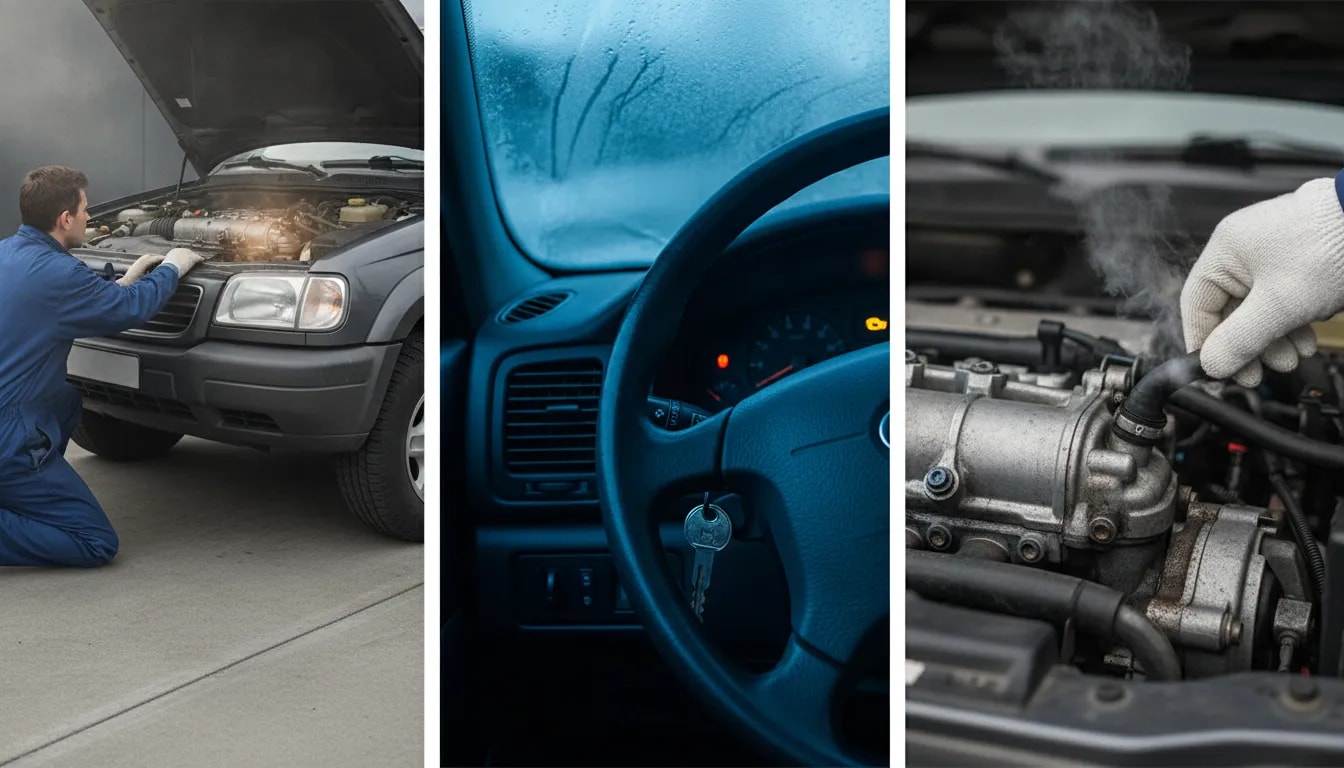
Before buying a used diesel, check three things: its emissions equipment, how it starts from cold, and signs of excessive engine blow-by. These checks can reveal problems that a clean interior, attractive price, or smooth warm-engine test drive may hide.
The same priorities apply whether you are considering a VW Golf TDI, BMW diesel, Mercedes SUV, Jeep Grand Cherokee diesel, Chevrolet Cruze diesel, or an EcoDiesel-powered vehicle. Missing emissions hardware can create registration problems, while poor starting and excessive crankcase pressure can point toward expensive repairs.
Use this used diesel inspection checklist to screen a vehicle before committing money. Treat the results as warning signs, not definitive diagnoses or a substitute for a professional pre-purchase inspection.
Key Takeaways
- Arrange an overnight-cold start before the seller has an opportunity to warm the engine.
- Inspect emissions hardware for missing components and verify compliance before buying a modified diesel.
- Persistent smoke and excessive crankcase pressure require diagnosis, not assumptions about the failed part.
- Compare the asking price with realistic repair estimates before committing to a questionable vehicle.
Table of Contents
- Used Diesel Inspection Checklist at a Glance
- Arrange the Inspection Before You Visit
- Read the Cold Start: Cranking, Smoke, and Idle
- Check for Emissions Deletes and Exhaust Warning Signs
- Assess Blow-By Once the Engine Is Warm
- Put Potential Repair Costs Beside the Asking Price
- Common Mistakes to Avoid
- When to Proceed, Investigate, or Walk Away
Used Diesel Inspection Checklist at a Glance
| Check | Encouraging signs | Reasons to pause the purchase |
|---|---|---|
| Cold start | Starts reasonably promptly and settles into a steady idle | Prolonged cranking, persistent smoke, severe shaking, or rough running for several minutes |
| Emissions and exhaust system | Required equipment appears intact, with no obvious replacement pipes or heavy soot buildup | Missing DPF or other hardware, unexplained modifications, or heavily sooted exhaust tips |
| Warm-engine blow-by check | Only mild pressure or vapor at the oil filler | Strong pressure pulses, substantial oil mist, or heavy vapor from a crankcase vent |
Inspection order matters: arrange the cold start first, inspect the exhaust before it becomes hot, and leave the blow-by assessment until the engine reaches operating temperature.
Arrange the Inspection Before You Visit
A useful inspection begins with a clear request to the seller: leave the engine off overnight and do not start or move the vehicle before the appointment. An engine that has merely cooled down after a morning drive is not the same as an overnight-cold engine.
Cool weather, ideally below about 50°F when practical, can make starting weaknesses more apparent. However, you do not need to wait for a particular temperature to insist on a genuinely cold start.
Ask these questions before traveling:
- Can the vehicle be left unstarted overnight?
- Has any emissions equipment been removed, bypassed, or modified?
- Does it have any known starting, smoke, injector, turbo, or engine-pressure problems?
- Will the seller allow an independent inspection if anything looks suspicious?
If the vehicle is already warm when you arrive, reschedule the cold-start portion rather than accepting a warm start as equivalent. Moving the car may have an innocent explanation, but it still prevents you from checking the condition you came to assess.
Keep the inspection safe. Do not crawl beneath an unsupported vehicle, touch hot exhaust components, or reach near moving belts and fans. Have a mechanic perform checks you cannot safely access.
Read the Cold Start: Cranking, Smoke, and Idle
A diesel cold-start test is useful because glow plug, injector, and compression problems may be less obvious once the engine is warm. Assess the entire start-up sequence, not just whether the engine eventually runs.
Notice how long it takes to start
A healthy diesel should generally start reasonably promptly, although a few seconds of cranking can be normal. Exact behavior depends on the engine and conditions, so avoid judging every diesel against a universal stopwatch limit.
Repeated or prolonged cranking deserves investigation. Possible causes include:
- Glow plug problems: inadequate assistance during a cold start.
- Injector problems: fuel delivery that does not support clean, consistent starting.
- Low compression: a potentially more serious internal-engine concern.
Do not accept “it only does that when cold” as reassurance. Cold operation is precisely what this check is intended to assess.
Distinguish brief vapor from persistent smoke
A small amount of white vapor immediately after starting can be condensation. Dense smoke that continues, particularly alongside rough running, is a different concern.
| Exhaust appearance | Possible significance | Buying response |
|---|---|---|
| Light white vapor that clears | May be ordinary condensation | Continue assessing the start and idle |
| Heavy, persistent white smoke | May indicate a combustion problem or coolant entering the cylinders, including possible head gasket or cylinder-head damage | Require diagnosis before proceeding |
| Blue smoke | Suggests oil burning, potentially involving piston rings, valve seals, or turbo seals | Investigate the source and repair cost |
| Black smoke | Suggests incomplete combustion, potentially involving injectors or turbo-related problems | Do not dismiss it as normal diesel behavior |
Heavy white smoke continuing beyond roughly 30 seconds is a useful reason to investigate, not proof of a failed head gasket. Smoke color and duration alone cannot identify the exact fault.
Listen for an idle that settles
Some initial unevenness may settle within about 30 seconds to a minute. Severe shaking, misfiring, or rough running that continues for several minutes is a warning sign.
Pay attention to whether the engine becomes steadily smoother or simply keeps struggling. A diesel that eventually runs well after an extended rough period still needs its cold-start problem explained.
If an in-person cold start is temporarily impractical, request a recording of a previous cold start as supporting information. It is not equivalent to checking the vehicle yourself. Repeated excuses or refusal to arrange a proper test are stronger reasons to walk away than the absence of a recording alone.
Check for Emissions Deletes and Exhaust Warning Signs
A used diesel with removed emissions equipment may look like a bargain while bringing compliance and resale complications. Inspect the hardware rather than relying only on the seller’s description.
Look for missing or altered components
Depending on the vehicle’s original specification, the inspection may include:
- Diesel particulate filter, or DPF: look for an absent canister or replacement pipework where it should be.
- Diesel exhaust fluid, or DEF, system: if fitted, confirm that the tank remains present and check its fluid status.
- Catalytic converter: look for missing hardware or unexplained exhaust changes.
- Unusual welds or straight sections: ask whether they are repairs or evidence of removed equipment.
Not every diesel has a DEF system. Judge the vehicle against its factory specification rather than assuming the same layout applies to every model.
Some components may be easier to see on smaller cars such as a Golf or Cruze. SUVs can have covers that restrict visibility. If the important hardware is obscured or unfamiliar, arrange an inspection on a lift rather than guessing.
A tank being present, or having fluid in it, does not by itself establish that the complete emissions system works correctly.
Understand the risk of buying a deleted diesel
Removed emissions equipment can create legal and practical problems. Depending on the applicable rules, it may affect emissions-test compliance and registration. Modifications can also complicate warranty claims or a future dealer trade-in.
Do not assume a seller’s ability to use the vehicle means you can register and use it where you live. Verify the relevant requirements before purchasing a modified diesel.
If you find suspicious pipework, ask directly what was changed and why. An evasive response leaves you unable to assess either compliance or the cost of correcting the vehicle.
Inspect the exhaust tips for heavy soot
Look inside the tailpipe, not just at its polished outer edge. A thick black coating is a reason to investigate incomplete combustion, injector problems, turbo-related issues, or the condition of the emissions system.
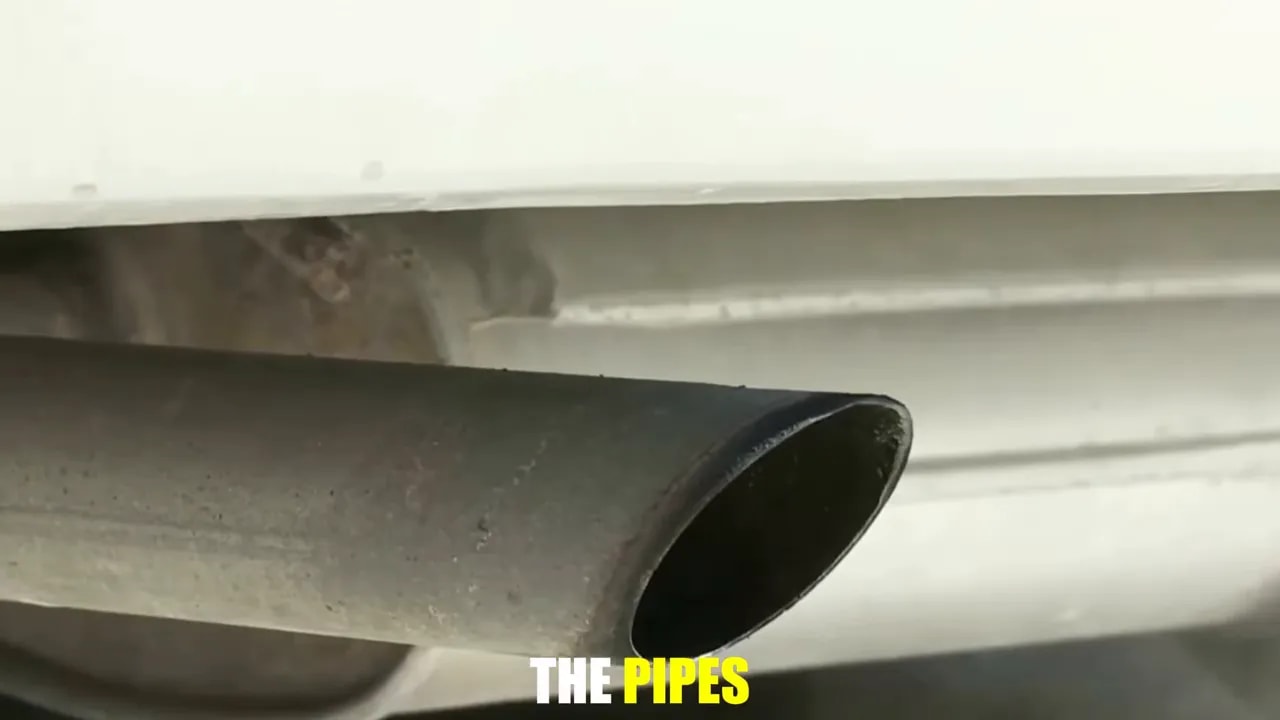
A relatively clean outlet is encouraging on a diesel with a functioning particulate filter. However, tailpipe soot is a clue, not a diagnosis. It cannot tell you on its own which component has failed, and a clean tailpipe does not prove the engine is healthy.
Assess Blow-By Once the Engine Is Warm
Blow-by is combustion gas that escapes past the piston rings into the crankcase. Some occurs during normal engine operation. Excessive blow-by can indicate worn rings, scored cylinder walls, or other internal damage.
This check matters because significant internal wear can turn a modestly priced diesel into an engine-rebuild or replacement project.
How to approach the oil-filler check
Only perform this check if it is safe and appropriate for the engine. Obtain the seller’s permission, and let a mechanic handle it if you are unfamiliar with the layout.
- Allow the engine to reach operating temperature.
- Identify the oil filler and check that it can be accessed safely.
- Carefully remove the oil-fill cap, keeping clear of hot parts and possible oil splash.
- Observe vapor and pressure at the opening without sealing it.
- Refit the cap securely when finished.
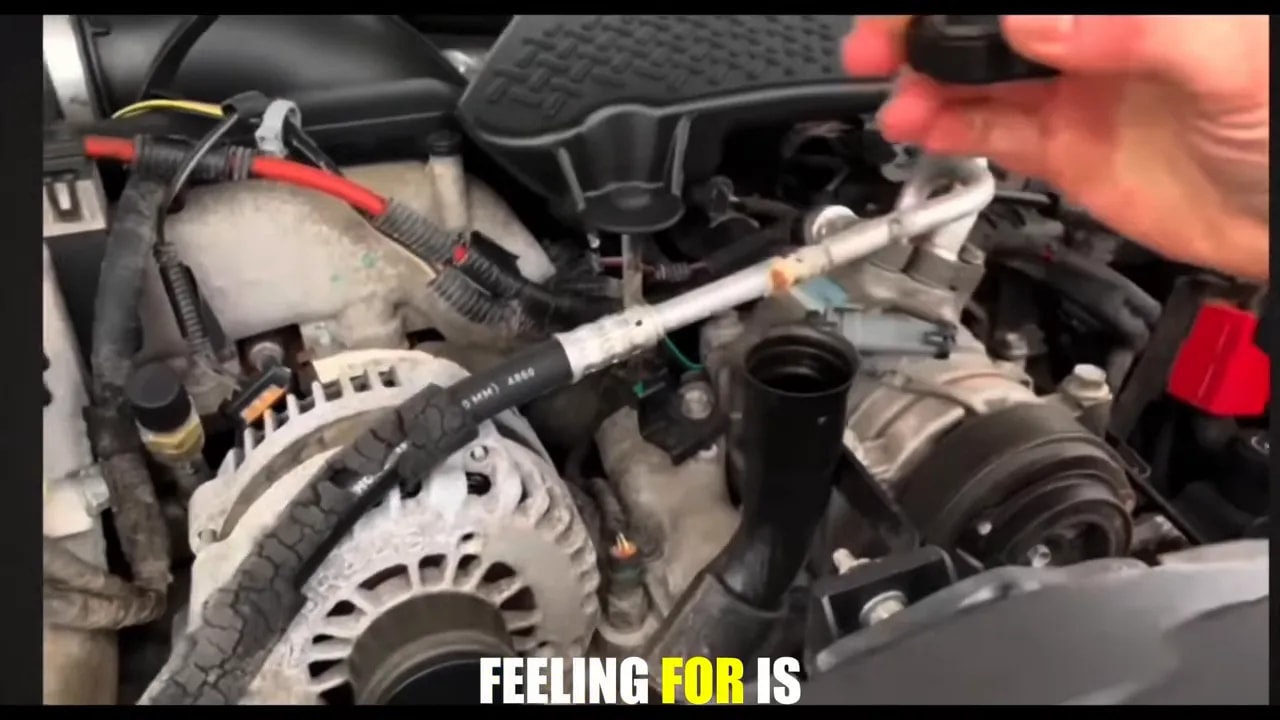
The basic hand-over-opening assessment looks for unusually forceful airflow. If used, keep your hand above the opening rather than touching or blocking it, and stay clear of moving components.
What should make you pause?
A little pressure or vapor can be normal. More concerning observations include:
- Strong, repeated pulses of air.
- Substantial oil mist or oil being expelled.
- Pressure that feels unusually forceful.
- Heavy vapor or oil discharge from a visible crankcase vent tube, where fitted.
The oil-cap check is a screening tool, not a measurement of total engine health. It does not establish compression, identify damaged cylinders, or prove that an engine needs replacement. Suspicious results need a model-appropriate professional assessment before you buy.
If internal wear is confirmed, an oil change or fuel additive will not repair worn piston rings or damaged cylinder walls. Do not purchase on the assumption that routine maintenance will reverse that damage.
Include cooling-system pressure concerns in the diagnosis
Abnormally high cooling-system pressure can raise concern about combustion gases entering the coolant, potentially through a head gasket fault or cracked cylinder head. This is particularly important when persistent white smoke is also present.
A warm cooling system normally operates under pressure, so hose firmness alone cannot confirm a fault. Leave questionable pressure to a mechanic to assess. Never remove a radiator or coolant-reservoir pressure cap while the engine is hot.
Put Potential Repair Costs Beside the Asking Price
The purchase price is only part of the financial decision. A cheap diesel is not necessarily defective, but a low price does not offset an unknown engine problem.
Illustrative repair figures show why these checks matter:
- BMW 335d glow plugs: approximately $400 to $600 for parts alone, with labor adding to the bill.
- VW TDI replacement engine: approximately $3,000 to $5,000 installed in a favorable case.
- BMW diesel engine replacement: approximately $8,000 to $12,000, with Mercedes and Audi diesels potentially involving similarly substantial costs.
- Cruze diesel or EcoDiesel major engine work: potentially $5,000 or more.
These are rough examples, not current quotes or guaranteed minimums. The exact engine, parts, labor, and extent of damage matter. Get a written estimate for the specific vehicle before treating a fault as an affordable negotiating point.
Common Mistakes to Avoid
- Accepting a warm start: it does not test overnight-cold starting behavior.
- Assuming smoke is harmless because the vehicle is a diesel: persistent or heavy smoke needs explanation.
- Ignoring a DPF or DEF delete: compliance problems can matter as much as mechanical condition.
- Diagnosing from one symptom: soot, smoke, or oil-filler pressure cannot identify a fault by themselves.
- Believing additives will repair confirmed internal wear: damaged engine components require appropriate mechanical work.
- Letting the asking price override uncertainty: an unexplained major problem remains a risk at a discount.
When to Proceed, Investigate, or Walk Away
Proceed to a fuller inspection when the emissions equipment appears intact, the engine starts cleanly from cold, and the warm-engine assessment reveals no obvious excessive pressure or oil discharge.
Pause for diagnosis when you find unexplained soot, persistent smoke, prolonged cranking, rough idle, suspicious modifications, or abnormal pressure. Establish the cause and repair cost before negotiating.
Walk away when the seller repeatedly prevents meaningful checks, refuses an independent inspection, or offers excuses instead of verifiable answers. A seller’s reluctance is not proof of a mechanical fault, but it leaves you carrying an avoidable uncertainty.
Passing these three checks makes a used diesel a more promising candidate. It does not guarantee reliability. The practical goal is to reject obvious risks early, then verify the remaining vehicle before handing over money.