
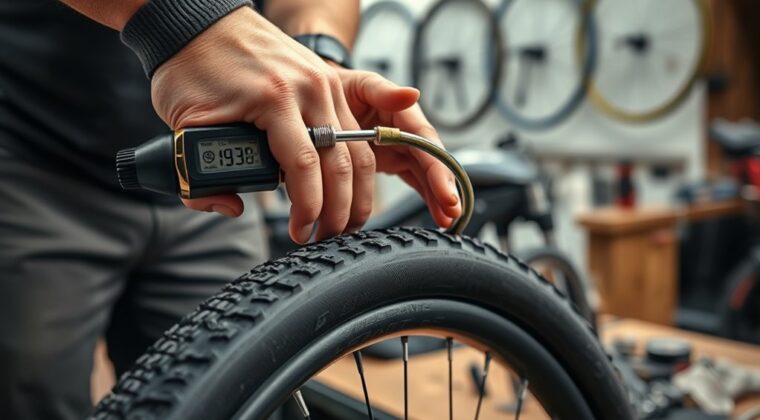
Yes, a tire inflator can seat a tubeless tire bead if it delivers a fast, high-volume burst of air. You’ll get better results if you clean the rim, inspect the bead, apply soapy water, and remove the valve core for unrestricted flow. A floor pump may work first, but a high-SCFM compressor is often more effective, especially near 70 psi. If it still won’t seat, a few proven tricks can help.
Key Takeaways
- Yes, a tire inflator can seat a tubeless bead if it delivers strong, high-volume airflow and enough pressure.
- Clean, dry rims and undamaged bead seats improve the chance of a proper seal.
- Removing the valve core increases airflow and helps air rush into the tire faster.
- Soapy water on the bead and rim reduces friction and helps the bead slide and seal.
- If a floor pump fails, use a high-SCFM air compressor or bead-setting aids like a ratchet strap.
Can a Tire Inflator Seat a Tubeless Bead?
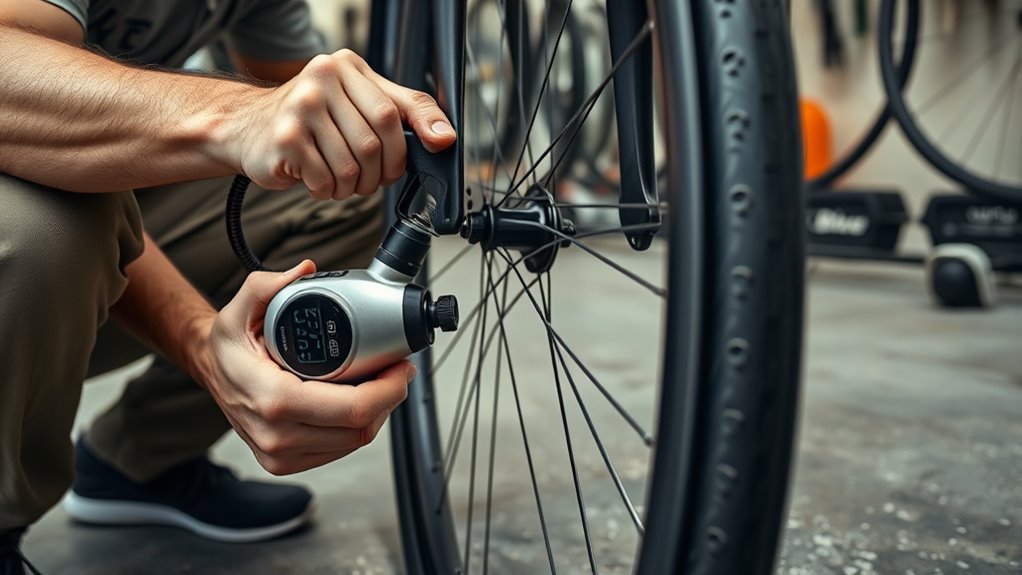
Yes—a tire inflator can seat a tubeless bead if it can move enough air fast enough, and in practice that usually means strong airflow and pressure, often around 70 psi for best results.
You’ll get better odds with a high-SCFM air compressor than with a weak unit, because seating tubeless needs a fast air burst more than a slow climb.
To inflate tubeless, take the valve core out so air enters without restriction and the bead of the tire can snap outward against the rim.
Remove the valve core first so air flows freely and the bead can pop into place.
If you’re using a tire that once had an inner tube, inspect it for damage before you try again.
A ratchet strap can help force the sidewalls outward for the initial seal.
CO2 canisters work in a pinch, but they’re a last resort because they can disrupt sealant.
When airflow is strong and the setup’s right, you can free yourself from shop dependence and seat the bead yourself.
Prep the Rim, Tire, and Valve Core
Before you try to seat the bead, prep every contact point so the air burst can do its job. On tubeless tires, you need a clean rim, a proper mount, and a clear path for air to seat the bead. Scrub off old sealant residue, then inspect the bead seats for damage.
Apply a soap-heavy mix to the tire bead so it can slip and settle while inflating tubeless.
- Prep the rim until it’s dry, smooth, and free of contamination.
- Remove the valve core so you get maximum airflow and more air to seat the tire.
- Set the valve at 12 o’clock and confirm the tire and rim match.
If the tire isn’t aligned correctly, stop and reset it before you try again. When you prep the rim and valve core correctly, you give the system the best chance to seat the tire cleanly and fast, without wasted effort.
Try a Floor Pump First
Try a floor pump first, since a standard pump often seats a tubeless bead with the least hassle and the best control.
Mount the second bead cleanly, then inflate briskly so you can drive air into the tire before it leaks away. For many setups, removing the valve core increases flow and makes seating the tire much easier.
Add a light film of soapy water to the bead and rim interface to help it slide outward and seal. Aim for about 70 psi if your rim and casing allow it, because that pressure often snaps the tire bead into place.
A light film of soapy water helps the bead slide outward and seal; 70 psi often snaps it into place.
Newer size standards from tire and wheel makers have improved fit, so a floor pump now works better than it once did. If the bead still won’t seat, your technique may be off, so reset and try again with careful, fast strokes.
Switch to a Compressor if Needed
If a floor pump won’t seat the bead, switch to an air compressor for a fast, high-flow burst that can push a stubborn tubeless tire into place.
During a tire change, remove the valve core to maximize flow, then use the compressor at about 70 psi; strong bead seating often needs that volume, not just pressure. Aim the valve at 12 o’clock so the seal can build evenly.
A Milwaukee M18 at 1.2 SCFM @ 90 psi can work, but a compressor with 2.6 SCFM @ 90 psi may seat faster and more reliably.
- Keep the wheel steady and watch the bead line.
- Listen for pops that confirm the bead’s locking.
- Stop if pressure rises too fast; overinflation’s real.
If the tire still won’t seat, check the rim and bead for leaks, then retry with controlled bursts.
Use These Tubeless Bead-Setting Tricks
With the valve core removed to maximize airflow, you can use a few practical bead-setting tricks to help the tire pop into place.
Start by coating both bead areas with soapy water; it reduces friction and lets the tire and rim interface slide together cleanly. If the sidewalls sit loose, wrap a ratchet strap around the tread and snug it until the casing bulges outward. That pressure pushes the beads outward, improving sealing.
Soap the beads, cinch a strap around the tread, and let pressure coax the tire into sealing.
Warm the tire slightly in the sun or a heated room; a softer carcass often seals faster without direct heat. Then use a floor pump or a high-volume inflator like the Topeak JoeBlow Booster to deliver enough volume of air for bead seating.
Keep your ear on the rim: sharp pops tell you the bead is locking home. If one side still resists, reposition, add more soapy water, and try again.
Freedom here means controlled pressure, patience, and decisive inflation.
Frequently Asked Questions
Can I Use an Air Compressor to Seat Tubeless Tires?
Yes, you can use an air compressor to seat tubeless tires if you match the air compressor types to the bead seating process.
You’ll need strong airflow, not just pressure, and tire inflation techniques like removing the valve core help.
Avoid common mistakes, use safety precautions, and keep the valve at 12 o’clock.
Ratchet straps can help.
These tire maintenance tips let you work efficiently and independently.
Can You Over Inflate a Tire to Seat the Bead?
Yes, you can overinflate a tire to help bead seating, but you shouldn’t exceed the manufacturer’s tire pressure limit.
Use suitable inflator types, watch for pops, and stop once the bead locks. Follow safety tips to avoid blowouts, rim damage, and other common issues.
If it still won’t seat, check valve leaks, lubricant, and airflow.
Regular maintenance advice and a higher-SCFM compressor can improve results without risking your freedom.
Why Isn’t My Tubeless Tire Bead Seating?
Your tubeless tire bead isn’t seating because air’s escaping or not entering fast enough.
Check for common issues like low SCFM, weak psi, dirty rims, or leftover sealant.
Your inflation techniques should include removing the valve core and using a ratchet strap if needed.
For bead seating, follow tire maintenance and troubleshooting tips carefully, while keeping safety precautions front and center.
Clean surfaces, then reinflate until the bead snaps home.
How Much Psi to Seat Bead?
You’ll usually need about 70 psi for bead seating, though stubborn setups may need 90 psi or more.
You should match tire pressure to the tire and rim, then choose inflator types that deliver enough airflow.
For tire maintenance, remove the valve core and watch for common issues like leaks or dirt.
Follow safety tips: never exceed the tire’s rating, and check pressure often so you don’t overinflate.
Conclusion
In the end, a tire inflator can often help you nudge a tubeless bead into place, but only if you’ve done the prep work right. Clean the rim, check the tire’s position, and remove the valve core for better airflow. If a floor pump doesn’t quite do the trick, a compressor can give you the extra push you need. Use the right method, and you’ll restore a stubborn setup with far less fuss.