
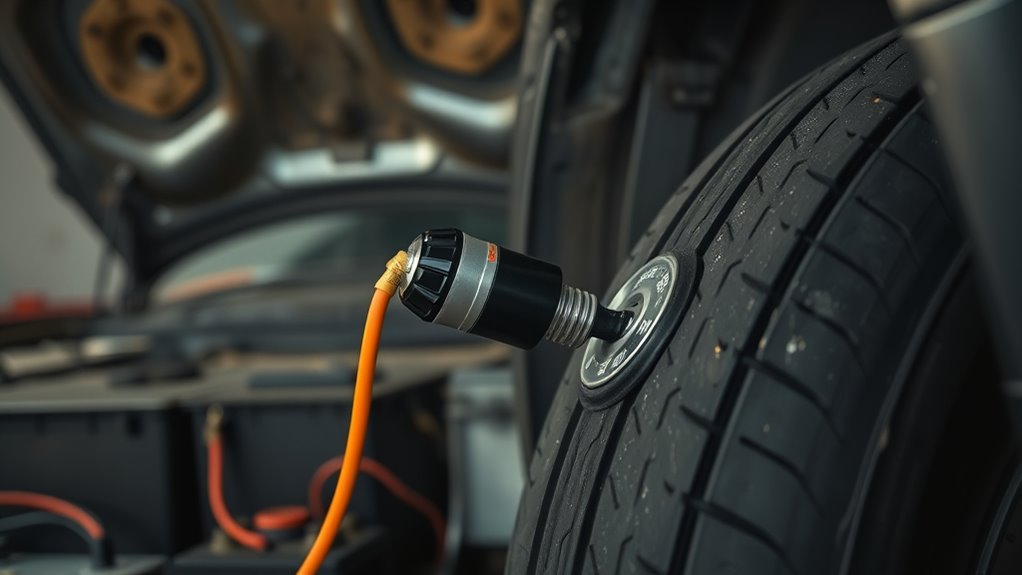
You can’t reliably use a plug-in tire inflator with a dead car battery because it needs a steady 12-volt supply. A completely discharged battery usually can’t provide enough current, and trying to run the inflator may drain it further. If your battery is dead, jump-start the car first or use a charged battery-powered inflator. Before you add air, check tire pressure, inspect for damage, and set the correct PSI so you avoid mistakes and get the full picture.
Key Takeaways
- A plug-in tire inflator usually cannot run on a completely dead car battery.
- A dead battery lacks enough voltage and current for most 12-volt inflators.
- A battery-powered inflator can work independently if it is fully charged.
- Jump-start the car or keep the engine running before using a plug-in inflator.
- Check tire pressure, hose connections, and inflator compatibility before inflating.
Can You Use a Tire Inflator With a Dead Car Battery?
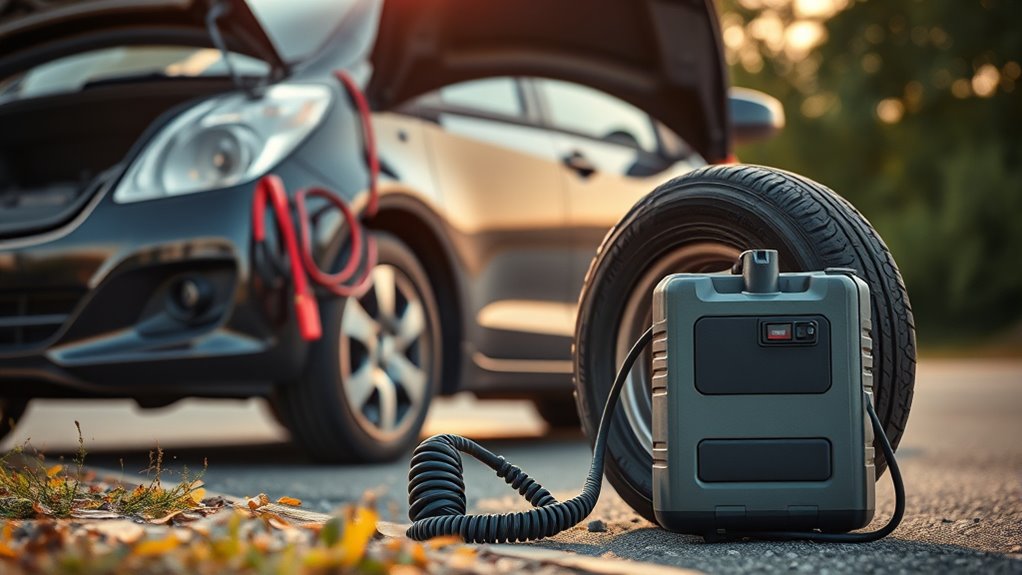
If your car battery is completely dead, a plug-in tire inflator won’t work because it draws power from the vehicle’s electrical system. You can’t rely on a plug-in model when the dead battery can’t supply current.
To inflate tires, you need another power source, such as a running car or a battery-powered inflator. The battery-powered inflator gives you independence, because it operates without the vehicle and lets you respond on your own terms.
If you try to run a tire inflator with the engine off, you risk deeper battery depletion and may prevent the car from starting. For lead-acid batteries, that deep discharge can cause avoidable wear.
If you must use a plug-in tire inflator, keep the engine running so the alternator can recharge the system while you work. That approach preserves mobility, reduces frustration, and helps you stay in control of the situation.
Why a Dead Battery Can’t Run an Inflator
A dead car battery can’t run a tire inflator because it no longer has enough voltage to power the device. You need a functioning electrical system to deliver the 12 volts most inflators require for inflation.
A dead car battery can’t power a tire inflator; it needs a functioning 12-volt electrical system.
When a dead battery is fully discharged, it can’t supply steady power, so the inflator may fail to operate or shut down under load. If you force it, you only drain the dead battery further, which makes restarting harder and keeps you dependent on the vehicle’s engine.
Most tire inflators are intended to work while the engine is running, because the alternator then provides continuous output and stabilizes voltage. That setup lets the inflator function without collapsing the battery’s remaining charge.
Without that support, the inflator has no reliable source of power. In practical terms, a dead battery blocks inflation, limits mobility, and leaves you waiting for recharge or jump-start assistance instead of moving freely.
What to Check Before Inflating a Tire
Before you inflate a tire, make sure the engine is running so you don’t drain the battery further, especially since tire inflators pull significant current. If your car battery is dead, power management matters. Use these checks:
- Check tire pressure with a reliable gauge so you know the exact fill level you need.
- Inspect for visible damage like punctures or sidewall bulges; inflation won’t fix structural failure.
- Confirm the tire inflator matches your compatible power source, whether a 12V outlet or rechargeable pack.
- Verify the tire inflator gauge reads accurately to prevent over-inflation or under-inflation.
Keep the vehicle’s engine running during setup, then compare the reading with the tire placard before adding air.
That lets you reclaim safe, controlled mobility without wasting power or guessing.
How to Inflate Tires Safely
To inflate tires safely, park the vehicle in a well-ventilated area. Then choose a power source that won’t worsen a dead battery; if the battery is dead, use a battery-powered inflator instead of one that draws from the car.
Set your tire inflator to the manufacturer’s recommended PSI and monitor tire pressure closely. A plug-in tire inflator can work when vehicle power is available, but don’t rely on a dead car battery. If you must use a plug-in tire inflator, run the engine only when the battery can support it, so you avoid deep discharge.
Set your inflator to the recommended PSI and monitor pressure closely to avoid overinflation.
Keep safety first: secure the hose, stand clear of moving parts, and stop once you reach target pressure.
Make regular check habits part of your routine, because correct inflation improves performance and efficiency. Keep emergency tools and a portable tire inflator in your vehicle, so you can inflate tires quickly and protect your freedom on the road.
When to Jump-Start the Car First
If your car battery is dead, jump-start the vehicle first because a tire inflator won’t run without usable power from the battery or electrical system. You need restored voltage before you can inflate tires safely and efficiently. A dead battery often gives you a clicking sound when you try to start the car, and that’s your cue to act.
With the engine running, the vehicle’s electrical system can support the tire inflator and reduce power drain.
- Check for a dead battery symptom: clicking, dim lights, no crank.
- Jump-start the car before connecting the tire inflator.
- Keep the engine running so the inflator can efficiently operate.
- Use a battery-powered inflator independently only if it has enough charge; otherwise, it still won’t help your car battery situation.
This sequence keeps you moving with less dependence, more control, and fewer delays.
Frequently Asked Questions
Will Tire Inflator Drain Car Battery?
Yes, a tire inflator can drain your car battery if you run it too long with the engine off.
You should treat tire inflator safety as part of car maintenance essentials: use the proper inflator power source, follow inflator usage guidelines, and keep jump start techniques ready.
For battery health tips, prefer portable inflators or run the engine.
These emergency tools protect tire pressure importance and battery maintenance.
Can a Dead Battery Be Charged Back to Life?
Yes, you can often charge a dead battery back to life with battery revival techniques. You’ll compare charging options, then use jump starting methods or a charger; jump starter advantages include fast roadside recovery.
Check battery lifespan factors, common battery issues, and solar chargers effectiveness. Apply maintenance tips, test with a multimeter, and watch for battery replacement signs.
If troubleshooting battery problems shows no recovery, you’ll need replacement.
Can You Use a Tire Inflator in a Car Without the Engine Running?
Yes, you can only if your tire inflator’s power sources don’t depend on the engine running.
For example, if you keep a battery-powered portable compressor in your trunk, you can restore tire pressure roadside.
You should compare tire inflator types, follow inflating tips, and watch battery safety.
For car battery maintenance and vehicle readiness, check inflation frequency, carry emergency tools, and avoid draining the battery with plug-in units.
How Long Does a Dead Car Battery Need to Run to Recharge?
You’ll usually need 20–30 minutes of driving to get enough battery recharge time for a dead car battery.
Your alternator function restores voltage while your engine runs, but charging efficiency drops with high power consumption from lights or A/C.
For better battery health, minimize load, check electrical systems, and use jump starting only as a bridge.
If it stays weak, follow maintenance tips, assess battery lifespan, and run vehicle diagnostics.
Conclusion
Before you reach for the inflator, pause. If your car battery is dead, the compressor may not have enough power to start, and that can leave you stranded with a soft tire and no backup. Check the battery voltage, the inflator’s power source, and tire pressure first. If the battery can’t support the load, jump-start the car before inflating. That one step can prevent a failed inflation and get you moving safely.

