
Tires are usually cold enough to check after they’ve sat unused for at least three hours. Driving heats the tires and can raise pressure by 3 to 5 PSI, so an immediate check may read too high. After about 30 minutes, they start cooling, but full return to ambient temperature takes longer. For an accurate PSI reading, measure them when they’re fully cooled, ideally first thing in the morning, and you’ll see why that timing matters.
Key Takeaways
- Tires are generally considered cold after sitting unused for at least three hours.
- They start cooling within about 30 minutes after you stop driving.
- After 1–2 hours parked, tire pressure may already drop noticeably.
- Checking too soon after driving can give a falsely high pressure reading.
- For accurate results, measure tire pressure when the tires match ambient temperature.
Why Tire Pressure Drops in Cold Weather
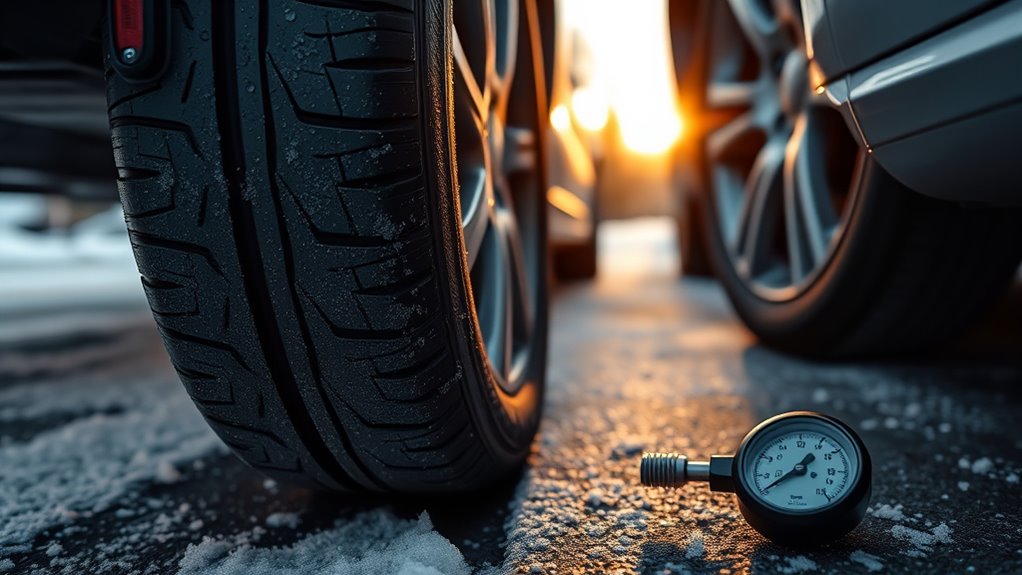
When temperatures fall, your tire pressure drops because the air inside the tire contracts, reducing pressure relative to warmer conditions.
When temperatures fall, tire pressure drops as the air contracts inside the tire.
In cold weather, you can expect about 1-2 PSI (pounds per square inch) loss for every 10°F decrease, so a 20°F drop can remove up to 4 PSI. That shift matters because it can push you toward underinflated tires, which reduce grip, lengthen stopping distances, and raise skidding risk.
You should check tire pressure with a gauge, not by feel, and do it when the tires are cold for an accurate reading.
Cold months also demand regular monitoring, since tires can lose 1-2 PSI monthly even without sharp temperature swings.
Why Tire Pressure Rises After Driving
As you drive, friction between the tires and the road generates heat, and that heat causes the air molecules inside the tire to expand, raising pressure.
You’ll see tire pressure climb as the casing warms, often by 3-5 PSI after a trip, depending on speed and duration. Even a 10°F temperature rise can add about 1-2 PSI, so the change is measurable, not random.
If you check your tire pressure immediately after driving, the reading can look higher than the true cold state, which masks whether your tires are properly inflated.
For accurate maintenance, measure when tires are cold, ideally after sitting for several hours. Then compare the result to the manufacturer’s specification in PSI (pounds per square).
That simple habit keeps you independent from guesswork and helps you maintain control over performance, wear, and safety.
How Long Tires Take to Cool Down
Tires usually start cooling within about 30 minutes after you stop driving, but they often need several hours to return fully to ambient temperature.
Tires begin cooling within 30 minutes, but several hours are often needed to reach true ambient temperature.
You’ll often see a substantial drop after 1–2 hours parked, yet the exact rate depends on air temperature, humidity, and sunlight.
In cold weather, heat leaves the rubber and air more quickly, so your readings stabilize sooner.
For the most accurate data, use a tire pressure gauge after the vehicle’s been parked at least 3 hours; overnight is even better.
That’s when to check if you want a true cold reading.
Proper tire pressure supports control, efficiency, and safety, and inflated tires help maintain predictable handling.
Because you’re managing your own vehicle, you can rely on timing, not guesswork.
Let the tires rest, then measure each proper tire consistently so you’re making decisions from stable pressure, not temporary driving heat.
When Tires Are Cold Enough to Check?
You can treat your tires as cold once they’ve sat unused for at least three hours, which gives the rubber and air time to return to ambient temperature. At that point, your cold tire pressure reflects the baseline your vehicle’s engineers intended, not the inflated result of heat.
Use a tire gauge only after that cooling window, or first thing in the morning after an overnight stop. Driving can raise pressure by 3–5 PSI (pounds per square inch), so a hot tire can look normal when it’s actually underinflated once it cools.
Temperature changes also shift readings, which is why you should check before long trips and during seasonal changes. If the warning light came on after driving, don’t react immediately; wait until the tires cool, then reassess.
You’ll get a truer measurement, preserve efficiency, and keep your setup aligned with the freedom that comes from accurate maintenance.
How to Check Tire Pressure Accurately
How do you get an accurate tire-pressure reading? Start with cold tires: wait at least three hours after driving, or check them first thing in the morning after the car’s been parked overnight.
Remove the valve stem cap, then press a reliable gauge firmly onto the valve to prevent leakage. A digital gauge gives you the most precise tire pressure reading; many manual gauges drift enough to mislead you.
Press a reliable gauge firmly onto the valve to prevent leakage, and use a digital gauge for the most precise reading.
Read the PSI (pounds per square inch) against the target listed in your owner’s manual or on the driver’s-side door placard. Don’t guess, and don’t rely on hot-tire readings; they’re inflated by heat and distort the result.
If the tire pressure is low, inflate your tires immediately to the recommended level. That keeps your vehicle stable, efficient, and under your control.
Then replace the cap and repeat the check for each tire, including the spare if your vehicle uses one.
How to Keep Tire Pressure Right in Winter
Check tire pressure when the tires are cold, ideally after the vehicle’s been parked for several hours or overnight, so you get an accurate reading.
Watch winter temperature drops closely, because pressure can fall by about 1-2 PSI for every 10°F decrease.
Inflate to the recommended 33 PSI front and 31 PSI rear to maintain safety and fuel efficiency.
Check Pressure Cold
When winter temperatures drop, tire pressure can fall by 1–2 PSI for every 10°F decrease, so accurate readings matter more than ever.
You should check pressure cold, after the vehicle’s sat at least three hours or overnight, because driving heats the air and skews results. Use a quality gauge, not just the sensor, since cold weather can make electronic readings less reliable.
Compare your air pressure to the PSI (pounds per square inch) listed on the door panel or in the owner’s manual, then adjust as needed. Keeping tires at the right inflation reduces rolling resistance, supports control, and limits uneven wear.
In winter, test them at least monthly so you stay ahead of gradual air loss and preserve precise, free-moving performance.
Watch Temperature Drops
A sudden 20°F temperature drop can cut tire pressure by as much as 4 PSI, so you need to watch weather swings closely in winter. When tires heat after driving, wait 1-2 hours; even though they’re cooling, check again when cold for the right pressure. Use this quick guide:
| Condition | Effect | Action |
|---|---|---|
| Warm tires | Higher reading | Don’t adjust now |
| Cold snap | Lower PSI | Recheck soon |
| Overnight rest | Best accuracy | Measure then |
Keep a gauge in your vehicle so you can verify PSI (pounds per square inch) anytime temperatures shift. Regular checks help you stay free from underinflation, preserve control, and protect fuel efficiency. In cold weather, watch temperature drops like a technician: measure, compare, and respond before loss compounds.
Use Proper PSI
Use the vehicle’s recommended PSI to keep winter tire pressure in range: 33 PSI for the front tires and 31 PSI for the rear tires, as listed on the door panel or in the owner’s manual.
You should use proper psi as your baseline, then verify tire pressure when the tires have sat overnight or for several hours. That gives you the most accurate cold tire pressure reading.
Check at least once a month, and before long trips, because tires can lose 1–2 PSI monthly.
Cold weather tightens margins: every 10°F drop can cut pressure by 1–2 PSI.
Keep a gauge in your vehicle so you can confirm each tire stays properly inflated. That discipline protects handling, supports fuel efficiency, and keeps you free from avoidable risk.
Frequently Asked Questions
How Long Does It Take for Tires to Get Cold After Driving?
You’ll usually wait 1–2 hours for your tires to cool after driving, though tire temperature dynamics shift with driving duration effects, heat dissipation factors, and ambient temperature influence.
Longer trips and warmer roads keep them hot; cold weather can slow cooling too. For accurate readings, you should let them sit several hours or overnight.
Tire performance variations mean the exact cooldown time changes, but your best measure is patience and consistency.
What Is the 7 7 Rule for Tires?
The 7-7 rule means you check tire pressure after your tires sit 7 hours, or when ambient temperature drops 7°F after driving.
You’ll then read colder, truer values because heat dissipation has finished. Use it, and you’ll protect tread depth, track seasonal changes, and reduce performance impact.
Like a steam-powered gauge in a digital age, this rule keeps you free from guesswork and inflated readings.
Is 40 Degrees Too Cold for Summer Tires?
Yes, 40°F is cold enough to hurt summer tire performance.
You’ll notice a clear temperature impact: the rubber stiffens, grip drops, and stopping distances grow. That increases tire wear if you drive hard and reduces driving safety on wet or icy roads.
You should switch to winter tires when temperatures stay near this level, because they keep flexibility and control that summer tires can’t deliver in cold conditions.
What Is the 3% Rule for Tires?
The 3% rule says you shouldn’t let your tire pressure rise more than about 3% from its cold setting as tire temperature climbs.
You’ll feel the heat buildup after driving, but under normal driving conditions that small increase is expected.
If you start at 33 PSI, you shouldn’t exceed about 36 PSI warm.
Keeping this limit reduces tread wear, improves efficiency, and helps you control your tires, not let them control you.
Conclusion
In short, you should check tire pressure when your tires are cold, ideally after the car has sat for at least three hours or has been driven less than a mile. Driving heats the air inside the tire, so readings climb and can mislead you. If you keep an eye on pressure in winter, you’ll stay ahead of trouble before it snowballs. Accurate checks help you maintain grip, fuel economy, and tire life.

