
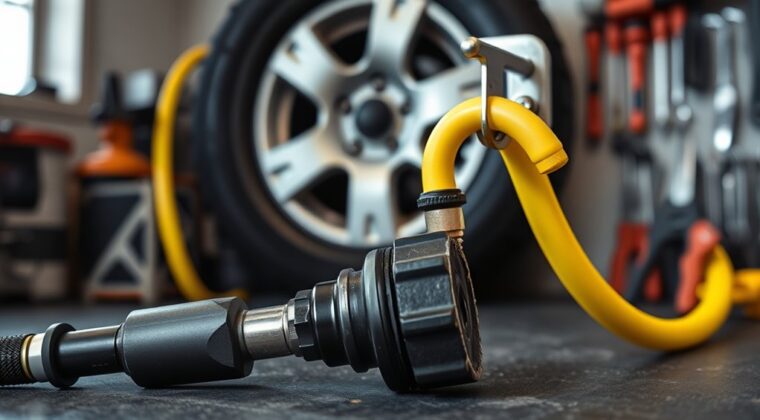
You can prevent tire inflator hose damage by keeping the hose within its rated pressure, avoiding tight kinks, and routing it so it never twists, yanks, or drags across rough surfaces. Inspect the hose, fittings, and seals before every use, and replace cracked, flattened, or loose parts right away. Store it coiled loosely in a cool, dry place away from sunlight and heat. A few more checks can help you catch failures before they start.
Key Takeaways
- Avoid kinks, twisting, and sharp bends by routing the hose with gentle curves and enough slack.
- Store the hose cleanly, coiled loosely in a cool, dry place away from sunlight, heat, and chemicals.
- Inspect the hose, fittings, and seals before every use for cracks, bulges, leaks, or loose connections.
- Keep inflation pressure within the hose’s rated limit to prevent ruptures and premature wear.
- Replace damaged or heavily worn hoses, as repairs are only suitable for minor, localized issues.
Why Tire Inflator Hoses Fail
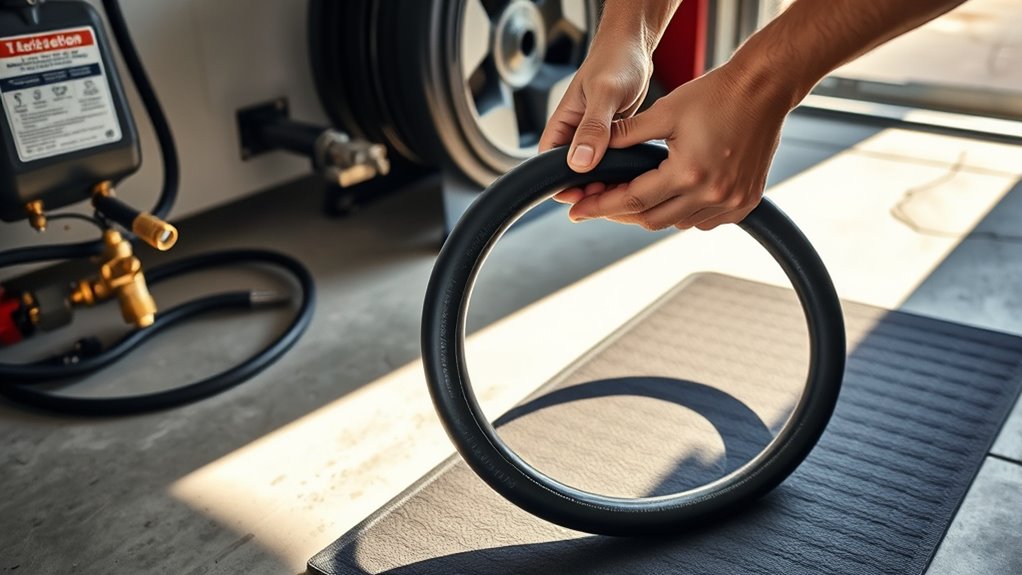
Tire inflator hoses fail when repeated flexing, pressure stress, and environmental exposure break down the hose material over time. You’ll see wear and tear as the hose ages, especially when you use it often under high-pressure conditions that exceed its rated limit. That stress weakens the structure and can trigger ruptures.
Physical damage from mishandling, impacts, cuts, or crushing also shortens service life fast. UV rays, extreme temperatures, and chemical exposure accelerate material degradation, making the hose brittle and more likely to leak.
At the connection points, loose fittings and damaged seals let air escape and reduce inflator performance. You can’t treat these failures as random; they’re the result of specific loads and exposures.
Check your tire inflator hoses for cracking, swelling, abrasion, and connection wear, then replace compromised parts before they fail in use and compromise your freedom to maintain safe tire pressure.
Avoid Kinks and Sharp Bends
You should keep the tire inflator hose free of tight bends, because sharp curvature concentrates stress and weakens the material over time.
Store it with enough slack to maintain a straight path, and don’t twist it during use.
When you route or stow the hose, use holders or a reel so it holds its shape without kinks.
Prevent Tight Hose Bends
Tight hose bends can shorten an inflator hose’s service life fast, so keep it laid out with enough slack to stay flat and relaxed during storage and use.
Use supports or a holder to maintain a gentle curve and prevent kinks that restrict airflow and wear the inner wall. When you inflate, position the unit closer to the tire so the hose stays under low tension.
Keep the hose out of high-traffic areas to avoid pinching and impact damage. Inspect it regularly for cracks, flattening, or bends, and replace it before air leaks start. That simple discipline protects maximum performance and gives you more control over every inflation.
- Lay the hose flat
- Support gentle curves
- Inspect and replace early
Store Hose With Slack
Store the hose with a little slack so it doesn’t kink, because repeated bends can weaken the material and eventually cause leaks or ruptures. When you store hose with slack, you prevent kinks and limit wear and tear from stress points.
Coil it gently, keep sharp bends out, and use a hose reel or organizer for proper storage that helps maintain proper shape. Before stowing, make sure the hose is clean and free of debris so grit won’t degrade the lining.
Then inspect the hose for signs of wear, including cracks, flattening, or bulges. These checks let you catch damage early and reduce risk of damage later.
With disciplined storage, you protect the hose, preserve performance, and keep your inflator ready when you need it.
Prevent Hose Cracks and Abrasions
Regular inspections help catch hose wear early, so check the tire inflator hose for cracks, abrasions, or other damage before small defects become leaks. You’ll prevent failure by inspecting the hose after every use, especially where it bends, rubs, or contacts hard surfaces.
Clean off dirt and grit with a damp cloth, since debris can grind the outer layer and create fresh abrasions. Avoid twisting or kinking the hose, because repeated strain weakens the wall and starts cracks. Use protectors or covers in high-contact areas to block sharp edges during inflation or transport.
When you store the hose, keep it cool, dry, and out of UV exposure so heat and sunlight don’t accelerate wear.
- inspect for cuts and scuffs
- clean after dusty jobs
- fit protectors at abrasion points
Store Your Tire Inflator Properly
When you’re done using the inflator, place it in a cool, dry location to limit heat and humidity exposure that can degrade the hose and internal components.
Store your tire inflator properly so you can avoid damage from temperature swings, sunlight, and rough handling. Use a dedicated storage case or bag to protect the unit, organize accessories, and reduce impact wear.
Keep the hose coiled loosely, with no kinks or tight bends, because repeated stress can weaken hoses and cause leaks. Before storage, clean the inflator and hose to remove dust and debris that can work into components and create internal damage over time.
Choose storage away from direct UV exposure, since sunlight can break down hose materials and other parts.
With disciplined storage habits, you preserve performance, extend service life, and keep your gear ready when you need clean, reliable air support.
Check Fittings and Seals
Inspect every fitting and seal before you inflate, because a loose or worn connection can leak air and cut efficiency. You should check fittings and seals for wear, damage, or deformation, then make sure the hose locks securely to the inflator and valve stem.
Use compatible fittings for your model; mismatched connections can damage threads, stress seals, and reduce performance. Apply a thin film of silicone-based lubricant to O-rings and seals when needed so they stay supple and resist friction.
If you find cracking, flattening, or looseness, replace the part immediately. Strong connections keep your setup precise, protect your hose, and support reliable inflation without waste.
- Check fittings for tight, secure engagement.
- Inspect seals and O-rings for wear or damage.
- Use silicone-based lubricant and replace bad parts fast.
Catch Pressure Leaks Early
You should listen for any hissing during inflation, since it often indicates a leak at the hose or connection points.
Check the fittings often and confirm they’re tight at the inflator and valve stem.
If you catch a leak early, you can fix it before it causes hose damage or pressure loss.
Listen For Hissing
Listen for a faint hiss during inflation, because it often signals a pressure leak in the hose or at the tire valve connection. You can catch hissing sounds early by pausing and tracing air leaks before they waste pressure or slow inflation.
Inspect the inflator hose for wear and tear, especially near bends and seals, where small cracks hide. If you hear unusual sounds, verify a secure connection at the tire valve and correct it immediately to prevent further leaks.
- Stop inflation and isolate the source.
- Test the hose in a controlled setting for peak performance.
- Replace damaged seals or cracked sections promptly.
This quick check keeps your system efficient, supports safe use, and helps you stay free from avoidable breakdowns.
Check Fittings Often
Check fittings often to catch pressure leaks early and keep inflation steady. Inspect every joint, clamp, and adapter for tight fit and secure connections.
If you spot visible cracks or damage on the hose, replace the part before it fails. Use hose clamps sized for your hose so they hold firm and reduce pressure loss.
Apply a silicone-based lubricant to O-rings and fittings when needed; it helps seals move smoothly and resist wear. Then monitor pressure readings during use. A sudden drop usually signals air leaks or a loose fitting, and early detection lets you correct the fault before more damage follows.
When to Repair or Replace the Hose
A tire inflator hose should be repaired only for minor, isolated issues; otherwise, replacement is usually the safer choice. You should inspect the hose for visible signs like cracks, bulges, or scuffs that can lead to air leaks.
If the hose is damaged by impact or high pressure, test it for failure; any leak means you should replace it. Persistent kinks or bends create airflow restrictions, so straighten the hose first, then repair only if the problem is local and brief.
UV degradation or chemical exposure weakens the material, hurting performance and safety, so a new hose often restores peak function. When repair costs nearly match a new hose, choose replacement for better reliability and less downtime.
- Visible signs of wear usually justify replacement.
- Kinks, leaks, or impact damage reduce performance.
- Costly repairs rarely beat a new hose.
Create a Tire Inflator Hose Checklist
After deciding whether a hose should be repaired or replaced, keep it in service with a simple checklist that catches problems before they turn into leaks or failures.
For each tire inflator hose, inspect regularly for kinks, cuts, abrasions, or flattening. Check for wear at the fittings, bends, and coupling points.
Before every use, verify secure connections and clear debris from threads and seals so you prevent leaks. During inflation, avoid excess pressure; stay within the hose’s rated limit to protect the liner and fittings.
Use with care: don’t twist, yank, or drag the hose across rough surfaces. Handle gently when routing it around wheels or equipment.
After use, store properly in a cool, dry place away from sunlight and heat, which degrade materials.
This checklist supports proper maintenance, extends service life, and helps you keep control of your equipment rather than letting damage decide for you.
Frequently Asked Questions
How to Repair Tire Inflator Hose?
You repair a tire inflator hose by cutting out damaged sections, then replacing the hose if you spot severe signs of wear.
Choose hose replacement options that match inflator hose materials and hose compatibility factors.
Use DIY repair techniques with clamps and fittings, follow safety precautions, and apply regular maintenance tips.
Check common hose issues, practice inflator usage tips, use effective storage methods, and keep the hose aligned to prevent leaks and failure.
What Is the 5 Psi Rule?
A hiss of air, a steady gauge, and you’re safe: the 5 PSI rule means you keep tire pressure within 5 PSI of your inflator’s max rating.
You protect hose materials, inflator types, and PSI levels by following usage guidelines and safety features.
Check maintenance tips, avoid common issues, and use repair techniques only when needed.
This discipline delivers inflation benefits, lowers stress, and helps you stay in control.
Is It Safe to Keep a Portable Tire Inflator in the Car?
Yes, you can keep a portable tire inflator in your car if you manage inflator storage carefully.
Store it cool, dry, and secured to protect hose protection and inflator lifespan. That supports tire safety, pressure monitoring, and vehicle readiness.
Keep the battery near 50–60%, inspect for wear, and follow maker guidance.
For your liberation, it’s a smart travel essential that strengthens emergency preparedness, portable convenience, and car maintenance.
How to Maintain an Inflator?
You maintain your inflator like a compass: steady, reliable, ready. You need hose storage away from UV and heat, regular inspections, pressure checks, and cleaning tips after use.
Follow usage guidelines, confirm nozzle care, and replace the hose at the first crack. Check compatibility factors, respect temperature considerations, and use safety precautions.
Lubricate the O-ring quarterly, and you’ll keep your tool free, efficient, and prepared.
Conclusion
By protecting your tire inflator hose from kinks, abrasions, leaks, and poor storage, you keep the tool ready when you need it most. Inspect fittings, watch for pressure loss, and replace damaged parts before they fail. As the adage goes, “An ounce of prevention is worth a pound of cure.” A quick checklist and regular care can prevent downtime, improve safety, and extend hose life, so your inflator performs reliably every time.