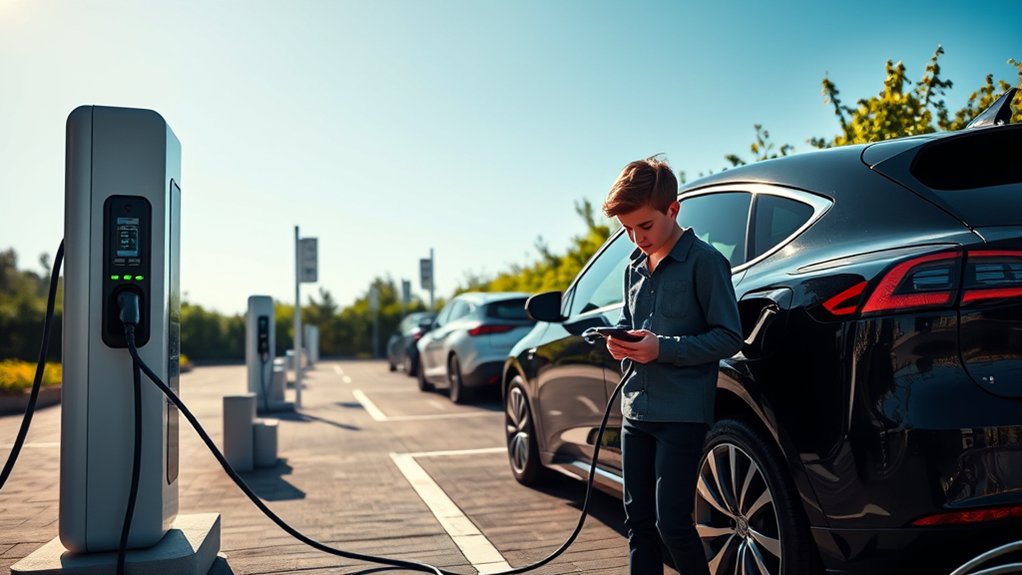
Charging an electric vehicle (EV) is different from filling a gas tank, but it is not as difficult as many myths make it sound. Most drivers charge where they already park, public charging keeps improving, and your best setup depends on your daily miles, your home or apartment access, your vehicle, and your budget.
Quick Answer
EV charging is usually easiest when you match the charger to your driving routine. Level 1 works for short daily trips, Level 2 is best for faster home or workplace charging, and DC fast charging is mainly for road trips. You do not always need a home charger, but reliable access makes ownership easier.
Key Takeaways
- Most EV charging happens while the car is parked, often overnight at home, at work, or at a public destination charger.
- Level 1 charging is slow but useful for short commutes. Level 2 charging is much faster and is the most practical daily setup for many drivers.
- DC fast charging is helpful for road trips, but charging speed depends on the charger, vehicle, battery temperature, and battery state of charge.
- As of July 7, 2026, the U.S. had 81,150 public electric station locations and 252,860 public charging ports listed by the Alternative Fuels Data Center.
- Federal clean vehicle credits are not available for vehicles acquired after September 30, 2025, but state, local, utility, and charger incentives may still help.
At a Glance
| Time Required | A few minutes to plug in; charging time ranges from overnight Level 1 charging to faster Level 2 or DC fast charging sessions. |
| Difficulty | Easy for routine charging; moderate if you need a new Level 2 circuit or shared-building approval. |
| Tools Needed | Vehicle charging cord, compatible charging port, charging app or RFID card for some public stations, and a licensed electrician for new home wiring. |
| Cost | Varies by electricity rate, charger type, public network fees, installation needs, and local incentives. |
Myth: Charging an EV Takes Too Long
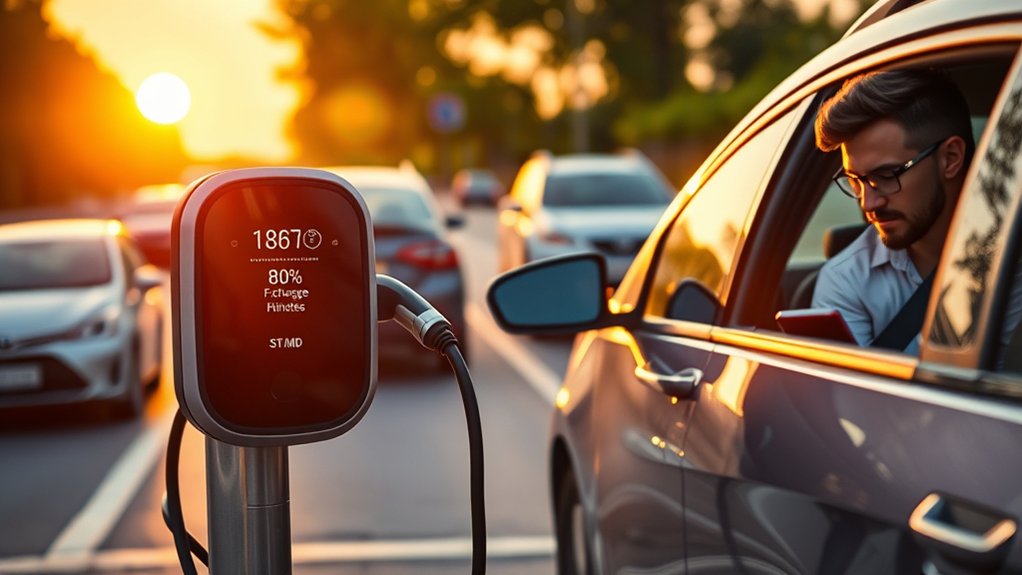
Many people picture EV charging like standing at a pump and waiting for a full tank. That is usually the wrong comparison. With an EV, the best charging is often the charging you do while the car is already parked.
The U.S. Environmental Protection Agency explains that most charging happens where you already park, such as at home, and plugging in can take less than a minute. A full charge may take hours, but that time often happens while you sleep, work, shop, or eat.
Charging speed depends on three things: the charger, the car’s onboard charging limit, and the battery’s state of charge. Cold weather and a very full battery can also slow charging.
| Charging Type | Typical Use | General Speed |
|---|---|---|
| Level 1 | Standard 120-volt outlet, short commutes, plug-in hybrids, backup charging | About 3 to 5 miles of range per hour |
| Level 2 | Home, workplace, apartments, hotels, shopping centers | Often about 25 to 40 miles of range per hour, depending on charger and vehicle |
| DC fast charging | Road trips and quick highway stops | Often about 100 to 200+ miles in around 30 minutes, when the vehicle and charger support it |
Pro Tip: For fast charging, stop charging around 70% to 80% on road trips when practical. The last 20% often charges much slower, so two shorter stops can be faster than one long stop.
Myth: Home Charging Systems Are Essential
You do not always need a dedicated home charging system to own an EV. Many EVs include a portable charging cord that can use a standard household outlet, and many drivers also use workplace, apartment, hotel, retail, or public chargers.
That said, home charging is still the easiest option for many owners. If you drive longer distances each day, a Level 2 home charger can make EV ownership feel much more convenient.
Home Charging Is Optional
Level 1 charging uses a regular 120-volt outlet. It is slow, but it can work if you drive short distances and can leave the car plugged in overnight. For example, a driver who only needs 25 to 35 miles of range each day may be fine with Level 1 in many cases.
Level 2 charging uses 240 volts and usually needs a dedicated circuit. It can add much more range overnight, which helps if you commute farther, drive multiple errands daily, or share one charger between two EVs.
Warning: Do not rely on damaged cords, loose outlets, undersized adapters, or unsafe extension-cord setups for EV charging. If you need a new outlet or Level 2 charger, hire a licensed electrician to check panel capacity, permits, breaker sizing, and installation safety.
Public Charging Availability
Public charging is no longer rare. According to the U.S. Department of Energy’s Alternative Fuels Data Center, the United States had 81,150 public electric station locations and 252,860 public charging ports as of July 7, 2026.
Those numbers include different charging speeds. Many public ports are Level 2 chargers at places where cars sit for a while, such as garages, hotels, campuses, offices, and shopping centers. DC fast chargers are more common along highways and busy travel corridors.
The key is to look at ports, not just station locations. A station location is the place. A charging port is the unit that can charge one vehicle at a time.
Level 1 Charging Benefits
Level 1 charging is not fast, but it is simple. It can be enough for some drivers because most daily trips are short. EPA notes that more than 73% of on-road passenger trips were 10 miles or less in 2022, and more than 98% were less than 75 miles.
Level 1 works best when you can plug in for many hours and your daily driving is light. It is less ideal if you often arrive home with a low battery or need to recover a lot of range before the next morning.
Myth: EV Charging Is More Expensive Than Gas
EV charging is not automatically cheaper in every situation, but it is often less expensive per mile than gasoline when you charge at home. Your real cost depends on local electricity rates, your utility plan, public charging fees, vehicle efficiency, and how often you use DC fast charging.
Home charging during off-peak hours is usually the best value if your utility offers time-of-use rates. Public fast charging can cost more because you are paying for speed, equipment, site costs, and network access.
The old advice about federal EV tax credits also needs an update. The IRS says the New Clean Vehicle Credit, Previously Owned Clean Vehicle Credit, and Qualified Commercial Clean Vehicle Credit are not available for vehicles acquired after September 30, 2025. If you are shopping now, check state, local, utility, and charger-installation incentives instead of assuming a federal vehicle credit is available.
Note: To compare costs fairly, use your actual electricity price, your vehicle’s kWh per 100 miles rating, local gas prices, and your expected mix of home, workplace, Level 2 public, and DC fast charging.
Myth: Electric Vehicles Don’t Have Enough Range
Range anxiety is common before you own an EV, but daily driving usually needs less range than people expect. EPA says most EV models now go above 200 miles on a fully charged battery, and all new models are rated for more than 100 miles.
That does not mean every EV fits every driver. A 120-mile city EV can be great for local use but less convenient for road trips. A 300-mile EV gives more flexibility, especially in cold weather or areas with fewer fast chargers.
| Range Factor | Why It Matters |
|---|---|
| Weather | Cold temperatures and cabin heat can reduce range. |
| Speed | Highway driving uses more energy than slower city driving. |
| Tires and load | Low tire pressure, cargo, roof boxes, and towing can reduce range. |
| Battery buffer | You should plan trips with a margin instead of using every mile of the estimate. |
Myth: Road Trips Aren’t Feasible With an EV
EV road trips are feasible, but they require a different habit. Instead of waiting until the battery is almost empty, you plan charging around meals, rest stops, hotels, and reliable fast chargers.
EV road trips work best when you plan around charger speed, connector type, station reliability, and backup stops, not just the distance between chargers.
Before a longer trip, check:
- Connector compatibility: Make sure the station supports your vehicle’s connector or adapter.
- Charging speed: A 350 kW charger does not help much if your vehicle can only accept a lower peak rate.
- Recent station status: Use your vehicle’s navigation system or a charging app to check recent check-ins, pricing, and outages.
- Battery preconditioning: Some EVs warm the battery before fast charging when you navigate to a charger.
- Hotel charging: Overnight Level 2 charging can save a fast-charging stop the next morning.
Road trips are easiest in EVs with good highway range, reliable navigation, fast-charging support, and access to large charging networks. They are harder when you tow, drive in extreme cold, travel rural routes, or depend on a single charger with no backup nearby.
Myth: There Aren’t Enough Public Charging Stations
There are far more public EV chargers than many people realize, but access is not equal everywhere. Dense cities and major highway corridors often have many choices, while some rural areas still need more coverage.
As of July 7, 2026, AFDC listed 81,150 public electric station locations and 252,860 public charging ports in the United States. This does not mean every charger is fast, free, or available at all times. It means the network is large enough that most drivers should evaluate local access, not rely on old national myths.
If you cannot charge at home, look for charging at work, near grocery stores, at gyms, in public garages, at libraries, at hotels, and near regular errands. Apartment and condo drivers should also ask property managers about Level 2 charging plans, assigned-space charging, and local right-to-charge rules.
Myth: Fast Chargers Are the Only Option Needed
Fast chargers get attention because they make road trips easier, but they are not the only chargers you need. In daily life, slower charging can be better because it fits the time your car already sits parked.
Charging Needs Vary by Use
A driver who travels 20 miles a day may be fine with Level 1 charging. A driver who travels 60 miles a day may prefer Level 2 at home or work. A road-trip driver needs DC fast charging along the route.
Think of charging by use case:
- Level 1: Best for light daily driving, emergency backup, and plug-in hybrids.
- Level 2: Best for normal daily EV ownership, apartment garages, workplaces, hotels, and overnight charging.
- DC fast charging: Best for road trips, quick turnarounds, and long-distance travel.
Importance of Home Charging
Home charging is not mandatory, but it is the smoothest option for many EV owners. If you can plug in at home, you can often start the next morning with the range you need.
A Level 2 charger can be worth it if you drive more than Level 1 can recover overnight, if you have more than one EV, or if your utility offers off-peak rates that make scheduled charging cheaper.
Myth: High-Power Outlets Are Required for Home Charging
You do not always need a high-power outlet. A standard 120-volt outlet can work for light driving, but it should be in good condition and used with the charging cord approved for your vehicle.
A 240-volt Level 2 setup is better if you need faster recovery. Many Level 2 chargers use a dedicated circuit, and higher-power units may need to be hardwired. EPA recommends choosing a safety-certified charger and using an electrician when new wiring is needed.
If your panel is older or close to capacity, you may still have options. A lower-amp Level 2 charger, load management equipment, circuit sharing, or a planned panel upgrade can help. Do not assume the only choice is an expensive full electrical upgrade.
Myth: Charging EVs Contributes to Environmental Issues
Charging an EV does use electricity, and electricity can create emissions depending on your local grid. Battery manufacturing also has an environmental footprint. Those points are real, but they do not erase the overall benefit.
EPA says EVs typically have a smaller carbon footprint than gasoline cars, even when accounting for the electricity used for charging. EVs also have zero tailpipe emissions when running on electricity, which helps reduce local air pollution.
The cleanest results come when you combine efficient driving, smart charging, cleaner grid power, renewable electricity where available, and responsible battery recycling. EVs are not impact-free, but the “charging is worse for the environment” myth is too simplistic.
Myth: Charging EVs Is a Headache for New Drivers
Charging can feel confusing at first because you need to learn new terms: kW, kWh, Level 1, Level 2, DC fast charging, J1772, CCS, and J3400/NACS. After a few sessions, the routine becomes simple.
Charging Locations Abound
New EV drivers should save a few charging apps, add a payment card before the first trip, and learn which networks work best near home and along common routes.
Do not wait until you are at 5% battery to learn a new charging network. Test a nearby public charger on a low-stress day so you understand the plug, screen, app, pricing, and receipt process.
Quick Charging Options Available
DC fast charging is useful when you need range quickly. It is not always best to charge to 100% at a fast charger because charging slows as the battery fills. For many road trips, charging from about 10% or 20% up to 70% or 80% is the best balance of speed and range.
| Charger Type | Best For | Typical Location |
|---|---|---|
| Level 1 | Short daily driving and backup charging | Home outlets |
| Level 2 | Daily charging and overnight charging | Homes, apartments, workplaces, hotels, public garages |
| DC fast charging | Road trips and quick range recovery | Highways, travel plazas, busy retail centers |
Simple Home Charging Setup
A simple home setup starts with your daily mileage. If Level 1 can recover your normal driving overnight, you may not need more right away. If you need faster charging, compare Level 2 charger options and ask an electrician to inspect your panel and parking location.
For a cleaner setup, choose a charger with the right connector, a cable long enough to reach safely, weather protection if installed outdoors, and ENERGY STAR or another recognized safety certification.
Battery Health and the 80/20 Rule
The 80/20 rule means many EV drivers keep the battery between about 20% and 80% for normal daily use. This habit can reduce stress on the battery and keeps charging faster, since many EVs slow down as they approach a full charge.
You can still charge to 100% when you need the range for a trip. The best habit is simple: use the daily charging limit recommended in your vehicle settings or owner’s manual, then charge higher before long drives.
Frequently Asked Questions
What is the 80/20 rule for EV charging?
The 80/20 rule means keeping your EV battery roughly between 20% and 80% for normal daily use. It is not a strict law. Charge higher when you need more range, and follow your vehicle’s battery-care settings.
What did Rowan Atkinson say about electric cars?
Rowan Atkinson has raised concerns about EV manufacturing, battery impact, and whether some drivers replace cars too quickly. Those concerns are part of a wider debate, but charging decisions should be based on current vehicle data, your driving needs, and EPA or DOE emissions tools.
What is the most stolen EV?
The most stolen EV can change by year, location, and data source. Popular models may appear more often in theft counts because there are more of them on the road. For insurance decisions, check current theft data for your state and ask your insurer about discounts for tracking, garage parking, and anti-theft features.
Does Elon Musk believe in electric cars?
Yes. Elon Musk has been one of the most visible promoters of electric vehicles through Tesla. Still, your EV choice should depend on practical factors like range, charging access, price, reliability, service support, and total ownership cost.
Can I own an EV without home charging?
Yes, but it takes more planning. Look for workplace charging, public Level 2 chargers near regular errands, fast chargers on common routes, and apartment or condo charging options. If public charging near you is limited or expensive, ownership may be less convenient.
How long does EV charging really take?
It depends on the charger and the car. Level 1 can take many hours or overnight for modest range. Level 2 can often cover daily charging overnight. DC fast charging can add major highway range in a short stop, but speed slows as the battery fills.
Conclusion
EV charging myths often come from comparing electric cars to gas cars in the wrong way. You do not always need a dedicated home charger, but steady charging access makes ownership easier. Public charging is far more available than it used to be, and daily range is enough for most drivers. The smartest move is to match the EV and charging setup to your real driving pattern, not to old assumptions.
Sources
- U.S. EPA: Electric Vehicle Myths — EV emissions, range, public charging, grid, and battery context.
- U.S. DOE AFDC: Electric Vehicle Charging Stations — Level 1, Level 2, DC fast charging, connector terminology, and charging speed context.
- U.S. DOE AFDC: Alternative Fueling Station Counts by State — current public charging station and port counts.
- U.S. EPA: Getting Started with Home EV Charging — home charging levels, setup, safety, installation, and apartment charging guidance.
- IRS: Clean Vehicle Credit Seller or Dealer Requirements — current status of federal clean vehicle credits after September 30, 2025.
- U.S. DOE AFDC: Electric Vehicle Benefits and Considerations — fuel cost, efficiency, infrastructure, and ownership considerations.