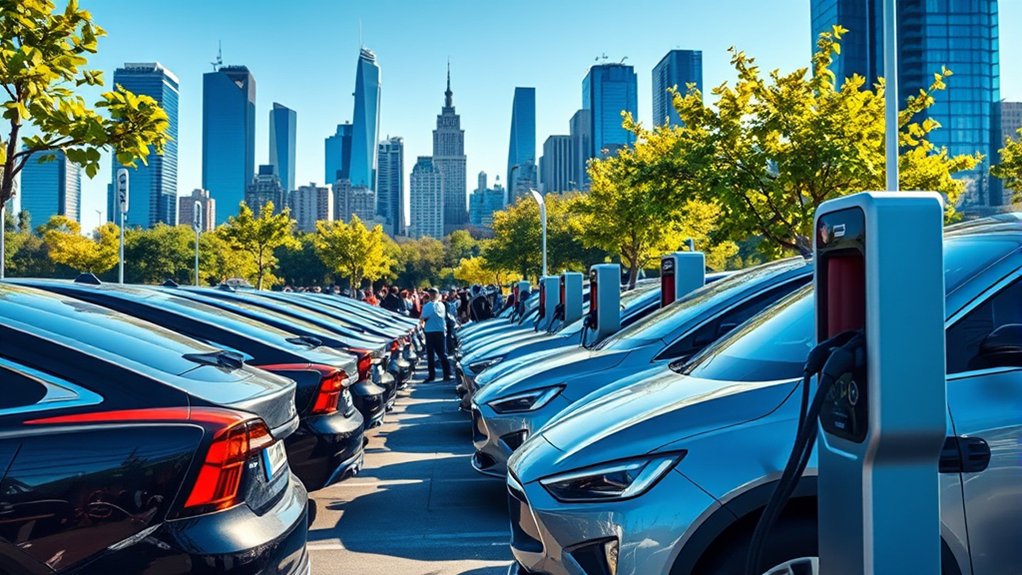
The EV charging infrastructure in the U.S. is growing quickly, but it is not evenly distributed. As of July 8, 2026, the U.S. Alternative Fuels Data Center listed 81,155 electric charging station locations and 252,884 charging ports across non-residential sites, excluding home chargers. The biggest gaps are no longer just about how many chargers exist. Drivers also need reliable ports, clear payment options, compatible connectors, and enough fast charging along busy corridors and in underserved communities.
Quick Answer
EV charging infrastructure includes the public, workplace, fleet, apartment, and home equipment used to charge electric vehicles. The U.S. network is expanding, led by Level 2 and DC fast charging, but access still varies by state, neighborhood, connector type, reliability, and utility readiness.
Key Takeaways
- The most reliable way to compare EV infrastructure is by charging ports, not just station locations, because one location can have many ports.
- Level 2 chargers remain the backbone of daily charging, while DC fast chargers are most important for road trips, ride-hailing, and drivers without reliable home charging.
- AFDC currently lists 178,534 Level 2 ports and 73,621 DC fast ports in the U.S. non-residential charging network.
- Regional gaps remain large. California has far more total ports than most states, while rural and lower-adoption regions still face thinner coverage.
- Future growth depends on site permitting, utility upgrades, funding stability, charger reliability, payment access, and connector standardization.
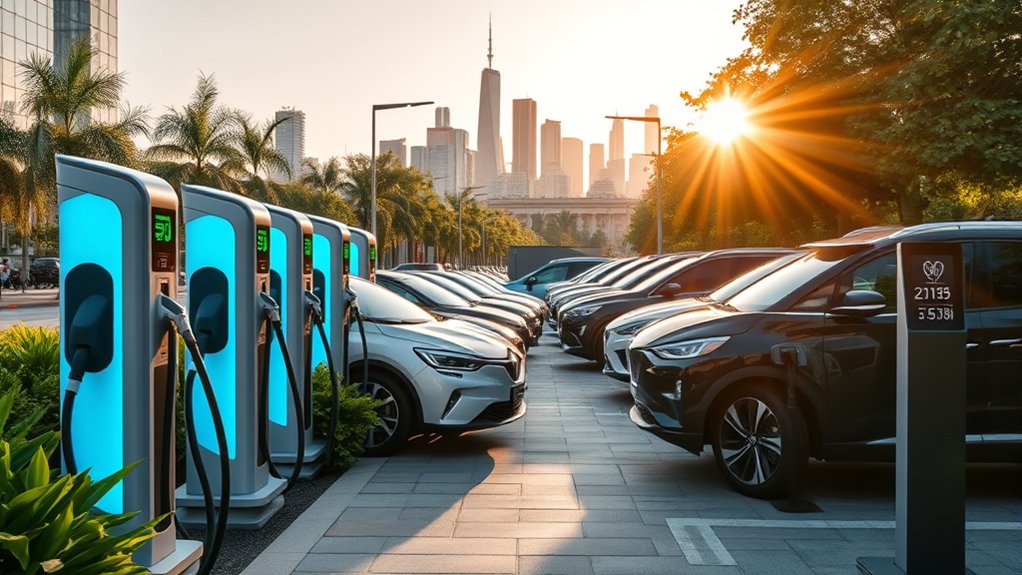
What Is the Current State of EV Charging Infrastructure in the U.S.?
The U.S. charging network is larger than it was a few years ago, but the numbers need careful wording. A charging station location is a site, such as a parking lot, travel center, workplace, hotel, or shopping center. A charging port is the equipment that can charge one vehicle at a time. A connector is the plug that goes into the vehicle. One site can have several ports, and one port may have more than one connector.
According to the U.S. Alternative Fuels Data Center station counts, the U.S. non-residential electric charging network included 252,884 charging ports as of July 8, 2026. That total included 710 Level 1 ports, 178,534 Level 2 ports, and 73,621 DC fast charging ports. These figures do not include residential charging equipment, so the true number of places where EVs are charged is much larger when home chargers are counted.
As of July 8, 2026, AFDC listed 252,884 U.S. electric charging ports across 81,155 non-residential station locations.
This progress matters because most EV drivers prefer predictable charging. Many owners charge at home, but public and workplace infrastructure fills important gaps for apartment residents, long-distance travelers, fleets, ride-hailing drivers, and anyone who cannot plug in overnight.
How EV Charging Infrastructure Is Counted
EV charging data can look confusing because different reports count different things. A network may say it has thousands of stations, while another source may count ports, connectors, or plugs. These are not always the same.
| Term | What It Means | Why It Matters |
|---|---|---|
| Station location | A physical site where charging is available. | One location may have one port or dozens of ports. |
| Charging port | Equipment that can charge one vehicle at a time. | Ports are the best count for real charging capacity. |
| Connector | The plug that connects the charger to the vehicle. | Connector type determines whether your EV can plug in directly or needs an adapter. |
Note: Home chargers are a major part of real-world EV charging, but they are usually not included in public infrastructure totals. When you compare charger counts, check whether the source includes public, private, workplace, fleet, or residential equipment.
What Types of EV Charging Are Available?
The U.S. charging network is built around three main charging levels: Level 1, Level 2, and DC fast charging. Each serves a different purpose. Level 1 is slow and mostly residential. Level 2 is the everyday workhorse. DC fast charging is the fastest public option and is most useful for road trips and high-mileage drivers.
Level 1 Charging
Level 1 charging uses a standard 120-volt household outlet. The Alternative Fuels Data Center describes Level 1 as adding about 5 miles of range per hour, though the real result depends on the vehicle, battery, temperature, and charging equipment.
Level 1 can work for plug-in hybrids, low-mileage drivers, emergency backup charging, or overnight charging when daily mileage is short. It is not ideal for quick public charging because it can take many hours to recover a meaningful amount of range.
Level 2 Charging
Level 2 charging uses 208-volt or 240-volt power and is the most common non-residential charging level in the U.S. AFDC currently lists 178,534 Level 2 ports. These chargers are common at workplaces, apartment buildings, hotels, shopping centers, municipal lots, parking garages, and homes with dedicated EV charging equipment.
AFDC says Level 2 charging can add about 25 miles of range per hour. That makes it practical for overnight home charging, an eight-hour workday, or several hours parked at a destination. It is usually slower than DC fast charging, but it is often cheaper to install and easier on daily routines.
DC Fast Charging
DC fast charging sends direct current to the vehicle battery and is designed for shorter charging stops. AFDC says DC fast charging can add roughly 100 to 200+ miles of range in about 30 minutes under suitable conditions. Some sessions are faster, and some are slower, depending on the car, battery state of charge, charger output, weather, and whether the charger is sharing power with nearby vehicles.
AFDC currently lists 73,621 DC fast charging ports in the U.S. These ports are especially important along highways, near travel centers, in dense cities, and in areas where drivers do not have dependable home charging.
Pro Tip: For road trips, do not plan around one charger alone. Choose stops with several DC fast ports, check live status in the charging app, and keep enough range to reach a backup site.
Connector Types and the J3400/NACS Transition
Connector compatibility is changing quickly. Many EVs still use J1772 for Level 1 and Level 2 charging and CCS for DC fast charging. Some older fast-charging sites also have CHAdeMO, mainly for older Nissan Leaf models and a small number of other vehicles. Tesla’s connector has moved toward broader industry use through SAE J3400, often called NACS in consumer discussions.
This transition should improve charging access over time, but it also creates a short-term mix of plugs and adapters. Before buying an EV or planning a trip, check which connector your vehicle uses, whether it supports adapters, and whether the charging network you want to use is open to your vehicle.
How Are Charging Station Locations Growing?
Charging locations are growing through a mix of private investment, utility programs, state incentives, federal funding, automaker partnerships, and site-host demand. Growth is strongest where EV adoption is high, where local permitting is smoother, where utilities can support new electrical loads, and where businesses see charging as a way to attract customers.
California still has the largest network by total count. Other large states, including New York, Florida, and Texas, also have thousands of locations and ports. Smaller states can still rank well on a per-capita basis if they have strong policy support and dense coverage relative to population.
| State | Station Locations | Charging Ports | What It Shows |
|---|---|---|---|
| California | 19,603 | 65,488 | Largest total network and high EV adoption. |
| New York | 5,515 | 21,023 | Strong metro-area and corridor coverage. |
| Florida | 4,382 | 15,033 | Large travel market with growing highway needs. |
| Texas | 3,760 | 12,382 | Large geography makes corridor coverage important. |
| Vermont | 551 | 1,447 | Small state with comparatively strong access by population. |
| Louisiana | 267 | 869 | Shows how coverage can lag in lower-deployment regions. |
What Key Challenges Do States Face in Developing EV Charging Infrastructure?
States face more than a simple equipment shortage. Building a good EV charging network requires land, power, permits, software, maintenance, customer support, and a business model that works after the ribbon-cutting.
Permitting and zoning can slow projects when local rules are unclear or when sites need parking changes, signage, trenching, or accessibility improvements. Utility interconnection can also take time because high-power DC fast charging sites may require new transformers, service upgrades, or grid planning.
Rural economics are another barrier. A busy urban charger may serve many vehicles each day, while a rural corridor charger may be essential for travel but used less often. That makes funding, site selection, and long-term maintenance especially important outside major metro areas.
Warning: A station shown on a map is not always available when you arrive. Ports can be occupied, offline, blocked, limited by payment issues, or incompatible with your connector. Always check live status when possible.
Reliability is also part of infrastructure. A region may have enough ports on paper, but drivers still lose confidence if screens fail, payment systems do not work, connectors are damaged, charging sessions stop early, or support is hard to reach. Better uptime standards, clearer pricing, and faster repair response are as important as installing new hardware.
What Government Initiatives and Funding Support Charging Networks?
The 2021 infrastructure law created major federal support for EV charging, including the National Electric Vehicle Infrastructure Formula Program. The program was designed to help states build a more connected national charging network, especially along alternative fuel corridors and major travel routes.
Federal money can help close gaps, but it does not build chargers by itself. States still need approved plans, site hosts, contractors, utility coordination, equipment procurement, inspections, and long-term maintenance. Local rules and utility timelines can decide whether a funded site opens quickly or stalls for months.
Tax incentives can also affect EV demand and charging investment. The IRS New Clean Vehicle Credit page says the credit is not available for vehicles acquired after September 30, 2025. Because federal and state incentives can change, drivers, businesses, and site hosts should verify current eligibility before making a purchase or investment decision.
How Are Automakers and Charging Networks Expanding Access?
Automakers, charging networks, convenience-store chains, utilities, and site hosts are all working to expand charging access. The most important shift is not just more ports. It is a move toward larger charging hubs, better uptime, clearer payment, and wider connector compatibility.
| Expansion Area | What Is Changing | Why It Helps Drivers |
|---|---|---|
| Connector standardization | More vehicles and networks are moving toward J3400/NACS compatibility. | Fewer adapter problems and more usable fast chargers over time. |
| Highway charging hubs | Networks are adding multi-port DC fast sites near travel corridors. | More backup ports at each stop and less dependence on one charger. |
| Retail and workplace charging | More chargers are being placed where vehicles already sit. | Drivers can charge while shopping, working, or staying overnight. |
| Payment improvements | Networks are improving apps, card readers, roaming, and account access. | Charging becomes easier for first-time users and travelers. |
For EV owners, the practical question is simple: can you reach a working charger that fits your vehicle and your schedule? Partnerships help when they increase real access, not just when they add logos to a map.
How Does Charging Infrastructure Vary by Region?
Charging access varies widely by region because EV adoption, state policy, population density, highway spacing, utility readiness, and private investment all vary. Dense coastal markets often have more Level 2 destination charging and more fast-charging demand. Rural regions may need fewer sites overall, but each site may be more important because the distance between alternatives is larger.
California has the largest total network, with 65,488 AFDC-listed electric charging ports. Vermont has far fewer total ports, but its smaller population and compact geography make coverage stronger than the raw count suggests. Louisiana has 869 listed ports, showing how some regions still have thinner coverage.
This uneven map affects real drivers. In a high-coverage metro area, a driver may have several backup stations within a few miles. In a rural corridor, one offline fast charger can disrupt a trip. That is why infrastructure planning must focus on both total port count and strategic location.
What Are the Utilization Rates and Consumer Experiences?
Consumer experience depends on more than the charging level. A good charging stop has enough working ports, clear pricing, safe lighting, restrooms or nearby services, accurate app data, and a simple payment process. A poor stop may have one broken port, a confusing app, a blocked parking space, or slow charging because the site is sharing power.
Utilization also differs by location. Urban fast chargers may be busy because they serve apartment residents, ride-hailing drivers, delivery vehicles, and travelers. Rural fast chargers may be less busy day to day but still essential for long-distance confidence. Workplace and destination Level 2 chargers may have long dwell times, which is useful if drivers are parked for several hours.
Charging time also varies. Level 1 can take 20 hours or more from a low battery. Level 2 often works well for overnight or workday charging. DC fast charging may add substantial range in less than an hour, but speed usually drops as the battery fills. For many EVs, the fastest road-trip strategy is to charge from a lower state of charge to roughly 70% or 80%, then continue driving instead of waiting for a slow final top-off.
What Future Investments Are Expected in Charging Infrastructure?
Future investment will need to cover both public and private charging. The 2030 National Charging Network report from the Joint Office of Energy and Transportation and NREL modeled a mid-adoption scenario with 182,000 publicly accessible fast charging ports, 1 million publicly accessible Level 2 ports, and 26.8 million privately accessible Level 1 and Level 2 ports by 2030.
That projection shows why home, multifamily, and workplace charging matter so much. Public DC fast chargers get the most attention because they are visible and important for trips, but most daily charging can happen where vehicles already park for long periods.
The same report estimated that cumulative charging infrastructure investment could reach tens of billions of dollars by 2030, excluding some grid upgrade costs. That means utilities, regulators, charging companies, automakers, property owners, and local governments all have a role in whether the network grows smoothly.
How Will Regulatory Changes Impact EV Adoption?
Regulatory changes can affect EV adoption in several ways. Vehicle emissions rules influence automaker planning. Building codes can make new apartments and workplaces more charger-ready. Utility rules affect how fast charging sites connect to the grid and how demand charges are handled. State grants and rebates can make charging projects easier to finance.
Federal incentives also matter, but they can change. The IRS currently states that the New Clean Vehicle Credit is not available for vehicles acquired after September 30, 2025. That does not end EV adoption, but it can change buyer behavior, dealer messaging, and automaker pricing strategies.
For charging infrastructure, the most useful regulatory environment is stable, clear, and practical. Site hosts need predictable rules before they invest. Drivers need transparent pricing and accessible payment. Utilities need time to plan capacity. States need reliable funding paths and realistic deployment deadlines.
Frequently Asked Questions
How much does it cost to charge an EV at public stations?
Public charging costs vary by network, location, charger speed, membership plan, idle fees, and local electricity rates. Level 2 charging is often cheaper than DC fast charging, while DC fast charging usually costs more because it delivers much higher power. Always check the station app or screen before starting a session.
What is the average charging time for different EV types?
Charging time depends on battery size, state of charge, charger power, temperature, and the vehicle’s charging curve. Level 1 is slow and can take 20+ hours from a low battery. Level 2 is often suited for overnight or workday charging. DC fast charging can add significant range in 20 to 60 minutes for many vehicles.
Are there membership fees for using charging networks?
Some networks let you pay as a guest, while others offer memberships that may lower the per-kWh or per-minute price. A membership can be useful if you use the same network often, but occasional drivers may prefer stations with credit-card, contactless, or simple app-based payment.
How do charging stations handle payment processing?
Charging stations may accept payment through a network app, RFID card, credit card reader, contactless payment, or plug-and-charge system. The exact method depends on the network and site. Before a long trip, set up accounts for the networks along your route so you are not creating logins at the charger.
What happens if a charging station is out of service?
Check the charging app for nearby alternatives, report the issue to the network, and move to a backup site if needed. For road trips, avoid arriving with only a few miles of range. Planning a buffer gives you options if a port is offline, occupied, blocked, or incompatible.
Do all electric vehicles use the same charging plug?
No. Common plugs include J1772 for Level 1 and Level 2 charging, CCS for many DC fast-charging vehicles, CHAdeMO for some older vehicles, and J3400/NACS for Tesla-style charging access. Adapter support varies by vehicle, model year, and charging network.
Can renters and apartment residents rely only on public charging?
They can, but it usually takes more planning and may cost more than home charging. Renters should look for workplace charging, nearby Level 2 stations, reliable DC fast chargers, and apartments that offer EV-ready parking. Multifamily charging is one of the most important gaps in the U.S. charging network.
Conclusion
The U.S. EV charging infrastructure network is no longer in its earliest stage, but it is still uneven. The country now has more than 250,000 AFDC-listed non-residential charging ports, led by Level 2 and DC fast charging. The next challenge is quality: chargers must be placed where drivers need them, work when they arrive, support the right connectors, show clear pricing, and connect to a grid that can handle higher demand. With better planning, stronger reliability, and smarter regional investment, EV charging can become a normal part of daily driving instead of a source of range anxiety.
Sources
- U.S. Alternative Fuels Data Center — Alternative Fueling Station Counts by State — current U.S. station location and charging port counts.
- U.S. Alternative Fuels Data Center — Electric Vehicle Charging Stations — charging level definitions, port terminology, connector information, and charging speed guidance.
- U.S. Alternative Fuels Data Center — Charging Electric Vehicles at Home — home charging context and residential charging basics.
- Federal Highway Administration — NEVI Formula Program — federal EV charging infrastructure program background.
- Joint Office of Energy and Transportation / NREL — The 2030 National Charging Network — projected charging infrastructure needs for 2030.
- Internal Revenue Service — New Clean Vehicle Credit — current federal clean vehicle credit eligibility status.