

A partially clogged diesel particulate filter may clear through regeneration, the process that burns off accumulated soot. When the vehicle permits it, a properly warmed engine and a sustained drive can help create the conditions needed, without removing the filter or using special tools.
The important limitation is that a regeneration drive is not a cure for every DPF warning. It is an option for early soot buildup, not a substitute for diagnosis when the car has serious engine faults, severe power loss, or a heavily blocked filter.
The approach sometimes described as a “Japanese DPF cleaning trick” is better understood as a carefully planned regeneration drive. Its useful elements are preparation, suitable engine load, enough uninterrupted driving time, and checking whether the problem actually improves. Your vehicle’s handbook takes priority over any generic speed, RPM, or duration recommendation.
Key Takeaways
- A regeneration drive may clear early soot buildup when the vehicle permits the procedure.
- Manufacturer instructions take priority over generic speed, RPM, gear, and duration targets.
- Warm-up and sufficient sustained driving time matter more than brief bursts of acceleration.
- Persistent warnings after two properly completed attempts call for professional diagnosis.
Table of Contents
- Can You Clear a Blocked DPF by Driving?
- What DPF Regeneration Needs to Work
- Prepare the Vehicle and Route Before You Start
- How to Carry Out a Regeneration Drive
- How to Tell Whether DPF Regeneration Is Happening
- Check the Result Before Trying Again
- Mistakes That Make a DPF Cleaning Drive Less Useful
- Prevent Recurrence by Responding Early
Can You Clear a Blocked DPF by Driving?
Driving can help a DPF regenerate when the blockage is caused by soot that the system can still burn off and the vehicle is able to carry out regeneration. The aim is not to force debris out of the exhaust. It is to maintain operating conditions that allow the filter’s cleaning process to work.
A regeneration drive is most relevant when:
- A DPF warning has appeared recently and the handbook recommends a driving procedure.
- The car has been making more frequent regeneration attempts.
- There are early signs of soot buildup, rather than a long-standing or severe blockage.
- The engine otherwise operates normally and can safely sustain the recommended drive.
Do not assume that reduced power automatically means the car needs a motorway run. It can also be a reason to seek diagnosis, especially if the vehicle has entered limp mode or displays additional engine warnings.
When to seek professional help instead
Skip the DIY drive if the car will not start, has serious engine faults, cannot maintain speed safely, or has had unresolved DPF warnings for an extended period. A severely blocked filter may need professional cleaning or replacement.
If the handbook calls for workshop attention, follow that instruction rather than attempting a generic regeneration procedure. The same applies when warnings escalate or the vehicle’s behavior deteriorates.
What DPF Regeneration Needs to Work
A diesel particulate filter captures soot from the exhaust. Regeneration uses heat to burn off that soot and restore the filter’s ability to pass exhaust gas.
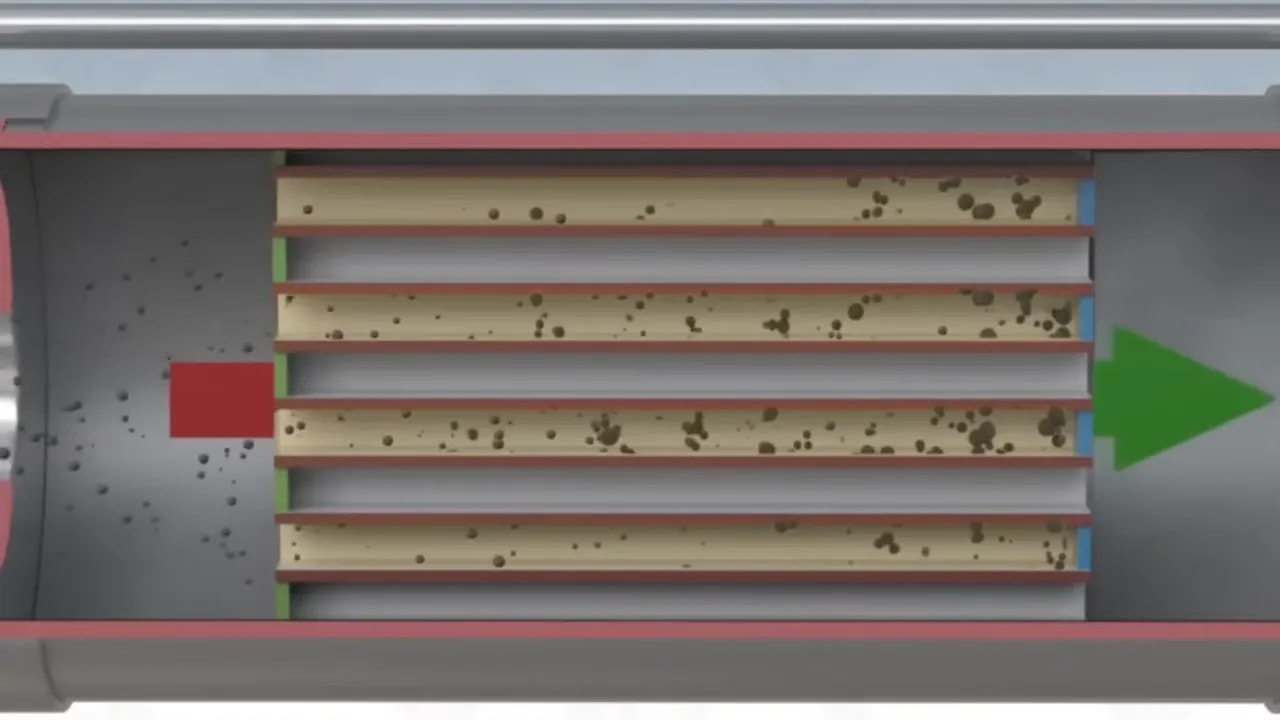
The practical goal is to bring the engine and exhaust system up to operating temperature, then sustain suitable driving conditions long enough for cleaning to take place. A short burst of acceleration is not equivalent to a completed regeneration cycle.
The often-cited precision driving approach uses the following planning targets:
| Factor | Suggested target | Important limitation |
|---|---|---|
| Road speed | 100 to 110 km/h, approximately 62 to 68 mph | Only where legal, safe, and appropriate for the vehicle |
| Engine speed | 2,000 to 2,500 RPM | A reference range, not a universal regeneration threshold |
| Gear selection | A gear that maintains the suitable RPM range | The correct gear depends on gearing and transmission type |
| Sustained driving time | 30 to 45 minutes once regeneration is underway | Use the manufacturer’s procedure and completion guidance |
| Preparation | A mechanically sound, warmed-up vehicle with sufficient fuel | Resolve serious faults before attempting regeneration |
These figures are not a guarantee that a particular engine will reach the required exhaust temperature. RPM alone does not confirm regeneration, and there is no single gear or road speed that works identically across every diesel model.
For additional background on DPF operation and blockage symptoms, the RAC’s diesel particulate filter guide provides useful supporting information.
Prepare the Vehicle and Route Before You Start
A successful attempt begins before joining a fast road. Check the car’s condition and choose a route that gives you time to complete the manufacturer’s recommended procedure safely.
Check oil, coolant, fuel, and warnings
- Engine oil: Confirm that its level and condition are suitable.
- Coolant: Check that the level is correct before setting off.
- Fuel: The suggested approach starts with at least half a tank, preferably around three-quarters. Follow any vehicle-specific minimum.
- Faults: Do not overlook other engine problems simply because a DPF warning is present.
If you cannot establish whether the warning allows a driver-assisted regeneration attempt, consult the handbook or a qualified technician first.
Choose a route with enough time and minimal interruptions
Look for a legal, suitable route where traffic conditions allow sustained driving. Off-peak travel can make this easier, but road safety always takes priority over maintaining a particular speed or RPM.
Allow for the warm-up, the regeneration period, and a gentler final stretch. A “30-minute DPF clean” can require considerably more than 30 minutes from departure to parking. If cleaning begins only after the exhaust has warmed sufficiently, the first part of the trip is preparation rather than the full cleaning period.
Milder weather can make it easier to retain exhaust heat. An outside temperature above 10°C is suggested for this approach, but it is a planning preference rather than a universal requirement.
Decide whether a DPF fuel additive is appropriate
Some DPF-specific fuel additives are designed to assist soot combustion by reducing the temperature needed for it to burn. They are an optional aid, not proof that the filter will clear and not a replacement for repairing engine faults.
If using one:
- Confirm that the vehicle manufacturer permits it.
- Choose a product explicitly intended to be added to diesel fuel.
- Follow the label’s dosage and fuel-volume instructions.
- Do not treat every product labeled “DPF cleaner” as a fuel-tank additive.
Product names can cover different application methods. A cleaner intended for direct workshop treatment must not be poured into the fuel tank. If the label recommends adding the product before refueling, follow that mixing procedure rather than assuming one method suits all formulations.
How to Carry Out a Regeneration Drive
Use the following framework only when your handbook permits a driving-based regeneration attempt. Any vehicle-specific instructions override the general targets below.
1. Warm the engine through normal driving
Do not start a sustained higher-load drive immediately after a cold start. Begin with gentle, normal driving and allow the engine to reach its usual operating temperature.
A short initial idle may be part of the suggested preparation, followed by roughly 5 to 10 minutes of local driving. However, a fixed two- or three-minute idle does not establish that the engine, oil, and exhaust are fully warm. Conditions vary, so use the vehicle’s temperature indication and handbook guidance rather than relying solely on a timer.
2. Maintain suitable engine speed and load
Once warm, settle into the recommended driving conditions. The reference approach uses 100 to 110 km/h and 2,000 to 2,500 RPM, where those conditions are legal and safe.
Choose the gear by the resulting engine speed, not by its number. Fourth or fifth may suit some cars; other vehicles have different gearing. Using the highest gear can leave the engine below the intended range even at motorway speed.
With an automatic transmission, use an appropriate selectable gear mode only if the handbook allows it and you can do so safely. Avoid forcing a generic gear choice onto a transmission that operates differently.
Steady driving is preferable to repeated hard acceleration and deceleration. Cruise control may help in suitable conditions, but do not use it when traffic, weather, or road conditions make it inappropriate.
3. Give regeneration time to finish
The most common practical mistake is ending the journey too soon. A 15- or 20-minute trip may include most of its time warming the engine and exhaust rather than completing soot burn-off.
The suggested precision approach allows at least 30 minutes of sustained driving after regeneration begins, with up to 45 minutes proposed for a more substantial but still recoverable soot buildup.
That timing is not a universal instruction to keep driving regardless of warnings. Follow your vehicle’s completion indication or prescribed procedure. If traffic requires slowing down or stopping, do so. An interruption does not, by itself, prove that every vehicle has abandoned regeneration or that a timer must always restart.
4. Finish with gentler driving
After completing the prescribed drive, return to normal, gentler driving rather than stopping immediately after sustained higher-load operation.
The suggested approach includes another 5 to 10 minutes on local roads, followed by a brief idle before shutdown. Use the manufacturer’s guidance on cooling down and switching off, particularly if regeneration still appears to be active.
How to Tell Whether DPF Regeneration Is Happening
Some cars display a regeneration message or indicator. Others provide only indirect clues. Possible signs include:
- Cooling fans operating more noticeably.
- A temporary increase in displayed fuel consumption.
- A slightly elevated idle when slowing or stopping.
- A faint hot or burning smell around the exhaust.
These are clues, not confirmation that the DPF has finished cleaning. Fans and fuel-consumption changes can have other causes, and not every vehicle makes regeneration obvious.
Do not dismiss a strong or unusual smell, worsening performance, or new warnings as normal regeneration. Stop the attempt when the vehicle’s instructions or safe operation require it.
Check the Result Before Trying Again
After the drive, monitor the vehicle during normal use over the next day or two. Useful signs of improvement include the DPF warning clearing, normal power returning, and smoother operation.
Some recoverable soot buildup may require another manufacturer-permitted regeneration attempt. However, repetition should have a clear stopping point.
- Warning cleared and operation restored: Continue normal maintenance and remain alert to recurring symptoms.
- Some improvement but the warning remains: Check the handbook before deciding whether another attempt is appropriate.
- No improvement after two properly completed attempts: Arrange professional diagnosis rather than continuing repeated highway runs.
- Symptoms worsen at any stage: Stop treating the issue as a routine cleaning problem and seek help.
A persistent warning does not establish that the filter must immediately be replaced. It establishes that a driving attempt has not resolved the problem and that diagnosis is needed to choose the next step.
Mistakes That Make a DPF Cleaning Drive Less Useful
- Treating the RPM range as a guarantee: Engine speed alone does not verify exhaust temperature or successful regeneration.
- Starting with a cold engine: Warm-up is part of preparation, not something to skip.
- Using too high a gear: Road speed can look suitable while engine speed remains below the intended range.
- Stopping too early: Reaching the motorway is not the same as completing a cleaning cycle.
- Using the wrong cleaner: Check the application method, compatibility, and dose before adding anything.
- Ignoring other faults: A DPF warning does not make unrelated engine problems safe to overlook.
- Prioritizing an uninterrupted run over safety: Never speed or resist necessary slowing to preserve regeneration conditions.
Prevent Recurrence by Responding Early
The most useful part of this approach is early attention, not a promise of a last-minute rescue. A newly illuminated DPF warning or increasingly frequent cleaning attempts should prompt a check of the handbook and the vehicle’s condition.
A planned sustained drive may help when the manufacturer recommends it, but there is no universal maintenance interval for performing one. A suggested interval such as every 8,000 to 10,000 km should not replace the vehicle’s own service and DPF guidance.
The practical next step is simple: establish whether your car permits a regeneration drive, prepare it correctly, allow enough time, and assess the result. If the warning persists or the car has serious symptoms, move to diagnosis rather than chasing a “trick.”