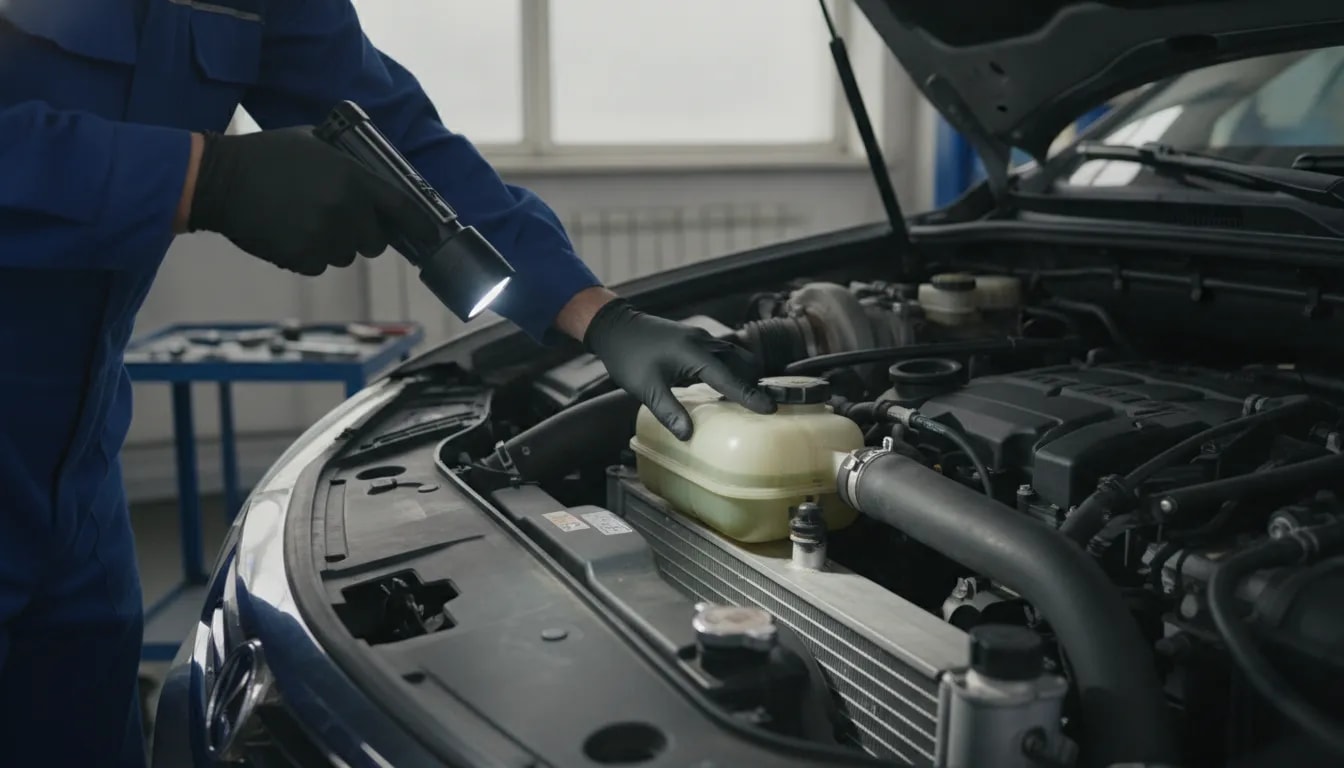
A normal temperature gauge does not prove that a diesel cooling system is healthy. Low coolant, restricted passages, contamination, and trapped air can interfere with cooling before an obvious temperature warning appears.
The most useful checks are coolant condition, recurring coolant loss, the correct fluid specification, service history, proper bleeding, and pressure-cap condition. Together, they reveal problems that simply topping up the reservoir can miss.
Whether you drive a diesel pickup, van, or passenger car, cooling-system maintenance should focus on both the fluid and the components that keep it circulating.
Key Takeaways
- A normal temperature gauge does not rule out localized cooling problems.
- Choose coolant by the manufacturer’s specification rather than its color.
- Recurring coolant loss and oil contamination need diagnosis, not repeated top-ups.
- Scheduled coolant replacement, correct bleeding, and pressure-cap testing support reliable cooling.
Table of Contents
- Why a Diesel Engine Can Have Cooling Problems With a Normal Gauge
- Start With Warning Signs That Need Prompt Attention
- Choose Diesel Coolant by Specification, Not Color
- Keep Water Top-Ups From Becoming a Maintenance Habit
- Replace Coolant Based on Service Requirements, Not Appearance
- After Cooling-System Repairs, Verify That Air Has Been Removed
- Include the Pressure Cap in Cooling-System Maintenance
- A Practical Diesel Cooling-System Maintenance Plan
- The Bottom Line
Why a Diesel Engine Can Have Cooling Problems With a Normal Gauge
Coolant carries heat away from the engine. It also provides corrosion protection, while the cooling system must maintain adequate circulation through the engine and radiator.
Diesel engines operating under heavy loads need dependable heat removal. Towing and other demanding operation leave less room for neglected coolant or restricted flow. Aluminum components also require suitable corrosion protection.
Two problems are particularly easy to overlook:
- Restricted heat transfer: Deposits or contamination can interfere with cooling even when the reservoir contains enough fluid.
- Localized overheating: An air pocket can leave part of the engine inadequately cooled without producing an immediate, obvious change on the dashboard gauge.
This does not mean that every diesel with a normal gauge is overheating. It means the gauge should not replace routine inspection. Coolant loss, oily residue, or overheating after recent repairs deserves attention regardless of the needle’s position.
Start With Warning Signs That Need Prompt Attention
Before deciding whether to top up or replace coolant, look for evidence of a leak or contamination. These issues require diagnosis, not just fresh fluid.
Safety first: Inspect coolant levels with the engine cold. Never remove a radiator or expansion-tank pressure cap while the system is hot. Do not open a hot system to investigate bubbling or coolant loss.
Milky coolant or an oily film
Coolant that looks milky or has an oily layer may be contaminated with engine oil. Possible causes include a failed oil cooler, a head-gasket problem, or a cracked cylinder head.
Oil contamination compromises cooling performance. Replacing the coolant without addressing the source does not solve the problem.
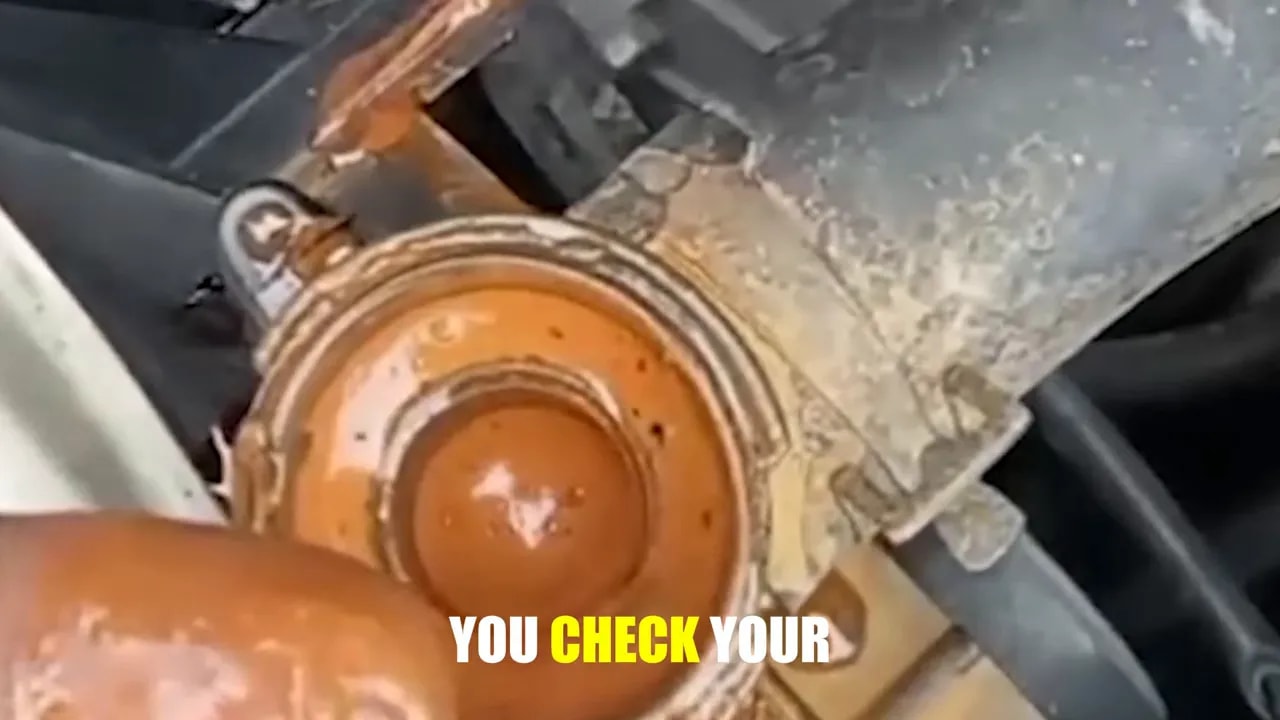
If you find clear oil contamination, stop using the vehicle and arrange an inspection before continuing to drive. Continued overheating can turn a repairable fault into cylinder-head damage.
Persistent bubbles in the expansion tank
Bubbling can be associated with combustion gases entering the cooling system, including through a damaged head gasket. Gas pockets interfere with cooling and can contribute to localized overheating.
However, bubbles alone do not establish a head-gasket diagnosis, especially when the system has recently been drained or refilled. Trapped air must also be considered.
Persistent or unexplained bubbling should be professionally investigated rather than dismissed. Do not keep driving simply because the temperature gauge still appears normal.
A falling coolant level or occasional puddle
Repeated top-ups are a warning sign. A small leak can leave the engine short of coolant, allow air into the system, and indicate a component that is deteriorating.
Common areas to inspect include:
- Water pump and its seal.
- Radiator and radiator end tanks.
- Hose connections.
- Expansion tank.
- Thermostat housing gaskets.
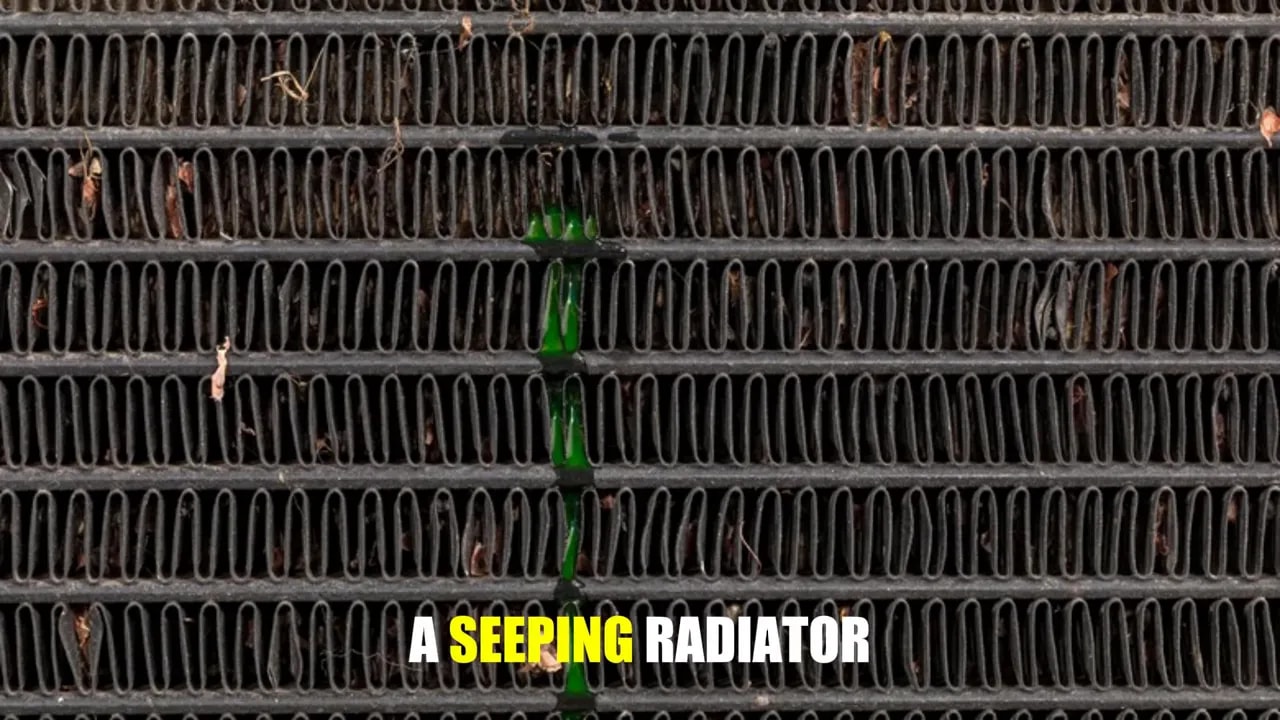
A weeping seal or seeping radiator may worsen and eventually cause rapid coolant loss. Arrange repairs promptly rather than treating topping up every few months as normal maintenance.
Choose Diesel Coolant by Specification, Not Color
The correct coolant is the one that meets your vehicle manufacturer’s requirements. Its color is not a reliable substitute for that specification.
Coolant labels commonly refer to different inhibitor technologies:
- IAT: Inorganic additive technology.
- OAT: Organic acid technology.
- HOAT: Hybrid organic acid technology.
These terms describe broad coolant families. They do not, by themselves, tell you whether a particular product is right for your engine.
Many modern diesel applications specify OAT or HOAT formulations, but the practical rule is to follow the exact manufacturer requirement. Do not assume every diesel has the same construction or needs the same coolant chemistry.
A reliable coolant-selection checklist
- Find the required specification in the owner’s manual or manufacturer service information.
- Check the product label against that requirement rather than choosing by color or price.
- Confirm what is already in the system before adding another product.
- If the existing coolant is unknown, arrange an appropriate drain, flush, and refill with the specified coolant.
Manufacturer manuals are a better starting point than a generic shelf label. For example, Ford owners can access vehicle-specific information through the Ford owner’s manual portal.
Why mixing coolant can cause trouble
Different coolants can contain incompatible inhibitor packages. Mixing unsuitable formulations can produce deposits or gel-like material that restricts passages and reduces circulation.
The important distinction is compatibility, not dye color. Two fluids that look alike are not necessarily interchangeable, and a full reservoir does not rule out restricted coolant flow.
Avoid casually combining products. If the wrong coolant has already been added, resolve the compatibility question before adding more.
Keep Water Top-Ups From Becoming a Maintenance Habit
Water and coolant are not interchangeable for long-term maintenance. Coolant provides corrosion protection as well as freeze protection, and repeated water additions dilute that protection.
Tap water can introduce minerals such as calcium and magnesium. When heated, these can form scale deposits that interfere with heat transfer.
What to use when water is temporarily necessary
If a temporary water addition is necessary, use distilled or deionized water rather than water from a hose or household tap. Then restore the correct coolant concentration according to the vehicle and coolant instructions.
A temporary top-up should not become permission to keep driving with an unresolved leak. It addresses the level, not the reason the level dropped.
Questions to answer before topping up
- Is the engine fully cold?
- Does the fluid meet the required coolant specification?
- Is the product premixed or a concentrate requiring preparation?
- Has the vehicle needed previous top-ups?
- Is the coolant clean, or does it show contamination?
If the system keeps losing fluid, prioritize finding the fault over repeatedly restoring the reservoir level.
Replace Coolant Based on Service Requirements, Not Appearance
Coolant can look clean after its protective additives have deteriorated. Appearance cannot confirm that corrosion protection remains adequate.
As coolant ages, its inhibitor package can become depleted and its chemistry can change. Neglected coolant can contribute to corrosion and deposits, undermining the cooling system over time.
Use the manufacturer’s replacement interval as the deciding rule. Do not assume that a long-life product has an unlimited service life.
General reference intervals sometimes used are around five years or 150,000 kilometers for long-life OAT coolant and around two years for traditional formulations. These are not universal instructions: your vehicle’s specified interval and coolant requirements take priority.
What if a used diesel has no coolant service history?
A clean-looking reservoir is not enough to establish the coolant’s age or type. Check the maintenance records first.
If the history cannot be verified, arrange a cooling-system assessment and an appropriate coolant service. Establishing a known fluid specification and service date is more useful than guessing from color.
After Cooling-System Repairs, Verify That Air Has Been Removed
A system can appear full while still containing trapped air. This is particularly relevant after a coolant change, hose replacement, or other work that opens the cooling circuit.
Air pockets do not remove heat as effectively as circulating coolant. A pocket near a hot engine area can cause localized overheating even though the expansion tank looks correctly filled.
Why there is no universal bleeding procedure
Some vehicles use bleeder screws. Others require a particular filling sequence or operating procedure. Instructions involving an open cap, running the engine, or manipulating hoses are not safe or suitable as blanket advice for every diesel.
Follow the exact service procedure for the vehicle. If that procedure is unavailable or unclear, have a qualified technician refill and bleed the system.
Checks to make after the work is complete
- Confirm that the specified coolant was used.
- Verify that the vehicle-specific bleeding procedure was completed.
- Recheck the coolant level when the engine is cold.
- Look for leaks at disturbed connections.
- Investigate new overheating rather than assuming the reservoir level proves the refill was successful.
If overheating begins after cooling-system work, trapped air is an important possibility. It should not automatically be blamed on a different component without checking the refill.
Include the Pressure Cap in Cooling-System Maintenance
The radiator or expansion-tank pressure cap is easy to overlook. A weak cap can compromise cooling-system operation, yet its condition is not established by checking coolant level.
Include cap inspection and testing in routine maintenance. An annual pressure-cap test is a useful preventive check, particularly when coolant loss or overheating remains unexplained.
A brief visual inspection can identify an obvious concern, but it does not prove the cap functions correctly. Ask for an appropriate test rather than assuming that a cap that screws on normally is healthy.
A Practical Diesel Cooling-System Maintenance Plan
Use this checklist to separate quick inspections from work that needs tools or vehicle-specific instructions.
| When | What to check | What to do if something is wrong |
|---|---|---|
| Monthly, with the engine cold | Coolant level, visible contamination, and signs of leakage | Investigate recurring loss or abnormal fluid appearance. |
| Before adding coolant | Required specification and compatibility with existing fluid | Do not select a product by color alone. |
| At the scheduled service interval | Coolant replacement requirements | Replace it on schedule even if it looks clean. |
| After cooling-system work | Correct refill, bleeding, and cold coolant level | Follow the vehicle-specific procedure and investigate new overheating. |
| Annually | Pressure-cap function | Arrange testing rather than relying only on appearance. |
| Whenever coolant loss appears | Leak source and severity | Repair promptly instead of normalizing repeated top-ups. |
Basic visual checks take little time. Pressure testing, diagnosis, coolant replacement, and repairs may require workshop equipment and expense. They should not be confused with a quick reservoir inspection.
The Bottom Line
A healthy diesel cooling system needs more than a full expansion tank. It needs the correct coolant, adequate circulation, effective corrosion protection, sound components, and proper filling after repairs.
Start by verifying the coolant specification and service history. Then inspect for contamination and leaks, confirm that recent work included correct bleeding, and include the pressure cap in routine testing. Do not wait for the gauge to enter the red before taking an abnormal finding seriously.