

The best diesel fuel additive is one that addresses a specific need: fuel-system lubricity, cold-weather protection, injector deposits, or DPF regeneration. A healthy diesel running on suitable fuel does not automatically need an additive at every fill-up.
For most diesel truck, car, and van owners, the useful choices fall into three groups: lubricity and anti-gel treatments, occasional injector cleaners, and compatible DPF regeneration aids. The bigger mistake is adding products without checking their formulation, purpose, or dosing instructions.
Two-stroke oil is not a sensible substitute for a purpose-made diesel treatment. Alcohol-containing products and water-emulsifying additives also deserve particular scrutiny, especially where the vehicle manufacturer prohibits them.
Key Takeaways
- Choose diesel additives by operating conditions and manufacturer compatibility, not by the number of advertised benefits.
- Winter anti-gel protection and injector cleaning are different functions that require the correct formula.
- Two-stroke oil is not a suitable substitute for a purpose-made diesel lubricity treatment.
- Use cleaners and DPF aids sparingly, without exceeding doses or combining overlapping treatments.
Table of Contents
- Which Diesel Additive Do You Actually Need?
- Diesel Additives and Ingredients to Avoid
- Lubricity and Anti-Gel Treatments: Protection Matched to Conditions
- Diesel Injector Cleaner: An Occasional Tool, Not an Automatic Habit
- DPF Regeneration Additives: Useful Only in the Right Application
- A Practical Diesel Additive Checklist
- The Bottom Line
Which Diesel Additive Do You Actually Need?
Choose by operating conditions rather than by the number of benefits advertised on the bottle.
| Your situation | Category to consider | Main caution |
|---|---|---|
| Concern about fuel lubricity or inconsistent fuel sources | A compatible diesel lubricity treatment | Check manufacturer guidance before adopting an every-tank routine. |
| Cold weather that requires protection against fuel waxing | A winter diesel anti-gel formula | A cleaning or lubricity product is not necessarily an anti-gel treatment. |
| Suspected injector deposits, rough idle, smoke, or falling fuel economy | A diesel injector cleaner used periodically | Symptoms alone do not establish that deposits are the cause. |
| A DPF-equipped diesel used mainly for short trips | A compatible DPF regeneration aid, where permitted | Do not mix treatments, exceed the dose, or ignore persistent warnings. |
| A healthy engine using suitable fuel in normal conditions | No additional product may be necessary | Avoid buying a treatment without a clear problem to solve. |
Start with the owner’s manual and the exact product label. General additive advice should not override vehicle-specific restrictions or application instructions.
Diesel Additives and Ingredients to Avoid
Two-stroke oil in diesel fuel
Adding two-stroke oil to diesel is a popular home-brew lubricity practice, but popularity is not evidence of protection. Oil formulated for a two-stroke engine is not the same as a treatment designed for diesel pumps and injectors.
Testing attributed to Sasol’s Energy Technology Division in 2015 examined two-stroke oil mixed with diesel at a typical 200:1 fuel-to-oil ratio. The reported findings included little lubricity improvement at that concentration and no measurable benefit to cetane number or fuel economy.
The reported engine test also found injector deposits and approximately 2% power loss after 16 hours at peak power. Those results describe the tested oil, engine, and conditions, not a guaranteed outcome for every vehicle. They nevertheless undermine the claim that this practice provides protection without a downside.
The concerns are particularly relevant to modern common-rail engines:
- Injector fouling: trace metals such as zinc in an oil formulation can contribute to nozzle deposits.
- Combustion quality: deposits can interfere with the injector’s spray pattern.
- DPF contamination: ash and metal-containing residues can accumulate in the exhaust filter and shorten its useful life.
If fuel lubricity is the concern, choose a compatible, purpose-made diesel lubricity additive rather than adding two-stroke oil.
Alcohol-containing and water-emulsifying treatments
Water handling matters as much as cleaning or ignition claims. A diesel water separator is intended to remove separated water before it reaches sensitive fuel-system components.
An additive that keeps water dispersed in the fuel can work against that separation process. Carrying water through a high-pressure injection system creates a risk of damage and poor operation.
Some manufacturer guidance specifically excludes alcohol, metal-based additives, and other water emulsifiers. Check the restrictions for your own engine rather than assuming that a product labeled “diesel treatment” is suitable.
Are all cetane boosters harmful?
Do not judge every cetane booster by the same rule. Cetane improvement, alcohol content, and water emulsification are separate characteristics. Some multifunction diesel products combine cleaning or lubricity treatment with cetane improvement.
Cetane boosters are marketed for easier cold starts and quieter operation, but a higher cetane claim alone is not a reason to buy one. The important questions are whether the fuel already meets the engine’s requirements and whether the complete additive formulation is permitted.
Be particularly cautious about a standalone performance treatment that provides no clear compatibility information. More advertised ignition improvement does not automatically mean better fuel-system protection.
Lubricity and Anti-Gel Treatments: Protection Matched to Conditions
Why ULSD lubricity matters
The refining processes used to produce ultra-low sulfur diesel, or ULSD, also remove compounds that contribute to the fuel’s natural lubricating properties. Commercial diesel is treated to meet fuel requirements, so ULSD should not automatically be regarded as untreated or unsuitable.
Lubricity still matters because fuel lubricates components within the pump and injection system. Inadequate lubrication can contribute to wear in high-pressure fuel pumps, including the CP4 pump used in many modern diesels.
A supplemental lubricity additive is most relevant when there is a reason to question fuel consistency and the engine manufacturer permits its use. It is not a guarantee against pump failure.
Products to compare
Purpose-made products to consider include:
- Power Service Diesel Kleen + Cetane Boost
- Howes diesel treatments
- Stanadyne Performance Formula
- Opti-Lube XPD
- Hot Shot’s Secret Diesel Extreme
These are comparison candidates, not interchangeable products or a universal ranking. A maintenance treatment, concentrated cleaner, and winter formula can have different purposes and dosing schedules, even when sold under the same brand.
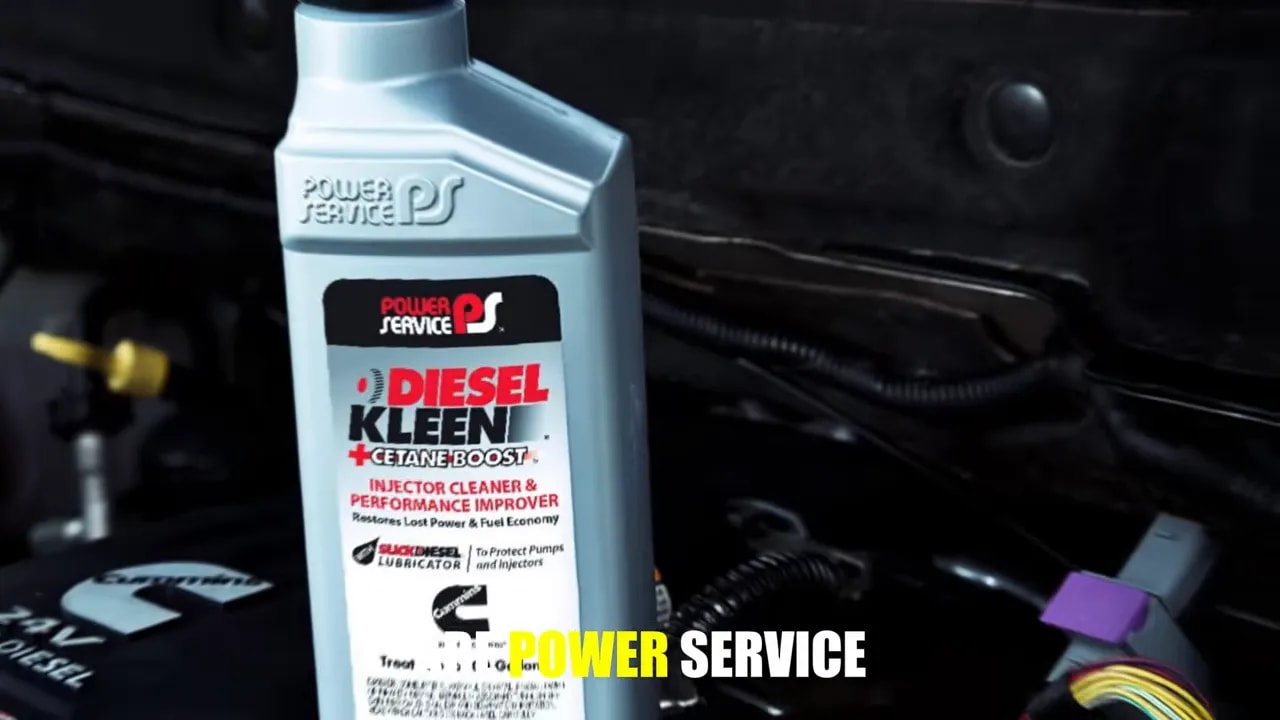
When comparing lubricity claims, look for HFRR lubricity testing, a standard industry test, rather than relying entirely on owner impressions. A claimed test advantage is most useful when the test conditions, dose, and comparison fuel are clear.
How often should you use a lubricity additive?
Possible routines range from treatment at each fill-up when fuel sources are uncertain to less frequent use when consistently buying suitable fuel from reputable, high-volume stations. Neither routine is a universal requirement.
Use the schedule for the exact formula. In particular, do not assume that a concentrated cleaner containing lubricity ingredients is intended for every tank.
Winter anti-gel protection is a separate requirement
In cold conditions, wax formation in diesel can interfere with fuel flow. A winter anti-gel treatment is designed to address that problem, not simply to clean injectors.
Winter products to compare include:
- Power Service Diesel Fuel Supplement: the white-bottle winter formula.
- Howes Diesel Treat: an anti-gel diesel treatment.
- Opti-Lube Winter Blend: a winter-specific formula.
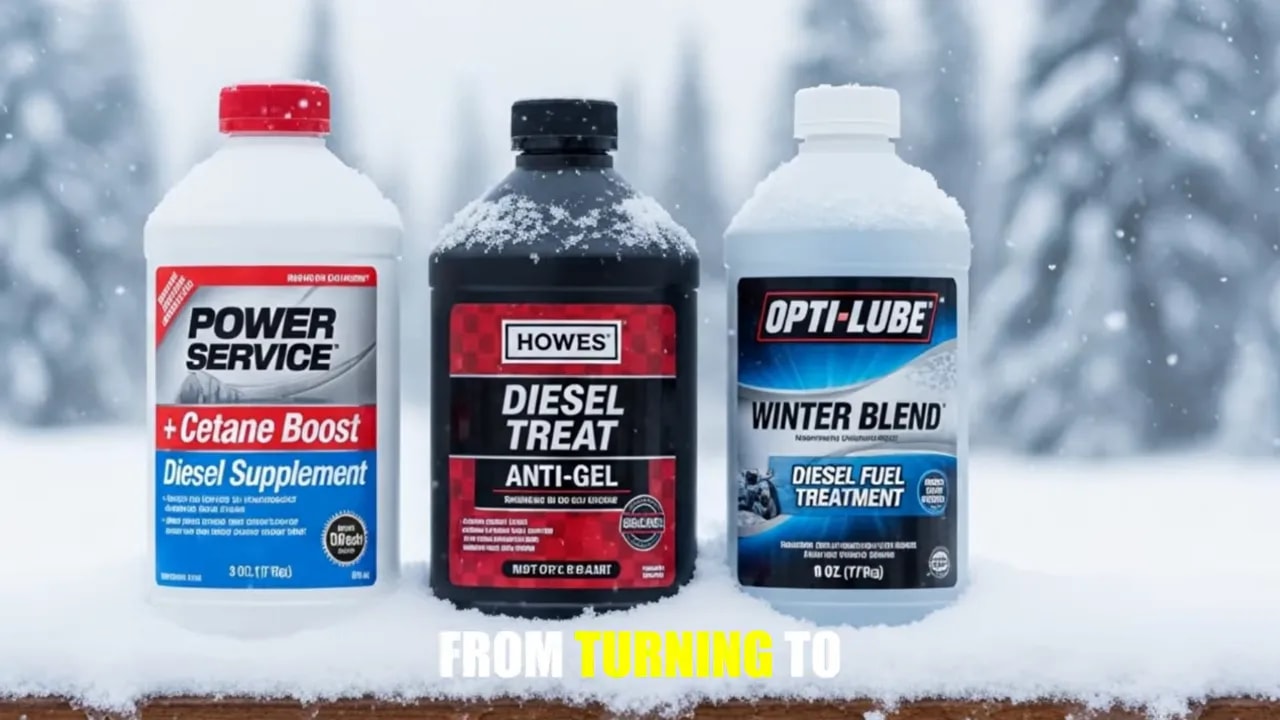
Do not confuse Power Service Diesel Kleen with the white-bottle winter supplement. Buying by brand name alone can leave you with a cleaner when the actual need is cold-weather protection.
Follow the winter formula’s instructions for dose and operating conditions. Adding extra product is not a substitute for choosing the correct treatment.
Compare treatment cost, not bottle price
A simple cost calculation makes products easier to compare:
Cost per gallon treated = bottle price ÷ gallons treated at the intended dose.
For example, a $15 to $25 bottle that treats 250 gallons costs approximately 6 to 10 cents per gallon. This is an illustrative calculation, not a current price guarantee. Different concentrations and dosing instructions can change the result substantially.
Diesel Injector Cleaner: An Occasional Tool, Not an Automatic Habit
Modern diesel injectors operate at very high pressures, with some systems reaching approximately 29,000 psi. Small deposits can affect fuel delivery, spray patterns, and combustion efficiency.
An injector cleaner can be useful when deposits are suspected or when a compatible product provides a periodic maintenance schedule. It should not become an excuse to overlook continuing symptoms.
Signs that may justify investigating deposits
- Rough or uneven idle
- Increased black exhaust smoke
- Reduced fuel economy
These signs can justify investigating fuel-system cleanliness, but they do not prove that a cleaner will solve the problem. Persistent rough running, smoke, or economy loss warrants diagnosis rather than repeated dosing.
Which cleaners are worth comparing?
Two options to compare are Hot Shot’s Secret Diesel Extreme and Power Service Diesel Kleen + Cetane Boost. Both combine cleaning with other fuel-treatment functions.
Sea Foam is another product sometimes considered for heavily dirty systems, but it should not be treated as the default choice for every modern diesel. Verify the permitted application and follow its instructions precisely.
How often should you use diesel injector cleaner?
A general periodic range is every 5,000 to 10,000 miles, but this is not a universal service interval. The product instructions and vehicle guidance should determine the actual schedule.
Do not assume that every-tank use is appropriate. Excessive use or an unsuitable concentration can create compatibility concerns, including potential effects on seals.
Likewise, pouring cleaner directly into a fuel filter is not a universal application method. Use that approach only where the exact product instructions and vehicle service procedure permit it.
DPF Regeneration Additives: Useful Only in the Right Application
A diesel particulate filter captures soot from the exhaust. During regeneration, that soot is burned off. Frequent short trips and city use can prevent the system from reaching the conditions needed to complete regeneration.
Compatible regeneration aids are intended to help soot burn at a lower temperature. They are relevant only to an appropriate DPF-equipped diesel and should be used sparingly.
DPF-compatible does not necessarily mean DPF cleaner
A fuel treatment described as suitable for DPF-equipped engines is not automatically a dedicated regeneration aid. For example, Diesel Extreme is described as DPF-friendly, but that description alone does not establish that it performs the same function as a dedicated DPF additive.
Check the stated application rather than treating all emissions-system claims as equivalent.
Frequency and warning signs
A general range sometimes suggested for periodic DPF-aid use is every 3,000 to 5,000 miles. Treat that as a starting point for checking instructions, not a prescribed interval for every diesel.
Increasing regeneration warnings deserve attention. Follow the vehicle’s regeneration and service guidance rather than assuming another bottle will resolve the underlying issue.
Do not combine multiple DPF additives or double the prescribed dose. Incorrect use can create excessive regeneration temperatures and risk cracking or melting the filter.
A Practical Diesel Additive Checklist
Before adding any treatment, work through these steps:
- Identify the need. Decide whether the concern is lubrication, cold weather, deposits, or regeneration.
- Check vehicle restrictions. Confirm whether the manufacturer permits the additive type and formulation.
- Read the exact label. Distinguish winter protection from cleaning and DPF compatibility from regeneration assistance.
- Check ingredient and water-handling claims. Pay attention to alcohol, emulsifiers, and metal-based ingredients where prohibited.
- Measure the dose. Follow the treatment rate for the amount of fuel being treated.
- Avoid overlapping products. A multifunction treatment may already provide the function you are trying to add.
- Respond to persistent symptoms. Do not keep increasing the concentration instead of arranging diagnosis.
Keep basic maintenance ahead of additive shopping: buy diesel from reputable, high-volume stations and replace the fuel filter on schedule. Additives supplement those habits; they do not replace them.
The Bottom Line
The best diesel additive routine is usually a limited one: a compatible lubricity treatment when justified, a winter anti-gel formula when conditions require it, an occasional injector cleaner, and a DPF regeneration aid only where appropriate.
Avoid two-stroke-oil mixtures, unsuitable alcohol-containing or water-emulsifying products, and unsupported promises of dramatic horsepower or fuel-economy gains. Choose a treatment for a defined need, then use the correct dose.