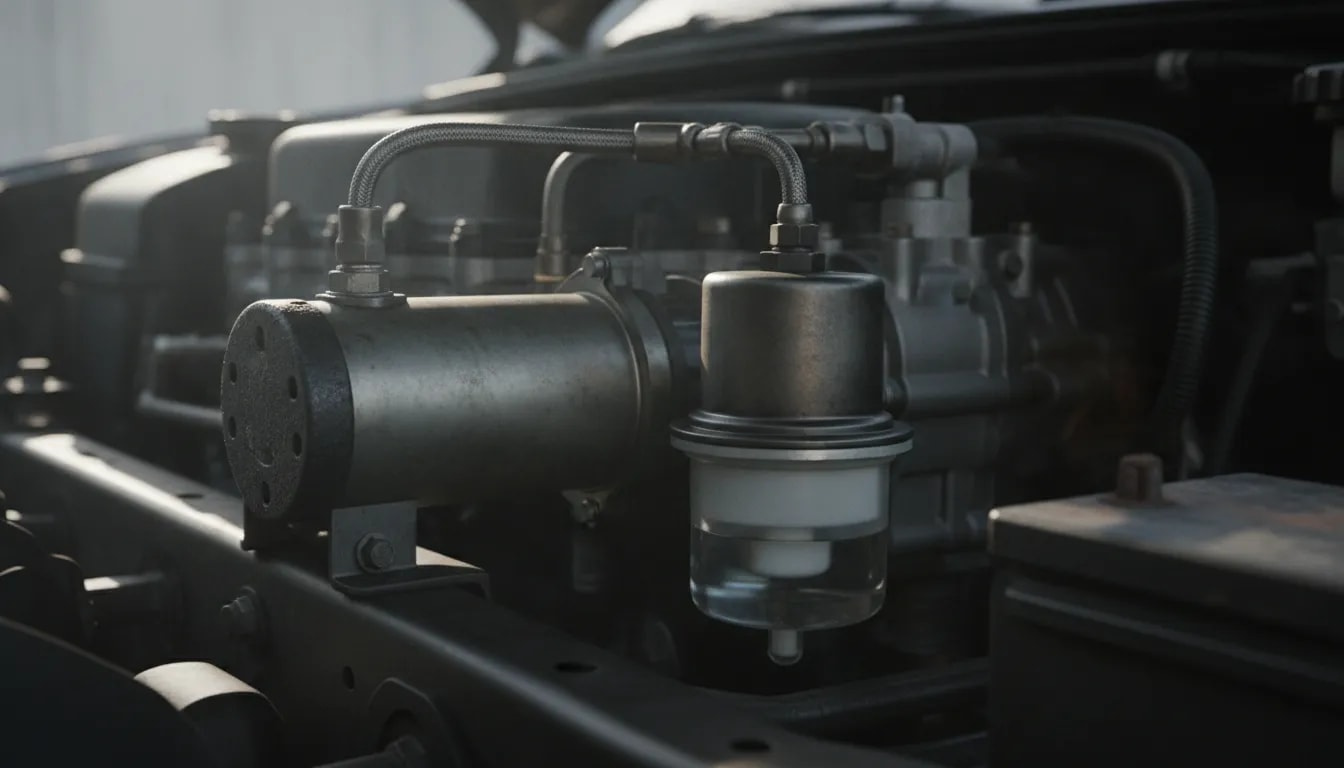
The main symptoms of a failing diesel lift pump are hesitation under load, extended cranking, intermittent stalling, low fuel pressure codes, and a change in pump noise. A weak pump may still supply enough fuel for easy starting and smooth idle, so normal behavior around town does not rule out a problem.
The most useful early clue is a diesel that pulls normally at light throttle but bogs down during hard acceleration, hill climbing, or towing. Before replacing expensive injection-system components, check the low-pressure fuel supply and confirm the diagnosis with a pressure test.
Key Takeaways
- A weak lift pump can cause hesitation under load while starting and idle remain normal.
- P0087 indicates low fuel pressure but does not identify the lift pump as the cause.
- Confirm supply pressure against the engine’s specification, including its behavior as fuel demand increases.
- Insufficient fuel supply can damage susceptible injection pumps, making early diagnosis important.
Table of Contents
- What Does a Diesel Lift Pump Do?
- How to Check a Suspected Bad Lift Pump
- The Five Main Diesel Lift Pump Failure Symptoms
- Why a Weak Lift Pump Can Become an Expensive Problem
- Common Diagnostic Mistakes to Avoid
- What to Do Next
What Does a Diesel Lift Pump Do?
A lift pump supplies fuel from the tank to the injection system. Its role is to deliver sufficient fuel volume at a steady, relatively low pressure, with the fuel passing through the system’s filter and water separator.
The injection pump performs a different job: it creates the much higher pressure needed to deliver fuel through the injectors. A CP3 or CP4 is a high-pressure injection pump, not another name for a lift pump. A VP44 or mechanical Bosch inline injection pump also belongs on the injection side of the system.
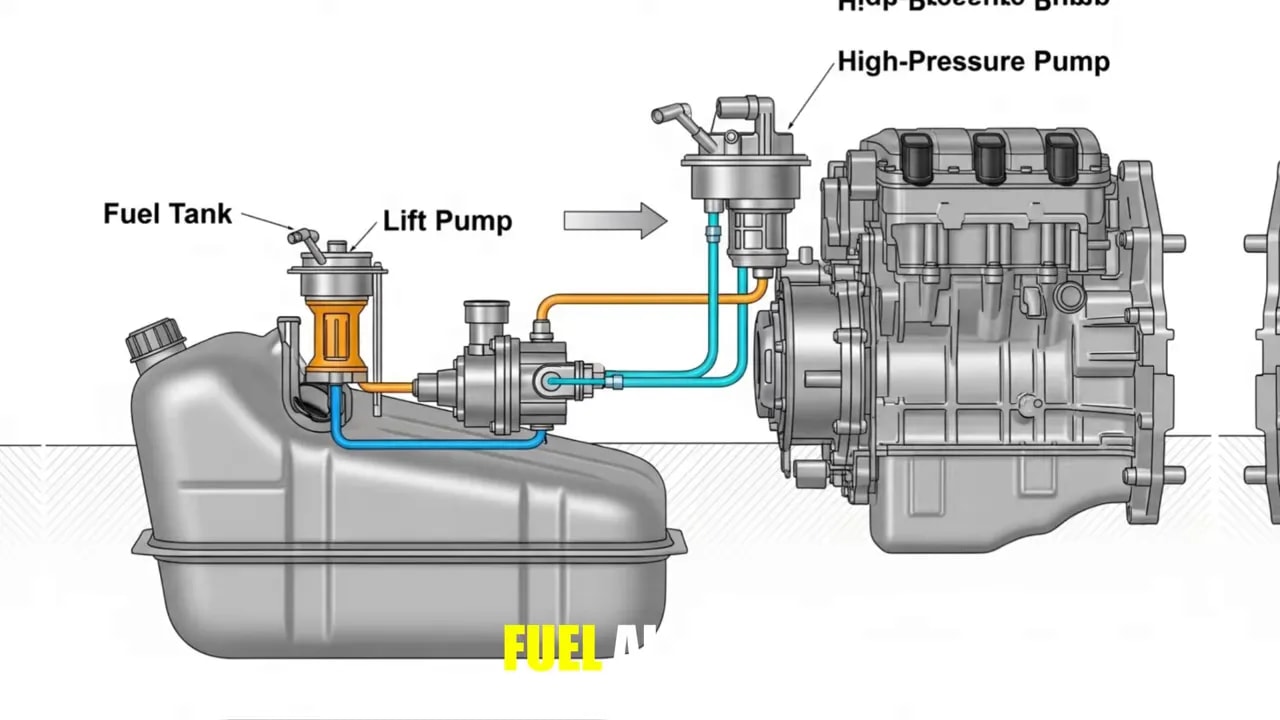
When the low-pressure supply cannot meet demand, the injection pump receives too little fuel. That can cause running problems and, on susceptible systems, damage to the injection pump itself.
These warning signs are relevant when diagnosing lift-pump-equipped Cummins, Power Stroke, Duramax, and other diesels, including applications with aftermarket FASS systems. However, pump arrangements, priming behavior, and pressure requirements depend on the particular engine and fuel system. Do not assume one test specification applies to every diesel.
How to Check a Suspected Bad Lift Pump
Symptoms identify where to investigate. They do not, by themselves, prove that the pump needs replacing. Start with a simple operating check, then measure fuel supply pressure.
1. Record when the problem happens
Before testing, note the conditions that trigger the fault:
- Does hesitation occur only during acceleration, towing, or climbing?
- Does easing off the throttle restore normal power?
- Is starting harder after an overnight stop than after a short shutdown?
- Does stalling coincide with a low fuel level, turns, or inclines?
- Has the pump become louder, changed tone, or stopped making its usual priming sound?
- Is a low fuel rail pressure code stored?
This pattern helps distinguish a fuel supply problem that appears at high demand from one that primarily affects priming after the vehicle sits.
2. Listen for the electric pump’s priming cycle
On a vehicle whose electric lift pump primes at key-on, turn the ignition on without cranking. Listen near the tank or fuel filter housing for the pump’s usual hum.
A healthy electric pump generally has a quiet, steady sound. Priming duration varies by vehicle; some systems run for roughly 10 to 25 seconds. Use the expected behavior for your application rather than treating that duration as a universal rule.
Next, observe how long the engine cranks before starting compared with its previous behavior. An absent priming sound or a longer starting delay warrants further testing.
Silence is not enough to confirm a failed pump, and an audible hum does not confirm adequate pressure. This check also does not apply in the same way to a mechanically driven lift pump.
3. Measure pressure at the injection pump inlet
The key diagnostic test is a fuel pressure gauge check on the low-pressure supply at the injection pump inlet. Use the correct test procedure and pressure specification for the engine, or have a qualified diesel technician perform it.
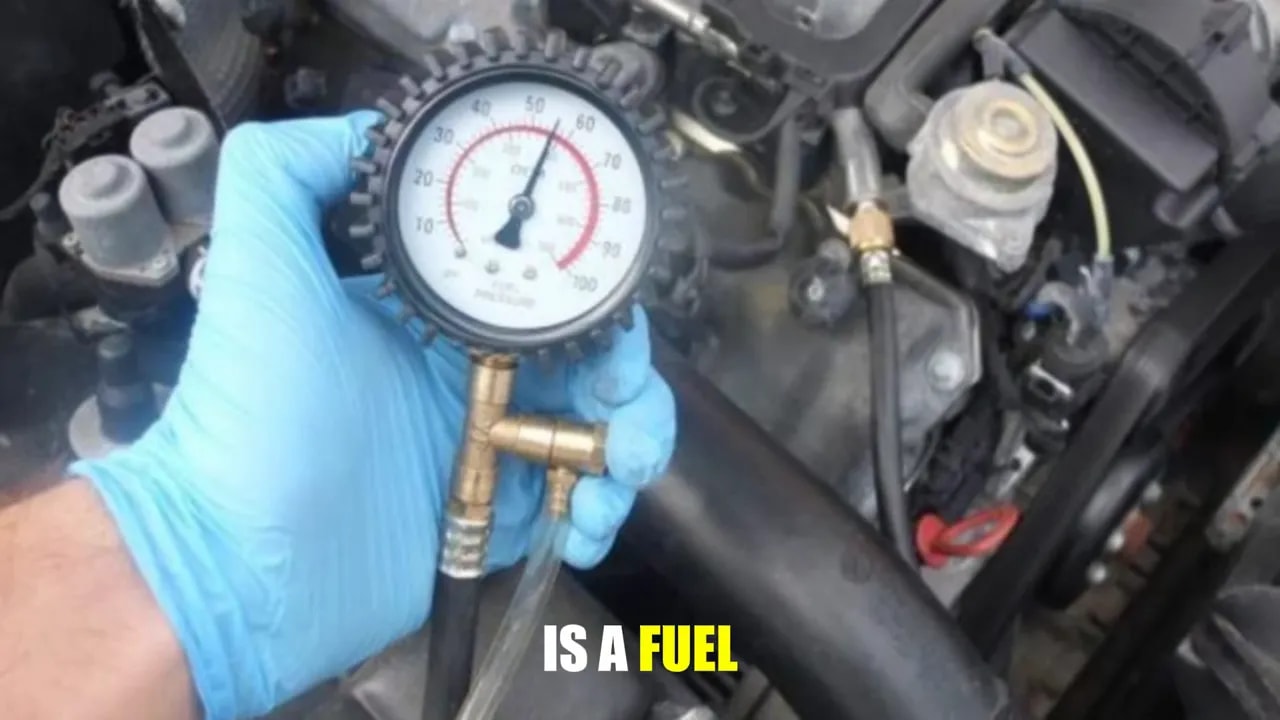
A general reference for some lift pump applications is 5 to 15 PSI, approximately 35 to 100 kPa. That is not a universal specification for Cummins, Power Stroke, Duramax, or every aftermarket pump installation.
The test should establish two things:
- Whether supply pressure reaches the required level during priming and at idle.
- Whether it stays adequate as fuel demand increases, rather than collapsing under load.
A weak pump can appear satisfactory at idle yet fail when the engine needs more fuel. Pressure below the application’s minimum, or a drop toward zero under load on a system that requires positive supply pressure, needs prompt investigation.
4. Confirm the cause before replacing parts
Low pressure means the fuel supply needs attention, but it does not automatically identify the lift pump as the only possible cause. A blocked fuel filter can also restrict delivery.
If low-pressure supply meets specification, continue diagnosis of the injection system rather than replacing the lift pump solely because the symptoms seem familiar.
The Five Main Diesel Lift Pump Failure Symptoms
These symptoms can overlap, and they do not have to appear in a fixed sequence. A change in pump sound may precede a noticeable performance problem, while another vehicle may first show hesitation during heavy acceleration.
A louder hum, new buzzing, or mechanical clicking
An electric lift pump normally produces a consistent hum while operating. A new high-pitched whine, louder buzzing, or noticeably different tone can signal deterioration.
Mechanical lift pumps can develop rhythmic ticking or clicking as their actuating mechanism wears. On designs driven by a camshaft eccentric, wear at the operating lever can change the sound.
The important comparison is with the pump’s normal behavior. Noise alone is not a replacement verdict, but a new sound combined with hard starting or power loss makes a pressure check more important.
Longer cranking after sitting overnight
A weakening lift pump may take longer to establish the fuel supply needed at the injection pump inlet. The engine then cranks for longer before firing.
A particularly useful pattern is:
- Extended cranking after the vehicle has sat overnight.
- A much quicker restart while the engine is still warm.
- A starting delay that has become more noticeable over time.
This points toward a possible priming or supply problem, but it does not isolate the lift pump without testing. Also distinguish extended cranking time from a starter that turns the engine slowly. The lift pump symptom described here is delayed firing, not necessarily reduced cranking speed.
Hesitation or power loss under load
At idle and light throttle, the engine needs relatively little fuel. A deteriorating lift pump may still meet that demand, making the vehicle seem healthy during ordinary low-load driving.
Hard acceleration, towing, or climbing increases the required fuel delivery. If the pump cannot keep up, inlet supply pressure falls and the injection system becomes fuel-starved.
You may feel:
- A brief interruption in acceleration.
- A flat spot as engine speed rises.
- Bogging during a climb or while pulling a load.
- Power returning when you reduce throttle demand.
Hesitation around 2,500 RPM under load is one example, not a diagnostic threshold. The relationship between fuel demand and power loss matters more than a specific engine speed.
Normal idle does not clear the pump. A pressure test that only checks idle can miss the very condition causing the complaint.
Intermittent stalling, especially with low fuel
A failing lift pump can contribute to loss of prime or air entering the fuel supply. A worn mechanical pump diaphragm may allow air into the system, while a weakened electric pump may struggle to recover when fuel moves away from the pickup during a turn or incline.
Air is much more compressible than liquid fuel. Its presence can interrupt stable fuel delivery and injection, causing the engine to stall.
The engine may restart after the system re-primes. That temporary recovery does not mean the underlying problem has disappeared.
If stalling repeatedly occurs with low tank levels, during cornering, or on hills, investigate the fuel supply before assuming an injector or sensor fault. These circumstances are clues, not proof that the lift pump alone is responsible.
A check engine light with P0087
On electronically controlled common-rail diesels, insufficient fuel supply can prevent the system from maintaining the required rail pressure. The ECU may store P0087, indicating fuel rail or system pressure is too low.
However, P0087 is not a lift-pump-specific code. Other possible causes include:
- A blocked fuel filter.
- A failing high-pressure injection pump.
- Excessive leakage through an injector return.
- A faulty rail pressure sensor.
The code describes a pressure problem, not the component that must be replaced. Test the low-pressure supply first before condemning the high-pressure pump.
Why a Weak Lift Pump Can Become an Expensive Problem
Insufficient inlet supply can make a susceptible injection pump cavitate. Cavitation involves vapor bubbles forming in low-pressure regions of the fuel and collapsing as pressure rises. Those collapses can erode internal pump surfaces.
This is different from simply drawing outside air into a fuel line, although both conditions can disrupt fuel delivery.
Older Cummins diesels equipped with a VP44 injection pump deserve particular attention to lift pump health. In these applications, a failing supply pump can contribute to severe injection pump damage.
For a rough sense of the cost difference, a lift pump may cost around $100 to $300, or £100 to £300, while injection pump replacement can run from roughly $1,500 to more than $3,000, or similar numerical amounts in pounds. These are broad illustrative figures, not a quote for a particular vehicle or repair.
The practical lesson is not to replace a lift pump at the first unusual sound. It is to verify supply pressure early, before continued fuel starvation creates a more costly fault.
Common Diagnostic Mistakes to Avoid
- Assuming good starting means good fuel delivery. A weak pump may handle starting and idle but fail under load.
- Replacing the high-pressure pump based only on P0087. Check low-pressure supply and filter restriction first.
- Using one pressure range for every engine. Confirm the exact application’s requirements.
- Relying only on pump noise. Sound is a preliminary clue, not a measurement of output.
- Expecting a mechanical pump to hum at key-on. Match the check to the pump design.
- Ignoring a stall because the engine restarts. Re-priming can temporarily hide an ongoing supply fault.
What to Do Next
If your diesel hesitates under load, takes longer to start after sitting, or develops an unfamiliar pump sound, arrange a low-pressure fuel supply test. Record the operating conditions and any stored fault codes so the test can address the actual complaint.
Confirm adequate supply at the injection pump inlet before replacing expensive injection-system parts. If pressure falls below the engine’s specification, identify and correct the supply fault promptly, with help from a qualified diesel technician when needed.