

The best diesel engine for your needs is not necessarily the newest, most powerful, or most fuel-efficient. It is the one whose fuel system, emissions equipment, and repair exposure fit your driving habits and budget.
Older mechanical diesels offer relatively simple troubleshooting. Early electronically managed turbo diesels add useful performance without all the complexity of later designs. Modern common-rail and luxury diesels can provide excellent refinement, but expensive fuel, exhaust, and electronic systems change the ownership equation.
Think of these seven levels as an ownership-risk framework, not an official engine classification. Several levels can overlap in the same vehicle, and maintenance history matters alongside design.
Key Takeaways
- Diesel ownership risk depends on injection design, emissions equipment, modifications, and vehicle complexity.
- Repeated short trips can make a DPF-equipped diesel a poor match for your commute.
- Fuel-pump contamination can turn one failed component into a multi-component repair.
- Compare potential major repair costs with vehicle value, not just expected fuel savings.
Table of Contents
- The Seven Diesel Ownership Levels at a Glance
- Start With Your Driving Pattern, Not the Diesel Badge
- What Makes a Diesel Relatively Simple to Own?
- Why Modern Diesel Repairs Can Become So Expensive
- Two Risk Multipliers: Performance Tuning and Luxury Complexity
- How to Evaluate a Used Diesel Before Buying
- When a Diesel Repair Stops Making Financial Sense
- The Bottom Line: Choose the Complexity You Can Afford
The Seven Diesel Ownership Levels at a Glance
This framework separates basic engine simplicity from the additional risks introduced by precision injection, emissions equipment, tuning, and luxury-car complexity.
| Level | Diesel category | Main ownership consideration | Illustrative repair exposure |
|---|---|---|---|
| 1 | Older mechanical diesels | Simple systems, but dated refinement and performance | $100 to $1,000 for relatively routine repairs |
| 2 | Early electronically managed turbo diesels | A balance of economy, torque, and manageable complexity | $500 to $3,000 for significant repairs |
| 3 | High-pressure common-rail diesels | Fuel contamination can damage multiple components | $1,500 to $6,000 for the fuel-system scenarios considered here |
| 4 | Diesels with extensive emissions equipment | Short-trip use can create regeneration and carbon-buildup problems | $200 to $4,000 per affected system, depending on the work |
| 5 | Performance-tuned diesels | Higher output puts additional demands on stock hardware | $2,000 to $10,000 for major component failures |
| 6 | Highly complex luxury diesels | Expensive hardware and involved diagnosis increase repair exposure | $5,000 to $25,000 for substantial repairs |
| 7 | Diesels facing catastrophic or uneconomic repairs | The repair estimate can exceed the vehicle’s value | $15,000 to $40,000 in severe scenarios |
These dollar ranges are broad illustrations, not model-specific quotes or maximum costs. A minor repair, a complete system replacement, and an engine rebuild are different jobs. Use a written estimate for the exact vehicle rather than treating any range as a guaranteed budget.
Level 7 is also different from the others: it describes a financial outcome, not a particular engine technology. A common-rail, tuned, or luxury diesel can reach that point when a major failure becomes too expensive to repair.
Start With Your Driving Pattern, Not the Diesel Badge
Before comparing engines, decide whether your normal use suits the vehicle’s emissions system. This is particularly important for a modern used diesel.
Regular highway driving
Sustained highway operation gives the exhaust system a better opportunity to reach the temperatures needed for diesel particulate filter regeneration. It also lets a diesel’s torque and cruising efficiency work in its favor.
An early turbo diesel such as a suitable Volkswagen 1.9-liter TDI can offer a useful compromise: stronger everyday performance than a basic mechanical diesel, good highway economy, and less emissions-system complexity than many later designs. Fuel economy in the 30 to 40 mpg range is a useful illustration for these setups, not a promise for every vehicle.
Short trips and stop-and-go commuting
Repeated grocery runs and brief urban journeys are a less favorable match for a diesel equipped with a DPF. The exhaust may not remain hot enough for effective regeneration, allowing soot to accumulate.
A fuel-efficient engine can still be an expensive choice when its operating needs do not match your commute. Consider that mismatch before purchase, rather than assuming occasional longer trips will resolve every existing problem.
Hands-on ownership
A mechanically simple diesel may suit someone who prioritizes understandable faults and is comfortable doing appropriate maintenance. The trade-off is an older driving experience, often with more noise, slower acceleration, noticeable exhaust odor, and less refinement.
Mechanical simplicity reduces certain kinds of complexity. It does not make worn injectors, valve problems, or an engine rebuild effortless.
What Makes a Diesel Relatively Simple to Own?
The lower-risk end of this framework is built around fewer systems that can turn a localized fault into an expensive diagnosis or multi-component repair.
Mechanical injection: fewer electronic dependencies
Older mechanically injected diesels, exemplified by the Mercedes OM617, rely far less on electronic fuel control than modern designs. They also lack much of the elaborate exhaust aftertreatment found on newer diesels.
Their ownership problems tend to be recognizable mechanical wear: injector deterioration, oil-seal leaks, and valve-related issues. Many are more straightforward to investigate than faults involving several interacting control systems.
That simplicity helps explain the reputation of well-maintained older diesels for covering hundreds of thousands of miles. It should not be interpreted as a guarantee that any high-mileage example needs only inexpensive servicing.
Early turbo diesels: the practical middle ground
Turbocharging and early electronic fuel management improved acceleration, passing torque, and everyday usability. For buyers who want transportation rather than a restoration project, this category can be more appealing than a purely mechanical engine.
Common ownership concerns include:
- Turbocharger wear: a significant repair, but not automatically a whole-engine failure.
- Oil leaks: faults that need diagnosis and repair without necessarily involving multiple systems.
- Intake carbon buildup: deposits that can require cleaning.
Do not group every early VW diesel into the mechanical-injection category. Early TDI engines use electronic fuel management, and the exact engine variant matters more than a broad era label.
Why Modern Diesel Repairs Can Become So Expensive
Refinement and emissions control bring real benefits, but they also introduce tightly engineered components and more potential repair points. Two areas deserve particular attention: high-pressure injection and exhaust aftertreatment.
Common-rail fuel systems: one failure can spread contamination
Common-rail injection uses a high-pressure pump to supply fuel to precision injectors. This helps provide smoother, quieter operation, but makes fuel-system condition especially important.
Water or other contamination can damage sensitive pump components. If a pump breaks down internally and releases metal particles, the problem can extend beyond the pump itself to injectors and other parts of the fuel circuit.
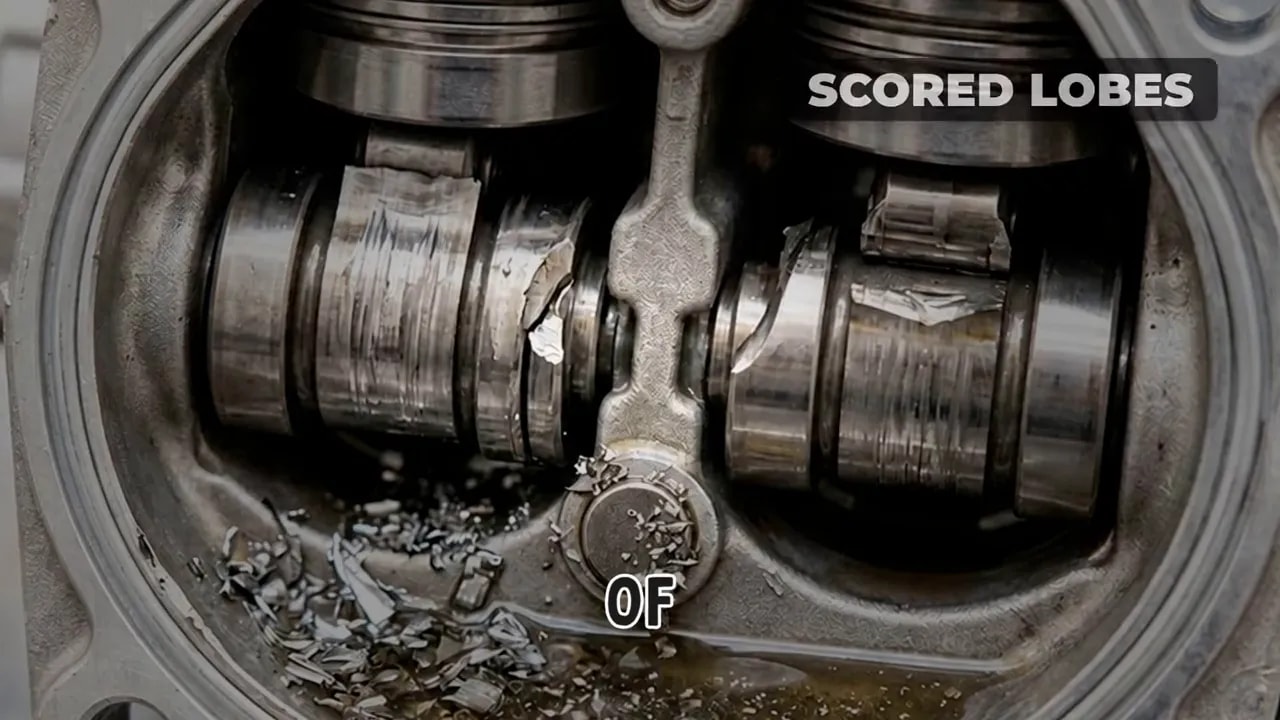
The expensive scenario is not simply replacing one failed component. It is dealing with contamination throughout the system. Depending on the damage and required repair procedure, that can involve the pump, injectors, and affected lines or other components.
When assessing a used common-rail diesel, ask whether it has had fuel contamination, pump failure, or injector work. If repairs were performed, the invoices should explain the scope of the work rather than merely show that one part was replaced.
DPF, EGR, and DEF: different systems with different jobs
These terms are often grouped together, but they do not describe the same process:
- DPF, or diesel particulate filter: captures soot and uses regeneration to burn off accumulated soot.
- EGR, or exhaust gas recirculation: recirculates some exhaust gas to help control nitrogen oxide emissions; carbon deposits can interfere with valve operation.
- DEF, or diesel exhaust fluid: is used by equipped exhaust-treatment systems to reduce nitrogen oxide emissions; it does not serve as the soot filter.
High exhaust temperature is particularly relevant to DPF regeneration. Highway operation can support passive regeneration, while repeated short trips can make soot management more difficult.
EGR carbon buildup can cause a valve to stick, contributing to rough idling or reduced power. DEF systems introduce additional components, including pumps and heaters, that can require service.
| Emissions-system work | Illustrative cost range |
|---|---|
| DPF cleaning or replacement | $300 to $4,000 |
| EGR valve service or replacement | $200 to $1,500 |
| DEF pump or heater repair | $400 to $2,500 |
Cleaning and replacement sit at very different points within these ranges. Multiple faults can also produce a combined bill much larger than the cost of servicing one component.
Warning lights, rough idle, and power loss need diagnosis. They are reasons to investigate, not proof that the DPF or EGR valve must be replaced.
Two Risk Multipliers: Performance Tuning and Luxury Complexity
A vehicle can have all the fuel-system and emissions-system risks described above, then add further expense through modifications or premium equipment.
Performance tuning increases demands on the whole vehicle
A software tune can deliver substantial power and torque gains without a large initial purchase cost. That does not mean the extra output is free over the vehicle’s remaining life.
Higher output places additional demands on the turbocharger, injectors, and drivetrain. A tune that pushes stock components harder reduces the margin between normal operation and component limits.
The label “Stage 2” alone does not establish how much additional stress a particular vehicle experiences. Evaluate the actual calibration, supporting hardware, and condition rather than relying on a stage name.
For a used buyer, the important questions are:
- Has the engine software been modified?
- What output was the modification intended to produce?
- Were supporting components changed?
- Have the turbocharger, injectors, or drivetrain already needed repair?
A tuned diesel may suit an enthusiast who accepts the expense. It is a less straightforward choice for someone whose priority is predictable, low-risk commuting.
Luxury diesels add more than engine complexity
A premium diesel SUV or sedan may combine multi-stage turbocharging, interconnected control modules, and extensive chassis electronics. Its ownership costs therefore extend well beyond the basic engine.
An electronic fault can affect several vehicle functions and require involved diagnosis. Complex turbo arrangements and expensive replacement parts can further increase the bill.
A low used purchase price does not turn a complex luxury vehicle into a low-cost vehicle to repair. Judge affordability by potential repair exposure, not just the price on the windshield.
How to Evaluate a Used Diesel Before Buying
Use the seven levels to identify which risks apply to a particular vehicle. Do not try to force it into one exclusive category.
- Identify the exact engine and equipment. Establish whether it uses mechanical injection, early electronic injection, or common rail, and which emissions systems it has.
- Compare the vehicle with your normal journeys. Be especially cautious about a DPF-equipped diesel intended mainly for short urban trips.
- Review itemized repair history. Look for turbo, injector, fuel-pump, DPF, EGR, DEF, and control-module work.
- Clarify modification history. Treat added power as an additional ownership consideration, not automatically as an improvement.
- Investigate unresolved symptoms. Recurring warning lights, rough idle, and reduced power deserve an explanation before purchase.
- Get a vehicle-specific assessment and estimate. Broad cost ranges are no substitute for understanding the condition of the actual car or truck.
- Compare repair exposure with vehicle value. Decide whether a plausible major bill would still make ownership financially sensible.
Calculate fuel savings separately from repair risk
Fuel economy is only one part of the decision. Calculate fuel cost per mile using your own fuel price and realistic mpg figure:
Fuel cost per mile = price per gallon ÷ miles per gallon.
A fixed claim such as 12 cents per mile only applies at the fuel price and economy figure used to calculate it. Even attractive fuel savings should be considered alongside maintenance and possible major repairs.
When a Diesel Repair Stops Making Financial Sense
A severe failure can leave an otherwise usable vehicle facing an estimate above its market value. Major turbo damage, a cracked cylinder head, or extensive electronic problems can create this outcome.
This is an economic problem rather than proof that the vehicle cannot physically be repaired. The owner must decide whether the repair is justified by the vehicle’s value, condition, and expected remaining usefulness.
Before approving a very large repair:
- Obtain a written diagnosis and itemized estimate.
- Check whether the estimate addresses the complete failure rather than only its first symptom.
- Establish a realistic value for the vehicle in repaired condition.
- Consider whether other unresolved systems could create further expense.
Do not assume that a mechanically uneconomic vehicle will automatically receive an insurance payout or formal write-off. That is a separate question from whether repairing it makes sense for the owner.
The Bottom Line: Choose the Complexity You Can Afford
Older mechanical diesels favor simplicity. Early electronically managed turbo diesels can offer a useful balance of economy and everyday performance. Modern diesels provide more refinement, but require closer attention to fuel-system condition, emissions equipment, and driving pattern.
The strongest used-diesel purchase is one whose exact specification, repair history, and likely costs are understood. Buy for the journeys you actually make and the repairs you can realistically absorb, not for a reputation attached to diesel engines as a whole.