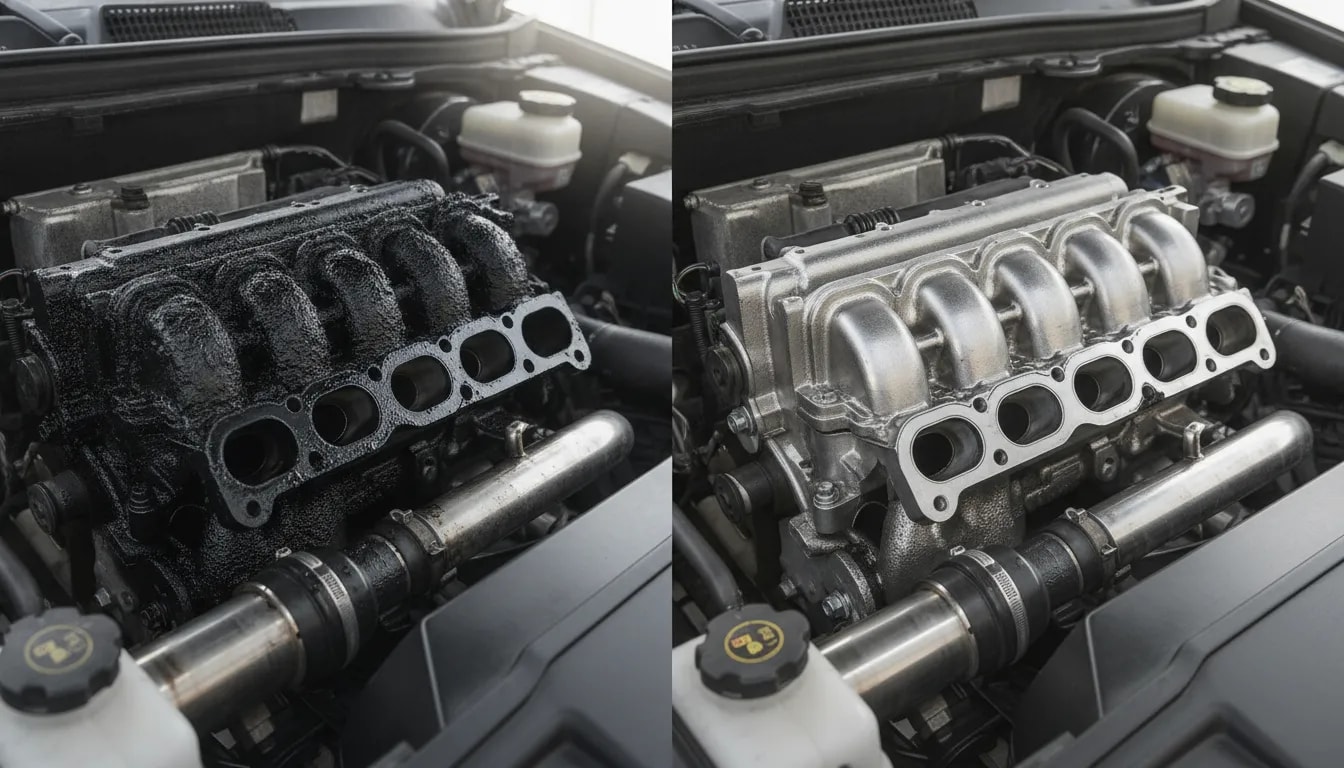
If your diesel has gradually lost power, developed a rough idle, or started using more fuel, intake carbon buildup is worth investigating. Soot and oil vapor can form stubborn deposits inside the intake manifold, EGR valve, and intake ports, restricting the air reaching the engine.
A proper mechanical intake carbon clean can restore performance lost to that restriction. It involves removing components and physically clearing deposits, rather than relying on a fuel additive or a no-disassembly cleaning service.
The important first step is inspection. These symptoms are reasons to check for carbon buildup, not proof that cleaning will solve every running problem.
Key Takeaways
- Intake carbon can cause gradual power loss, rough idle, and poorer economy without a dedicated warning light.
- Heavy, hardened deposits call for mechanical removal rather than reliance on no-disassembly cleaning treatments.
- Walnut blasting typically costs $400 to $700, while extensive intake and EGR work can exceed $1,000.
- Inspect recurring intake symptoms and DPF problems before replacing parts or repeating cleaning services.
Table of Contents
- Signs Your Diesel Intake May Be Clogged
- What Causes Carbon Buildup in a Diesel Intake?
- What a Proper Diesel Intake Carbon Clean Involves
- How Much Does Diesel Carbon Cleaning Cost?
- Do Fuel Additives, Intake Sprays, and Vapor Cleaning Work?
- Why Intake Carbon Matters When a DPF Keeps Blocking
- How Often Should a Diesel Intake Be Cleaned?
- DIY Carbon Cleaning: The Mistake That Can Damage an Engine
- How to Reduce Carbon Buildup After Cleaning
- The Best Next Step: Confirm the Restriction Before Paying for a Fix
Signs Your Diesel Intake May Be Clogged
Intake restriction often develops slowly. A diesel that feels slightly less responsive each year may have a buildup problem rather than simply be showing its age.
Common symptoms include:
- Rough or uneven idle: Often more noticeable when the engine is cold.
- Hesitation under acceleration: A delay between pressing the accelerator and the engine responding.
- Weaker mid-range power: Less pulling strength where the engine previously felt responsive.
- Worsening fuel economy: Fuel consumption that has crept upward over time.
- Black smoke during acceleration: A possible sign of poor combustion.
- Intermittent limp mode: Sometimes accompanied by faults that do not immediately identify the underlying restriction.
The combination of gradual power loss, hesitation, and poorer economy makes an intake inspection particularly worthwhile. Replacing sensors or other components without checking the physical airflow path can leave the actual restriction untouched.
Can carbon buildup happen without a warning light?
Yes. There is no dedicated dashboard warning that directly reports how much carbon is lining the intake manifold. The engine control unit, or ECU, can adjust engine operation as airflow changes, making the early decline less obvious.
That does not mean an intake problem can never trigger a fault. Severe restriction or associated EGR problems may eventually produce warning lights or limp mode. A clear dashboard does not rule out a dirty intake.
What Causes Carbon Buildup in a Diesel Intake?
Two substances meet inside the intake system:
- Exhaust soot: The exhaust gas recirculation system, known as EGR, returns some exhaust to the intake to lower combustion temperatures and reduce emissions.
- Oil mist: Crankcase ventilation carries oily vapor back through the intake.
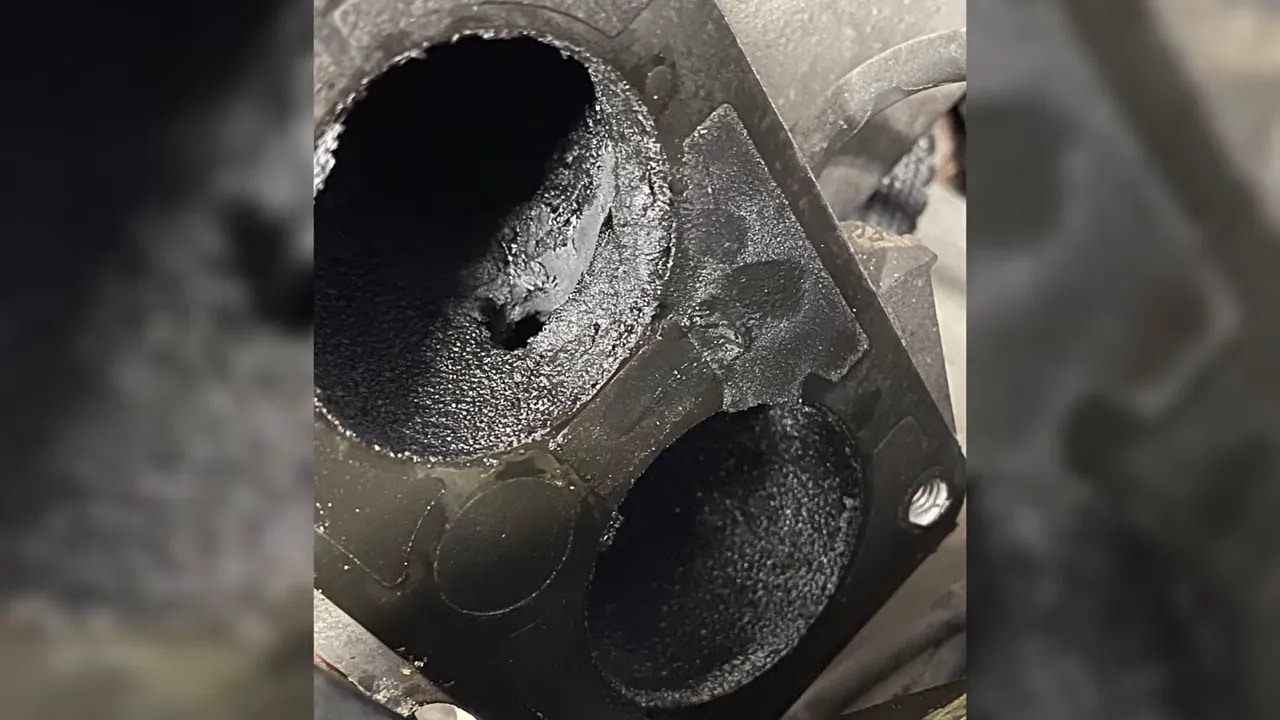
When soot mixes with oil mist, it creates sticky, dark deposits. Repeated exposure to heat can turn those deposits into a hard, tar-like coating.
The buildup can affect the EGR valve, intake manifold, intake ports, and valves. As the coating thickens, passages that should carry air freely become narrower. In severe cases, deposits can obstruct more than half of a passage.
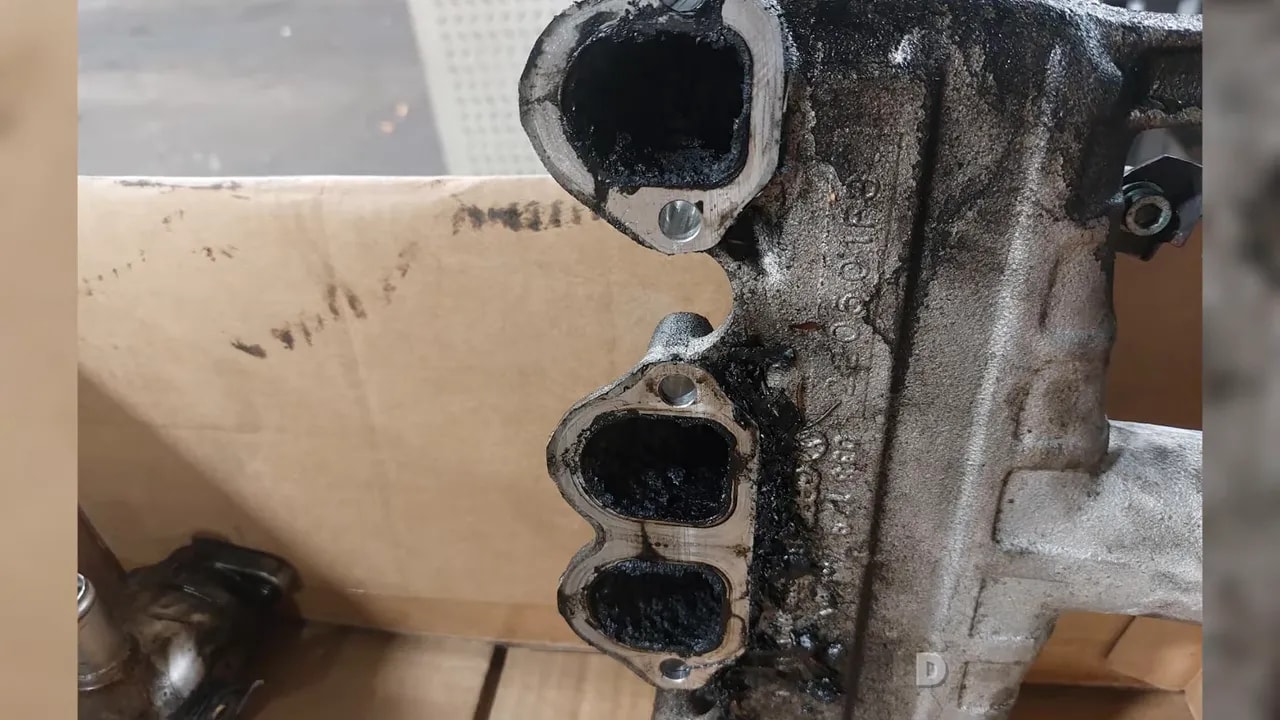
This explains why the problem is not necessarily obvious from outside the engine. The restriction is inside the airflow path, and it accumulates over years rather than appearing as a sudden failure.
What a Proper Diesel Intake Carbon Clean Involves
A mechanical carbon clean targets the deposits themselves. For a heavily contaminated intake, the job typically involves removing the intake manifold and EGR valve so their internal surfaces can be accessed.
Different parts require different cleaning methods. Cleaning the manifold alone is not the same as cleaning the intake ports and valves.
Intake manifold and EGR cleaning
With the components removed, stubborn deposits can be soaked, scraped, and physically cleared. A badly carbon-coated EGR valve may need replacement rather than cleaning.
The objective is to restore the air passages, not merely improve the appearance of an accessible surface. When comparing services, ask exactly which components the quoted work includes.
Walnut blasting for intake ports and valves
Walnut blasting uses compressed air to propel crushed walnut-shell media against carbon deposits. The media is hard enough to remove carbon while being softer than the underlying metal.
This method is used to clean intake ports and valves that remain contaminated after the manifold is removed. It provides direct physical removal of deposits that a light chemical treatment may leave behind.
The intake valves for the cylinder being cleaned must be fully closed. This is a critical safety requirement, not an optional precaution.
What improvements can you expect?
When carbon restriction is responsible for the symptoms, cleaning can produce a noticeable improvement in:
- Idle smoothness.
- Throttle response.
- Mid-range pulling power.
- Fuel consumption.
The purpose is to recover performance the engine has lost. It is not a power upgrade beyond the engine’s original capability, and it should not be presented as a guaranteed cure for unrelated faults.
How Much Does Diesel Carbon Cleaning Cost?
A professional walnut-blasting service at an independent workshop typically costs about $400 to $700. Much of that expense is the labor required to remove the intake manifold and gain access.
A more extensive intake and EGR clean on a heavily contaminated diesel can cost more. Some full-service quotes exceed $1,000.
| Service | Indicative cost | Important distinction |
|---|---|---|
| Professional walnut blasting | About $400 to $700 | Confirm which ports and components are included. |
| Extensive intake and EGR cleaning | Can exceed $1,000 | Heavy buildup and the overall scope of work can increase the bill. |
| No-disassembly gas or vapor cleaning | Often $100 or more | Not equivalent to physically removing hardened intake deposits. |
Use these figures as a guide, not a fixed price for every engine. A lower quote may cover a much smaller job.
Questions to ask before booking
- Has the intake restriction been inspected or confirmed?
- Will the intake manifold be removed?
- Does the price include EGR cleaning, or is that separate?
- Are the intake ports and valves included?
- Will walnut blasting be used where appropriate?
- Could the EGR valve require replacement?
These questions help distinguish a thorough mechanical clean from a treatment sold under the same broad “carbon cleaning” label.
Do Fuel Additives, Intake Sprays, and Vapor Cleaning Work?
The key distinction is light deposit maintenance versus removal of heavy, hardened buildup.
Some chemical products may have a role in dealing with light deposits or supporting maintenance after cleaning. That does not make them an equivalent repair for an intake passage narrowed by years of baked-on material.
| Method | Role or limitation |
|---|---|
| Fuel-system additive | May have a fuel-system maintenance role, but should not be treated as proof that a clogged manifold has been cleared. |
| Intake cleaning spray | May help with light deposits, but is not a reliable substitute for removing severe buildup. |
| Gas or vapor cleaning without disassembly | Does not provide the same direct access and physical deposit removal as a mechanical clean. |
| Mechanical cleaning and walnut blasting | Physically removes stubborn deposits from accessible components, ports, and valves. |
If your diesel already has significant hesitation, lost power, smoke, or rough idle, do not choose a service solely because it promises a complete clean without dismantling anything. Ask how it will address a physically restricted manifold.
A heavily clogged intake needs a different solution from an engine with a thin layer of fresh contamination.
Why Intake Carbon Matters When a DPF Keeps Blocking
The intake and diesel particulate filter, or DPF, are separate components, but their problems can be connected.
A restricted intake can contribute to incomplete combustion. That can produce additional soot, which then reaches the DPF.
The sequence is straightforward:
- Intake deposits reduce airflow.
- Poor combustion produces more soot.
- The DPF collects that soot.
- Cleaning the filter alone leaves the upstream restriction in place.
This is why a recurring DPF problem deserves more than repeated filter cleaning. If intake restriction is contributing to soot production, it also needs attention.
That does not make intake carbon the cause of every DPF blockage. It makes the intake a relevant part of the investigation, especially when repeated DPF trouble accompanies declining power or economy.
How Often Should a Diesel Intake Be Cleaned?
Some owners use roughly 40,000 to 60,000 miles as a maintenance reference for intake carbon cleaning. Treat that as a guide rather than a universal requirement.
Driving pattern matters. Diesels used mainly for short urban journeys tend to need attention sooner than those regularly given sustained runs at operating temperature.
A practical approach is to:
- Keep track of changes in idle quality, response, and fuel consumption.
- Have the intake checked when symptoms appear or return.
- Use mileage and driving history to guide inspection, rather than assuming every engine needs the same cleaning schedule.
Finding a developing restriction early can mean a less extensive job than waiting until the intake is severely obstructed.
DIY Carbon Cleaning: The Mistake That Can Damage an Engine
Removing an intake manifold is within the abilities of some experienced home mechanics. Cleaning around exposed intake ports introduces a serious risk, however.
Do not scrape heavy carbon where loose pieces can fall into an open intake port and reach a cylinder. Debris left inside can cause severe engine damage when the engine is started.
Walnut blasting requires the same care: the intake valves for the cylinder being cleaned must be fully closed before any media enters the port.
Being comfortable with manifold removal does not automatically mean being equipped to clean the ports safely. If you cannot confidently control debris and verify valve closure, professional cleaning is the safer choice.
How to Reduce Carbon Buildup After Cleaning
Cleaning removes existing restriction, but it does not remove the conditions that created it. Ongoing maintenance and driving habits still matter.
Give the engine sustained runs at operating temperature
Regular runs of around 20 to 30 minutes at highway speed, with the engine at operating temperature, can help support cleaner combustion. Repeated five-minute journeys are a less favorable usage pattern.
These runs are a maintenance habit, not a replacement for physically removing hardened deposits from an already clogged intake.
Keep oil changes on schedule
Oil vapor contributes to the sticky material that binds soot inside the intake. Keep up with oil changes and use quality oil appropriate for the engine rather than stretching service intervals.
Consider an oil catch can as a separate maintenance measure
Some owners fit an oil catch can to capture oil mist from crankcase ventilation before it reaches the intake. Its role is to reduce one contributor to future contamination, not to clean deposits that are already present.
Inspect when symptoms return
Do not wait for a dramatic loss of power. Returning hesitation, rough idle, or worsening economy is a reason to check the intake again.
The Best Next Step: Confirm the Restriction Before Paying for a Fix
A diesel that feels tired may have recoverable airflow restriction. The useful next step is an intake and EGR inspection, followed by a clear quote for the work actually needed.
If heavy carbon is confirmed, choose a service that physically removes it and addresses the affected components. If restriction is not found, avoid paying for a carbon clean simply because the symptoms sounded familiar.