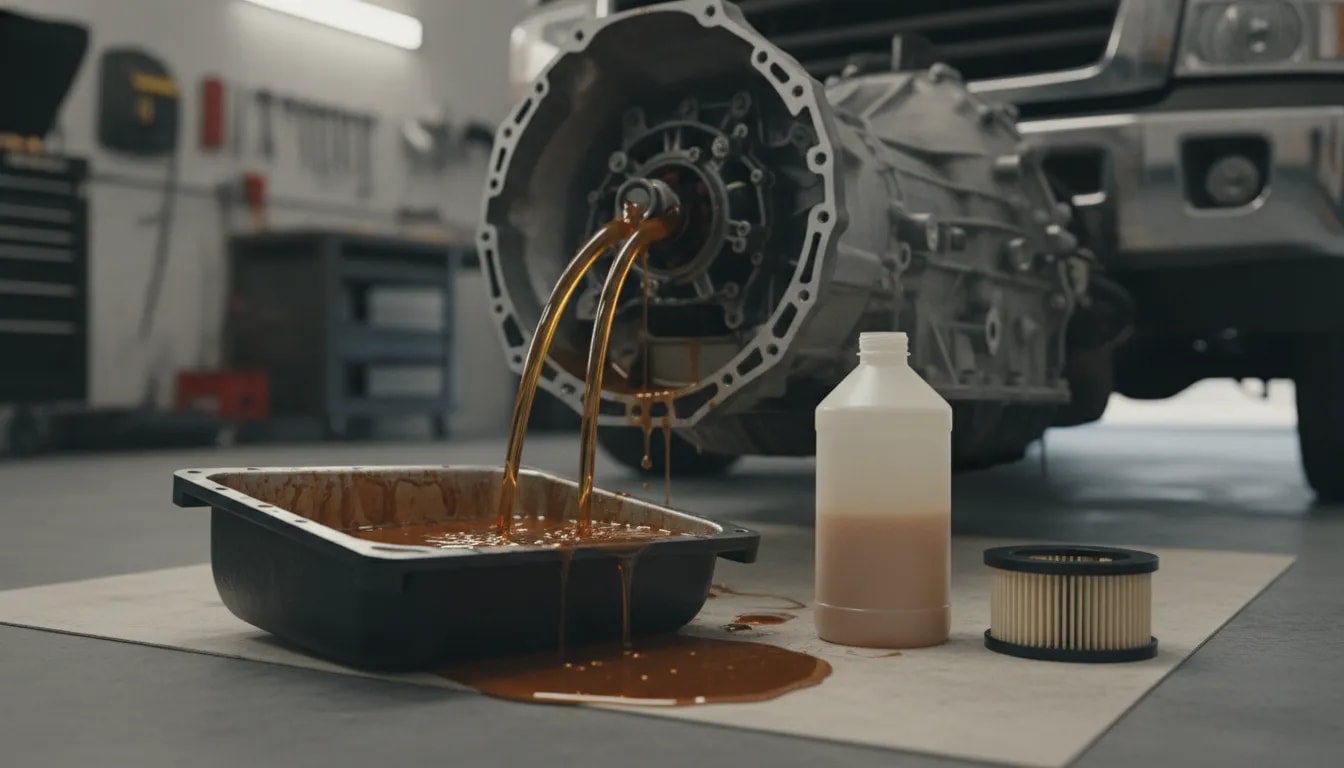
A diesel that clunks into Drive, hesitates when cold, or shudders under light load does not automatically need a transmission rebuild. Deteriorated transmission fluid can contribute to those symptoms, and replacing it with the correct specification fluid and a new filter can improve shift quality when the underlying hardware is still healthy.
The important distinction is maintenance versus repair. Fresh fluid can restore the friction behavior an automatic transmission needs, but it cannot repair worn-out clutches or reverse serious internal damage. The right approach starts with identifying the gearbox, reviewing its service history, and diagnosing any symptoms before choosing a service.
Key Takeaways
- Correct fresh transmission fluid can improve shifting when deterioration, rather than mechanical damage, is the cause.
- Lifetime-fill wording does not eliminate fluid deterioration or the need to check gearbox-specific maintenance guidance.
- Use the exact required fluid specification and confirm the filter service before authorizing work.
- High-mileage transmissions need condition-based assessment before choosing a drain and fill or machine flush.
Table of Contents
- Signs Your Diesel Transmission Fluid May Need Attention
- Why Transmission Fluid Affects Diesel Shift Quality
- Does “Lifetime” Transmission Fluid Really Need Changing?
- How to Choose the Right Transmission Fluid Service
- Will Changing Old Transmission Fluid Damage a High-Mileage Gearbox?
- How Much Does a Diesel Transmission Fluid Change Cost?
- What About Diesel DSG and Manual Gearboxes?
- Common Mistakes to Avoid
- Your Next Step
Signs Your Diesel Transmission Fluid May Need Attention
Transmission fluid deterioration often shows up as a gradual change in how the vehicle engages gears and shifts. Because that change happens slowly, an owner may become accustomed to it before recognizing a problem.
| Symptom | What it feels like | What to do next |
|---|---|---|
| Delayed or harsh cold engagement | A hesitation after selecting Drive, sometimes followed by a noticeable thump. | Note whether it improves as the vehicle warms up and check the fluid service history. |
| Flared shifts | Engine speed rises before the next gear takes hold. | Have the transmission assessed rather than assuming a fluid change will resolve it. |
| Shudder under light load | A vibration or trembling sensation during gentle acceleration. | Describe the driving conditions clearly when arranging diagnosis. |
| Clunky downshifts | A jolt as the gearbox selects a lower gear. | Review when the symptom began and whether transmission maintenance is overdue. |
These symptoms are reasons to investigate, not proof that old fluid is the only cause. An overdue service may be relevant, but mileage alone cannot establish a diagnosis.
When a Fluid Change Is Not Enough
A transmission that slips badly, has physically worn clutch packs, or produces burnt-smelling fluid with visible metallic particles needs professional assessment. Fresh fluid should not be presented as a substitute for the mechanical repair such a gearbox may require.
The practical question is whether the transmission has lost shift quality because its fluid has deteriorated, or whether its internal components are already damaged. That distinction determines whether servicing is likely to help.
Why Transmission Fluid Affects Diesel Shift Quality
Automatic transmission fluid, commonly called ATF, does more than lubricate moving parts. It also:
- Transmits hydraulic pressure used to operate the transmission.
- Carries heat away from working components.
- Controls friction behavior as clutch packs engage and release.
The fluid’s friction characteristics are part of the gearbox’s calibration. The transmission control system expects the clutches to respond in a particular way, and its shift timing depends partly on that response.

Diesel engines deliver substantial torque at low engine speeds. That can place demanding loads on the transmission, particularly during towing, hauling, or climbing hills. Heat generated under those conditions contributes to fluid deterioration.
Over time, the additive package loses effectiveness, the fluid oxidizes, and microscopic clutch wear material accumulates. The control system can compensate for changing behavior to a degree, but eventually delayed engagement, harsh shifts, or shudder may become noticeable.
If the hardware remains sound, fresh approved fluid and a replacement filter can help return the gearbox to the behavior it was designed for. That is a restoration of normal operation, not a performance upgrade.
Does “Lifetime” Transmission Fluid Really Need Changing?
A maintenance schedule that describes a transmission as “sealed for life” can easily be interpreted as meaning the fluid never deteriorates. That is not a useful assumption for an owner planning to keep a vehicle for many years or high mileage.
A lifetime-fill designation does not stop heat, oxidation, or wear contamination. It also does not necessarily mean the vehicle manufacturer and transmission manufacturer give identical maintenance advice.
ZF eight-speed automatics, used across vehicles from brands including BMW, RAM, Jaguar, Land Rover, and Audi, illustrate why both sources of guidance matter. A vehicle schedule may omit a routine fluid-change interval while separate gearbox service guidance recommends maintenance.
As a broad reference, fluid and filter service guidance for the ZF-equipped vehicles discussed here is approximately 8 years or 50,000 to 75,000 miles, with earlier attention under demanding use. Treat that as a prompt to check the current recommendation for your exact transmission, not as a universal interval for every ZF gearbox or every diesel automatic.
What If the Vehicle Has Passed 60,000 Miles Without a Change?
If your diesel has covered more than 60,000 miles and its records show no transmission fluid service, checking the applicable interval is worthwhile. The combination of an unknown service history and deteriorating shift quality deserves attention.
It does not, by itself, prove that a fluid change will fix the problem. Identify the transmission first, then compare its age, mileage, and use with the relevant maintenance guidance.
How to Choose the Right Transmission Fluid Service
1. Identify the Exact Gearbox
Start with the transmission fitted to your vehicle, not simply the vehicle’s brand or the fact that it has a diesel engine. A conventional automatic, wet-clutch dual-clutch transmission, and manual gearbox have different fluid requirements and service needs.
Ask the workshop to identify the gearbox and explain which service recommendation applies to it.
2. Confirm the Exact Approved Fluid Specification
Correct specification matters more than choosing a familiar brand. Transmission-specific friction modifiers influence how the clutches grip. A fluid that does not meet the gearbox’s requirements can create harsh shifting or shudder rather than cure it.
Use the handbook and the transmission manufacturer’s fluid guidance or approval list to establish the required specification. Do not rely solely on a broad “compatible with” claim when a specific approval is required.
Before authorizing the work, ask for:
- The exact fluid product and specification.
- Confirmation that it meets the requirements for your transmission.
- Details of the filter replacement included in the service.
- The proposed service method.
If the workshop cannot explain which specification it intends to use, resolve that uncertainty before proceeding.
3. Choose a Method Appropriate to the Transmission’s Condition
A drain and fill removes the fluid that drains from the gearbox, then replaces it with fresh fluid. It does not necessarily replace the entire fluid volume in one operation.
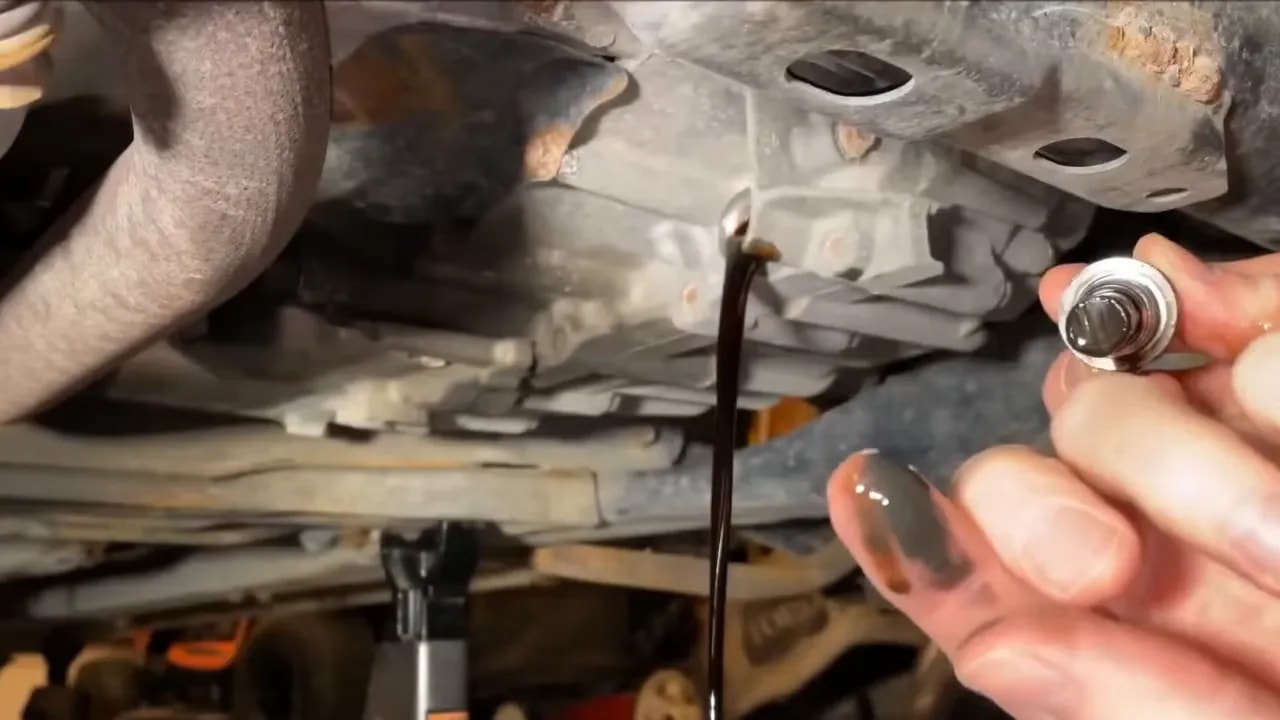
On some automatics, a straightforward drain and fill replaces roughly half the fluid. The actual proportion depends on the transmission and the work performed.
For a high-mileage gearbox with an uncertain maintenance history, a gradual approach may be preferable to an aggressive machine flush. A mechanic may recommend two or three drain-and-fill services over a few thousand miles, progressively refreshing the fluid rather than attempting a single forceful exchange.
This is a condition-dependent decision, not a fixed procedure for every vehicle. A symptomatic, neglected transmission should be assessed before choosing either method.
Will Changing Old Transmission Fluid Damage a High-Mileage Gearbox?
The claim that fresh fluid inevitably destroys an old transmission confuses the condition of the gearbox with the service performed on it.
A heavily neglected transmission may already have significant wear and accumulated deposits. An aggressive flush can disturb debris, which may then reach hydraulic control passages or solenoids. That concern is different from saying that correct fresh fluid is inherently harmful.
The sensible response is neither “flush every gearbox” nor “never change old fluid.” It is to:
- Assess the symptoms and existing fluid condition.
- Establish whether serious mechanical wear is already present.
- Select an appropriate service method for that gearbox.
- Use the exact required fluid and replace the filter as applicable.
No service method can guarantee recovery of an already failing transmission. Equally, leaving deteriorated fluid untouched is not a repair.
How Much Does a Diesel Transmission Fluid Change Cost?
The fluid itself may be relatively inexpensive, but a complete service involves more than buying one bottle. The following figures are rough budgeting estimates, not fixed quotes.
| Item | Approximate cost or quantity |
|---|---|
| Quality automatic transmission fluid | $8 to $15 per liter, with some specifications costing more. |
| Typical automatic service fluid quantity | About 5 to 10 liters, plus a filter. |
| DIY automatic service | A few hundred dollars in fluid and parts. |
| Independent workshop service | Roughly $200 to $400 in the examples discussed, though some applications cost more. |
| Rebuilt or replacement diesel automatic | Approximately $3,000 to $8,000, sometimes more. |
A $10-per-liter fluid is not a $10 transmission repair. Request a gearbox-specific quote that clearly states the fluid, filter, and service method included.
The financial case for maintenance is straightforward: servicing a healthy transmission is substantially less expensive than replacing one. But a modest service price should not be used to promise that every shifting complaint has an inexpensive solution.
What About Diesel DSG and Manual Gearboxes?
Wet-Clutch Dual-Clutch Transmissions
Wet-clutch dual-clutch gearboxes, including certain DSG transmissions fitted to diesel Volkswagen, Skoda, and SEAT vehicles, also depend on appropriate fluid maintenance.
Many of these applications have an explicit fluid and filter interval, with approximately 40,000 miles serving as a common reference. Confirm the schedule for the exact gearbox rather than applying that number to every DSG or dual-clutch transmission.
Do not transfer the service requirements of a conventional automatic to a dual-clutch gearbox without checking them. The correct fluid and applicable filter service remain essential.
Manual Diesel Gearboxes
A manual gearbox that feels notchy or balky, particularly when cold, may benefit from fresh gear oil of the correct grade. The same limitation applies: oil maintenance cannot correct every mechanical shifting problem.
Gear oil may cost roughly $10 to $15 per liter, and some manual gearboxes hold about 2 liters. Verify the actual capacity and specification before buying oil. Those figures are examples, not universal quantities.
Common Mistakes to Avoid
- Treating an additive as a fluid service: A pour-in treatment is not the same as replacing deteriorated fluid and servicing the filter.
- Buying generic fluid without checking approval: The gearbox’s friction requirements matter, not just the label’s broad compatibility language.
- Assuming every clunk means a rebuild: Fluid condition deserves consideration when the hardware is still healthy.
- Assuming every clunk means old fluid: Symptoms still need diagnosis, especially when slipping is pronounced.
- Applying one interval to all transmissions: Conventional automatics, wet-clutch dual-clutch units, and manuals require gearbox-specific guidance.
- Expecting fresh fluid to reverse internal damage: Burnt fluid, metallic particles, and severe slipping are reasons for assessment, not miracle-cure expectations.
Your Next Step
Find out which transmission your diesel has, locate any previous fluid-service records, and check the current maintenance guidance for that gearbox. If shift quality has changed, describe the symptoms to a workshop before booking the service.
For a healthy transmission suffering from deteriorated fluid, the correct fluid and filter service can make a meaningful difference. For a damaged transmission, diagnosis prevents maintenance from being mistaken for repair.