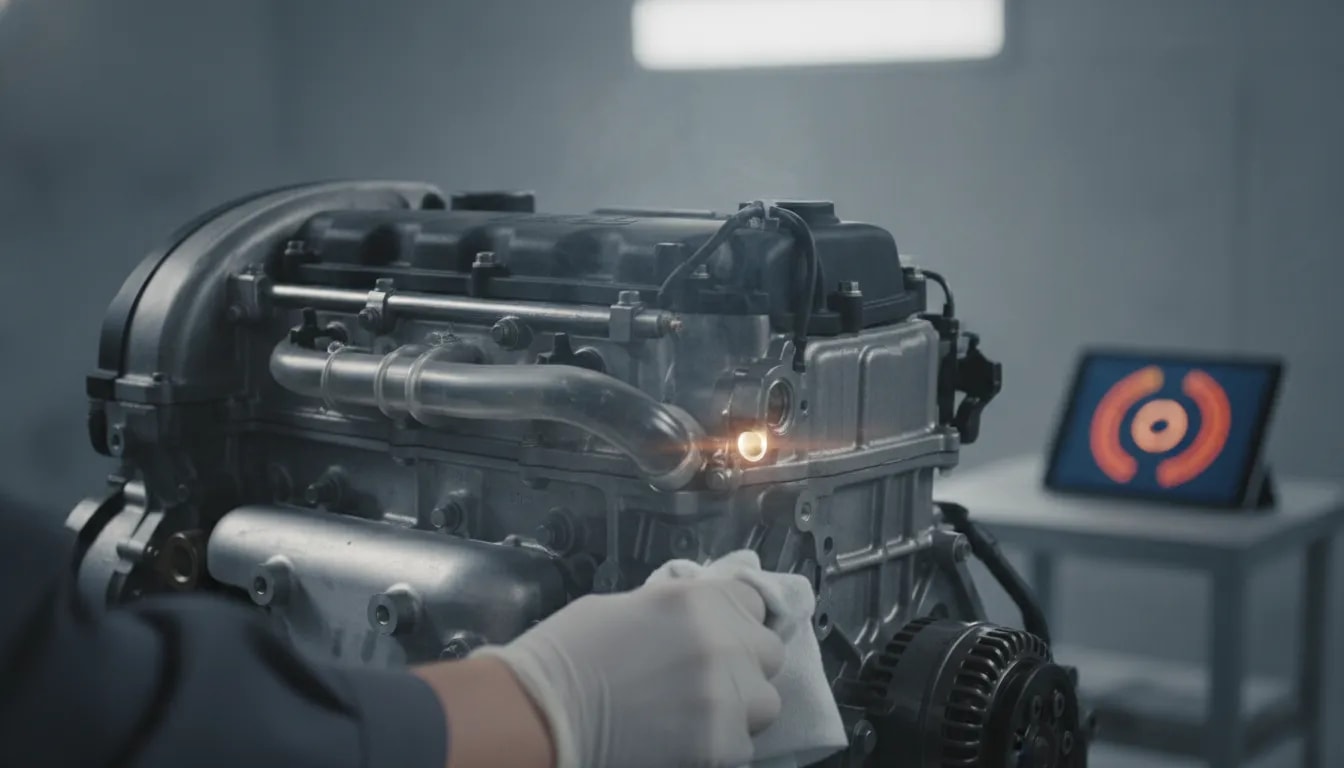
The Mazda 2.2 Skyactiv-D diesel can deliver strong torque and good fuel economy, but it has several important reliability risks. Carbon buildup, injector seal leakage, contaminated engine oil and oil pump drive problems can combine to cause serious engine damage.
Failure is not inevitable. Some owners have covered 150,000 miles without major trouble. However, a used Mazda diesel deserves more scrutiny than its badge or a smooth test drive might suggest. Detailed maintenance records and an inspection by a specialist familiar with this engine are especially important.
For owners and buyers of a Mazda CX-5, Mazda 6 or Mazda 3 diesel, the central issue is not simply whether one component might fail. It is whether an developing intake or lubrication problem has been allowed to damage other parts of the engine.
Key Takeaways
- Carbon deposits, injector seal leakage and poor oil condition can contribute to serious Skyactiv-D engine damage.
- Reported failure mileages are not a fixed lifespan, and some engines achieve substantially higher mileage.
- Detailed service invoices and diesel-specialist inspections matter more than mileage or a smooth test drive alone.
- Preventive maintenance should address intake cleanliness, injector sealing and lubrication as connected concerns.
Table of Contents
- Is the Mazda 2.2 Skyactiv-D Reliable?
- Used Mazda Diesel Buying Checklist
- Common Mazda 2.2 Diesel Problems
- Why These Problems Can Become a Failure Cascade
- Maintenance That Can Help Reduce the Risk
- Warning Signs and Ownership Mistakes to Avoid
- Warranty, Goodwill and the Petrol Alternative
- The Bottom Line
Is the Mazda 2.2 Skyactiv-D Reliable?
The 2.2 Skyactiv-D is best approached as a maintenance-sensitive diesel with potentially expensive failure modes, rather than a low-attention ownership choice.
Introduced in 2012, it appeared first in the CX-5 and subsequently in the Mazda 6 and Mazda 3 in selected markets. It was sold across the UK, Europe, Australia and other regions, although availability and specification vary.
Its appeal is understandable: a twin-turbo arrangement, a broad torque delivery and an unusually low compression ratio helped it offer performance and efficiency. Those strengths do not remove the need to examine its diesel-specific weaknesses.
Reported problems often fall between roughly 70,000 and 120,000 miles, with about 85,000 miles frequently cited in accounts of major failures. These figures are not a fixed engine lifespan or a proven failure probability. Trouble can develop earlier, while well-maintained examples can travel considerably further.
What matters more than the odometer?
- Documented oil and filter changes: Look for dates, mileages and invoices, not just an assurance that servicing was regular.
- Injector seal work: Establish whether seals have been inspected or replaced and what parts were fitted.
- Intake and EGR maintenance: Find out whether carbon deposits have been assessed and removed.
- Previous lubrication problems: Investigate any history of contaminated oil, oil pressure warnings or internal engine repairs.
- Driving pattern: Frequent short trips deserve particular attention when assessing the engine’s maintenance needs.
Used Mazda Diesel Buying Checklist
A pre-purchase inspection should focus on the engine’s known problem areas, rather than relying only on how it performs during a short drive.
- Confirm the exact engine and specification. Do not assume that every Mazda 3, Mazda 6 or CX-5 has the same engine or emissions equipment.
- Read the service invoices in mileage order. Identify gaps and distinguish routine servicing from targeted preventive work.
- Ask specifically about injector seals. A general service stamp does not establish that these have been renewed.
- Request evidence of intake and EGR inspection or cleaning. Ask what was cleaned, when it was done and whether the condition was documented.
- Investigate DPF and oil contamination history. Previous regeneration problems and concerns about fuel dilution should be part of the assessment.
- Have a diesel specialist evaluate the lubrication system. Depending on the car’s history and condition, this may include assessing oil contamination, the oil pickup strainer and the oil pump drive.
- Verify any promised repair assistance. Obtain confirmation from Mazda for the specific vehicle instead of relying on a seller’s description.
A recent oil change is not evidence that the engine is undamaged. Fresh oil does not reverse wear that may already have occurred in bearings, camshaft surfaces or a chain drive.
For example, a lower-mileage car with missing invoices and no record of injector or intake work may be harder to assess than a higher-mileage car with detailed evidence of preventive maintenance. Mileage is useful context, but it cannot substitute for condition and history.
Common Mazda 2.2 Diesel Problems
| Problem area | Why it matters | What to discuss with a specialist |
|---|---|---|
| Intake carbon buildup | Deposits reduce the available air passage through the intake. | Inspection of the manifold, intake ports and valves. |
| EGR fouling | Carbon accumulates in the exhaust gas recirculation system. | EGR condition and an appropriate cleaning method. |
| Injector seal leakage | Loss of sealing can allow combustion contamination into the engine’s oil environment. | Seal condition, replacement history and suitable replacement parts. |
| Fuel dilution in engine oil | Fuel contamination reduces the oil’s ability to protect moving components. | Oil analysis and investigation of the underlying cause. |
| DPF regeneration issues | These are another reported diesel-specific concern that should not be ignored. | Previous warnings, regeneration problems and diagnostic findings. |
| Camshaft and bearing wear | Inadequate lubrication can damage both upper and lower engine components. | Evidence of wear where symptoms or history justify investigation. |
| Oil pump drive chain failure | Loss of pump drive can rapidly remove the engine’s oil supply. | Drive condition and any associated lubrication problems. |
Carbon buildup in the intake and EGR system
Exhaust gas recirculation, or EGR, returns some exhaust gas to the intake to help control emissions. That gas carries soot and other combustion residues, which can accumulate on intake surfaces.
Over time, deposits can become dense and firmly attached rather than remaining as loose soot. The affected areas include the intake manifold, EGR passages and intake valves. As deposits thicken, the space available for airflow becomes smaller.
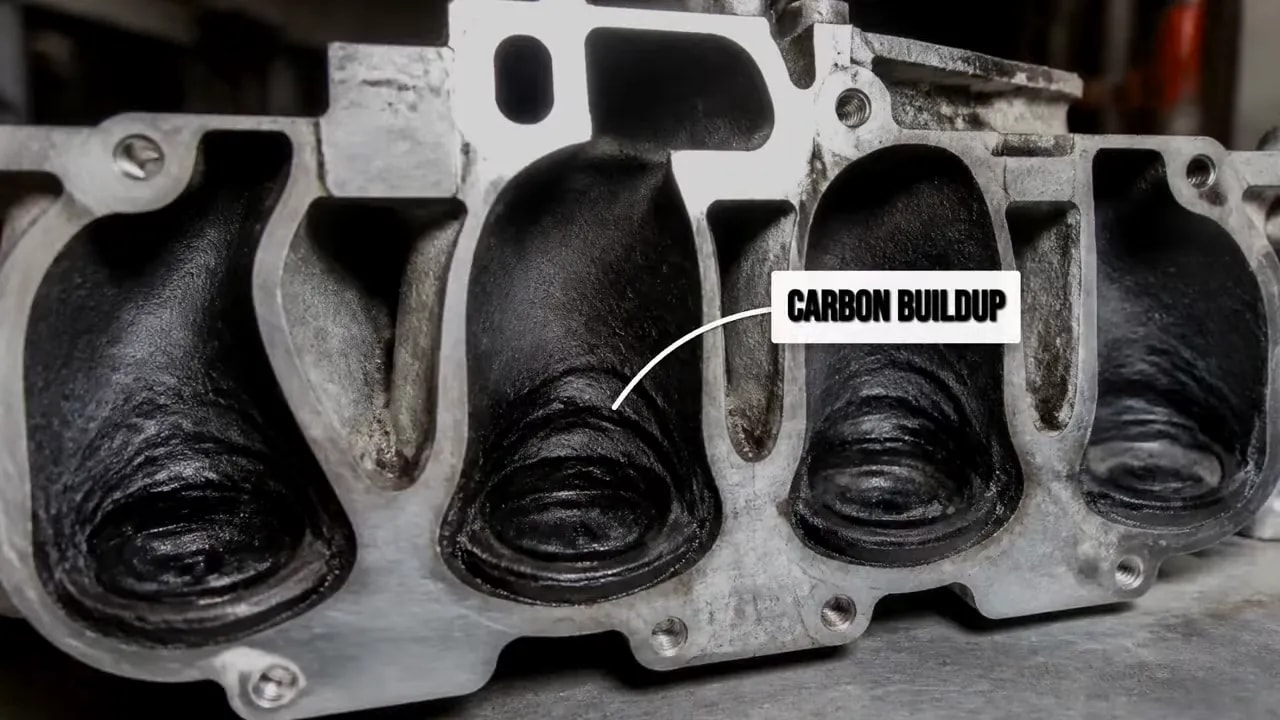
The diesel injects fuel directly into the combustion chamber, so the intake valves do not receive a fuel-washing effect. Deposits can therefore remain on those surfaces and build up through repeated use.
Heavy carbon accumulation is a physical restriction. Engine management cannot restore an intake passage that has become substantially blocked. Assessing the deposit level and choosing an appropriate cleaning method are more useful than assuming the engine can compensate indefinitely.
Injector seal leakage
Each injector relies on a small sealing washer at its seat in the cylinder head. Despite its size, this component performs an important job: maintaining the seal around the injector at the combustion chamber.
If that seal deteriorates, combustion leakage and contamination can affect the engine’s oil environment. This makes injector sealing relevant to far more than injector performance alone.
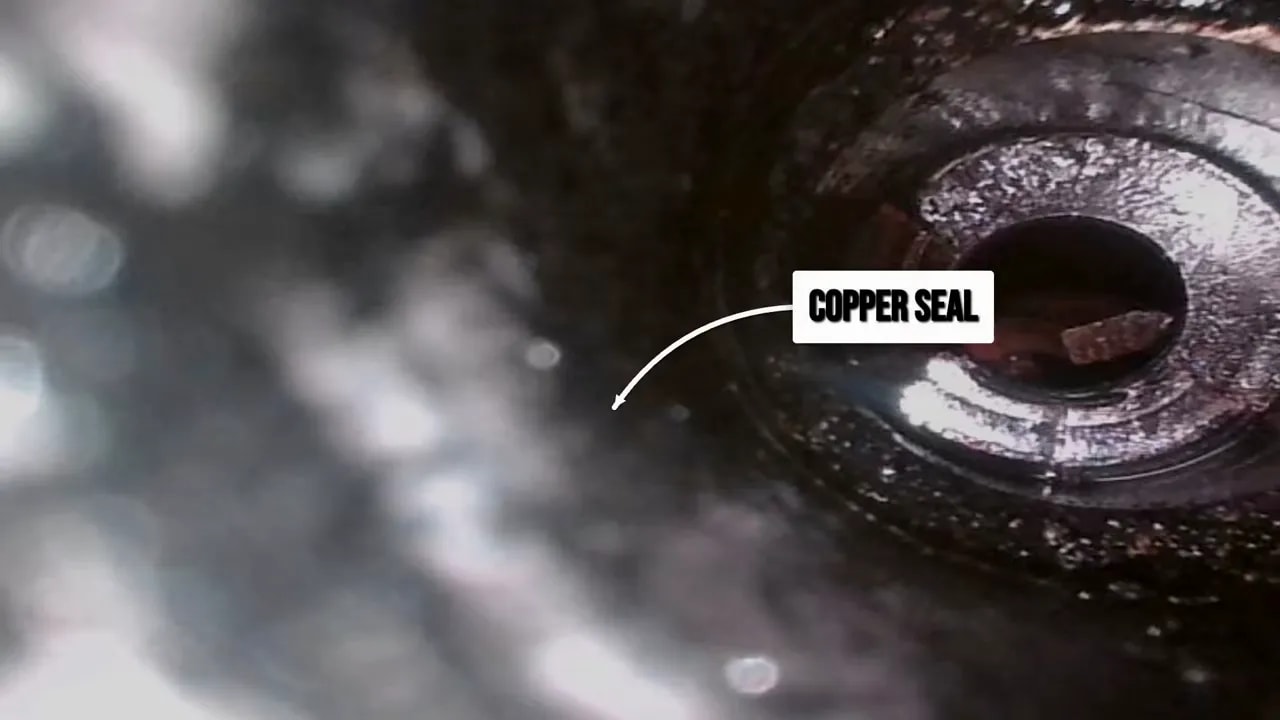
Repeated heating and cooling are part of the operating conditions these seals experience. Frequent short-trip use is a reason to pay closer attention to their condition and the broader maintenance history.
Seal leakage and fuel dilution should still be investigated carefully rather than treated as interchangeable diagnoses. Finding contaminated oil is the start of identifying the cause, not the end of the repair.
Fuel dilution and loss of oil protection
Fuel dilution means diesel fuel has mixed with the lubricating oil. The concern is that the resulting oil no longer behaves as intended, particularly in its ability to maintain a protective film between moving metal surfaces.
The components at risk include bearings, camshaft lobes and the oil pump drive chain. Carbon contamination adds another concern because the lubrication system must circulate oil through components that depend on clean, suitable lubricant.
Oil analysis can help assess fuel contamination and changes in oil condition. A specialist can interpret those findings alongside the car’s service history and inspection results.
There is no reason to wait for a dashboard warning before investigating a known contamination concern. Internal wear can accumulate before a fault becomes obvious to the driver.
Oil pump drive failure and engine seizure
The oil pump supplies pressurized lubricant to the engine. Its drive chain is therefore a critical component: if the pump loses its drive, oil circulation can be interrupted abruptly.
Poor lubrication and contamination can contribute to chain wear. Wear in its joints increases effective chain length, affects tension and can lead to poor engagement or contact with guides.
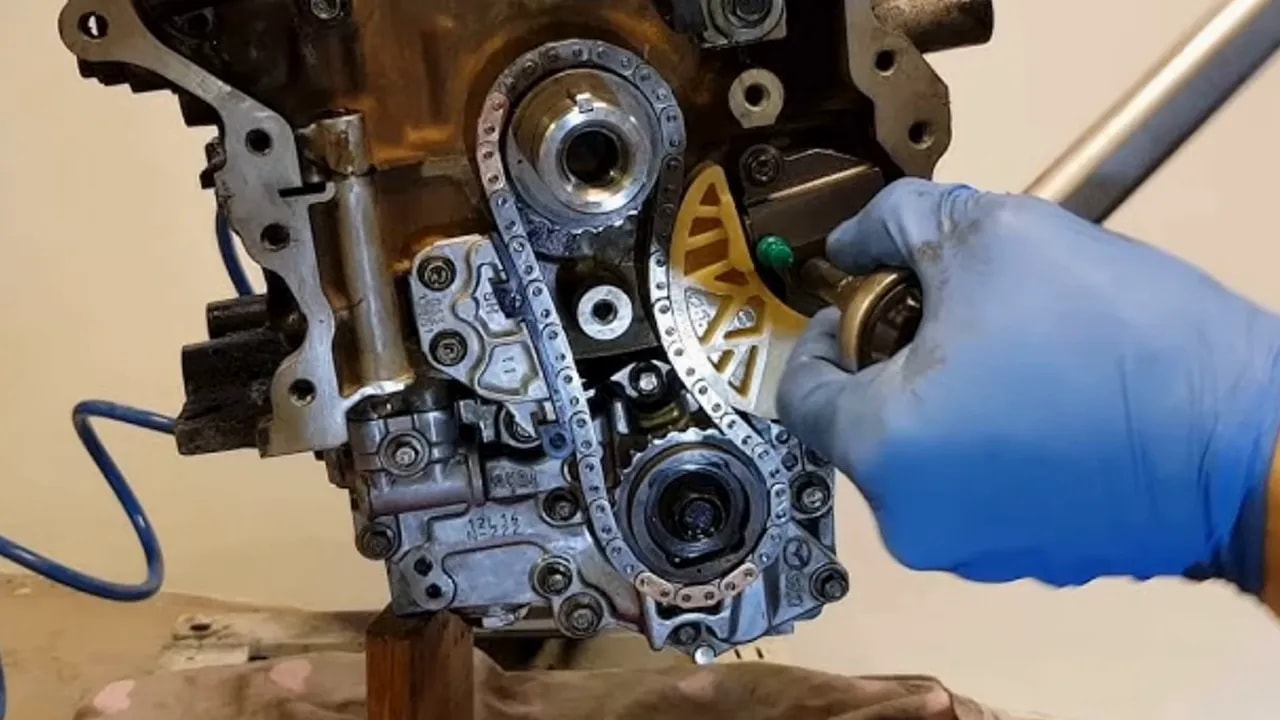
If the oil pump drive fails, the consequences can extend well beyond replacing the chain. Bearings and the crankshaft can suffer rapid damage, potentially leaving the engine seized.
The oil pump drive chain should not be confused with the engine’s timing chain. When discussing a diagnosis or repair estimate, establish which drive system is involved and whether lubrication damage has affected other components.
Why These Problems Can Become a Failure Cascade
The most serious outcomes arise when multiple weaknesses overlap. Intake deposits, injector leakage and poor oil condition do not have to follow an identical sequence in every engine, but they can create interacting problems.
- Deposits accumulate in the intake and EGR system. Air passages become increasingly restricted.
- Injector sealing or other contamination concerns develop. The oil’s condition becomes an important diagnostic issue.
- Lubrication quality deteriorates. Moving components lose some of the protection they depend on.
- Internal wear progresses. Camshaft surfaces, bearings and the pump drive may be affected.
- A critical lubrication failure occurs. Loss of oil pump drive or severe oil starvation can cause major engine damage.
This explains why treating only the final failed part may be insufficient. A chain repair does not resolve contaminated oil, and an oil change does not repair a leaking seal or worn bearing.
How the original design affects maintenance needs
The original 2.2 Skyactiv-D used a 14:1 compression ratio, unusually low for a production diesel at its introduction. Lower compression helped reduce combustion temperatures and nitrogen oxide emissions.
Mazda’s launch-era emissions strategy also relied heavily on EGR. Early versions were promoted for achieving their emissions goals without the urea-based selective catalytic reduction system used by some competitors.
Those choices helped define the engine’s performance and emissions characteristics, but they also made intake cleanliness and operating conditions important ownership considerations. Low compression can make combustion more sensitive during cold starts and low-speed operation, while substantial EGR use exposes the intake to combustion residues.
Do not assume that launch-era emissions equipment describes every later engine or market specification. Check the individual vehicle.
Maintenance That Can Help Reduce the Risk
A useful maintenance plan addresses contamination, carbon deposits and lubrication together. It should be agreed with a specialist who knows the exact engine version and can assess its existing condition.
Use a conservative oil and filter change plan
An oil and filter change interval of about 5,000 miles is a conservative specialist recommendation for this engine. Treat that as preventive guidance to discuss, not as a universal statement of Mazda’s official schedule for every vehicle.
Keep invoices showing the date, mileage, oil used and work completed. If fuel dilution is suspected, changing the oil should be accompanied by investigation rather than repeatedly replacing oil without finding the cause.
Discuss preventive injector seal replacement
Preventive replacement of the injector seals before approximately 60,000 miles is another specialist recommendation. If a car has already passed that mileage without evidence of seal work, ask for an assessment instead of assuming the seals are sound.
Where revised or upgraded parts are proposed, confirm their suitability for the specific engine and retain the parts details on the invoice.
Inspect and clean the intake and EGR system
Intake and EGR cleaning before roughly 60,000 miles is a preventive benchmark worth discussing. The actual need depends on deposit condition, previous cleaning and driving use.
Walnut blasting is one method used by specialists to remove firmly attached intake deposits. Ask which components require cleaning and which procedure is appropriate for each, rather than treating every carbon-cleaning service as equivalent.
Assess the oil pickup strainer and pump drive
Where contamination or leakage has been found, discuss whether the oil pickup strainer requires inspection and cleaning. The pump drive also deserves attention where the history or condition suggests a lubrication problem.
These checks help avoid a narrow repair that leaves another part of the same problem unresolved.
Warning Signs and Ownership Mistakes to Avoid
Accounts of severe failures describe sudden warning lights, harsh mechanical noise and rapid engine stoppage. The difficulty is that these may be signs of an advanced failure rather than useful early notice.
If an oil pressure warning or severe mechanical clatter appears, stop safely and switch off the engine. Continuing to drive or repeatedly restarting it risks further damage. Arrange diagnosis before attempting to use it again.
The more useful preventive approach is to investigate known problem areas before relying on symptoms.
- Do not use the absence of warning lights as a health certificate. Contamination and wear can develop without an early dashboard alert.
- Do not treat 85,000 miles as a deadline. There is no single mileage at which every engine fails.
- Do not assume routine servicing includes targeted preventive work. Injector seals and intake cleaning need their own evidence.
- Do not assume motorway use eliminates risk. Longer journeys do not repair a leaking seal or reverse existing wear.
- Do not regard maintenance as a guarantee. Careful servicing improves the basis for ownership, but it cannot prove that an engine has no hidden damage.
Warranty, Goodwill and the Petrol Alternative
Claims of extended Mazda goodwill assistance in the UK or Europe should be checked directly with Mazda. Do not assume that a stated age or mileage limit creates automatic coverage.
Ask for written confirmation of whether the particular vehicle is eligible and what service evidence is required. Detailed receipts are valuable for both diagnosis and any request for repair assistance, but they do not by themselves guarantee approval.
It is also important to separate Skyactiv-D diesel reliability from Skyactiv-G petrol reliability. The 2.0 and 2.5 petrol engines have a stronger reputation for straightforward long-term ownership, and the diesel-specific concerns described here should not be applied indiscriminately across Mazda’s range.
For a buyer who prioritizes simpler maintenance and does not want to manage these diesel-specific risks, a petrol Mazda is worth considering.
The Bottom Line
The Mazda 2.2 Skyactiv-D is not guaranteed to suffer a catastrophic failure, but it requires an informed ownership approach. Its most important vulnerabilities involve intake deposits, injector sealing, oil contamination and the consequences of inadequate lubrication.
Before buying, prioritize detailed invoices and a specialist inspection over mileage alone. If you already own one, build a maintenance plan that addresses the underlying causes of contamination and wear, rather than waiting for a warning light or repairing only the last component to fail.