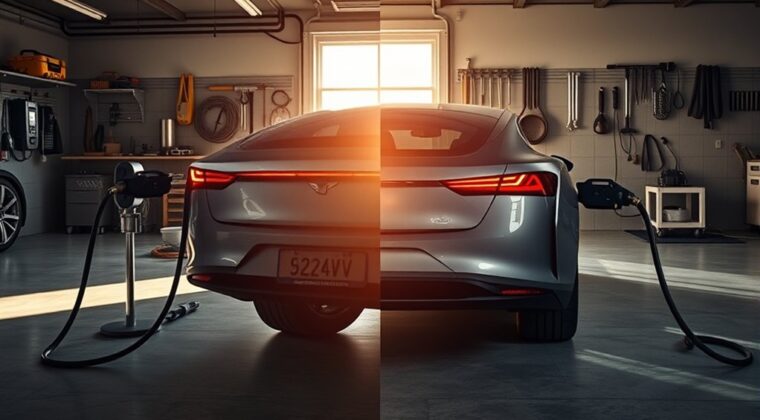
Choosing between 120V and 240V EV charging comes down to how many miles you drive, how long your car sits at home, and whether your electrical system can safely support a faster charger. A 120V outlet can work for short daily driving, while a 240V Level 2 charger is usually the better home setup if you want overnight recovery, longer daily range, or less dependence on public charging.
Quick Answer
Use 120V charging if you drive lightly, usually under about 30 to 40 miles per day, and can plug in for many hours. Choose 240V Level 2 charging if you need faster overnight charging, drive more often, own a long-range EV, or want a more convenient home setup.
Key Takeaways
- 120V Level 1 charging is simple and low-cost, but it is slow. Expect about 2 to 5 miles of range per hour in many real-world situations.
- 240V Level 2 charging usually adds about 10 to 25+ miles of range per hour, depending on the charger, circuit, vehicle, and conditions.
- Level 2 is best for longer commutes, full battery-electric vehicles, multiple EV households, and drivers who want reliable overnight charging.
- A 240V charger may need permits, a dedicated circuit, load calculation, GFCI protection, and professional installation.
- For road trips, home Level 2 charging helps you leave with a fuller battery, but DC fast charging is what usually handles mid-trip charging stops.
At a Glance
| Time Required | 10 to 20 minutes to compare your driving needs; longer if an electrician checks your panel for Level 2 installation. |
| Difficulty | Easy for choosing a charging level; moderate to advanced for installation planning. |
| Tools Needed | Your EV manual, daily mileage estimate, electric bill or utility rate plan, charger specs, and a licensed electrician for 240V work. |
| Cost | 120V may cost little if your included cord and outlet are safe. 240V can range from a simple charger install to a larger panel or wiring upgrade. |
Understanding the Basics of EV Charging Levels
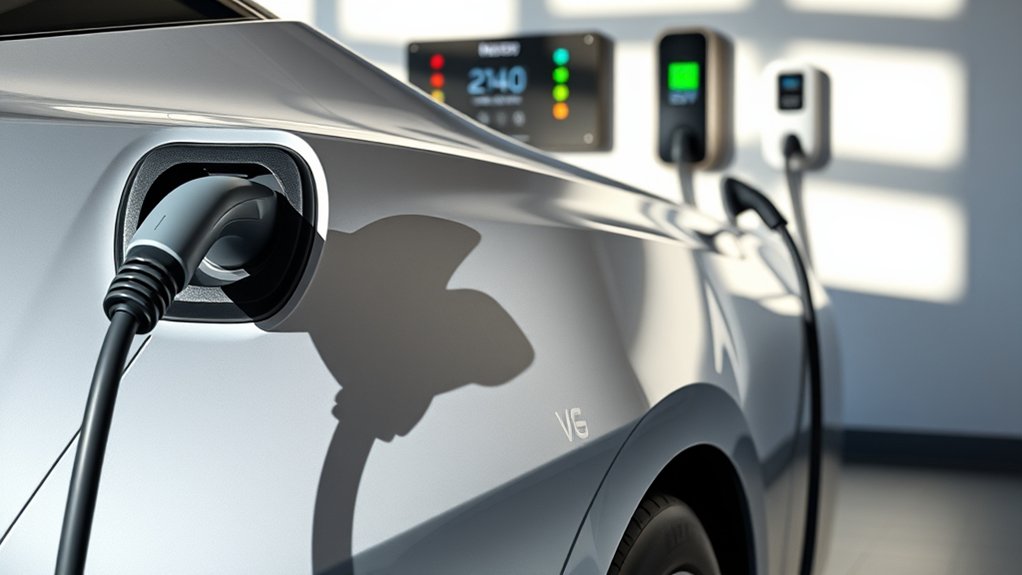
EV charging levels describe how much power the charging equipment can deliver to your vehicle. For most home charging decisions, you are comparing AC Level 1 and AC Level 2.
Level 1 charging uses a standard 120V household outlet. It is the slowest option, but it is often enough if your car stays parked overnight and your daily mileage is low.
Level 2 charging uses 240V service in most homes. It needs a properly sized circuit and charging unit, but it can refill much more range overnight. The U.S. Department of Energy’s Alternative Fuels Data Center notes that Level 2 charging is common for home, workplace, and public charging because it can charge a typical EV battery overnight.
A simple rule: if your car can recover the miles you drive each day while it sits parked overnight, that charging level can work for your routine.
120V vs. 240V Charging: What Each Offers for Daily Commuters
For a short commute, 120V charging can be enough. A Level 1 cord can often add about 2 to 5 miles of range per hour, depending on the vehicle, temperature, battery state of charge, and charging equipment. If you plug in for 10 hours, that may recover roughly 20 to 50 miles of range.
For a longer commute, 240V Level 2 charging is much more practical. Many Level 2 setups add about 10 to 25+ miles of range per hour. A higher-amperage Level 2 charger can be faster, but your EV’s onboard charger and your home’s electrical capacity set the real limit.
Use this quick formula before you buy anything:
- Estimate daily miles: Add your commute, errands, school runs, and any regular side trips.
- Estimate plug-in hours: Count the hours your car is usually parked and plugged in at home.
- Compare recovery: Daily miles needed ÷ plug-in hours = miles of range needed per charging hour.
- Choose the level: If the result is low, 120V may work. If the result is high, 240V is usually the better fit.
Pro Tip: Build in a buffer. If you drive 35 miles per day, do not choose a setup that barely recovers 35 miles on a perfect night. Cold weather, detours, battery preconditioning, and missed plug-in time can reduce your margin.
Side-by-Side Comparison: 120V vs. 240V EV Charging
| Feature | 120V Level 1 | 240V Level 2 |
|---|---|---|
| Typical use | Short daily driving, plug-in hybrids, backup charging | Daily EV use, longer commutes, overnight recovery |
| Power source | Standard 120V outlet | 240V residential circuit or 208V commercial service |
| Approximate range added | About 2 to 5 miles per hour | About 10 to 25+ miles per hour |
| Installation | May use an existing safe, grounded outlet | Usually needs a dedicated circuit and professional installation |
| Best advantage | Lowest setup cost | Faster, easier daily charging |
| Main limit | Slow recovery after long drives | Higher upfront cost and electrical requirements |
Why 240V EV Charging Helps Long Driving Days
A 240V Level 2 charger is better than 120V when you need to recover a large amount of range at home. If you drive 60, 80, or 100 miles in a day, Level 1 may not catch up overnight. Level 2 usually can.
This matters most when you want to start each morning with a comfortable buffer. Instead of slowly adding range over several days, a Level 2 charger can refill most daily use while you sleep.
For true road trips, though, do not confuse Level 2 with DC fast charging. Level 2 is excellent at home, hotels, workplaces, and destinations where the car sits for hours. DC fast charging is the better option for highway stops because it can add far more range in a short break, when your EV and the station support it.
Note: The charging station does not control everything. Your EV’s battery temperature, state of charge, onboard charger, connector, and software all affect charging speed.
Comparing Charging Times: 120V vs. 240V
Charging time depends on battery size, battery percentage, charger output, and vehicle efficiency. A small plug-in hybrid may refill overnight on 120V. A large battery-electric SUV may need much longer on the same outlet.
Here is a simple way to picture the difference:
- 120V Level 1: Best for adding small amounts of range each night. It may take more than a full day to refill a large EV battery from a low state of charge.
- 240V Level 2: Best for restoring daily driving range overnight. Many drivers can plug in at night and wake up with the range they need.
- DC fast charging: Best for mid-trip stops, not daily home charging. It is usually found at public charging sites along travel routes and busy corridors.
If your car is parked 10 hours each night, a 120V setup may recover enough range for a short commute. If you need the car ready again after a long drive, a 240V setup is far more convenient.
How to Check Your Home’s Electrical Capacity for EV Charging
Before installing a Level 2 charger, check whether your home can safely support the added load. Many homes have 100-amp, 150-amp, or 200-amp service, but the service size alone does not tell the full story. Your existing appliances, HVAC, range, dryer, water heater, and panel space matter too.
Warning: Do not open, modify, or test an electrical panel unless you are qualified to do so. A licensed electrician should perform the load calculation, confirm code requirements, and install any new 240V EV charging circuit.
| Component | What to Check | Why It Matters |
|---|---|---|
| Main service panel | Service size, available breaker space, and total home load | Prevents overloading your electrical system |
| Circuit type | Dedicated 240V circuit for most Level 2 chargers | EV charging is a long-duration electrical load |
| Breaker and wire size | Matched to charger amperage and local code | Undersized wiring or breakers can create heat and fire risk |
| Permits and inspection | Local permit, inspection, and utility requirements | Keeps the installation code-compliant and safer |
| Charger certification | ENERGY STAR or safety-tested equipment from a recognized testing laboratory | Reduces risk from poorly certified or unsafe charging equipment |
A licensed electrician can also help you choose between a hardwired charger and a plug-in unit. Hardwired chargers can be cleaner and may support higher amperage. Plug-in units can be easier to remove, but the outlet, plug, breaker, and GFCI requirements must still match local code.
Cost Comparison: 120V vs. 240V Charging
The cost difference between 120V and 240V charging is mostly upfront installation cost, not the electricity itself. You pay for energy by kilowatt-hour, so the same amount of energy costs roughly the same before charging losses and rate-plan differences.
- 120V setup cost: Often low if your EV includes a portable Level 1 cord and you already have a safe, grounded outlet near your parking space.
- 240V charger cost: You may need to buy the charging unit, add a dedicated circuit, run wiring, install a breaker, get permits, and pay for labor.
- Panel upgrade cost: If your panel is full or your home service cannot support the extra load, the job can become much more expensive.
- Operating cost: A utility time-of-use plan may make overnight charging cheaper, especially if you can schedule charging during off-peak hours.
Level 2 can be worth the higher upfront cost if it saves you from frequent public charging, lets you use lower overnight rates, or makes EV ownership easier every day.
Which Charging Level Fits Your Lifestyle and Driving Habits?
Choose 120V charging if your EV sits parked for long periods, your daily mileage is light, and you do not often need to recover from low battery to high battery overnight. It can also work well for many plug-in hybrids because their batteries are smaller.
Choose 240V charging if you drive more miles, own a full battery-electric vehicle, live in a cold climate, share one charger across multiple EVs, or want the convenience of waking up with more range every morning.
If you rent or live in an apartment, your options may be different. Ask about approved charging areas, workplace charging, public Level 2 stations, and landlord permission before relying on an outlet. Avoid running long extension cords across sidewalks, garages, or driveways because they can overheat, trip people, or violate property rules.
Charger Amps, Connectors, and Vehicle Limits
A 240V charger is not automatically the same speed in every home. A 24-amp, 32-amp, 40-amp, and 48-amp Level 2 charger can deliver different power levels, but only if the circuit and the vehicle support that rate.
Your EV’s onboard AC charger sets the maximum AC charging speed. For example, if your home charger can deliver more power than your car can accept, the car will only take what it can use. That is normal.
Connector type also matters. Many non-Tesla EVs use J1772 for Level 1 and Level 2 AC charging. Tesla vehicles and a growing number of newer North American EV plans use or support J3400/NACS. Adapters can help in some cases, but you should use only manufacturer-approved or properly certified adapters.
Incentives and Rebates for EV Charger Installation
EV charger incentives can lower your cost, but they change by date, location, income rules, utility program, and equipment type. Check the rules before you buy or install equipment.
For U.S. federal tax purposes, the Alternative Fuel Vehicle Refueling Property Credit may apply to qualified EV charging equipment installed at a main home in an eligible location. For individuals, the IRS lists a credit of 30% of the cost, up to $1,000 per item, for qualified property bought and placed in service from January 1, 2023, to June 30, 2026. The property must also meet location and use rules, including eligible census tract requirements.
State, local, and utility incentives may also exist. Use the AFDC Laws and Incentives database, your state energy office, and your electric utility’s rebate page to confirm current programs.
Note: Tax rules can change, and eligibility is specific to your address and tax situation. Keep receipts, charger specs, permit records, and installation invoices, then confirm the credit with a qualified tax professional.
Frequently Asked Questions About 120V and 240V Charging Options
These two charging levels solve different problems. Level 1 is simple and slow. Level 2 is faster and more convenient, but it needs the right electrical setup.
Charging Speed Differences
Level 1 charging usually adds only a small amount of range each hour, which makes it best for light use. Level 2 charging adds several times more range per hour, which makes it better for full EV ownership and overnight charging.
Do not judge by voltage alone. Charger amperage, battery size, vehicle efficiency, battery temperature, state of charge, and onboard charger capacity all affect charging time.
Installation Requirements Comparison
Level 1 charging may use a standard household outlet if the outlet is grounded, safe, and suitable for the load. Level 2 charging usually needs a dedicated 240V circuit, proper breaker and wire sizing, a compatible charger, and professional installation.
In some homes, Level 2 installation is simple. In others, the electrician may recommend a load-management device, panel upgrade, subpanel, or service upgrade.
Frequently Asked Questions
Is it bad to charge an EV with 120V?
No. Charging with 120V is not bad for the EV when you use the correct charging cord and a safe outlet. The drawback is speed. It may not recover enough range overnight if you drive many miles or have a large battery-electric vehicle.
How much faster is 240V EV charging than 120V?
A 240V Level 2 charger is often several times faster. Level 1 may add about 2 to 5 miles of range per hour, while Level 2 often adds about 10 to 25+ miles per hour. The exact number depends on charger output, vehicle limits, temperature, and battery state of charge.
Do I need a 240V charger if I drive only 20 miles per day?
Not always. If you can plug in most nights, 120V charging may recover that range. A 240V charger still adds convenience because it gives you more buffer after unexpected trips, cold weather, or a missed charging night.
What is the 80/20 rule for EV charging?
The 80/20 rule is a common habit where drivers avoid staying near 0% or 100% battery during normal daily use. Many owners set a daily charge limit below full and charge higher before a trip. Follow your owner’s manual because recommendations vary by battery chemistry and vehicle.
What drains an EV battery the most?
High speeds, aggressive acceleration, steep climbs, cold weather, cabin heat, heavy cargo, underinflated tires, and poor route planning can reduce range. Regenerative braking, steady speeds, correct tire pressure, and preconditioning while plugged in can help.
What stops someone from unplugging your electric car?
Many EVs lock the connector while the vehicle is locked or actively charging. Some charging apps also send unplugged notifications. For home charging, park in a secure area when possible and use manufacturer-approved locking features.
Conclusion
For short, predictable driving, 120V EV charging can be enough. It is simple, low-cost, and useful when your car sits plugged in for many hours. For most full EV owners, 240V Level 2 charging is the better long-term home setup because it restores range faster, handles busy driving days better, and makes overnight charging easier.
The best choice is not only about voltage. Match your charger to your daily miles, parking time, vehicle limits, utility rates, incentives, and home electrical capacity. If you choose Level 2, use certified equipment and have a licensed electrician confirm the installation is safe and code-compliant.
Sources
- U.S. Department of Energy Alternative Fuels Data Center: Electric Vehicle Charging Stations — charging levels, Level 1/Level 2 ranges, equipment types, DC fast charging, and connector basics.
- ENERGY STAR: Electric Vehicle Chargers — charger buying guidance, Level 1 and Level 2 range estimates, certified charger safety, and licensed-electrician guidance.
- IRS: Alternative Fuel Vehicle Refueling Property Credit — federal charger credit rules, eligibility, census-tract requirements, and June 30, 2026 placed-in-service deadline.
- AFDC Laws and Incentives Database — state, local, utility, and federal incentive research.
- FuelEconomy.gov: All-Electric Vehicles — EV range, charge-time context, battery life, and official consumer EV information.
- Joint Office of Energy and Transportation: SAE J3400 Charging Connector — J3400/NACS, CCS1, adapters, and connector standardization context.