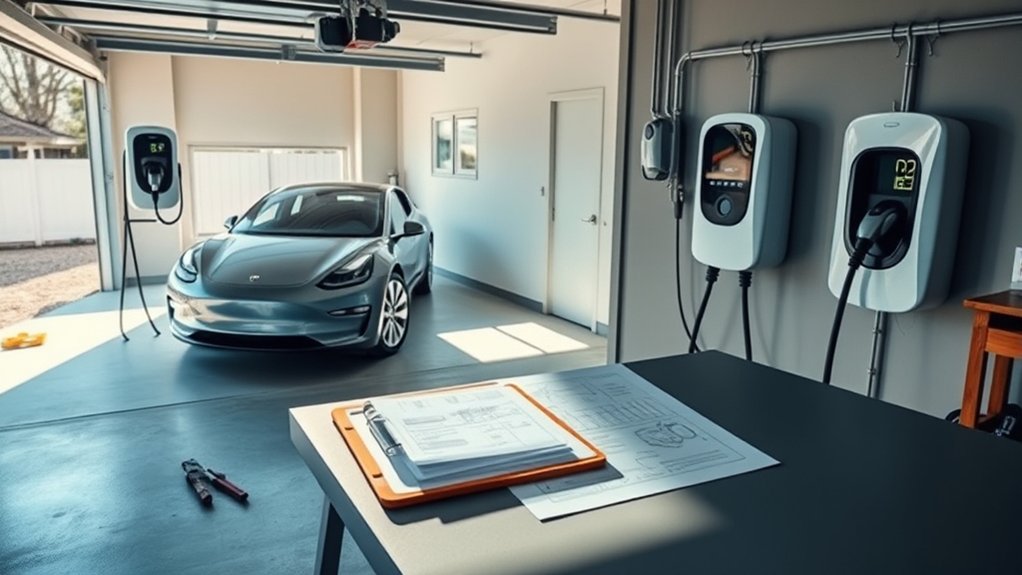
If you are installing an EV charger at home, start by checking whether the work needs an electrical permit. In many areas, a permit is likely when you add a new 240V circuit, hard-wire a Level 2 charger, upgrade an electrical panel, or run new wiring. Using an existing, code-compliant outlet may be different, but your local building or electrical department has the final say.
Quick Answer
You usually need a permit for a home EV charger if the job adds a 240V circuit, hard-wires a Level 2 charger, changes your electrical panel, or runs new wiring. You may not need a new permit for simple use of an existing legal outlet, but local rules control the answer.
Key Takeaways
- A Level 2 EV charger normally uses 240V power and often requires a dedicated circuit.
- Permits are commonly required for new circuits, hardwired chargers, panel upgrades, and new wiring runs.
- A plug-in charger on an existing, properly installed outlet may not need a new permit, but some cities still require one.
- A licensed electrician can check panel capacity, perform load calculations, pull the permit, and schedule inspection.
- Keep permit, inspection, charger manual, and invoice records for resale, insurance questions, and future electrical work.
At a Glance
| Time Required | Permit research may take 15–30 minutes. Approval can be same-day in simple online systems or longer if plan review, panel work, or utility approval is needed. |
| Difficulty | Moderate to advanced. Permit paperwork is usually manageable, but adding circuits, breakers, conduit, or hardwired equipment should be handled by a qualified electrician. |
| Tools Needed | Charger model number, manufacturer installation manual, panel information, proposed location, circuit details, site sketch, load calculation, and permit application. |
| Cost | Permit fees and installation costs vary by jurisdiction, charger amperage, wiring distance, panel capacity, outdoor work, and inspection requirements. |
Is a Permit Required for Your EV Charger Installation?
A permit is usually required when your EV charger installation changes the home’s electrical system. That includes adding a new 240V branch circuit, installing a hardwired EVSE, changing breakers, upgrading the electrical panel, running conduit, or installing a new receptacle for a Level 2 charger.
The U.S. Department of Energy’s Alternative Fuels Data Center explains that home charging installations must follow local and state codes, that permits may be required by local building and permitting authorities, and that NEC Article 625 covers much of the electrical code information for EV charging equipment.
That means the real answer depends on the authority having jurisdiction, often called the AHJ. This may be your city building department, county permitting office, state electrical board, or another local inspection office.
Warning: Do not open your electrical panel, add breakers, hard-wire a charger, or change circuit wiring unless you are legally qualified to do that work in your area. EV chargers can place a continuous high load on a home electrical system, so incorrect installation can create fire and shock hazards.
EV Charger Permit Decision Table
Use this table as a starting point, then confirm the rule with your local permitting office before buying equipment or starting work.
| Installation Scenario | Permit Likely? | Why It Matters |
|---|---|---|
| Using the portable Level 1 cord on an existing 120V outlet | Often no new permit | No new electrical work is being performed, but the outlet and circuit must be safe and suitable. |
| Installing a new 240V receptacle for a plug-in Level 2 charger | Usually yes | A new branch circuit, breaker, wiring, and receptacle are electrical work. |
| Hard-wiring a Level 2 EV charger | Usually yes | Hardwired EVSE must be installed to local code, manufacturer instructions, and inspection rules. |
| Replacing a charger with a similar unit on the same existing circuit | Maybe | Some areas treat this as like-for-like replacement; others still require a permit or inspection. |
| Upgrading the electrical panel or service | Yes | Panel and service work usually requires permits, inspections, and sometimes utility coordination. |
| Installing EV charging in a condo, apartment, or shared garage | Usually yes | Shared electrical rooms, assigned parking, association approval, metering, and common-area wiring add requirements. |
Common Scenarios Requiring a Permit for EV Chargers
You should expect a permit requirement if the installation includes new electrical work. Common permit triggers include:
- Adding a new 240V circuit: A Level 2 charger usually needs a dedicated high-capacity circuit.
- Hard-wiring a charger: A wall-mounted EVSE connected directly to the home wiring is electrical equipment, not a simple appliance plug-in.
- Installing a new NEMA receptacle: A new 240V outlet, such as a NEMA 14-50 or 6-50, normally requires proper breaker sizing, wiring, and inspection.
- Changing the electrical panel: Panel upgrades, subpanels, new breakers, or service upgrades usually require permits.
- Running new wiring through walls, ceilings, garages, crawl spaces, or outdoors: Routing and protection must meet electrical code.
- Installing outdoor equipment: Outdoor EV charging can be safe, but the equipment must be properly rated for the location and weather exposure.
Some cities publish specific EV charger permit guides. For example, the City of Seattle’s electrical permit tip says electrical permits are required for EV charger installations in Seattle, and a Level II charger for a single-family residence can be handled through its online permit process in that jurisdiction. That is a local example, not a nationwide rule.
Situations Where a Permit Isn’t Necessary
You may not need a new permit when you are not changing the electrical system. The clearest example is using the portable Level 1 charging cord supplied with many vehicles on an existing 120V outlet that is already legal, grounded, and in good condition.
You may also avoid a new permit when a plug-in EV charger uses an existing, properly permitted, dedicated 240V receptacle and no wiring changes are made. However, this depends on local rules. Some permitting offices still want EV charger installations registered or inspected, even when the outlet already exists.
A like-for-like charger replacement may also avoid a new permit in some areas if the circuit, amperage, breaker, wiring, and location stay the same. Still, if the replacement charger has a higher output, different connection type, or different manufacturer requirements, treat it as a new installation until your electrician or local building department confirms otherwise.
Note: “Plug-in” does not automatically mean “no permit.” If a new outlet, new breaker, new wiring, or panel change is needed, the electrical work itself is usually the permit trigger.
Why Permits Matter: Ensuring Safety and Compliance
Permits are not just paperwork. They create a record that the work was reviewed, installed, and inspected under the rules adopted in your area. That matters because EV chargers can run for many hours at a steady electrical load.
Safety Assurance
A properly permitted installation helps confirm that the charger, breaker, wire size, grounding, overcurrent protection, and location match the charger’s rating and local code. A qualified electrician can also confirm whether your home has enough spare electrical capacity for the charger you want.
The DOE’s home charging guidance says electricians can help homeowners determine whether the home has adequate electrical capacity, and that a qualified electrician can add circuits when Level 2 equipment requires more capacity.
Code Compliance
EV charging equipment must follow the electrical code adopted by your state or city. Many U.S. jurisdictions base local rules on the National Electrical Code, but local amendments and inspection practices can change the details.
For charger selection, ENERGY STAR notes that Level 2 chargers use 240V power and require a heavy-duty electrical circuit and plug. ENERGY STAR also warns that not all chargers for sale are safety certified, and that certified chargers are tested by a nationally recognized testing laboratory.
Inspection and Records
After the work is complete, the inspector may check the circuit, charger location, wiring method, panel labeling, breaker size, and installation instructions. If the project passes, keep the final approval with your home records.
These records can help later if you sell the home, upgrade the charger, add solar or battery storage, change insurance carriers, or troubleshoot electrical issues.
Insurance and Resale Protection
Unpermitted electrical work may create problems during a home sale, home inspection, or insurance claim review. It is more accurate to say that missing permits can complicate documentation and approval, not that every unpermitted charger automatically voids insurance.
Before installation, check your local permit rules and ask your insurer if it has documentation requirements for major electrical upgrades.
Before You Apply: Check the Panel, Charger, and Location
Before you submit a permit application, gather the information your electrician or building department will likely need.
- Charger type: Confirm whether you are installing Level 1 or Level 2 equipment. Level 1 uses a standard 120V outlet. Level 2 uses 240V power and charges faster.
- Connection type: Decide whether the charger will be hardwired or plug-in. Some local codes, charger manuals, or outdoor locations may favor hardwiring.
- Charger amperage: Check the maximum output setting and manufacturer instructions. Higher amperage can mean more demanding circuit requirements.
- Panel capacity: Ask an electrician for a load calculation to confirm whether your existing service and panel can safely support the added charging load.
- Wiring route: Measure how far the charger location is from the electrical panel. Long runs, finished walls, detached garages, and trenching can change cost and permitting complexity.
- Outdoor rating: If the charger is outside, use equipment rated for outdoor installation and follow weatherproofing requirements.
- Parking layout: Make sure the charging cable reaches the vehicle without crossing walkways, being pinched by garage doors, or creating a trip hazard.
- Utility limits: If your service is undersized or underground service work is needed, your utility may need to review or approve part of the project.
Pro Tip: Choose the charger location before buying the charger. A shorter, simpler wiring path can reduce labor, conduit, wall repair, trenching, and inspection issues.
How to Apply for an EV Charger Permit
The exact process varies by city or county, but most EV charger permits follow the same basic path.
- Contact the local building or electrical department. Ask whether your project needs an electrical permit, plan review, inspection, or utility sign-off.
- Confirm who can pull the permit. Some areas allow homeowners to pull permits for their own single-family home. Others require a licensed electrical contractor.
- Gather project documents. Common documents include the charger manual, model number, proposed amperage, panel details, load calculation, wiring route, and a simple site plan.
- Submit the application. Many jurisdictions allow simple residential Level 2 charger permits online. More complex work may need plan review.
- Wait for approval before work starts. Do not assume approval just because you submitted the form.
- Install the charger according to the approved permit. The work should match the permit, code, and manufacturer instructions.
- Schedule inspection. The inspector may need access to the panel, charger, wiring path, permit documents, and charger instructions.
- Keep the final approval. Save the permit card, inspection approval, electrician invoice, and charger documentation.
If the inspector requires corrections, complete them before using the charger at full output. Corrections are common and do not necessarily mean the project failed; they mean the installation needs changes before final approval.
Hire a Licensed Electrician for Safe Installation
Hiring a licensed electrician is strongly recommended for most Level 2 EV charger installations. Even if your area allows owner-performed work, EV charger circuits are not a good place to guess.
Ensuring Code Compliance
A licensed electrician can match the charger, breaker, wire, conduit, receptacle, disconnect requirements, and installation method to the local code and manufacturer instructions.
They can also tell you whether your preferred charger output is realistic for your home. For example, a charger that can deliver high amperage may need to be set lower if your electrical panel does not have enough available capacity.
Safety and Risk Management
EV chargers can run for long periods, often overnight. A poor connection, undersized wire, damaged receptacle, overloaded panel, or incorrect breaker can create heat and fire risk.
A qualified electrician can also check older panels, aluminum wiring concerns, garage outlet condition, grounding, and whether the charger should be hardwired instead of plugged in.
Permit Knowledge and Process
Electricians who install EV chargers regularly often know which documents the local permitting office expects. They may also be able to pull the permit, coordinate inspection, and answer inspector questions.
That can save time, especially if the project involves a panel upgrade, detached garage, exterior conduit, condo garage, multifamily property, or utility service change.
Costs to Install an EV Charger
The cost to install a home EV charger depends more on the electrical work than on the permit itself. A simple installation near the panel is usually much less expensive than a project that needs long conduit runs, wall repair, trenching, a panel upgrade, or utility service work.
Common cost factors include:
- Permit and inspection fees: These vary by city, county, project size, and whether plan review is needed.
- Charger hardware: Prices vary by amperage, smart features, cable length, weather rating, and safety certification.
- Labor: Longer wiring runs, finished walls, detached garages, and outdoor installations increase labor.
- Panel capacity: If your panel is full or undersized, you may need a load management device, subpanel, panel upgrade, or service upgrade.
- Utility work: Service upgrades, underground feeds, or transformer-related issues may require utility review and added time.
- Repair work: Drywall, paint, exterior sealing, trench repair, or garage finish work can add cost after the electrical work is complete.
The cheapest safe installation is usually the one planned around your existing panel capacity, parking location, charger output, and local permit rules before any equipment is purchased.
Local Regulations and Incentives for EV Charger Installations
Local rules can change the permit answer. Check all of the following before installation:
- City or county electrical permit rules: Your building department can tell you whether Level 1 use, plug-in Level 2 use, hardwired EVSE, or panel work requires a permit.
- State electrical rules: Some states have statewide electrical licensing, inspection, or code adoption requirements.
- HOA or condo approval: Even where right-to-charge laws exist, you may still need to follow written approval, parking, insurance, common-area, or installation rules.
- Landlord permission: Renters should get written approval before installing any charger, receptacle, conduit, or panel equipment.
- Utility requirements: Some utilities offer time-of-use rates, rebates, managed charging programs, or service review for higher-load installations.
- Incentive timing: State, local, and utility incentives change often, so verify availability before assuming a rebate or tax credit.
As of July 2026, the IRS page for the Alternative Fuel Vehicle Refueling Property Credit says the individual credit for property installed at a main home applied to qualifying property placed in service from January 1, 2023, to June 30, 2026. For installations after that date, do not assume a federal credit applies. Check the IRS, your state energy office, your utility, and the AFDC laws and incentives database for current programs.
Frequently Asked Questions
What happens if you install an EV charger without a permit?
If a permit was required and you skipped it, you may face correction notices, fines, failed resale inspections, or a requirement to expose and redo work. It may also complicate insurance or warranty documentation. Contact your local permitting office before continuing to use the charger.
Can my home handle an EV charger?
Maybe. A licensed electrician should perform a load calculation and inspect your panel, service size, available breaker space, wiring path, and charger amperage. Some homes can support Level 2 charging easily, while others need load management, a lower charger setting, or a panel/service upgrade.
Am I allowed to install my own EV charger?
Some jurisdictions allow homeowners to do electrical work on their own single-family home and pull the permit themselves. Others require a licensed electrician. Even where DIY work is legal, hardwired Level 2 chargers and new 240V circuits are high-load electrical work, so professional installation is the safer choice.
Is there a NEC requirement for installing an EV charger at home?
Yes. EV charging installations must follow the electrical code adopted in your area. The DOE notes that NEC Article 625 contains much of the information applicable to charging equipment, but your local code edition and amendments control the final requirements.
Do I need a permit for a NEMA 14-50 outlet for EV charging?
Usually, yes, if the outlet is new. Installing a new 240V receptacle requires a breaker, wiring, grounding, box, and receptacle that match code and charger requirements. If the outlet already exists, ask your local permitting office whether using it for EV charging needs any additional approval.
Do I need HOA or condo approval for an EV charger?
Often, yes. Even when state law limits an HOA’s ability to ban EV charging, you may still need written approval for location, wiring route, insurance, contractor licensing, common-area access, metering, and appearance. Condo and apartment installations usually need property management approval before permit work begins.
How long does an EV charger permit take?
Simple online residential permits may be issued quickly in some areas. Projects needing plan review, panel upgrades, service changes, utility coordination, condo approval, or revised drawings can take longer. Ask your local building department about current review times before scheduling installation.
Conclusion
For most homeowners, the safe answer is simple: if your EV charger installation adds a circuit, changes wiring, hard-wires equipment, installs a new 240V outlet, or upgrades the panel, plan on getting an electrical permit. If you are only using an existing legal outlet, you may not need a new permit, but local rules still decide.
Before installing a Level 2 charger, confirm your panel capacity, choose safety-certified equipment, check local permit rules, and hire a licensed electrician when new electrical work is involved. A permitted and inspected installation protects your home, creates a clean record, and helps your charger operate safely for years.
Sources
- U.S. Department of Energy Alternative Fuels Data Center: Charging Electric Vehicles at Home — home charging types, electrical capacity, local permits, and NEC Article 625 guidance.
- ENERGY STAR: Electric Vehicle Chargers — Level 1 and Level 2 charging basics, 240V charger guidance, energy savings, and safety certification notes.
- IRS: Alternative Fuel Vehicle Refueling Property Credit — federal credit eligibility, dates, and credit amount for qualified refueling or recharging property.
- IRS: About Form 8911 — form used to calculate the Alternative Fuel Vehicle Refueling Property Credit.
- Seattle Department of Construction and Inspections Tip #132 — example of local EV charger permit requirements and inspection process.
- AFDC Laws and Incentives Database — state, local, and utility incentive lookup for EV charging equipment and related programs.