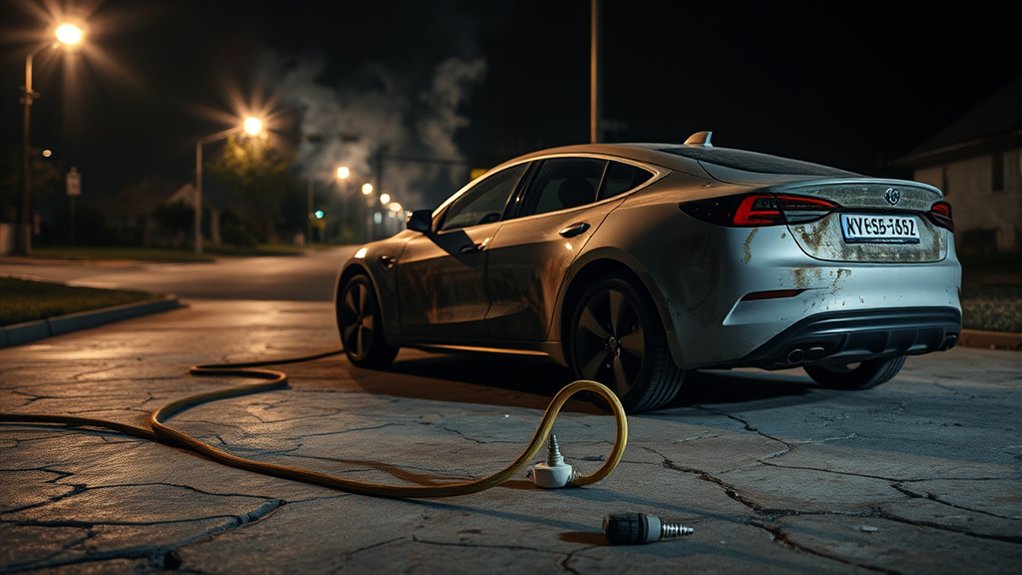
You should not charge an electric vehicle with a household extension cord. EV charging pulls power for hours, not minutes, so a cord that seems fine for a small tool or lamp can overheat, lose voltage, or defeat the safety protections built into your charger. The safer choice is a manufacturer-approved EV charging cable plugged directly into the correct outlet, a dedicated Level 2 charger, or a public or workplace charging station.
Quick Answer
No. You should not use a regular extension cord to charge an EV. The Electrical Safety Foundation International says never to use an extension cord or multiplug adapter when charging electric vehicles. Use the charger and cable approved by your vehicle or EVSE maker, plugged directly into a properly rated outlet.
Key Takeaways
- A household extension cord is not the same as a manufacturer-approved EV charging cordset.
- EV charging is a continuous electrical load, so weak cords, loose outlets, and long cable runs can create heat.
- Do not use damaged chargers, daisy-chained cords, two-prong adapters, or cords running through water, snow, doors, rugs, or walls.
- For home charging, use a direct wall outlet for Level 1 or have a qualified electrician install a dedicated Level 2 circuit or hardwired charger.
- If your charger cannot reach, solve the outlet or parking problem instead of adding a hardware-store extension cord.
At a Glance
| Safest Home Option | A listed Level 1 cordset plugged directly into a suitable 120-volt outlet, or a dedicated Level 2 charger installed by a qualified electrician. |
| Avoid | Household extension cords, multiplug adapters, daisy-chained cords, damaged outlets, and improvised 240-volt setups. |
| Best Upgrade | A safety-certified Level 2 charger on a properly sized circuit, with permits if your local authority requires them. |
| Who to Call | A licensed or qualified electrician who understands EV charging equipment, local code, GFCI protection, panel capacity, and dedicated circuits. |
Why Charging Your EV With an Extension Cord Is Dangerous
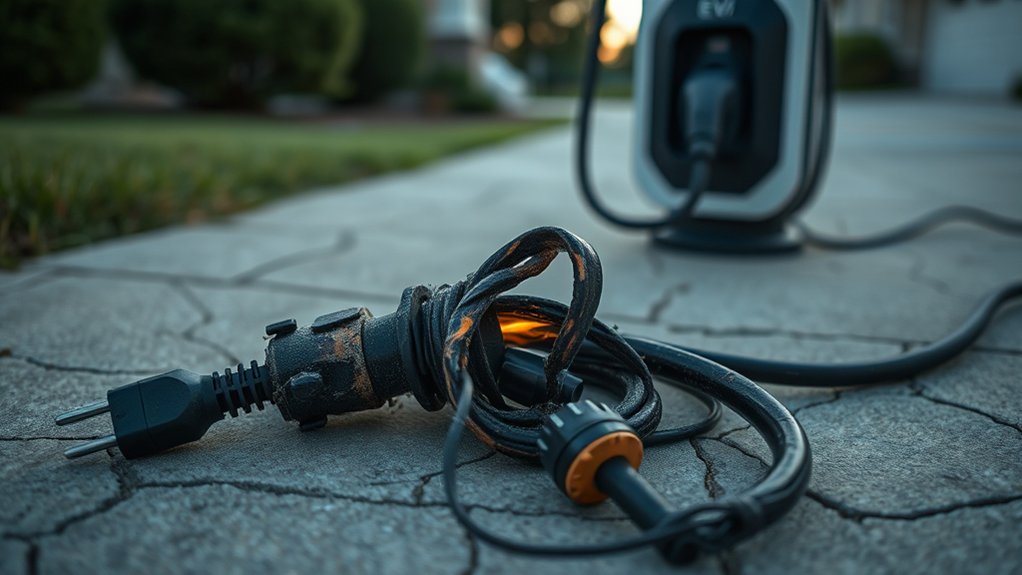
Charging your EV with an extension cord is dangerous because EV charging is a long, steady electrical load. A cord that is too thin, too long, damaged, coiled, wet, or plugged into a worn outlet can build heat at the plug, receptacle, or conductor. That heat can damage insulation and raise the risk of fire or shock.
The Electrical Safety Foundation International gives a direct rule: never use an extension cord or multiplug adapter when charging an electric vehicle. It also recommends using manufacturer-provided or approved charging cables and charging equipment certified by a Nationally Recognized Testing Laboratory.
Warning: Do not treat a heavy-duty extension cord as a safe EV charging solution. Cord gauge alone does not prove safety. Outlet condition, amperage, cord length, plug type, weather exposure, GFCI protection, and manufacturer instructions all matter.
Extension cords also add extra connection points. Every plug-to-socket connection can loosen, corrode, or heat up under load. Outdoors, rain, snow, standing water, and vehicle traffic make the setup even riskier if the equipment is not designed for that use.
What Makes EV Charging Different From Regular Appliances?
EV charging is different because it usually runs for several hours. A short burst of power for a vacuum or drill is not the same as charging a large battery overnight. That continuous draw is why EV charging equipment, branch circuits, outlets, and cables need to be matched carefully.
Level 1 vs. Level 2 Power
The U.S. Department of Energy’s Alternative Fuels Data Center explains that Level 1 charging uses a 120-volt AC plug and often adds about 5 miles of range per hour. Level 2 charging uses 240 volts in many homes or 208 volts in many commercial settings and can charge much faster.
| Feature | Level 1 Charging | Level 2 Charging |
|---|---|---|
| Typical supply | 120-volt household outlet | 240-volt residential or 208-volt commercial service |
| Typical use | Overnight charging for shorter daily driving | Faster home, workplace, or public charging |
| Safe connection | Manufacturer-approved cordset plugged directly into a suitable outlet | Dedicated circuit, listed EVSE, and qualified installation |
Continuous Load Requirements
EV charging infrastructure is considered a continuous load under the National Electrical Code, and Article 625 covers much of the code guidance for charging equipment. That means the wiring, breaker, receptacle, and EVSE must be sized for long charging sessions, not just a brief peak draw.
This is where many extension cords fail. They may be rated for a certain current under limited conditions, but they are often used in the worst possible way: too long, coiled, pinched under a garage door, lying in water, or plugged into a loose outlet.
Specialized Charging Equipment
EV charging equipment is designed with safety features that ordinary cords do not provide. A proper EVSE communicates with the vehicle, limits current, monitors faults, and uses a connector designed for EV charging. A random extension cord only moves power farther away from the outlet. It does not make the outlet, wiring, or charging circuit safer.
ENERGY STAR recommends choosing certified EV chargers because certified models are tested for safety by a nationally recognized testing laboratory. That matters because some chargers sold online may not be safety certified.
The Key Dangers of Using Extension Cords for EV Charging
The biggest risks are overheating, voltage drop, electric shock, and failed safety protection. These problems often start small: a warm plug, a faint smell, a loose outlet, or a cord that feels soft near the connector.
Overheating Risks Explained
Heat builds when current flows through resistance. Long cords, small wire gauge, damaged strands, worn plugs, and loose receptacles all add resistance. During EV charging, that resistance can stay hot for hours.
The ESFI extension cord safety guide warns that extension cords are temporary solutions, not long-term wiring. It also says continuous use can cause cords to deteriorate and create shock or fire hazards.
Voltage Drop Consequences
A longer cord creates a longer electrical path. That can cause voltage drop, slower charging, extra heat, or charger faults. The vehicle or charger may reduce power, stop charging, or show an error. Even if charging appears to work, the weak point may be the plug, outlet, or hidden section of cord warming up over time.
Fire and Shock Hazards
Extension cords are often routed across floors, through doorways, under rugs, or outside. Those are bad conditions for EV charging. If the cord is covered, heat cannot escape. If the cord is damaged or wet, shock risk increases. If a ground pin is missing or bypassed, you remove a key layer of protection.
Note: A charger that trips, flashes an error, smells hot, or makes the outlet warm is telling you something is wrong. Stop charging and have the outlet, circuit, and EVSE checked before using them again.
What Do the Safety Codes Say About EV Charging?
Safety codes do not treat EV charging like a casual plug-in load. Home charging equipment must follow local and state codes, and permits may be required. The AFDC states that EV charging infrastructure is a continuous load under the NEC and that electrical contractors should use the correct NEC requirements for a safe, code-compliant installation.
That does not mean every driver must install a Level 2 charger. Many drivers can use the portable Level 1 cordset that came with the vehicle, as long as it is plugged directly into a suitable outlet on an appropriate circuit. The key is that the EVSE and outlet must be used as intended.
You should also follow the vehicle and charger manual. If your manual says not to use extension cords, adapters, or modified plugs, do not use them. Ignoring that guidance can create a safety hazard and may also create warranty or insurance problems after a fire, shock, or equipment failure.
Why Heavy-Duty Extension Cords Still Are Not the Answer
A thick cord looks safer, but it does not solve the whole problem. A cord can be heavy-duty and still be the wrong length, wrong plug type, wrong temperature rating, wrong weather rating, or wrong current rating for your charger. It can also be plugged into an outlet that is worn, ungrounded, overloaded, or on a shared circuit.
There is another problem: EV chargers are designed as a system. The EVSE, its plug, the receptacle, the branch circuit, and the vehicle all work together. Adding an unapproved cord changes that system and can interfere with fault detection, grounding, and heat management.
The safe fix is not a longer extension cord. The safe fix is putting the right charging outlet or EVSE where the vehicle parks.
What Are the Safest Alternatives to Extension Cords for EV Charging?
The safest alternatives are direct, approved charging methods. Choose the option that fits your home, parking setup, and daily driving.
| Charging Option | Best For | Safety Notes |
|---|---|---|
| Direct Level 1 cordset | Shorter daily driving and overnight charging | Plug the manufacturer-approved cordset directly into a suitable outlet. Do not add an extension cord. |
| Dedicated 240-volt outlet | Portable Level 2 EVSE designed for that receptacle | Have a qualified electrician install the correct circuit, breaker, receptacle, and GFCI protection where required. |
| Hardwired Level 2 charger | Regular home charging | Often the cleanest permanent solution because there is no plug and receptacle connection to loosen. |
| Public or workplace charging | Renters, road trips, and homes without charging access | Use the station’s built-in cable and approved adapters only. |
If your only problem is reach, ask about a charger with a longer built-in cable that is approved by the manufacturer. Tesla, for example, lists its Mobile Connector bundle with a 20-foot cable and recommends a Wall Connector as its home charging solution. Use manufacturer guidance for your exact vehicle and charging product.
How to Safely Charge Your EV at Home
Start with the outlet, not the cord. Look at where the car parks, where the charger reaches, and what circuit supplies the outlet. A proper home setup should not require the charging cable to stretch across a walkway, pass under a garage door, or sit in standing water.
- Read your vehicle and charger manual. Use only approved charging equipment, adapters, and outlets.
- Inspect the outlet and EVSE before charging. Do not use cracked plugs, burned receptacles, loose outlets, missing ground pins, or damaged cable jackets.
- Plug directly into the outlet. Do not use an extension cord, multiplug adapter, or power strip.
- Use outdoor-rated equipment outdoors. The AFDC says outdoor home charging can be safe, even in rain, when the equipment is rated for outdoor installation and use.
- Hire a qualified electrician for new circuits. A professional can check panel capacity, circuit size, GFCI requirements, permits, receptacle type, and charger placement.
- Choose safety-certified equipment. Look for chargers tested by a nationally recognized testing laboratory, such as ENERGY STAR certified models.
Pro Tip: Install the outlet or wall charger close enough that the EVSE cable reaches the charge port with slack. A cable pulled tight is more likely to strain the plug, outlet, or connector.
What Should You Do If Your Charger Cannot Reach?
If your charger cannot reach the car, do not solve the problem with a household extension cord. Use one of these safer options instead:
- Move the vehicle closer so the approved EVSE cable can reach without strain.
- Use a public charger until you can correct the home setup.
- Ask an electrician to install a suitable outlet or hardwired EVSE near the parking spot.
- Check manufacturer accessories for approved charging cables or adapters for your exact EVSE.
- Call roadside assistance if you are stranded and cannot reach a safe charging source.
If a manufacturer or charging-equipment maker allows a specific accessory, follow that instruction exactly. Do not mix random cords, travel adapters, dryer adapters, or homemade wiring setups.
How Can You Engage With Landlords or HOAs for Charging Solutions?
If you rent or live under an HOA, approach EV charging as a property upgrade, not just a personal convenience. A safe shared charging setup is better than tenants improvising with cords from windows, garages, or common outlets.
Start with a simple proposal:
- Explain the safety issue. Extension cords and multiplug adapters should not be used for EV charging.
- Suggest a shared Level 2 charger. One or more assigned chargers can serve residents without unsafe temporary wiring.
- Mention incentives. State, local, and utility programs may help offset equipment and installation costs.
- Offer a qualified installer. Ask a certified electrical contractor to inspect panel capacity, parking layout, permits, and load management.
- Discuss access rules. Include payment, scheduling, signage, maintenance, and what happens if a charger is blocked.
Use the AFDC laws and incentives database to check local incentives and right-to-charge rules in your area. Rules vary by state, city, utility, and property type.
Frequently Asked Questions
Are EV charger extension cords safe?
Regular extension cords are not safe for EV charging. ESFI says never to use an extension cord or multiplug adapter when charging electric vehicles. Use only manufacturer-approved charging cables and plug the EVSE directly into the correct outlet.
What extension cord should I use with an EV charger?
The safest answer is none. Do not choose an extension cord by gauge alone. Instead, move the vehicle, install the correct outlet closer to the parking spot, use a listed EVSE with an approved cable length, or charge at a public station.
Can I use a 240-volt extension cord to charge my EV?
You should not use a random 240-volt extension cord for EV charging. Level 2 charging needs the correct circuit, breaker, receptacle or hardwired EVSE, GFCI protection where required, and manufacturer-approved equipment. Have a qualified electrician install the charging setup.
Can I charge my EV outside in the rain?
Yes, outdoor EV charging can be safe when the charger, outlet, enclosure, and installation are rated for outdoor use and installed correctly. Do not leave ordinary extension cords, adapters, or indoor-rated equipment exposed to rain, snow, or standing water.
What stops someone from unplugging my electric car?
Many EVs lock the charging connector while the vehicle is locked, especially during active charging. Public chargers may also have cable locks or session controls. For shared parking, use well-lit charging areas, follow station rules, and avoid stretching cables across walkways.
Conclusion
Using an extension cord to charge an EV is not worth the risk. EV charging is a long, continuous electrical load, and an ordinary cord can overheat, drop voltage, or weaken the protections built into your charger. For safe home charging, plug the manufacturer-approved EVSE directly into the correct outlet or have a qualified electrician install a dedicated Level 2 charger. If your cable cannot reach, fix the charging setup instead of adding another cord.
Sources
- Electrical Safety Foundation International: Electric Vehicle Charging Safety — backs the warning against extension cords and multiplug adapters for EV charging.
- Electrical Safety Foundation International: Extension Cord Safety Tips — backs extension-cord fire, shock, overload, and temporary-use safety guidance.
- U.S. DOE Alternative Fuels Data Center: Electric Vehicle Charging Stations — backs Level 1, Level 2, DC fast charging, connector, and residential charging details.
- U.S. DOE Alternative Fuels Data Center: Charging Electric Vehicles at Home — backs home installation, permits, continuous-load, outdoor-rated equipment, and electrician guidance.
- ENERGY STAR: Electric Vehicle Chargers — backs safety-certified charger guidance, Level 1 and Level 2 buying advice, and contractor recommendations.
- Tesla Support: Mobile Connector — backs examples of manufacturer-specific home charging guidance, adapter ratings, and Wall Connector recommendation.