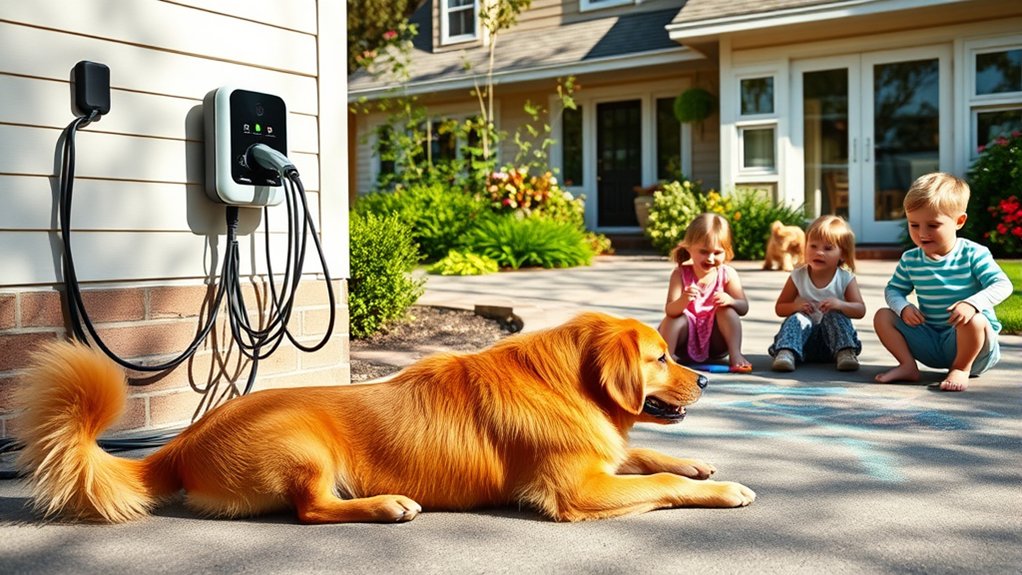
Keeping EV charging safety simple at home matters most when curious children and pets share the same garage, driveway, or carport. A properly installed, listed EV charger is designed to reduce shock risk, but the area around it still needs smart cable routing, routine inspections, clear family rules, and fast action if you notice heat, damage, burning smells, moisture, or repeated breaker trips.
Quick Answer
To make home EV charging safer around pets and children, use a listed charger, have Level 2 equipment installed by a licensed electrician, keep cables off walkways, store the connector in its dock, inspect for damage, block access when needed, and teach kids never to pull, unplug, chew, spray, or play near charging equipment.
Key Takeaways
- Choose charging equipment that is listed by a recognized testing laboratory and installed according to your local electrical code.
- Route cables along a wall or overhead support so children, pets, strollers, bikes, and tools do not cross over them.
- Stop charging immediately if you see frayed insulation, cracked plugs, melted plastic, corrosion, water intrusion, unusual heat, or a burning smell.
- Use gates, storage hooks, connector docks, and family rules to prevent tugging, chewing, tampering, and tripping.
- For installation, repairs, repeated breaker trips, or suspected electrical faults, call a licensed electrician instead of trying a DIY fix.
At a Glance
| Time Required | 15 to 30 minutes for a home safety check; longer if cable routing or professional repairs are needed. |
| Difficulty | Easy for inspection and household rules; professional-only for wiring, breakers, receptacles, and charger repair. |
| Tools Needed | Flashlight, cable hook or dock, child gate if needed, maintenance log, and the charger and vehicle manuals. |
| Cost | Usually $0 for inspection and rules; cable docks, hooks, gates, or professional electrical work vary by home. |
Understanding the Importance of EV Charging Safety
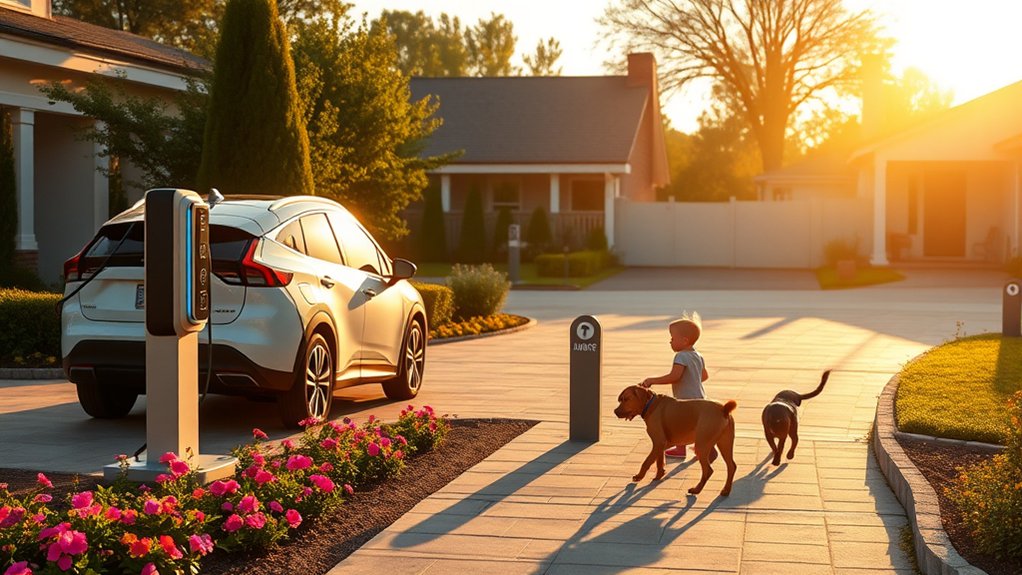
EV charging equipment, also called electric vehicle supply equipment or EVSE, is built to transfer power between your home electrical system and your vehicle. When the equipment is listed, undamaged, and used as directed, it includes safety design features that reduce shock and overheating risk.
That does not mean the area is risk-free. Children may pull on the connector, press buttons, trip over a cord, or spray water near the charger. Pets may chew cable insulation, urinate near equipment, dig around outdoor posts, or run through a charging cable while playing.
For families, the safest setup combines three layers: proper installation, physical prevention, and daily habits. Proper installation handles the electrical side. Physical prevention keeps small hands, paws, teeth, and feet away from the equipment. Daily habits make sure cables are stored, the charger is inspected, and everyone knows what to avoid.
Warning: Stop charging and keep children and pets away if you notice a burning smell, buzzing, melted plastic, a hot plug, a cracked connector, frayed cable insulation, water inside the equipment, corrosion, or repeated breaker trips. Call a licensed electrician or the charger manufacturer before using it again.
Choose Listed and Properly Installed EV Charging Equipment
The safest home EV setup starts before anyone plugs in the car. Choose charging equipment that is certified by a recognized testing laboratory, and have Level 2 charging installed by a qualified electrician who understands local electrical code and EVSE requirements.
In the United States, OSHA’s Nationally Recognized Testing Laboratory program explains how approved labs test and certify products for electrical safety standards. Common marks can include UL, ETL, CSA, or another lab on OSHA’s current NRTL list. Do not rely only on a product photo or low price.
The U.S. Department of Energy’s Alternative Fuels Data Center notes that Level 1 charging uses a 120-volt outlet, while Level 2 charging uses 240 volts in typical residential settings. Many Level 2 units need a dedicated circuit and code-compliant installation, so this is not the place for guesswork.
| Safety Item | What to Check | Why It Matters |
|---|---|---|
| Listing mark | Look for a recognized certification mark on the charger or documentation. | Shows the product was tested to applicable safety standards. |
| Correct circuit | Use the breaker, wire size, and receptacle or hardwired setup specified by the charger manual and code. | Reduces overheating and nuisance tripping. |
| Weather rating | Outdoor or carport chargers should be rated for the location and protected from impact. | Helps prevent water and dust from damaging electrical parts. |
| Professional install | Use a licensed electrician for new Level 2 wiring, panel work, outlet replacement, or hardwired units. | Protects your home, warranty, insurance, and family safety. |
Choosing Safe Locations for Your EV Charger at Home
Choosing the right location for your EV charger at home is essential for keeping children and pets away from the highest-risk points: the cable path, connector, wall unit, outlet, and vehicle charge port.
| Safety Consideration | Recommended Practice | Benefit |
|---|---|---|
| Distance from traffic | Place the charger away from main walking paths, toy storage, pet beds, trash bins, and bike parking. | Reduces trips, bumps, and cable tugs. |
| Cable management | Use the charger’s holster, dock, or wall hook every time charging ends. | Keeps the connector off the floor and away from pets. |
| Child access | Install the wall unit and cable dock where young children cannot easily pull on them. | Reduces tampering and connector strain. |
| Lighting | Keep the charging area well lit at night. | Makes damage, puddles, toys, and cable loops easier to see. |
| Moisture | Avoid low spots where rainwater, snowmelt, hose spray, or pet urine can collect. | Protects the equipment and reduces shock risk. |
For outdoor charging, place the unit where a child cannot use it as a step, a pet cannot chew the cable from behind landscaping, and a vehicle cannot strike the post or wall unit. If your charger is near a play area, install a physical barrier rather than relying only on verbal reminders.
Safe Cable Management for Kids and Pets
The cable is often the biggest everyday hazard. Even when the electrical system is working correctly, a loose cable can trip a child, wrap around a scooter wheel, catch a stroller, or tempt a dog that likes to chew.
- Keep the cable short and controlled. Do not leave extra loops across the floor.
- Route along a wall when possible. Avoid crossing the main walking path between the door, car, laundry area, and garage shelves.
- Use the holster every time. A connector left on the ground collects dust, grit, moisture, and pet hair.
- Keep tension off the connector. Do not stretch the cable tight between the charger and vehicle.
- Protect against chewing. If a pet has chewed cords before, supervise charging or block access with a gate.
- Keep toys away. Balls, scooters, toy cars, and bikes should not be stored under or around the charging cable.
Pro Tip: Make “dock the connector” part of the same habit as locking the car. When the connector is always returned to its holder, kids and pets are less likely to drag it, step on it, or treat it like a toy.
What Not to Do Around a Home EV Charger
Many home charging problems start with shortcuts. Keep the rules simple enough for the whole household to remember.
- Do not use damaged equipment. Stop using any charger, plug, or cable with cracks, cuts, exposed wire, melted areas, corrosion, or unusual heat.
- Do not let children unplug or reconnect the charger. Adults should handle the connector until children are old enough to understand the risk and follow instructions.
- Do not use unofficial adapters. Use only adapters and accessories approved by your vehicle and charger manufacturers.
- Do not charge near standing water. Keep the charging area dry and do not spray the charger with a hose.
- Do not ignore repeated breaker trips. A tripping breaker may signal overload, wiring trouble, moisture, or equipment failure.
- Do not run a cable under rugs, mats, doors, or heavy storage. Hidden cable damage can create heat and shock hazards.
- Do not treat a smart charger as maintenance-free. App alerts, firmware updates, and network features do not replace visual inspections.
Extension cords deserve special caution. Many EV and charger manufacturers prohibit them, and an unsuitable cord can overheat under continuous load. Follow your EV manual and charger manual exactly. If your normal cable cannot reach safely, ask an electrician about relocating the charger or installing a code-compliant charging point closer to the vehicle.
Regular Maintenance: Checking Your Charging Equipment
Regular maintenance helps you catch small problems before they become dangerous. You do not need to take the charger apart. In fact, you should not open the charger housing unless the manual specifically allows it and you are qualified to do so.
Visual Inspection Checklist
Inspect the charging area at least once a month and any time a child, pet, vehicle, tool, or storm may have damaged the equipment.
- Check the full cable length for cuts, chew marks, fraying, crushing, or flattened areas.
- Look at the connector for cracks, bent parts, dirt, grit, corrosion, or melted plastic.
- Make sure the cable dock or holster holds the connector securely.
- Confirm the wall unit is firmly mounted and not loose.
- Check for water stains, puddles, pet urine, mud, insects, or nesting material near the charger.
- Look for scorch marks, buzzing, unusual odors, or a plug that feels hot after charging.
Regular Testing Procedures
Your charger manual may include specific test steps. Follow those first. For a practical household routine, use this schedule:
| Task | Frequency |
|---|---|
| Cable, connector, and holster visual check | Monthly |
| Charging area cleanup and trip-hazard check | Weekly or after garage use |
| Review app alerts, fault history, or charger status lights | Monthly |
| Review manufacturer notices or recalls | Every few months |
| Licensed electrician inspection | If you notice heat, odor, breaker trips, water damage, loose outlets, or charging faults |
Identifying Wear Indicators
Wear indicators are warning signs that your charging setup needs attention. Frayed cable insulation can expose internal conductors. A loose plug or outlet can create heat. Corrosion can affect the connection. Cracks in the housing can let moisture reach parts that should stay sealed.
Do not tape over damage and keep charging. Electrical tape is not a repair for an EV charging cable, connector, outlet, or wall unit. Stop use and contact the manufacturer or a licensed electrician.
Effective Childproofing Strategies for Your EV Charging Area
Effective childproofing is about reducing access before curiosity turns into pulling, climbing, spraying, or unplugging. EV chargers may look simple, but they are connected to high-power electrical equipment.
| Strategy | How to Use It |
|---|---|
| Create a no-play zone | Mark the charging area as an adult-only zone, just like a stove, breaker panel, or tool bench. |
| Use barriers | Install a child gate or garage barrier when toddlers or young children play nearby. |
| Store cable high | Keep the connector in its dock and the cable wrapped on the charger’s hanger when not in use. |
| Set simple rules | Teach: do not touch, pull, spray, unplug, or climb near the charger. |
| Supervise | Do not let young children play unsupervised in a garage or driveway while charging is active. |
For older children, explain the reason behind the rule. Tell them the charger is not a toy, the cable is not a jump rope, and only an adult should plug or unplug the vehicle unless they have been specifically taught how to do it safely.
Ensuring Pet Safety Around EV Chargers
Pet safety around EV chargers depends on the animal’s behavior. A calm older dog may ignore the charger. A puppy, kitten, rabbit, or anxious dog may chew, paw, tug, mark, or hide behind the equipment.
- Block access for chewers. If your pet chews cords, use a gate, crate, closed door, or supervised charging routine.
- Keep the cable off the floor when not in use. A docked connector is less tempting than a loose cable on the ground.
- Do not place food, water, or beds near the charger. This keeps pets from spending time close to the equipment.
- Watch for urine or moisture. Clean the area and inspect the charger if a pet urinates nearby.
- Protect outdoor posts. Keep landscaping, digging, leashes, and lawn equipment away from the charging cable and pedestal.
- Use training cues. Teach “leave it” or “away” near the charger, but do not rely on training alone for puppies or high-drive pets.
Note: Bitter sprays and cord covers can help with some pets, but they are not a substitute for supervision and should never be sprayed into a connector, outlet, charging port, or electrical housing.
Teach Your Family Safe EV Charging Practices
Family habits keep the system safe after installation. Make the rules short, repeat them often, and post them near the charger if children, guests, babysitters, or relatives use the garage.
- Only adults plug and unplug unless an older child has been trained and supervised.
- No playing near the charging cable with balls, scooters, bikes, skates, or pet toys.
- No water near the charger from hoses, sprinklers, buckets, pressure washers, or water balloons.
- No pulling on the cable to remove the connector from the car.
- Report problems quickly if anyone sees damage, smells burning, hears buzzing, or notices a hot plug.
A safe home charging area is not only about the charger. It is about the walking path, cable storage, lighting, moisture control, pets, children, and the habits your family repeats every day.
How to Handle EV Charging Emergencies
When an EV charging emergency arises, your first job is to protect people and pets, not the equipment. Act quickly, but do not touch damaged or wet electrical parts.
Recognizing Emergency Signs
Watch for these signs while charging:
- Burning smell or smoke: This can signal overheating, arcing, or equipment failure.
- Hot plug or connector: Warm can be normal in some cases, but painful heat, melting, or discoloration is not.
- Visible damage: Cracks, chew marks, exposed wires, fraying, corrosion, or crushed cable sections require stop-use action.
- Water exposure: Standing water, flooding, hose spray, or moisture inside a charger housing needs professional evaluation.
- Charging faults: Repeated error lights, app warnings, or breaker trips should not be ignored.
Immediate Response Steps
If something seems wrong, follow these steps:
- Move children and pets away first. Keep them out of the garage, driveway, or carport.
- Disconnect only if safe. If there is no smoke, fire, water, shock sensation, or visible severe damage, stop the session using the vehicle or charger controls before unplugging.
- Do not touch wet or damaged equipment. Stay back and call emergency services if there is smoke, fire, shock risk, or water exposure.
- Call 911 for smoke, fire, shock, or injury. Evacuate the area and do not try to save the charger.
- Call a licensed electrician or manufacturer before reuse. Do not restart charging just because the equipment cools down or the breaker resets.
Contacting Professionals Quickly
Keep contact information in one place so no one has to search during a stressful moment. Save numbers for your electrician, charger manufacturer, vehicle roadside assistance, utility emergency line, and local emergency services.
If your charger is part of a smart charging network, keep the app updated and make sure at least one adult knows how to stop a charging session from the app, the charger, and the vehicle. Still, do not rely on an app if there is smoke, fire, water, or a shock hazard. Leave the area and call emergency services.
Resources for Further Information on EV Charging Safety
For safer decisions, use official and standards-based resources instead of random product listings or social media advice.
- DOE Alternative Fuels Data Center: Use the AFDC EV charging guide to understand charging levels, home charging, and charging equipment basics.
- OSHA NRTL Program: Use OSHA’s NRTL Program and current NRTL list to understand testing marks.
- ENERGY STAR Product Finder: The EPA’s certified EVSE product list can help you compare certified charging equipment.
- NFPA 70: The National Electrical Code is the main U.S. electrical installation standard used by many jurisdictions.
- Your manuals: Always follow your vehicle manual and charger manual for approved adapters, charging limits, storage, cleaning, and fault warnings.
Frequently Asked Questions
How safe is EV charging at home?
Home EV charging is generally safe when the charger is listed, installed correctly, used according to the manual, and kept in good condition. The main risks for families are damaged equipment, loose or overloaded circuits, wet conditions, trip hazards, cable chewing, and children tampering with the connector.
Do EV chargers have a surprising health downside?
For a standard corded home charger, the practical safety concerns are electrical faults, heat, fire, water exposure, tripping, and tampering, not a unique everyday health hazard. If someone in your home uses an implanted medical device, follow the medical device guidance and the EV and charger manuals for distance and handling instructions.
What is the 80/20 rule for EV charging?
People use “80/20” in two different ways. Some use it casually to say most charging happens at home and a smaller share happens in public. Others use “80%” to describe a daily battery charge limit for some vehicles. Neither is a universal safety rule. Follow your vehicle manual for daily charge limits and trip charging.
What stops someone from unplugging your electric car?
Many EVs and some chargers include connector locks, charge-session controls, or interlocks, but features vary by vehicle and charger. Check your manual to see whether your car locks the connector while charging and whether the setting can be changed in the vehicle menu or app.
Can pets chew an EV charging cable?
Yes. A pet that chews household cords may also chew an EV charging cable. Keep the cable docked when not in use, block access while charging, supervise puppies and kittens, and stop using the charger if you see bite marks or cable damage.
Should I keep a fire extinguisher near my EV charger?
A properly rated household fire extinguisher can be useful, but your first steps are to move people and pets away, call emergency services for smoke or fire, and avoid touching damaged or wet electrical equipment. Do not attempt to fight a fire if you are not trained or cannot do so safely.
Conclusion
Home EV charging can fit safely into family life when the setup is treated like serious electrical equipment rather than another household gadget. Use listed equipment, install it correctly, keep cables controlled, block access for young children and pets, inspect the area often, and stop charging at the first sign of damage, heat, smoke, moisture, or electrical faults. With the right habits, your charger can stay convenient without becoming a hazard in your home.
Sources
- U.S. Department of Energy Alternative Fuels Data Center — EV charging levels, home charging, Level 1 and Level 2 charging basics.
- OSHA Nationally Recognized Testing Laboratory Program — product testing and certification context.
- OSHA Current List of NRTLs — recognized testing laboratories and certification marks.
- ENERGY STAR Certified EVSE Product Finder — certified EV charging equipment list.
- NFPA 70 National Electrical Code — electrical installation standard commonly adopted by local jurisdictions.