
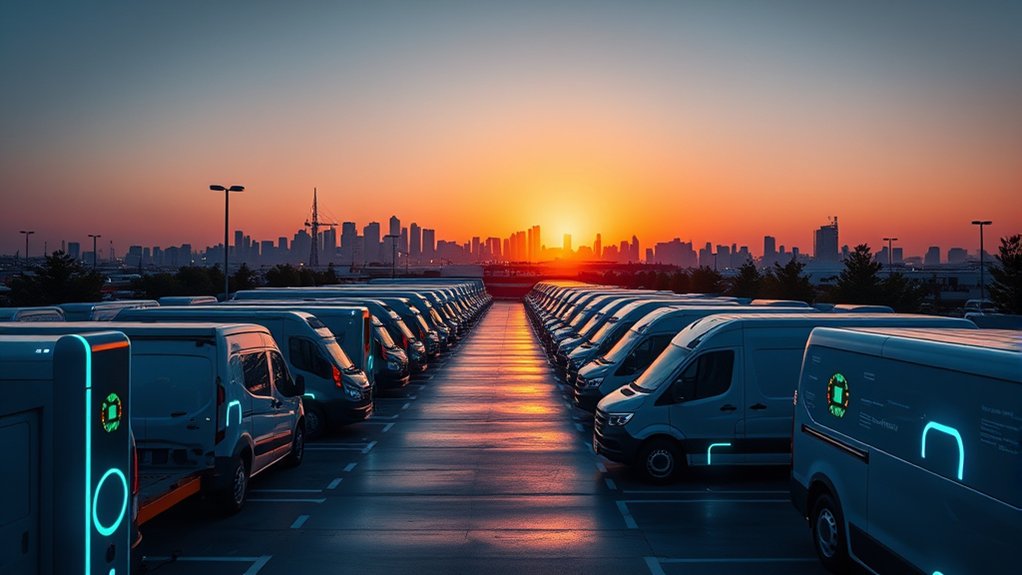
EV charging for commercial trucks and delivery vans works best when it is planned around routes, dwell time, payload, parking layout, and utility capacity. Most fleets use a mix of Level 2 chargers for overnight depot charging and DC fast chargers for short dwell times, while megawatt charging is emerging for heavy-duty trucks that need faster turnaround.
Quick Answer
For commercial trucks and delivery vans, start with depot charging first. Use Level 2 chargers for vans that park overnight, DC fast chargers for high-mileage routes or quick turnarounds, and megawatt-ready planning for heavy-duty trucks. The right setup depends on daily miles, battery size, dwell time, utility capacity, and charger uptime.
Key Takeaways
- Level 2 charging is usually the lowest-cost option for delivery vans that return to the same depot each night.
- DC fast charging helps when vehicles have long routes, multiple shifts, or limited parking time.
- Heavy-duty trucks may need high-power DC or megawatt-capable sites, but grid capacity and vehicle acceptance rates control real charging speed.
- Utility coordination, permits, demand charges, maintenance, and uptime guarantees matter as much as charger hardware.
At a Glance
| Planning Time | Several weeks to several months, depending on utility upgrades, permits, fleet size, and site work |
| Difficulty | Moderate for small Level 2 depots; high for DC fast or heavy-duty truck charging |
| Tools Needed | Route data, telematics, utility bills, site drawings, load study, charger specs, electrical contractor, and fleet-charging software |
| Cost | Varies widely by charger level, trenching, switchgear, utility upgrades, networking, and maintenance contract |
Why EV Charging Is Essential for Your Commercial Fleet
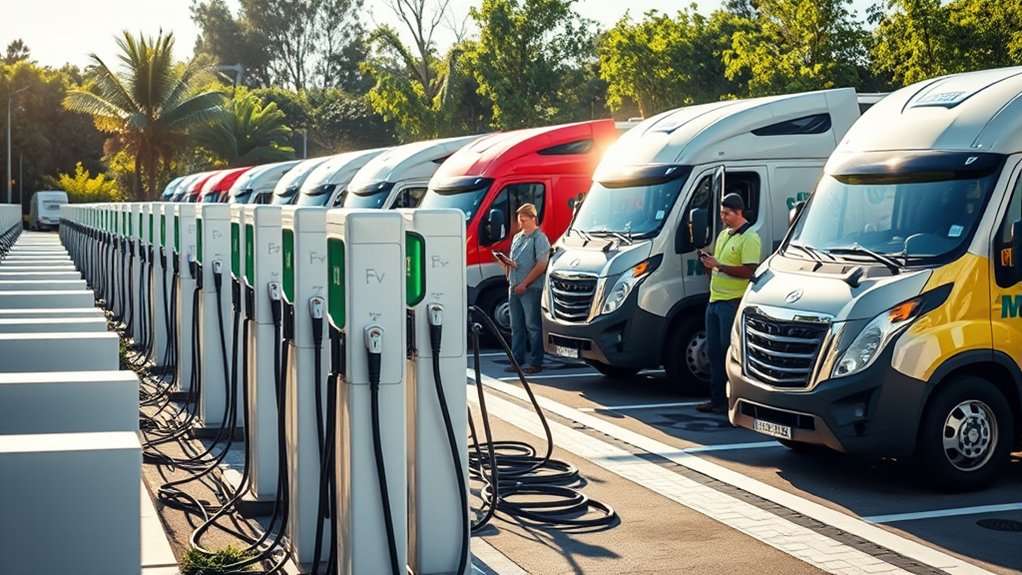
EV charging is essential for commercial fleets because it controls vehicle availability, route confidence, fuel cost, and long-term operating efficiency. A good charging plan helps your trucks and vans start each shift with enough range, without forcing drivers to wait for power during peak delivery hours.
Electric vehicles can lower energy costs because electric drivetrains are efficient, but the savings are not automatic. They depend on local electricity rates, diesel or gasoline prices, route length, payload, weather, demand charges, and how well you schedule charging. The U.S. Department of Energy’s Alternative Fuels Data Center notes that EV energy costs are generally lower than comparable conventional vehicles, while medium- and heavy-duty savings depend heavily on load and duty cycle.
Fleet charging is not just a hardware purchase. It is an operations plan that connects routes, vehicles, drivers, utility rates, parking, and maintenance.
Public charging can support long routes and backup needs, but most commercial fleets should first focus on controlled depot charging. Charging at your own facility gives you better cost control, easier vehicle staging, better data, and less driver downtime.
EV Charging Options for Trucks and Delivery Vans
Fleet operators usually choose from three main charging options: Level 2, DC fast charging, and high-power heavy-duty charging. The best choice depends on how long each vehicle parks and how many miles it must recover before the next route.
| Charging Type | Typical Power | Best Use Case | Fleet Notes |
|---|---|---|---|
| Level 2 AC | About 2.9 to 19.2 kW | Overnight depot charging for delivery vans and light-duty vehicles | The AFDC estimates about 25 miles of range per hour for a typical Level 2 setup, but actual range depends on the vehicle. |
| DC Fast Charging | Up to 500 kW for many current systems | High-mileage vans, multi-shift routes, public corridor backup, and short dwell windows | Useful when time matters, but demand charges, site power, and vehicle charge limits can raise costs. |
| Megawatt Charging System | Designed for very high-power DC charging, with development targets up to 3.75 MW | Medium- and heavy-duty trucks with large batteries and short dwell times | Plan conduit, transformer space, and switchgear capacity early, even if you install lower-power chargers first. |
For most delivery fleets, the starting point is simple: use Level 2 charging when vehicles park for 8 to 12 hours, and add DC fast charging only where route length or turnaround time requires it. Heavy-duty truck fleets need a deeper load study because one high-power charging site can draw as much power as a large commercial building.
Plan Your Depot Before You Buy Chargers
Before you order chargers, collect the data that defines your real charging need. This prevents overspending on chargers that sit unused or underbuilding a depot that cannot support daily routes.
- Daily miles: Record average, peak, and seasonal route mileage for each vehicle group.
- Dwell time: Measure how long each truck or van is parked between shifts.
- Energy use: Estimate kWh per mile with payload, hills, HVAC use, and weather included.
- Vehicle type: Match charger power to each vehicle’s onboard AC limit or DC fast-charge acceptance rate.
- Parking layout: Confirm cable reach, charger placement, snow clearance, driver walk paths, and trailer movement.
- Utility service: Ask the utility for available capacity, upgrade timelines, demand charges, time-of-use rates, and make-ready programs.
Pro Tip: Size the first charging phase for the routes you run now, but install conduit, panel space, and transformer space for the fleet you expect in three to five years. Future-proofing the site is often cheaper during the first construction phase.
The AFDC procurement and installation guidance recommends planning the project scope, budget, site needs, utility upgrades, permits, maintenance needs, and future expansion before installation starts.
Key Challenges in EV Charging Infrastructure for Fleets
EV charging infrastructure can improve fleet efficiency, but only when the site is built around real operations. The biggest problems usually come from electrical capacity, cost structure, uptime, and route coverage.
Electrical Capacity and Utility Upgrades
Level 2 chargers may fit into a small depot with limited upgrades, but DC fast chargers and heavy-duty truck chargers can require new switchgear, transformers, trenching, utility studies, and longer lead times. Contact the utility early, especially if you plan to charge many vehicles at the same time.
Warning: Do not install fleet EV chargers without a licensed electrical contractor, required permits, utility review, and code-compliant equipment. High-power charging can overload service equipment if the site is not designed correctly.
Demand Charges and Energy Costs
Electricity bills for DC fast charging can include demand charges based on the highest short period of power use during the billing cycle. A depot with several fast chargers may have low energy use but high peak demand. Managed charging, staggered start times, battery storage, and time-of-use scheduling can help reduce those peaks.
Range Anxiety and Route Coverage
Modern electric vans and trucks can cover many local delivery routes, but range still depends on payload, speed, terrain, weather, and accessory loads. Build a reserve into each route plan instead of assuming every vehicle will use its full rated range every day.
Reliability and Maintenance
Broken chargers can delay routes as much as vehicle downtime. Your vendor agreement should define response time, repair time, spare parts access, software support, payment support if used, and an uptime target. The AFDC operation and maintenance guidance recommends tracking utilization data, maintenance costs, warranty coverage, and uptime requirements.
Optimize Your Charging Operations
Once chargers are installed, the goal is to charge the right vehicle at the right time for the lowest practical cost. Smart charging software can help you avoid peak demand, keep vehicles ready for dispatch, and prevent every charger from starting at full power at once.
- Set departure priorities: Charge first the vehicles that leave earliest or run the longest routes.
- Use managed charging: Stagger charging sessions to reduce peak electrical demand.
- Match charge level to route need: A van that runs 45 miles tomorrow may not need a full battery tonight.
- Track charger utilization: Low use may mean you have too many ports in one area, while queues may show where to expand.
- Train drivers: Drivers should know where to park, how to plug in, how to report faults, and when not to unplug another vehicle.
For delivery vans, Level 2 charging often works well because vehicles return to base and sit overnight. For vehicles with longer routes or two-shift use, DC fast charging can fill the gap. For example, a large electric delivery van such as the Mercedes-Benz eSprinter offers published battery, range, cargo, and charging specifications that fleet managers can compare against route needs.
Note: Charger power is only one part of charging speed. The vehicle’s battery system, state of charge, temperature, and software limits decide how much power the vehicle will actually accept.
Future Trends in EV Charging for Commercial Vehicles
Commercial EV charging is moving toward higher power, better software, and more flexible energy management. These trends matter because electric trucks and vans will place larger, more predictable loads on depots and freight corridors.
| Trend | What It Means for Fleets | Planning Action |
|---|---|---|
| Megawatt Charging | Faster charging for heavy-duty trucks with large battery packs | Reserve space for high-power equipment, larger transformers, and safe truck movement. |
| Smart Charging | Lower peak demand and better use of off-peak rates | Choose chargers and software that support scheduling, reporting, and load control. |
| Energy Storage | Can reduce peak draw and support sites with limited utility capacity | Compare battery storage cost with utility upgrade cost. |
| Vehicle-to-Grid and Vehicle-to-Building | May let parked vehicles support a building or grid program in the future | Ask vendors about standards support, warranty limits, and utility program rules. |
| Open Standards | Reduces the risk of being locked into one network provider | Look for OCPP support, transparent data access, and clear ownership terms. |
Connector planning is also changing. Many light-duty EVs are moving toward J3400, also known as NACS, while many current commercial vehicles still use CCS. Heavy-duty charging is developing around MCS. Before you buy equipment, confirm the connector, charging rate, and software compatibility for every vehicle model in your fleet.
Frequently Asked Questions
What is the average cost of a commercial EV charging station?
The cost depends on charger level, number of connectors, trenching, utility upgrades, networking, permits, and labor. A simple Level 2 workplace or depot charger can cost far less than a DC fast charger. DC fast charging can require much higher equipment and installation costs, especially if the site needs new electrical service or transformer upgrades.
What is the 80/20 rule for EV fleet charging?
In fleet planning, the 80/20 idea means most daily charging needs can often be met with lower-cost depot charging, while a smaller share of vehicles or routes may need DC fast charging. It is not a fixed engineering rule. Use route data, dwell time, and energy use to decide the actual charger mix.
Which EV is best for delivery?
The best delivery EV depends on route length, payload, cargo volume, charging window, climate, driver needs, and service support. Urban parcel fleets may do well with electric cargo vans, while heavier regional routes may need box trucks or Class 6 to Class 8 electric trucks. Compare real route energy use before choosing a model.
How much profit does a commercial EV charging station make?
Profit depends on utilization, electricity cost, demand charges, pricing, maintenance, payment fees, site lease costs, and incentives. A public DC fast charger with low utilization may lose money, while a well-used depot charger can create value by lowering fleet fuel and downtime costs even if it is not open to the public.
How many chargers does a commercial fleet need?
Start by calculating how much energy each vehicle must recover before the next shift. Then divide that need by available charging hours and charger output. Add spare capacity for late returns, cold weather, route changes, maintenance, and future vehicle growth.
Should fleets use public chargers or private depot chargers?
Private depot chargers are usually better for predictable daily operations because they give you more control over cost, scheduling, and uptime. Public chargers are useful for route backup, long-distance work, and temporary coverage while a depot is being built.
Conclusion
EV charging for commercial trucks and delivery vans is a fleet operations decision, not just an equipment purchase. Start with route data, choose the right mix of Level 2 and DC fast charging, involve your utility early, and require clear uptime and maintenance support from vendors. When the charging plan matches your routes and dwell time, electric vehicles can reduce fuel exposure, improve dispatch readiness, and help your fleet meet long-term sustainability goals.
Sources
- U.S. Department of Energy Alternative Fuels Data Center: Electric Vehicle Charging Stations — charging levels, ports, connectors, Level 2, DC fast charging, and MCS context.
- U.S. Department of Energy Alternative Fuels Data Center: Electric Vehicle Benefits and Considerations — EV cost, fuel-economy, and infrastructure availability background.
- U.S. Department of Energy Alternative Fuels Data Center: Procurement and Installation for EV Charging Infrastructure — project planning, utility coordination, cost considerations, permits, and installation steps.
- U.S. Department of Energy Alternative Fuels Data Center: Operation and Maintenance for EV Charging Infrastructure — maintenance, fees, demand charges, uptime, and data collection.
- Mercedes-Benz Vans: eSprinter — example electric delivery van specifications, range, cargo volume, and charging details.