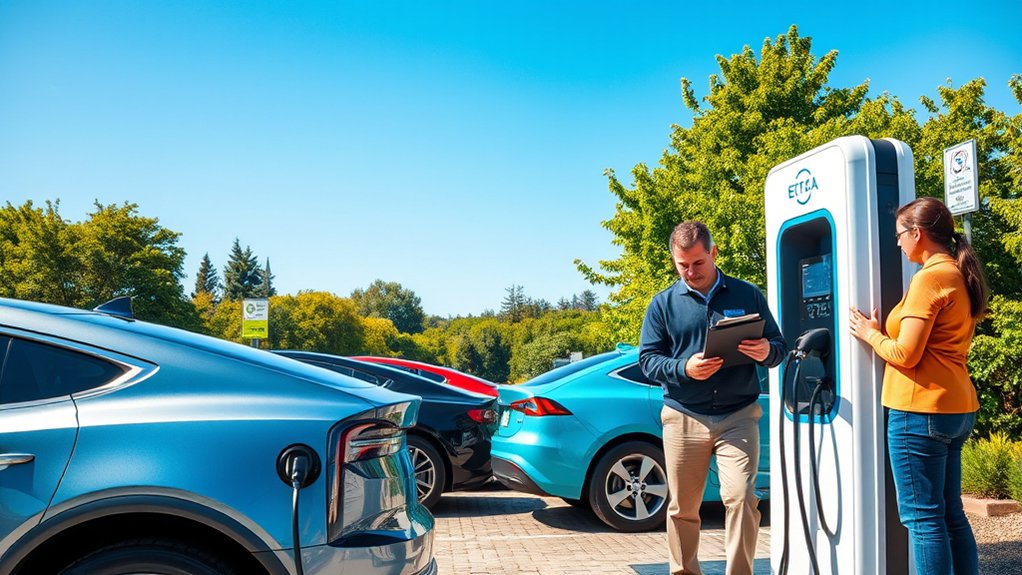
EV charging regulations in the U.S. set the rules for how many public charging stations are built, how they take payment, how reliable they must be, how accessible they are, and how user data is protected. The rules are not the same for every charger. A federally funded public fast charger, a workplace Level 2 charger, a condo charger, and a home charger can all fall under different federal, state, local, utility, building code, and electrical code requirements.
Quick Answer
U.S. EV charging regulations mainly focus on public access, payment choice, price transparency, ADA accessibility, charger uptime, safe installation, data privacy, and interoperability. The strongest federal rules apply to NEVI and other covered federally funded public chargers under 23 CFR Part 680, while state, local, utility, and building rules fill in the rest.
Key Takeaways
- Federal EV charging standards do not automatically apply to every charger. They mainly apply to NEVI Formula Program projects and certain publicly accessible chargers funded under Title 23.
- Covered public chargers must offer accessible payment options, show pricing before the session starts, and avoid required memberships.
- Covered charging ports must meet an average annual uptime of greater than 97%, using the federal calculation method.
- ADA and accessibility rules affect the route to the charger, space around the vehicle, reach range, operable parts, payment screens, and communication features.
- Permits, electrical inspections, utility approval, environmental review, and incentives vary by state and city, so local verification is always part of the process.
Understanding the Importance of EV Charging Regulations
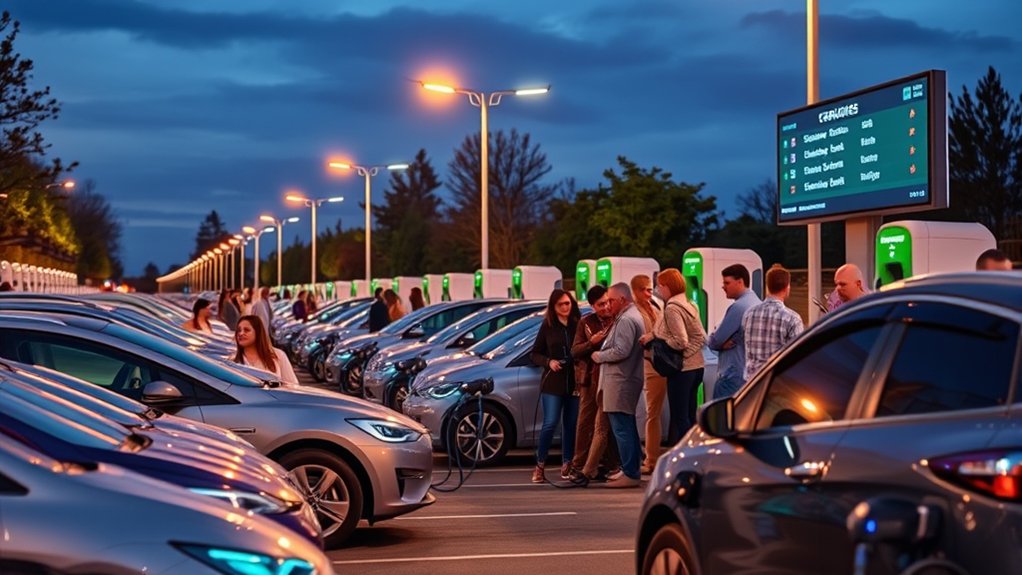
EV charging regulations matter because charging is now part of everyday transportation. Drivers need stations that work, prices that are clear, payment systems that do not exclude them, and spaces that people with disabilities can use safely.
The U.S. Environmental Protection Agency reports that the country has more than 77,000 public charging stations and 219,000 public EV charging ports. As that network grows, rules for reliability, accessibility, payment, and data security become more important for both drivers and site owners.
The most important federal baseline for many public charging projects is 23 CFR Part 680. These standards apply to projects funded under the National Electric Vehicle Infrastructure (NEVI) Formula Program and certain publicly accessible EV charger projects funded under Title 23.
Note: This article is general information, not legal, tax, engineering, or permitting advice. Always verify requirements with your state DOT, local building department, utility, licensed electrician, and tax professional before installing or operating EV charging equipment.
Which EV Chargers Must Follow Federal Rules?
Not every EV charger follows the same rulebook. Federal EV charging standards are strongest when federal transportation funds are involved. Private chargers and home chargers may still need to meet electrical codes, building codes, utility rules, HOA rules, lease terms, ADA rules, and state laws.
| Charger Type | Common Rules That May Apply |
| NEVI or other covered federally funded public chargers | 23 CFR Part 680, ADA, Buy America, Davis-Bacon wage rules, NEPA when applicable, state deployment rules, data reporting, uptime, payment, and interoperability standards |
| Privately funded public chargers | State and local laws, ADA if open to the public, electrical code, payment rules, utility interconnection, signage, and consumer protection rules |
| Multifamily, condo, and apartment chargers | State right-to-charge laws where adopted, lease or HOA rules, building permits, electrical load review, assigned parking rules, and utility approval |
| Single-family home chargers | Local electrical permits, National Electrical Code adoption, panel capacity, utility rates, HOA rules if applicable, and rebate or tax-credit eligibility |
| Fleet and workplace chargers | Electrical code, workplace safety rules, utility demand charges, access control, ADA if employee or public access is covered, and fleet data security |
Key Federal EV Charging Requirements for Covered Public Chargers
For covered federally funded public charging projects, the federal standards cover more than just the charger plug. They set rules for the number of ports, power level, payment access, uptime, cybersecurity, customer service, data sharing, and long-term maintenance.
| Requirement Area | What It Means for Drivers |
| Number of ports | Covered stations generally need at least four network-connected charging ports that can charge four EVs at the same time. |
| Fast charging power | Corridor DC fast chargers must support at least 150 kW per port when serving Alternative Fuel Corridors. |
| Payment access | Covered stations must allow secure, accessible payment and cannot force you to join a membership just to charge. |
| Price transparency | The price must be shown before you start charging, and extra fees must be clearly explained. |
| Reliability | Each covered charging port must meet an average annual uptime greater than 97%, using the federal uptime formula. |
| Data sharing | Station location, status, pricing, payment methods, connector type, and accessibility data must be available for mapping and third-party tools. |
| Customer service | Drivers must have a way to report outages, malfunctions, and charger problems. |
Payment Options for EV Charging Stations
Payment access is one of the most important parts of EV charging regulation. A public charger is not very useful if it only works for people who already downloaded one app, joined one network, or own one payment card type.
For covered federally funded chargers, payment must be secure and accessible to people with disabilities. At minimum, the station must support a contactless payment method that accepts major debit and credit cards. It must also offer either an automated toll-free phone number or an SMS option that lets the customer start a charging session and submit payment.
Covered chargers also cannot require a membership for use, and they cannot delay, limit, or reduce power based on whether you use a certain payment method or belong to a charging network.
Price transparency matters too. Covered stations must display the charging price before you start the session. If extra fees apply, such as idle fees, parking fees, session fees, or time-based fees, the station should make those fees clear before you plug in.
Pro Tip: Before you start a public charging session, check the price, idle fee, connector type, charging speed, and payment method in the app or on the charger screen. A low per-kWh price can still become expensive if idle fees start quickly after charging ends.
Accessibility Standards for EV Charging Stations
Accessibility standards help make EV charging usable for drivers with disabilities. They affect more than the parking space. They can include the route from the parking area to the charger, the access aisle, clear floor space, reach range, screen height, card reader position, cable weight, connector handling, lighting, signs, and customer service access.
The U.S. Access Board’s EV charging station guidance explains that covered EV charging stations must be accessible and usable by people with disabilities. The guidance points to ADA, ABA, and Section 508 standards that can apply to physical access and charger user interfaces.
For drivers, accessible charging usually means the station should provide enough room to exit the vehicle, move around it, reach the charger, handle the connector, and return safely to the vehicle charging inlet. The Access Board recommends accessible mobility features such as an accessible route, a vehicle charging space at least 11 feet wide and 20 feet long, an adjoining access aisle at least 5 feet wide, and clear floor or ground space positioned for reach and use.
Communication access also matters. Chargers with screens, apps, card readers, or support systems should be usable by people who are blind, have low vision, are deaf or hard of hearing, have limited dexterity, or have limited English proficiency when the applicable standards require it.
Warning: Do not assume a charger is ADA-accessible just because it is near an accessible parking space. EV charging requires space to reach the charger and connector, not only space to park.
Installation and Permitting Requirements for EV Chargers
When you install an EV charger, the permit path depends on the charger type, property type, electrical capacity, utility requirements, and local building rules. A basic Level 1 home outlet may need less review than a commercial DC fast charging site, but both still need safe wiring and code-compliant installation.
Local Regulations Compliance
Local rules can cover electrical permits, trenching, parking layout, signage, fire access, accessibility, inspection, energy metering, load management, and utility interconnection. Many cities also require licensed electrical work for Level 2 and DC fast charging equipment.
If you own a property or manage a business site, start with these steps:
- Confirm the charger type, power level, connector type, and expected daily use.
- Ask a licensed electrician to review panel capacity, wiring distance, conduit needs, and load calculations.
- Contact the utility before installing high-power Level 2 or DC fast charging equipment.
- Check city or county permit requirements before buying equipment.
- Confirm ADA route, access aisle, signs, lighting, and bollard placement before construction.
- Keep inspection records, equipment certifications, and warranty documents.
For covered federal projects, charger equipment and installation also need to meet specific standards for qualified technicians, equipment certification, long-term maintenance, customer service, and data reporting.
Environmental Considerations
Environmental review depends on the project. A simple home charger may only need an electrical permit. A large public charging site can involve utility upgrades, trenching, new pavement, stormwater review, historic preservation checks, right-of-way approval, or federal environmental review if federal funds are used.
For federally covered projects, 23 CFR Part 680 lists other federal requirements that can apply, including the National Environmental Policy Act (NEPA), Buy America, Davis-Bacon wage rules, ADA, Title VI, and other federal funding conditions.
For state and local projects, use official resources such as the DOE Alternative Fuels Data Center laws and incentives database, your state energy office, your state DOT, and your local building department.
How to Keep EV Charging Software Safe and Secure
Modern EV chargers are connected devices. They may process payments, identify users, exchange real-time pricing data, report charger status, receive software updates, and communicate with charging networks or utilities. That makes cybersecurity and data privacy part of EV charging compliance.
Compliance Certifications
For covered federally funded chargers, operators must use cybersecurity strategies that protect consumer data and reduce the risk of harm to charging infrastructure and the grid. The federal rule also says charging station operators should use appropriate Payment Card Industry Data Security Standards when processing, transmitting, or storing cardholder data.
PCI DSS is the main payment-card security standard to know when a charger accepts card payments. It applies to entities that store, process, or transmit cardholder data or could affect the security of that payment environment.
SOC 2 can still be useful when comparing software vendors, because it is an independent audit framework for controls such as security, availability, confidentiality, and privacy. But SOC 2 is not the same thing as a universal EV charging regulation.
Robust Security Protocols
Strong EV charging security should include encrypted communications, secure remote software updates, access control for administrators, vulnerability management, monitoring, incident response, and safeguards for customer data.
Covered chargers must also support interoperability requirements such as ISO 15118 for charger-to-vehicle communication and OCPP for charger-to-network communication. These standards help chargers work across networks and support features such as Plug and Charge, remote monitoring, diagnostics, and network switching.
For drivers, the most practical safety steps are simple: use trusted charging apps, avoid scanning suspicious QR code stickers placed over official payment labels, watch for damaged card readers, and report broken screens, damaged cables, or payment errors to the station operator.
Key EV Charging Regulations and Their Implications for Users
EV charging rules affect your charging experience in several direct ways. They influence whether you can pay without a membership, whether the price is visible before charging starts, whether the charger is shown correctly on maps, whether the station is reachable by wheelchair users, and whether broken chargers are tracked and repaired.
Here is what to check when you use a public charger:
- Price: Look for the per-kWh price and any session, parking, or idle fees before you start.
- Payment: Check whether the station accepts contactless card payment, app payment, SMS, phone payment, or plug-and-charge.
- Connector: Make sure the connector matches your vehicle or adapter.
- Power level: A charger rated for high power may still charge slower if your vehicle, battery temperature, or station load limits the session.
- Availability: Check real-time status before driving out of your way.
- Accessibility: Check whether the space has a usable access aisle, reachable controls, and a clear route.
- Support: Save the network support number or use the app to report a broken charger.
If a covered charger fails, the operator needs a way for customers to report outages and malfunctions. For drivers, reporting the issue helps the operator document downtime and fix the port faster.
Current and Emerging Trends in EV Charging Regulations
EV charging regulation is moving toward a more open, reliable, and driver-friendly system. The biggest trends are reliability measurement, open data, accessible payment, interoperability, bidirectional charging, grid integration, and stronger cybersecurity.
| Trend | Why It Matters |
| Uptime Requirements | Drivers need chargers that actually work, not just chargers listed on a map. |
| Open Data | Real-time status, pricing, connector, and accessibility data help drivers choose the right station before arrival. |
| Cybersecurity Rules | Connected chargers need protection against payment fraud, data exposure, software attacks, and grid disruption. |
| Right-to-Charge Policies | Some states limit how far HOAs, condo boards, or landlords can go in blocking charger installation, but details vary by state. |
| Bidirectional Charging | Vehicle-to-home and vehicle-to-grid charging may create new utility, safety, interconnection, and metering rules. |
The best EV charging rules do more than add plugs. They make charging reliable, accessible, transparent, secure, and easy to use for every driver.
How State-Specific Policies Affect EV Charging Regulations
State policies can change how quickly EV chargers get approved, where they are installed, who pays for upgrades, and which incentives are available. This is why two similar projects can have different costs and timelines in different states.
State and local rules may cover:
- EV-ready or EV-capable parking requirements in new buildings.
- Streamlined permitting for residential or commercial EV chargers.
- Utility rebates for Level 2 or DC fast charging equipment.
- Right-to-charge rules for condos, apartments, and HOAs.
- Public charging pricing, signage, and consumer protection rules.
- Grid connection, demand charges, and load management programs.
- Environmental justice, disadvantaged community, or corridor funding priorities.
For current rules, use the Alternative Fuels Data Center laws and incentives database, your state energy office, and your local utility. The AFDC database is a strong starting point, but it is still an overview. For binding decisions, confirm with the official agency, utility, or tax professional listed for the program.
EV Charging Incentives and Rebates
EV charging incentives can come from federal tax credits, state energy offices, air quality districts, utilities, city programs, and grant programs. Some incentives focus on homes. Others focus on multifamily housing, workplaces, disadvantaged communities, commercial fleets, or public fast charging corridors.
Common incentive types include:
- Utility rebates for Level 2 charger hardware.
- Make-ready programs that help pay for wiring, conduit, panels, transformers, or utility-side upgrades.
- State grants for public or multifamily charging.
- Federal or state tax credits when available and when eligibility rules are met.
- Special programs for rural, low-income, or disadvantaged communities.
Note: Incentives change often and may depend on installation date, census tract, income limits, equipment type, labor rules, utility territory, and whether the charger is public or private. Verify the current program before buying equipment.
Frequently Asked Questions
Do all public EV chargers have to follow NEVI rules?
No. NEVI and 23 CFR Part 680 standards mainly apply to NEVI Formula Program projects and certain publicly accessible EV charging projects funded under Title 23. Other public chargers may still need to follow ADA, state law, local code, utility rules, payment rules, and consumer protection laws.
What are the penalties for non-compliance with EV charging regulations?
Penalties depend on the rule being violated. A federally funded project can risk funding, reimbursement, contract, reporting, or enforcement problems. A local code violation can delay permits or inspections. ADA problems can lead to complaints, lawsuits, or required corrections. Payment and data security failures can also create contract, consumer protection, or payment-card compliance issues.
How do EV charging regulations impact property values?
EV-ready parking and reliable charging can make a property more attractive to EV owners, renters, employees, and visitors. The impact depends on location, parking demand, utility costs, charger reliability, access rules, and local EV adoption. A poorly planned charger can also create costs if it causes parking conflicts, demand charges, accessibility problems, or maintenance issues.
Can I use my home’s solar power for EV charging?
Yes, many homeowners charge an EV with solar power, but the setup depends on your inverter, panel output, charger type, utility net-metering rules, battery storage, and electrical panel capacity. A licensed electrician or solar installer can confirm whether your system can safely support EV charging.
Are there incentives for installing EV chargers in multifamily units?
Often, yes, but the programs vary by state, city, utility, and property type. Multifamily incentives may cover charger hardware, wiring, utility make-ready work, engineering, or load management. Check the DOE AFDC laws and incentives database, your state energy office, and your utility before starting the project.
Do EV chargers need to be ADA accessible?
Many public, government, commercial, and federally funded EV charging stations must be accessible under ADA, ABA, Section 508, or related rules. Accessibility can include the path to the charger, clear ground space, access aisles, reach range, operable parts, user interface, payment system, and support options.
What are the environmental benefits of widespread EV charging access?
Widespread charging access makes it easier for drivers to use electric vehicles, which have no tailpipe emissions. Total climate benefits depend on how the electricity is generated, but the EPA says EVs typically have a smaller carbon footprint than gasoline cars even when charging electricity is included.
Conclusion
EV charging regulations are designed to make charging easier, safer, more reliable, and more accessible. For drivers, the biggest benefits are clear prices, more payment choices, better charger uptime, improved accessibility, and better station information. For property owners and charging operators, the rules create a checklist: verify permits, use qualified installers, plan accessible spaces, protect payment data, publish accurate station information, and maintain the equipment over time.
The safest approach is to treat EV charging compliance as a layered process. Start with federal rules if public funds are involved, then check state law, local building and electrical codes, utility requirements, ADA access, equipment standards, and current incentive rules before you install or rely on a charger.
Sources
- eCFR, 23 CFR Part 680 — federal EV charging infrastructure standards for covered projects, including payment, uptime, interoperability, data, security, and other federal requirements.
- U.S. Access Board: Design Recommendations for Accessible Electric Vehicle Charging Stations — ADA, ABA, Section 508, accessible route, access aisle, clear floor space, and charger interface guidance.
- DOE Alternative Fuels Data Center: Federal and State Laws and Incentives — state, federal, local, and utility laws and incentives for alternative fuels and EV charging.
- U.S. EPA: Electric Vehicle Myths — EV emissions context, public charging growth, grid considerations, and environmental claims.
- PCI Security Standards Council: PCI DSS — payment-card data security requirements and intended audience for entities handling cardholder data.