
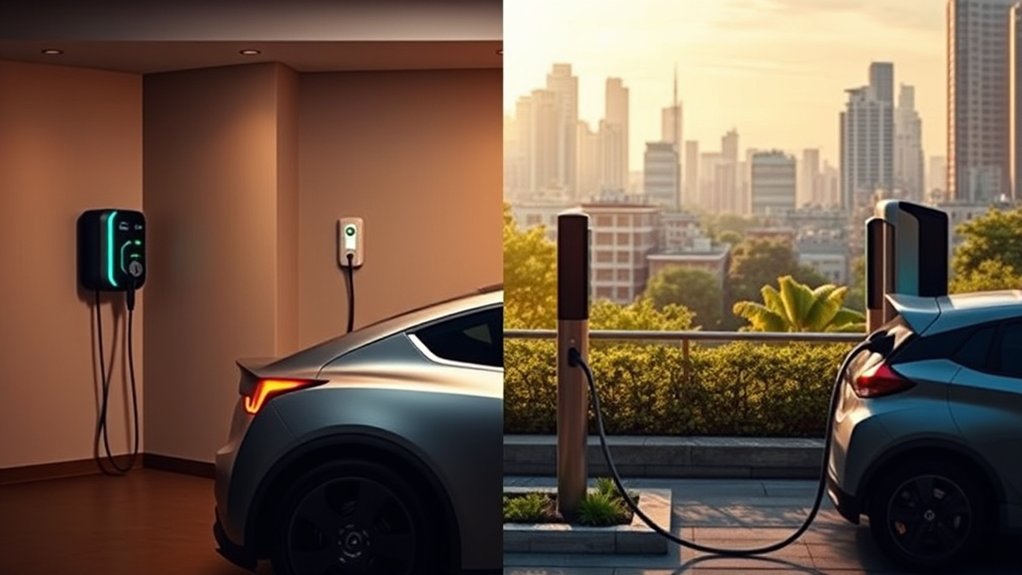
Home charging is usually the cheaper and easier way to charge an electric vehicle if you have a safe place to plug in. Public charging is still useful for road trips, apartment living, emergency top-ups, and days when you need speed. The real cost difference depends on your local electric rate, your EV’s efficiency, charger fees, and how often you use DC fast charging.
Quick Answer
Home EV charging is usually cheaper than public charging because you pay your residential electricity rate instead of a station price that may include location-based pricing, network fees, idle fees, or peak-hour rates. Public charging is worth it when you need faster charging, do not have home access, or are traveling.
Key Takeaways
- Home charging is usually the lowest-cost option, but your exact cost depends on your local utility rate and whether you can use off-peak pricing.
- Public charging prices vary by network, station, membership plan, time of day, idle fees, taxes, and whether you use Level 2 or DC fast charging.
- Level 1 can work for short daily driving, Level 2 is better for overnight home charging, and DC fast charging is best for trips or quick top-ups.
- A Level 2 home charger should be installed with proper permits, a dedicated circuit, and a qualified electrician when new wiring is needed.
- As of July 2026, the federal home charger credit for individuals applied only to qualifying equipment placed in service through June 30, 2026, so new buyers should check current state and utility rebates.
Understanding Home Charging Costs: What You Need to Know
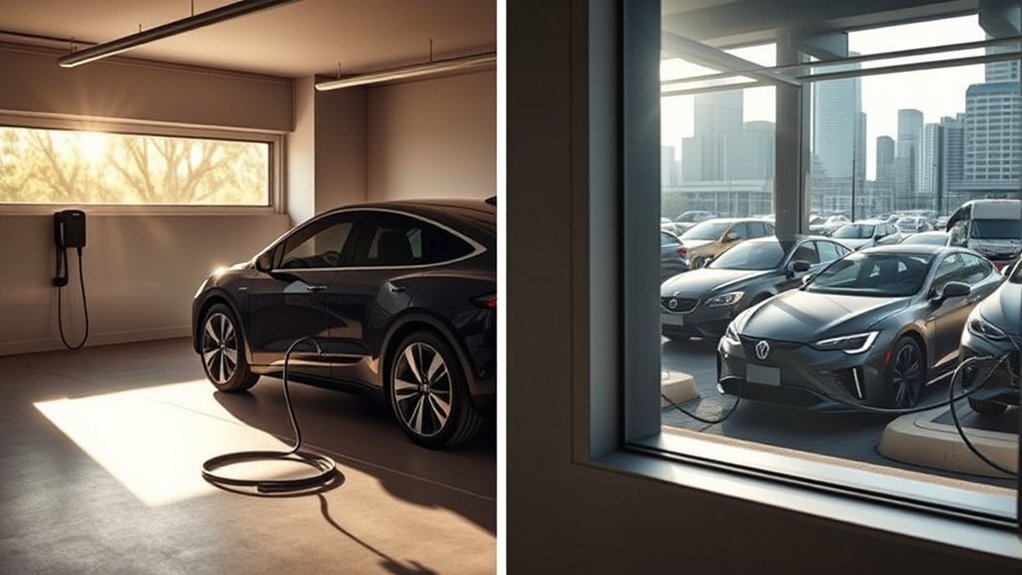
Home charging cost starts with one simple number: your electricity price per kilowatt-hour, or kWh. According to the U.S. Energy Information Administration, the U.S. average residential electricity price was 18.83 cents per kWh in April 2026, but the rate varies a lot by state and utility plan.
To estimate your home charging cost, use this formula:
EV charging cost = kWh added × your electricity rate. For a more realistic home estimate, add about 10% to account for charging losses.
For example, if your EV needs 60 kWh from the battery and your home rate is $0.19 per kWh, the electricity itself costs about $11.40. With charging losses from the wall outlet or charger, the billed energy may be closer to 66 kWh, or about $12.54.
Note: Your EV rarely charges from 0% to 100% in normal use. Most daily charging is a smaller top-up, such as 15 to 35 kWh, depending on your commute and battery size.
The Alternative Fuels Data Center notes that many EV owners can meet daily driving needs with overnight Level 1 charging if they have a dedicated 120-volt outlet near the vehicle. Drivers with longer commutes, larger batteries, or less predictable schedules often install Level 2 equipment for faster overnight charging.
The Price of Public Charging: Is It Worth the Cost?
Public charging is less predictable because stations do not all use the same pricing model. A public charger may bill by kWh, by minute, by session, by parking time, or through a membership plan. Some locations also add idle fees if your car stays plugged in after the session ends.
Major networks tell drivers to check real-time pricing before charging. Electrify America says DC fast charging pricing depends on location, plan, energy delivered, and in some cases time-of-use pricing. Tesla also says Supercharger pricing varies by site and may include on-peak and off-peak rates.
Public Level 2 charging may be affordable or even free at some workplaces, hotels, stores, or city-owned lots. DC fast charging usually costs more because it delivers power quickly and requires more expensive equipment. That higher price can still make sense on a road trip because speed matters more than the lowest possible cost.
Pro Tip: Before you plug in at a public station, check the app or screen for the kWh rate, idle fee, parking fee, session fee, and any cheaper member rate. The posted charging price may not be the full session cost.
Cost Comparison: Home vs. Public Charging: Where Can You Save More?
The easiest way to compare home and public charging is to price the same amount of energy at different rates. Here is a simple example using 60 kWh delivered to the vehicle battery.
| Charging Rate | 60 kWh Session Cost | Best Fit |
| $0.15/kWh | $9.00 | Low-cost home or off-peak utility plan |
| $0.19/kWh | $11.40 | Near the April 2026 U.S. residential average |
| $0.35/kWh | $21.00 | Moderate public charging example |
| $0.50/kWh | $30.00 | Higher-cost public or fast-charging example |
Over a year, the difference can be meaningful. If you drive 12,000 miles per year and your EV averages 30 kWh per 100 miles, the car uses about 3,600 kWh at the battery. Add about 10% charging loss for home charging, and your utility may bill around 3,960 kWh. At $0.19 per kWh, that is about $752 per year. At $0.35 per kWh in public charging, the same 3,600 kWh would cost about $1,260 before parking, idle, or session fees.
That does not mean every driver saves the same amount. Your savings depend on your local electricity rate, how efficiently your EV drives, how often you fast charge, and whether you can charge during off-peak hours.
Why Home Charging Is More Convenient
Home charging is convenient because it turns charging into a background habit. You park, plug in, and start the next day with the range you need. You also avoid detours, charger queues, broken stations, and payment apps for normal daily driving.
- Overnight charging: Level 2 charging can usually refill a typical daily commute overnight, while Level 1 may work for lower-mileage drivers.
- Lower everyday cost: Home charging usually uses your residential electricity rate instead of a station price.
- No public-station waiting: You still need time to charge, but you do not need to wait in line at a station for routine use.
- Better control: Many home chargers and EV apps let you schedule charging for off-peak hours.
- Solar compatibility: If you have solar, you may reduce your charging cost, especially if your utility plan rewards self-consumption. The savings depend on your solar system, rate plan, and local net-metering rules.
Home charging is not perfect for everyone. If you park on the street, rent an apartment, live in a condo, or do not have access to a dedicated outlet, public charging, workplace charging, or shared building charging may be your main option.
Charging Speed: Level 1, Level 2, and DC Fast Charging
Charging speed affects convenience as much as price. The Alternative Fuels Data Center explains that charging time depends on battery size, state of charge, vehicle limits, charger power, and electrical service.
- Level 1 charging: Uses a standard 120-volt outlet and adds about 5 miles of range per hour in AFDC’s example. It works best for short commutes, plug-in hybrids, and drivers who can stay plugged in for many hours.
- Level 2 charging: Uses 240-volt residential service or 208-volt commercial service. AFDC lists about 25 miles of range per hour as a common estimate, with actual power ranging by equipment and vehicle.
- DC fast charging: Public fast charging can add about 100 to 200+ miles in 30 minutes, depending on the station and vehicle. It is useful for road trips but usually costs more than home charging.
Note: Fast charging slows as the battery fills, especially near the top of the pack. For many road trips, charging to about 80% and moving on is faster than waiting for 100%.
Home Charger Installation Costs and Safety
A Level 1 setup may cost little or nothing if your EV includes a portable cord and you already have a suitable dedicated outlet. A Level 2 setup costs more because it may require the charger, wiring, breaker work, permits, panel capacity checks, and labor.
The AFDC says EV charging installations must comply with local and state codes, may require permits, and are treated as continuous loads under the National Electrical Code. A qualified electrician can check whether your electrical panel has enough capacity and whether a new dedicated circuit is needed.
Warning: Do not rely on extension cords, overloaded outlets, damaged plugs, or indoor-only equipment outdoors. Use safety-certified charging equipment, follow your vehicle manual, and hire a licensed electrician when adding a 240-volt circuit.
Incentives can change. The IRS Alternative Fuel Vehicle Refueling Property Credit allowed individuals to claim 30% of qualifying main-home charging equipment costs, up to $1,000 per item, for eligible property placed in service from January 1, 2023, through June 30, 2026. As of July 2026, new home charger buyers should check current federal law, state programs, local utility rebates, and charger manufacturer offers before budgeting.
When Public Charging Makes More Sense
Public charging can still be the right choice, even when it costs more per kWh. Use public charging when the value of time, access, or location beats the lower price of home charging.
- Road trips: DC fast chargers help you cover long distances without waiting overnight.
- No home parking: Apartment, condo, and street-parking drivers may rely on public, workplace, or curbside stations.
- Emergency top-ups: A public charger can help when your plans change or you use more range than expected.
- Free or discounted charging: Some workplaces, hotels, dealerships, and shopping centers offer free or reduced-cost Level 2 charging.
- High daily mileage: Drivers who exceed their overnight home charging capacity may need a public fast-charge stop.
If you depend on public charging, use multiple apps, keep a backup network account, check charger reviews when available, and plan around both charger location and charging speed. A cheap charger is not always the best choice if it is slow, blocked, or unreliable.
Choosing the Best EV Charging Method: Key Factors to Consider
The best EV charging method depends on your living situation, driving pattern, budget, and tolerance for waiting. For many homeowners, the lowest-cost setup is a safe home charger paired with off-peak electricity. For renters or city drivers, the best setup may be a mix of workplace charging, nearby Level 2 stations, and occasional DC fast charging.
Ask these questions before choosing:
- How many miles do you drive per day? A short commute may work with Level 1. Longer daily driving usually favors Level 2.
- Can you park near power? Home charging needs a safe outlet or installed charger where you park.
- What is your electric rate? Check your bill for the kWh rate, delivery fees, and time-of-use options.
- How much does installation cost? Get an electrician quote if you need a 240-volt circuit or panel upgrade.
- How often do you road-trip? Frequent travelers should compare nearby DC fast-charging networks and connector compatibility.
- Does your utility offer EV rates? Off-peak charging can reduce costs if you schedule charging overnight.
For most EV owners with reliable home access, home charging should handle daily use, while public charging fills the gaps. That balance usually gives you the best mix of cost, convenience, and flexibility.
Frequently Asked Questions
Is it cheaper to charge at home or at a charging station?
It is usually cheaper to charge at home because you pay your residential electricity rate instead of a public station rate. Public charging may cost more because the price can include network costs, fast-charging equipment costs, parking fees, idle fees, taxes, or membership differences. The exception is free or discounted charging at work, hotels, stores, or promotional stations.
What drains an EV battery the most?
High speeds, aggressive acceleration, cold weather, heavy cabin heat or air conditioning, hills, roof racks, underinflated tires, and towing can all reduce EV range. Highway speed matters because aerodynamic drag rises quickly as speed increases. You can improve efficiency by driving smoothly, keeping tires properly inflated, preconditioning while plugged in, and using seat heaters when practical in cold weather.
What is the 80/20 rule for EV charging?
The 80/20 rule usually means keeping your EV battery between about 20% and 80% for normal daily use instead of frequently letting it sit near empty or fully charged. It is not a strict rule for every car or battery chemistry. Charging to 100% is fine when you need the extra range for a trip, but many drivers use 80% as a daily target.
How much will my electric bill go up if I charge my EV at home?
A simple estimate is monthly miles divided by 100, multiplied by your EV’s kWh per 100 miles, then multiplied by your electricity rate. If you drive 1,000 miles per month and your EV uses 30 kWh per 100 miles, you need about 300 kWh at the battery. With roughly 10% charging loss, your billable use may be about 330 kWh. At $0.19 per kWh, that is about $63 per month.
Can I rely only on public charging?
Yes, but it usually takes more planning and may cost more. Public-only charging works best if you have reliable Level 2 or DC fast chargers near home, work, or regular errands. Check station pricing, access hours, connector type, charger speed, and idle fees before depending on a station as your main charging source.
Conclusion
Home charging is usually the better everyday choice because it is cheaper, easier to schedule, and available while your car is parked overnight. Public charging is still important, especially for road trips, renters, apartment dwellers, and quick top-ups. The smartest approach is to use home charging for routine driving when you can, then use public charging when speed or location makes the higher price worthwhile.
Sources
- U.S. Energy Information Administration, Electric Power Monthly Table 5.6.A — current U.S. residential electricity price data used for home charging examples.
- Alternative Fuels Data Center: Charging Electric Vehicles at Home — home charging equipment, Level 1 and Level 2 guidance, safety, and cost calculation method.
- Alternative Fuels Data Center: Electric Vehicle Charging Stations — Level 1, Level 2, and DC fast charging speeds and terminology.
- IRS: Alternative Fuel Vehicle Refueling Property Credit — federal charger credit eligibility and June 30, 2026 placed-in-service date for individuals.
- Electrify America Pricing and Plans — public DC fast charging pricing variables, idle fees, memberships, and time-of-use pricing.
- FuelEconomy.gov: All-Electric Vehicles — EV efficiency, charging efficiency, range, and recharge-time context.