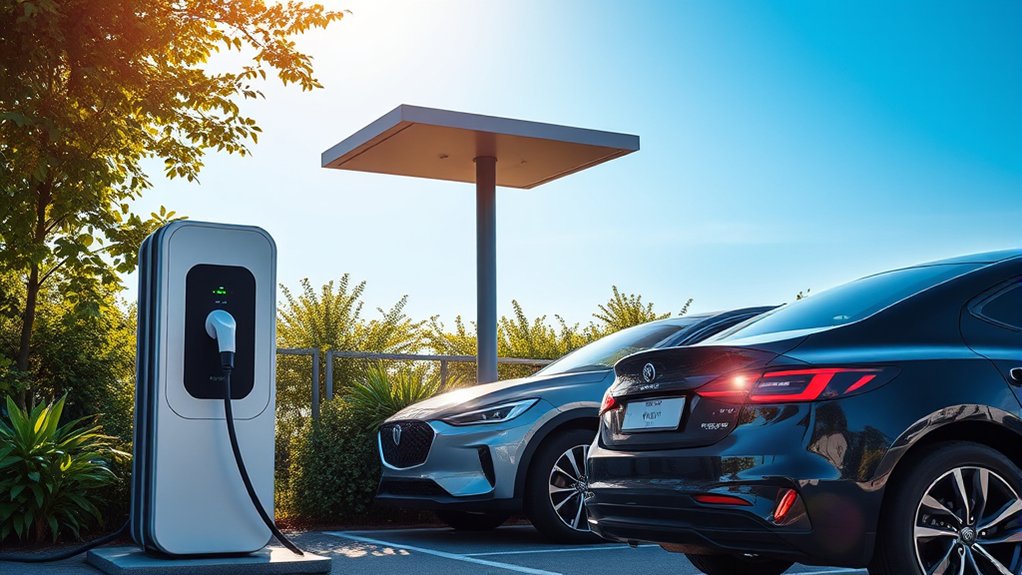
Not all electric vehicles use the same charger in every situation. Most EVs sold in North America can use common Level 1 and Level 2 AC charging, but the plug, adapter, charging speed, and DC fast-charging access can vary by vehicle. The main connector names to know are J1772, CCS1, CHAdeMO, and SAE J3400/NACS.
Quick Answer
No, all EVs do not use the same charger plug. Most non-Tesla EVs use J1772 for Level 1 and Level 2 AC charging, while many use CCS1 for DC fast charging. Tesla and a growing number of newer EVs use SAE J3400/NACS. Adapters can help, but they do not make every charger work with every car.
Key Takeaways
- Level 1 and Level 2 charging are AC charging options used mostly at home, work, hotels, and public parking areas.
- DC fast charging is used for road trips and quick stops, but the plug must match your EV or an approved adapter must be available.
- J1772 is common for AC charging on non-Tesla EVs in North America, while CCS1, CHAdeMO, and SAE J3400/NACS are used for DC fast charging.
- Tesla Supercharger access depends on the station type, your vehicle brand, your charge port, and whether your automaker supports an approved NACS DC adapter.
- Charging speed depends on the charger output, your EV’s maximum charge rate, battery temperature, state of charge, and power sharing at the station.
What Types of Electric Vehicle Chargers Exist?
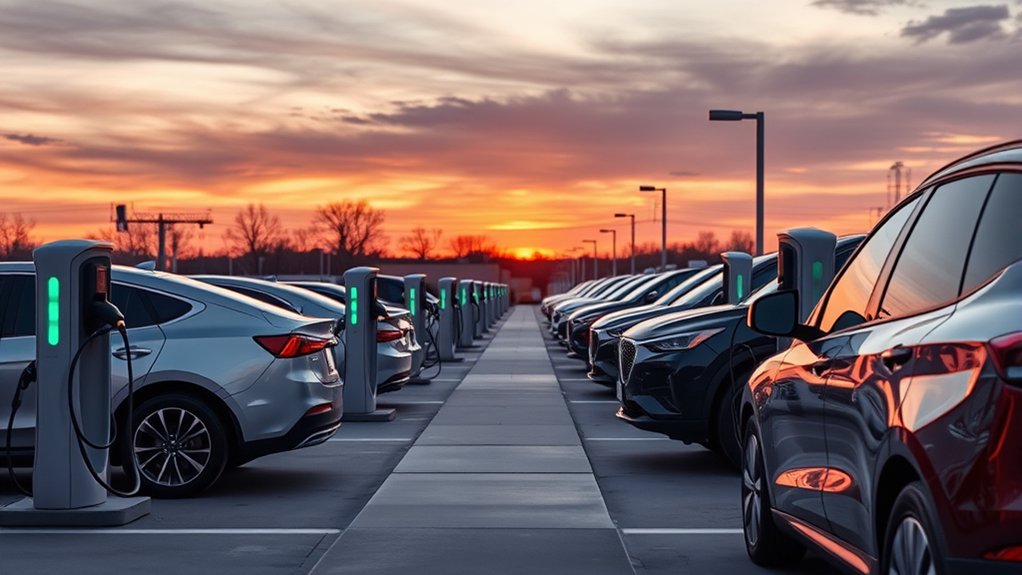
Electric vehicle chargers are usually grouped by charging level. The level tells you how power reaches the car and how fast the battery can usually recharge. The plug type tells you whether the connector physically fits your EV.
The U.S. Department of Energy Alternative Fuels Data Center classifies common EV charging into AC Level 1, AC Level 2, and DC fast charging. These categories are helpful, but they do not automatically guarantee that every plug will fit every EV.
| Charging Type | Power Source | Common North American Plugs | Best Use |
|---|---|---|---|
| Level 1 AC | 120V household outlet | J1772 or NACS/J3400 with the right cord or adapter | Slow overnight charging, short commutes, emergency backup |
| Level 2 AC | 240V residential or 208V commercial service | J1772 or NACS/J3400 | Daily home charging, workplace charging, hotels, public parking |
| DC Fast Charging | High-power DC at public fast-charge sites | CCS1, CHAdeMO, or SAE J3400/NACS | Road trips, quick stops, charging when you cannot wait overnight |
Level 1 is the slowest option. It uses a standard 120-volt outlet and is useful when you drive only a short distance each day or need backup charging. Level 2 is much more practical for most EV owners because it can usually recharge a daily commute overnight. DC fast charging is the fastest public option and is designed for longer trips or quick top-ups.
Note: The charger level and the connector are different things. A station may offer the right speed but the wrong plug, or the right plug but less power than your EV can accept.
How to Ensure Your EV Is Compatible With Different Chargers
To know whether your EV can use a charger, check three things: the charging level, the connector type, and your vehicle’s maximum charging rate. A plug that fits is only one part of compatibility.
- Identify your charge port. Look near the charge door or in your owner’s manual. Common North American ports include J1772, CCS1, CHAdeMO, and SAE J3400/NACS.
- Check whether the station is AC or DC. Level 1 and Level 2 are AC. DC fast chargers use a different system and may require CCS1, CHAdeMO, or NACS/J3400.
- Confirm your EV’s maximum AC and DC charge rates. A car limited to 50 kW will not charge at 250 kW just because it plugs into a 250 kW station.
- Use the network app or your EV navigation system. Filter by plug type, charging speed, payment method, and real-time availability before you drive to the station.
- Use only approved adapters. Some adapters are for AC charging only, while others are for DC fast charging. They are not interchangeable.
Warning: Do not force a plug, modify a connector, or use an unapproved third-party DC fast-charging adapter. High-power charging equipment can damage the vehicle, the adapter, or the charging station if it is not approved for your EV.
Understanding Electric Vehicle Charger Plug Types
The easiest way to avoid charging problems is to learn the plug families. These names show up in charging apps, vehicle manuals, and station listings.
J1772 Type 1
J1772 is the common AC charging connector for many non-Tesla EVs and plug-in hybrids in North America. It is used for Level 1 and Level 2 charging. Many Tesla and NACS-equipped vehicles can use J1772 Level 2 stations with the correct AC adapter.
CCS1 Combined Charging System
CCS1 builds on the J1772 shape by adding two large DC pins below the AC section. This lets one vehicle inlet support Level 1, Level 2, and DC fast charging. Many non-Tesla EVs sold in North America during the 2010s and early 2020s use CCS1 for DC fast charging.
CHAdeMO
CHAdeMO is an older DC fast-charging connector used on some Japanese EVs, especially earlier Nissan Leaf models. It still matters for drivers of CHAdeMO-equipped vehicles, but it is no longer the main direction for most new North American EVs.
SAE J3400 / NACS
SAE J3400, commonly called NACS, is the connector used by Tesla in North America and adopted by many automakers for newer EVs. Tesla explains that NACS is the common name for the J3400 standard published and maintained through SAE, and that NACS-equipped vehicles do not need an adapter at compatible NACS charging sites.
Type 2 and CCS2
Type 2 and CCS2 are common in Europe and some other markets. If you are reading North American charging information, do not assume European connector advice applies to your vehicle. Always check the connector used in your country and on your specific model year.
Are Level 1 and Level 2 Chargers Compatible?
For most EV drivers, Level 1 and Level 2 charging are the easiest forms of compatibility. Many EVs can use AC charging, but the connector or adapter still has to match the vehicle.
Level 1 charging uses a 120-volt outlet. It is slow, but it can work for light daily driving. Level 2 charging uses 240-volt residential service or 208-volt commercial service. It is the preferred home charging setup for many EV owners because it can usually refill normal daily driving needs overnight.
Non-Tesla EVs with a J1772 inlet usually plug directly into J1772 Level 1 and Level 2 equipment. Tesla and many NACS-equipped vehicles can use J1772 AC stations with an approved adapter. The reverse is also true in some cases: a J1772-equipped EV may use some NACS AC charging equipment only if the correct approved adapter is available.
Warning: A hardwired or high-amperage Level 2 charger should be installed by a qualified electrician. Do not rely on household extension cords for EV charging unless your vehicle manufacturer and charger manufacturer specifically allow it.
What Are the Benefits of Using DC Fast Charging?
DC fast charging is useful when time matters. Instead of sending AC power through the vehicle’s onboard charger, a DC fast charger sends direct current to the battery through the vehicle’s fast-charging system. That is why DC fast charging is much faster than Level 1 or Level 2 charging.
DC fast charging is best for road trips, public quick stops, and drivers who cannot charge at home. Many EVs can add a large amount of range in about 20 to 40 minutes, but the exact result depends on the charger, the EV, the battery temperature, and the battery’s state of charge.
Charging often slows down as the battery gets closer to full. This is called tapering. For many EVs, the fastest part of a DC fast-charge session is roughly the middle of the battery range, not the final 10% or 20%.
Pro Tip: On a road trip, it is often faster to charge from a low battery to about 70% or 80% and leave, rather than waiting for the last 20% to fill slowly.
How Does Tesla’s NACS Influence Charging Options?
Tesla’s NACS connector, now commonly referred to as SAE J3400/NACS, has changed the North American charging landscape. It uses one compact connector for AC and DC charging, and many automakers have moved toward NACS for newer North American EVs.
Supercharger access is not the same at every Tesla site. Tesla identifies three broad Supercharger situations: Tesla-only Superchargers, All EVs Superchargers with a Magic Dock adapter at the charging post, and NACS Superchargers that become available by vehicle manufacturer. You may need the Tesla app, a supported vehicle profile, and an approved adapter from Tesla or your vehicle manufacturer.
If your EV already has a NACS/J3400 port, you may not need an adapter at compatible NACS Superchargers. If your EV has a CCS1 port, you may need an approved NACS DC adapter and manufacturer-supported access. If your EV has CHAdeMO only, Tesla Supercharger access is generally not available through a simple adapter.
What Factors Influence Charging Speed and Efficiency?
Charging speed is not set by the station alone. Your EV, the charger, the battery, the weather, and the site setup all affect the result.
- Charger output: A 350 kW fast charger can supply more power than a 50 kW fast charger, but only if your EV can accept it.
- Vehicle maximum charge rate: Each EV has a maximum AC rate and a maximum DC rate. The lower limit controls the real charging speed.
- Battery state of charge: Charging is usually faster when the battery is not near full. It often slows above about 80%.
- Battery temperature: Cold or very hot batteries can charge more slowly. Some EVs precondition the battery before a fast-charge stop.
- Voltage architecture: Some newer EVs with higher-voltage battery systems can take advantage of very high-power chargers better than older EVs.
- Station load sharing: Some charging sites split power between stalls when several cars charge at once.
- Cable reach and port location: A charger may be compatible on paper, but a short cable or awkward parking layout can still cause problems.
Tips for Navigating the Electric Vehicle Charging Landscape
The EV charging landscape is easier to manage when you plan around your actual vehicle instead of assuming every station works the same way.
- Save your plug type in charging apps. This helps filter out stations that will not work with your EV.
- Check the station details before you arrive. Look for connector type, charging speed, payment method, live status, and recent driver notes.
- Carry the right adapter if your automaker recommends one. Keep AC and DC adapters separate in your mind because they serve different purposes.
- Plan fast charging around the battery range where your EV charges quickly. For many EVs, charging from very low to around 70% or 80% is more time-efficient than charging to 100%.
- Have a backup station on road trips. A station can be full, offline, blocked, or too short for your charge-port location.
The best charging station is not always the fastest one on the map. It is the one your EV can actually use, at a speed that fits your stop.
Home Charging vs Public Charging
Home charging and public charging solve different problems. Home charging is usually best for daily use because you can plug in overnight and start the next day with enough range. Public charging is best for longer drives, apartment dwellers without home charging, or days when you need extra range quickly.
If you can install Level 2 charging at home, it will often be the most convenient setup. You should still learn public charging because road trips require planning around connector type, charger reliability, payment apps, and charging speed.
If you live in an apartment or condo, look for workplace charging, nearby Level 2 public chargers, reliable DC fast chargers, or shared building chargers. A slower charger near a place you already spend time can be more useful than a faster charger across town.
Troubleshooting Common EV Charging Problems
If your EV will not charge, start with the simple checks before assuming the car or station is broken.
| Problem | Likely Cause | What to Do |
|---|---|---|
| Plug does not fit | Wrong connector type | Check whether your EV needs J1772, CCS1, CHAdeMO, or NACS/J3400. |
| Charging will not start | App, payment, network, or vehicle authorization issue | Confirm the station in the app, check payment, lock/unlock the vehicle, and retry the session. |
| Charging is much slower than expected | Battery is cold, battery is near full, station is sharing power, or EV has a lower max charge rate | Use battery preconditioning if available, try another stall, or stop around 80% when practical. |
| Supercharger does not appear for your EV | Vehicle brand or site is not supported | Add your vehicle details in the Tesla app and check only compatible sites. |
Frequently Asked Questions
Can all EV cars use the same charger?
No. Many EVs can use the same Level 1 or Level 2 AC charging stations with the right connector or adapter, but DC fast charging depends on the vehicle’s port. Common North American DC fast-charge connectors include CCS1, CHAdeMO, and SAE J3400/NACS.
Do adapters make every EV charger compatible?
No. Adapters only work when your vehicle, charger, adapter, and charging network all support that use. AC adapters and DC fast-charging adapters are different. Use only adapters approved by your vehicle manufacturer or the charging network.
What type of charger cable does a Nissan Leaf use?
It depends on the model year. Many earlier Nissan Leaf models use J1772 for Level 1 and Level 2 AC charging and CHAdeMO for DC fast charging. Newer Leaf information should be checked by model year because Nissan has updated charging hardware on redesigned models.
What charger does the Hyundai Kona Electric use?
Many North American Hyundai Kona Electric models use J1772 for Level 1 and Level 2 AC charging and CCS1 for DC fast charging. Always confirm by model year because automakers are transitioning some vehicles to SAE J3400/NACS.
Can non-Tesla EVs use Tesla Superchargers?
Some can, but not all. Tesla has Tesla-only Superchargers, All EVs Superchargers with Magic Dock adapters, and NACS Superchargers that open by vehicle manufacturer. Your EV may need a supported vehicle profile, the Tesla app, and an approved NACS DC adapter.
Is CHAdeMO still useful?
Yes, if your EV uses it. CHAdeMO still matters for some older EVs, especially earlier Nissan Leaf models. For new North American EVs, CCS1 and SAE J3400/NACS are more common choices for DC fast charging.
Should I use DC fast charging every day?
DC fast charging is convenient, but Level 2 charging is usually better for daily use when you have access to it. For the best battery care, follow your vehicle manufacturer’s guidance on charge limits, fast-charging frequency, and battery preconditioning.
What is the most stolen EV?
Theft rankings change by year, insurer, region, and data source. Charger compatibility does not determine theft risk. If theft risk matters to you, check current insurance loss reports and use basic protections such as secure parking, app alerts, tracking features, and good key security.
Conclusion
EV charging is not one-size-fits-all. Most EV owners can use common AC charging for daily driving, but fast charging depends on the vehicle’s connector, supported network, adapter rules, and maximum charge rate. In North America, the key plug types are J1772 for many AC stations, CCS1 for many non-Tesla fast-charging vehicles, CHAdeMO for some older EVs, and SAE J3400/NACS for Tesla and many newer EVs.
Before you rely on any station, confirm the plug type, charging speed, payment method, and adapter requirements. That simple check can save time, prevent frustration, and help you choose the right charger for your EV.
Sources
- U.S. Department of Energy Alternative Fuels Data Center — Electric Vehicle Charging Stations — charging levels, connector types, charging speed factors, and DC fast-charging systems.
- Tesla Support — Supercharging Other EVs — Tesla-only, All EVs, Magic Dock, NACS Supercharger access, and approved adapter guidance.
- Tesla — North American Charging Standard — NACS overview, automaker transition, and Supercharger network context.
- SAE International — J3400 Standard — official SAE J3400 standard listing for the North American Charging System connector.
- FuelEconomy.gov — All-Electric Vehicles — official U.S. government background on EV technology and charging basics.