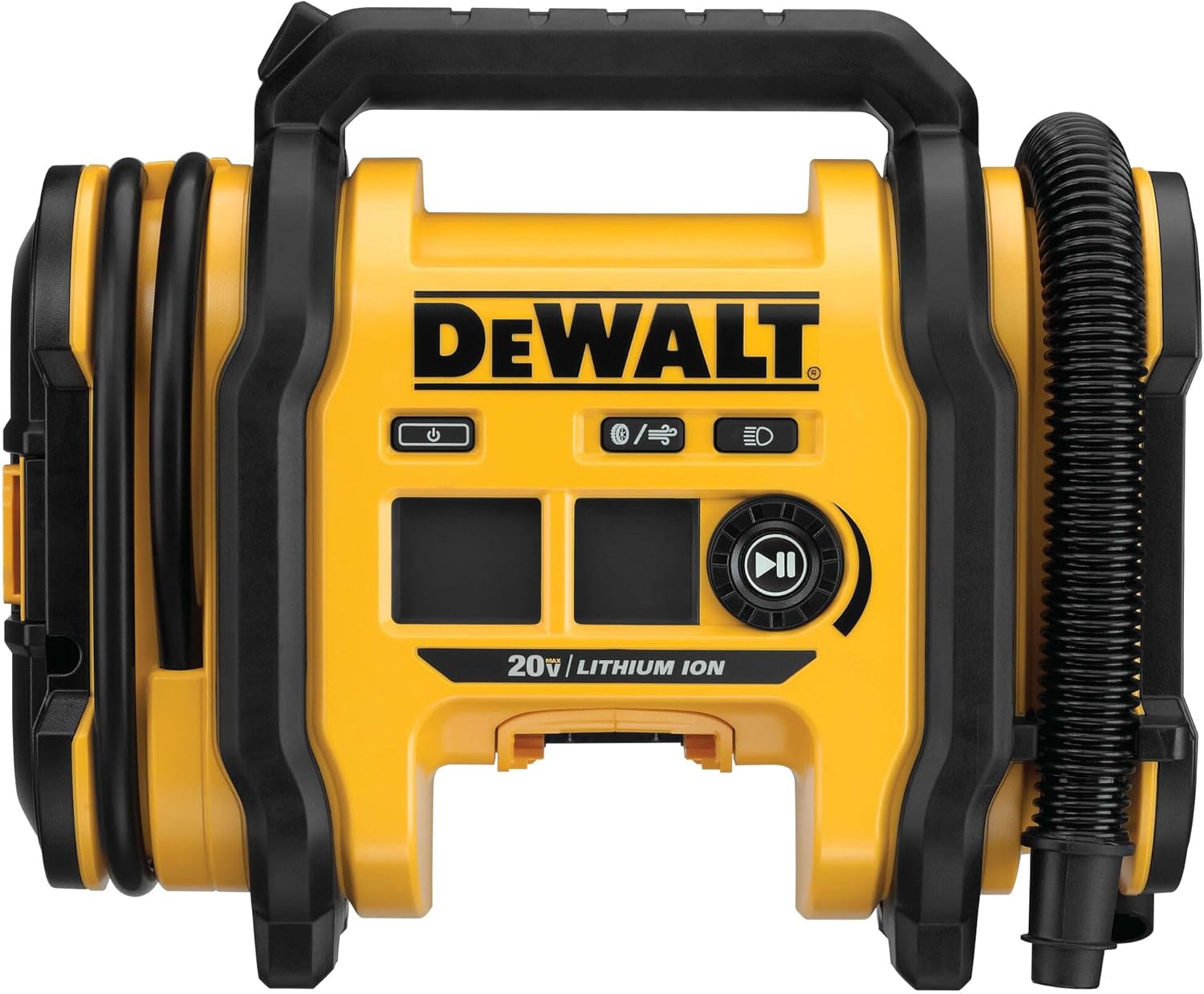
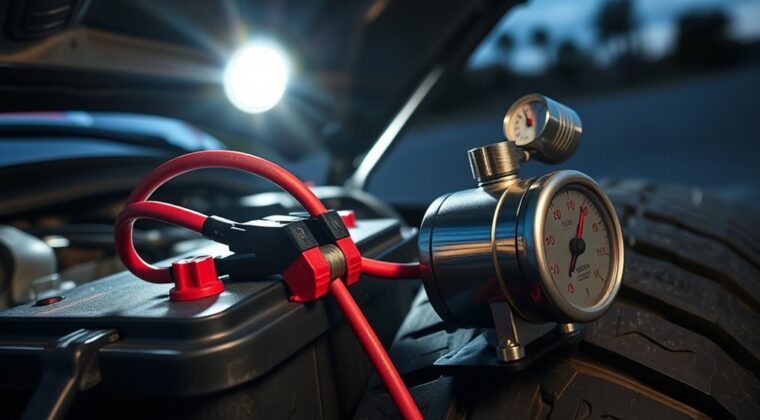
A battery-clamp tire inflator draws direct current straight from your vehicle’s battery, so you get a stable, high-current supply instead of relying on a lighter socket. You connect the positive clamp to positive and the negative to negative, then verify battery voltage stays above 11.5 volts for efficient output. This direct setup reduces voltage drop, supports 15–30 amp operation, and helps the compressor build pressure faster. More details explain the limits and best practices.
Key Takeaways
- Battery-clamp inflators draw direct current from the car battery, giving the compressor a stable power source.
- Connect the red clamp to positive and the black clamp to negative, with clean, tight terminal contact.
- Keep battery voltage above 11.5 volts so the inflator runs efficiently and avoids performance drops.
- Direct battery power reduces voltage loss, helping the compressor move air faster and inflate tires sooner.
- Inline fuses, proper cable gauge, and correct clamp condition protect against faults and maintain reliable operation.
How to Hook Up a Battery-Clamp Tire Inflator
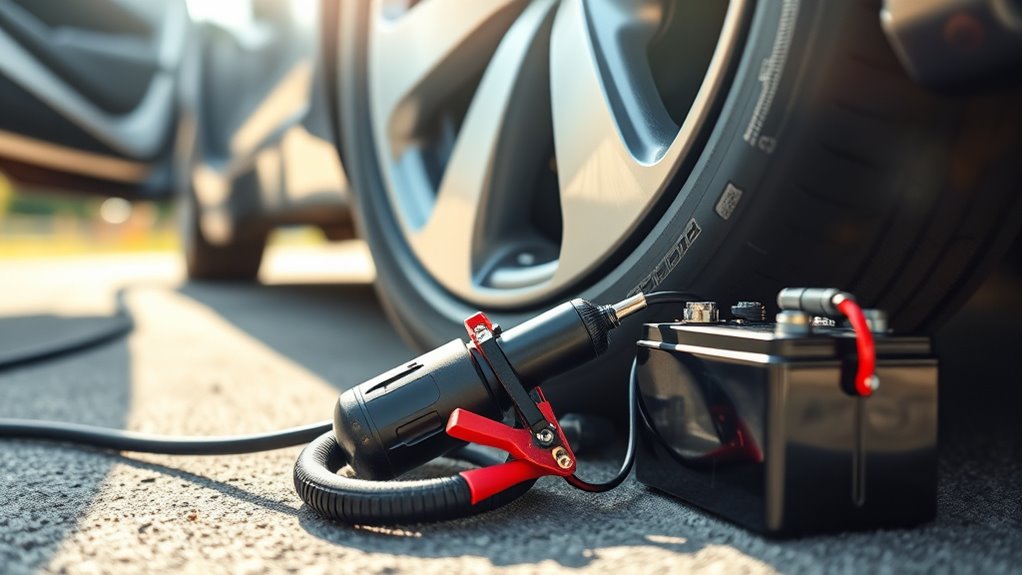
To hook up a battery-clamp tire inflator, first attach the positive clamp to the vehicle’s positive battery terminal, then connect the negative clamp to the negative terminal to complete the circuit safely.
First attach the positive clamp, then the negative, completing the circuit safely and reliably.
You should verify the car battery reads above 11.5 volts; weak battery power can trigger compressor problems or stall tire inflation. Use the battery as your power source, and keep clamps clean and tight so vehicle power reaches the unit without resistance.
Prefer portable compressors with inline fuses, because they shield the circuit from faults; never bypass them. Short cables or a direct connection reduce voltage drop, which helps preserve inflation speed and autonomy.
Check that the compressor’s duty cycle suits your task, and let it cool after extended use to prevent overheating.
This disciplined setup lets you command pressure efficiently, free from dependence on external outlets, while protecting equipment and your freedom to move.
How a Battery-Clamp Tire Inflator Runs
A battery-clamp tire inflator runs by drawing direct current from a vehicle’s battery through the positive and negative clamps, giving the compressor a stable power source without needing the engine running. You’re using the battery’s voltage to feed battery-powered compressors with controlled current, usually 15-30 amps, for tire inflation.
| Component | Function | Risk Control |
|---|---|---|
| Positive clamp | Starts the circuit | Attach first |
| Negative clamp | Completes the circuit | Attach second |
| Inline fuses | Interrupt faults | Protect safety |
You should watch the electrical system and keep voltage above 11.5 volts so the unit stays within spec. Inline fuses add a hard stop if a fault appears, limiting heat and damage. This setup gives you direct control, letting you inflate tires without dependence on engine output. Use the clamps cleanly, check polarity, and verify connections before energizing the compressor. When you respect these limits, you preserve safety and keep the inflator operating efficiently.
Why Direct Battery Power Speeds Inflation
When you connect the inflator directly to the battery, it gets maximum current with less voltage drop, so the compressor can spin faster and move more air. You’re giving the tire inflator a direct battery path that bypasses outlet resistance and long cable losses, so power reaches the compressor more efficiently.
That higher current, often 15–60 amps, supports quick air compression and raises inflation speeds without relying on a weaker 12V socket. Battery voltage matters: a charged battery above 12.6 volts keeps the motor in its efficient range, while sagging voltage slows output.
Higher current and healthy battery voltage keep the compressor in its efficient range, boosting inflation speed.
Because you’re not waiting on compromised wiring, the system responds with more consistent pressure rise and shorter run times. For short fills, this setup is safe and effective, but you should monitor battery condition during longer use so you don’t drain reserve power unnecessarily.
Direct connection gives you control, speed, and cleaner energy transfer.
What Changes Inflation Speed and Output
Inflation speed and output depend first on how much current the compressor’s motor draws: single-motor units usually pull about 15–30 amps, while twin-motor models can demand 40–60 amps, which helps them move more air and fill larger tires faster.
When you clamp a Portable Air Compressor directly to the battery terminal, you cut voltage drop and improve power delivery, so the motor sustains higher output and your tire reaches target tire pressure sooner.
Tire size and required pressure matter too: a larger tire or a higher setpoint increases air volume, so inflation speed falls even with strong amperage. Cold ambient temperatures can lower battery voltage, trimming efficiency and slowing the system.
You’ll also get better results from a well-built compressor with high-efficiency motors and inline fuses, because it maintains reliable output during longer runs.
In practical terms, direct-clamp power gives you more control, less loss, and faster, cleaner inflation.
Common Battery-Clamp Inflator Problems and Fixes
If your battery-clamp tire inflator won’t start or seems weak, check the power path first: the vehicle battery should read above 11.5 volts, the inline fuse should be intact and correctly rated, and the clamps need clean, solid contact with the battery terminals.
A battery-clamp unit depends on direct power supply, so common mistakes usually involve poor connections, a blown fuse, or a weak battery. Clean corrosion from the posts, tighten the clamps, and shorten the cable run when possible to reduce voltage drop.
- Verify battery voltage before you inflate.
- Replace any failed inline fuse with the correct amperage.
- Limit duty cycle; long sessions can drain the source, so run the engine if needed.
If output still sags, inspect the cable gauge and clamp jaws for damage.
These fixes restore efficiency, protect the battery, and keep your inflator usable under pressure.
Frequently Asked Questions
What Is the Power Source of a Digital Tire Inflator?
You power a digital tire inflator with a 12V DC source, usually your vehicle’s battery or a cigarette lighter outlet.
These power types affect inflator efficiency, battery capacity, and usage duration. Direct battery clamps give stronger charging options and faster inflation.
Keep your engine running for support, follow maintenance tips, and check safety features like fuses.
You’ll get reliable, precise operation while protecting your system and maximizing freedom on the road.
How Does a Cordless Tire Inflator Work?
You use a cordless tire inflator by charging its battery, connecting the air hose, and setting your target PSI on the pressure gauge.
The motor drives compressed air into the tire until auto-stop kicks in. Among inflator types, its inflation speed balances with battery life and portability features. You’ll value the freedom it gives.
Follow maintenance tips: keep seals clean, store charged, and inspect attachments regularly for reliable performance.
What Are the Common Problems With Car Tire Inflators?
You’ll usually face blown fuses, low-voltage starts, poor connections, and slow inflation from long hose length or weak cables.
You may also see inflation accuracy drift, higher noise levels, and durability concerns if the compressor overheats or leaks.
Check power efficiency, clean terminals, and keep the unit maintained.
Shorter leads improve user convenience, while routine maintenance tips help you avoid failures and keep performance stable.
Does a Portable Air Compressor Need to Be Plugged In?
Not always; you can stay untethered. Your portable air compressor may run on battery types or a vehicle’s 12V system, so you don’t always need a wall plug.
Power efficiency, compressor sizes, and inflation speed vary by model, and direct-battery connections boost output. You should follow user safety steps, clamp positive first, and use maintenance tips.
Choose portability options that free you from fixed outlets and keep control.
Conclusion
When you clamp a tire inflator directly to your battery, you give it the clearest path to power, like opening a wide gate instead of a narrow door. That direct current helps the motor spin faster, hold steadier voltage, and move more air with less delay. You still need solid connections, a healthy battery, and a proper fuse. If your inflator slows, check those links first, because the chain between battery and compressor controls everything.