
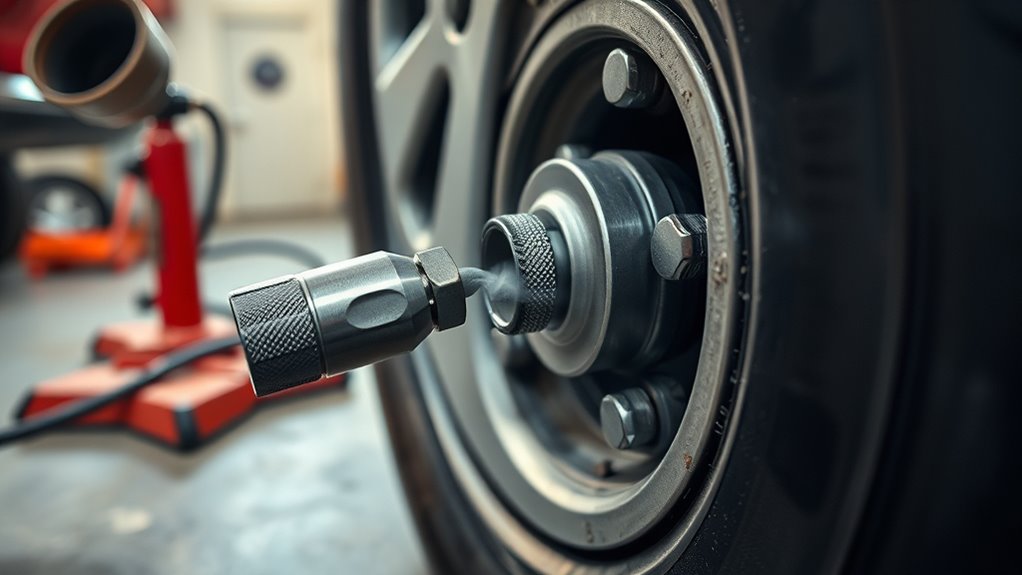
Your tire usually loses air when you remove the inflator because the valve core, valve stem, rim, or inflator nozzle isn’t sealing correctly. A loose, damaged, or misaligned valve core can let air escape as soon as pressure drops. Cracks or corrosion around the stem or rim can do the same. Cold weather can also lower pressure slightly. Check with soapy water and a reliable gauge, and you’ll spot the real cause fast, plus a few fixes.
Key Takeaways
- A sudden pressure drop after removing the inflator usually means the valve core or stem isn’t sealing properly.
- A misaligned inflator nozzle can let air escape the moment it detaches from the valve.
- Check the valve core for damage, wear, or corrosion, and tighten it if needed.
- Use soapy water on the valve stem, core, and rim to find leaks by bubbling.
- Cold temperatures can lower tire pressure naturally, so verify readings when the tire is cold.
Why Your Tire Loses Air After Inflating
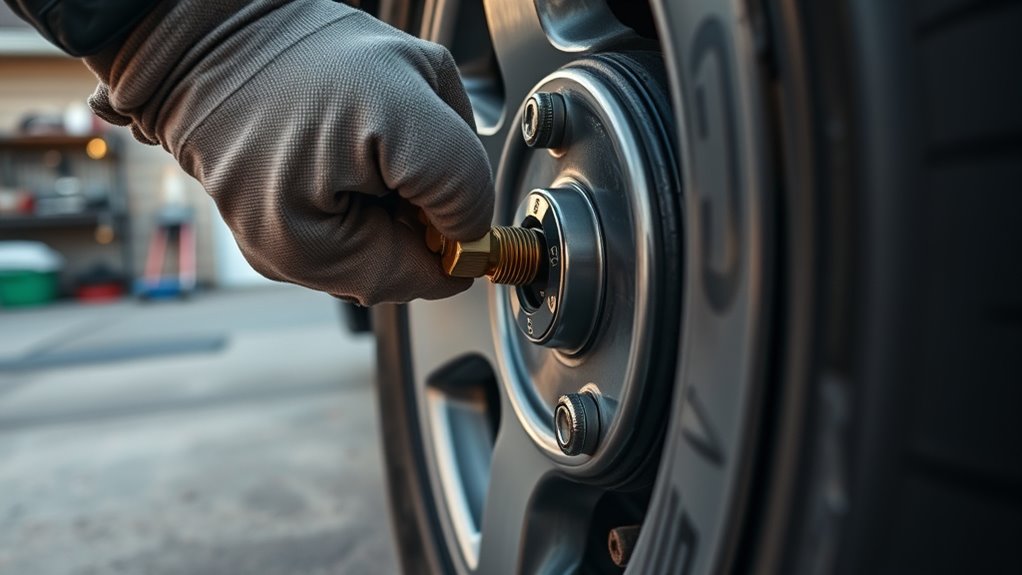
A sudden pressure drop after you inflate a tire usually points to a sealing problem at the valve core or valve stem. When you remove the inflator, a misaligned seal can let air loss start immediately, so watch the tire pressure closely.
If the reading falls sharply, from 32 psi to 24 psi, the issue may be the gas station nozzle or a faulty valve stem. You can verify leaks by brushing soapy water around the valve stem; bubbles expose escaping air.
Don’t ignore temperature changes, either, because a 10°F drop can reduce tire pressure by about 2%. That shift won’t cause major loss alone, but it can amplify a weak seal.
Keep control by doing regular inspections, tightening the valve stem properly, and checking pressure after every inflate. When you test methodically, you protect your freedom to drive without uncertainty or avoidable roadside failure.
Check the Valve Core for Tire Pressure Loss
If pressure drops right after you remove the inflator, check the valve core first, because a misaligned or off-center core can block proper airflow during inflation and then let air escape once the nozzle comes off.
You can regain control by inspecting the valve core for damage, wear, or corrosion in the valve stems. Even slight misplacement can trigger air loss and a rapid drop in tire pressure.
Tightening the valve core nut may stop minor leaks during inflation or deflation, so don’t skip that step. Regular tire maintenance keeps your system honest and your ride free.
- Inspect the valve core for centered seating.
- Tighten the core nut if it’s loose.
- Watch for slow leaks after inflation.
- Keep checking for consistent pressure over time.
Check the Tire, Valve Stem, and Rim for Leaks
When pressure drops during or after you remove the inflator, check the tire, valve stem, and rim for the leak source. First, inspect the valve stem for cracks, hardening, or chemical damage. Spray soapy water on the valve and watch for bubbles; bubbling shows air leaks that can steal pressure fast.
Next, inspect the rim for corrosion, dents, or edge damage. A damaged rim can open a gap between the tire bead and rim, letting air loss start the moment you disconnect the inflator. Also verify the tire bead is fully seated all the way around; a misaligned or damaged bead won’t seal cleanly.
If you see no obvious fault, recheck the valve core for proper alignment and blockage. This process helps you isolate the leak, protect the tire, and reclaim control instead of letting hidden defects dictate your ride.
Why Cold Weather Lowers Tire Pressure
Cold weather lowers tire pressure because the air inside the tire contracts as temperatures drop, typically reducing pressure by about 1 psi for every 10°F decrease.
You’ll notice the pressure in your tires fall faster overnight, when temperature drops hit hard and the rubber cools quickly. This isn’t the same as a leak, but it can still leave you losing air in practice and push you toward tire deflation.
- Check tires when they’re cold, not after driving.
- Expect underinflated tires after sharp cold weather swings.
- Do regular checks during winter to catch 1-3 psi monthly loss.
- Keep pressure near the recommended 32-38 psi for control.
Maintaining proper tire pressure gives you safer handling, better fuel economy, and even wear.
When you stay ahead of cold weather, you protect your freedom to drive without avoidable risk.
Fix Inflator and Gauge Issues
A faulty inflator nozzle or inaccurate gauge can make tire maintenance look like a pressure loss problem when the real issue is the equipment. You should inspect the inflate nozzle for damage, worn seals, or poor fit at the valve stem. If it doesn’t seat firmly, you may see tires losing air when you detach it.
Check the valve core too; a misaligned core can restrict flow during inflate and then leak air afterward. Gas station units can stop early or read wrong, so compare them with a reliable gauge.
A misaligned valve core can restrict inflation and leak afterward, while gas station gauges may read inaccurately.
If you want control, use a personal air compressor that delivers steadier air pressure and avoids external failures. Regularly check both tools for accuracy, and follow the owner’s manual for the correct connection procedure and target pressure.
This simple discipline helps you diagnose equipment faults fast, reduces false alarms, and keeps you from chasing phantom leaks when the problem is only the inflator.
Keep Tires Properly Inflated Every Week
Check your tire pressure at least once a week, since tires can lose 1–3 psi per month from normal seepage and temperature changes.
Measure pressure when the tires are cold, ideally after the vehicle’s sat for two hours, so you get an accurate reading.
Use a calibrated gauge and keep each tire at the pressure listed on your door jamb placard or owner’s manual.
Weekly Pressure Checks
When you check your tire pressure every week, you keep the tires at the recommended PSI for safe handling and better fuel economy.
Weekly pressure checks stop losing performance and help you notice when tires lose air from slow air seepage or air leaks. Use a calibrated gauge for measuring tire pressure, then compare it with the recommended pressure on the door placard or owner’s manual.
Maintaining proper tire pressure also reduces uneven wear and lowers blowout risk, so you stay in control and keep your mobility free from avoidable failures.
- Inspect each tire once a week
- Record any PSI drop
- Add air to spec immediately
- Visit a technician if loss continues
Cold Tire Readings
Cold tire readings give you the most accurate PSI because the tires should sit stationary for at least two hours before you measure them.
When you routinely check cold tire pressure with a calibrated gauge, you catch gradual air loss before the tire is losing air becomes a safety issue. A faulty valve, small punctures, or temperature drops can let air escape, especially during seasonal shifts.
Expect about 1-3 psi loss per month, and more when the weather falls 10°F; pressure can drop roughly 2%.
Accurate readings help you maintain proper tire inflation, improve handling, reduce wear, and lift fuel efficiency by up to 3%.
Measure every week, stay disciplined, and keep your vehicle under your control.
Frequently Asked Questions
Why Is My Tire Losing Air When I Pump It?
You’re losing air because your tire likely has a poor seal, valve issues, or a hidden puncture.
Check air pressure while you pump, and inspect the valve stem, inflator types, and hose connection for leaks.
For tire maintenance, clean debris, watch for seasonal changes, and consider tire age.
Use puncture detection, then choose repair options if needed.
Common causes also include damaged valve cores or faulty station equipment.
Can You Deflate a Tire With a Tire Inflator?
Yes, you can deflate a tire with a tire inflator if you use its release valve or depress the valve core.
You’ll control air pressure precisely, which matters for tire maintenance tips and air pressure importance.
Check your inflator usage guide, compare inflator types, and watch for common inflator issues.
A tire health check beats tire pressure myths.
For DIY tire repairs and seasonal tire care, proper inflation keeps you moving freely.
Why Is My Tire Losing Air but No Leak?
You’re likely seeing hidden air loss from the valve stem, bead seating, or rim damage, not a visible leak.
You should check tire pressure after temperature effects change it, inspect the valve stem for wear, and verify bead seating on the rim.
Tire age can weaken seals, and a poor puncture repair may seep slowly.
Wheel alignment won’t seal air, but it can reveal stress that worsens loss.
My Tire Is Leaking 1 PSI per Day. Is This Normal?
No, you shouldn’t treat 1 psi per day as normal tire pressure loss.
You’re likely seeing a leak from valve damage, rim corrosion, or a small puncture. Check for temperature effects, then do daily monitoring with a gauge.
Avoid relying on sealant usage alone. Use puncture detection methods, inspect the bead, and follow maintenance tips.
If air loss continues, you’ll need a professional inspection to restore safe, independent mobility.
Conclusion
When you remove the inflator, your tire may lose air because the valve core, valve stem, rim seal, or inflator chuck is leaking. Cold weather can also reduce pressure, so always verify PSI with an accurate gauge after inflation. If your gauge or inflator is faulty, replace it. Check tires weekly and fix leaks fast. Don’t treat pressure loss like a medieval mystery; use the right tools and inspect the system methodically.

