
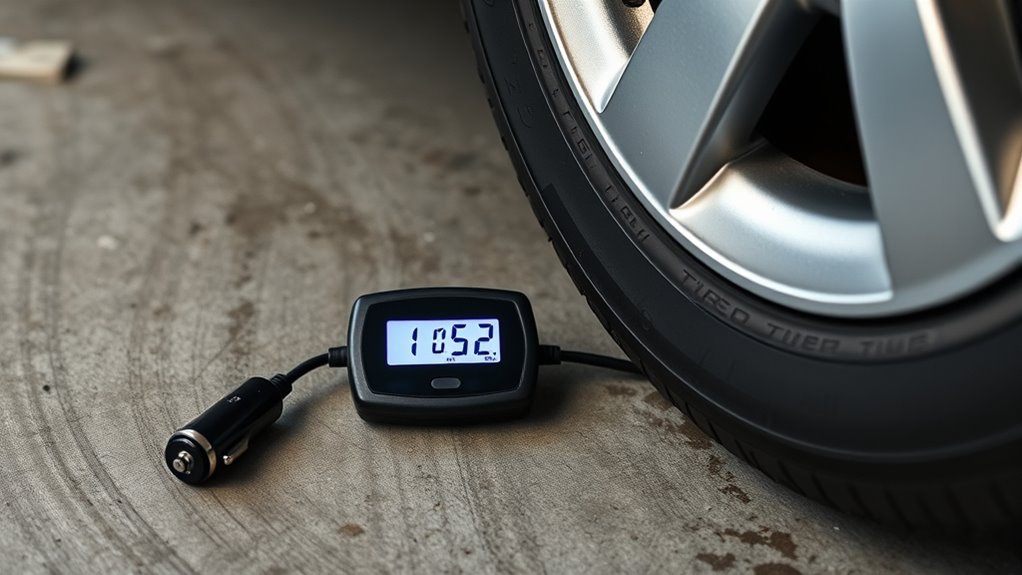
If your tire inflator runs on battery but not from the 12V outlet, check the car outlet first. Turn the ignition on, then test it with another device to confirm power. Inspect the inflator plug’s fuse, cord, and contacts for damage, corrosion, or looseness, and match any replacement fuse exactly. Also watch for overheating shutdowns, since many units cut out after 10–15 minutes, and there’s more to rule out next.
Key Takeaways
- Check the vehicle’s 12V outlet with another device to confirm it actually has power.
- Inspect the inflator’s plug fuse, since many 12V plugs contain a replaceable 10A or 15A fuse.
- Look for corrosion, bent contacts, loose fit, or heat damage in the outlet, plug, and cord.
- Make sure the ignition is on, because many 12V outlets are dead when the car is off.
- Verify the inflator is not overheating or drawing too much current, which can trigger shutdown.
Why Your Tire Inflator Works on Battery but Not 12V
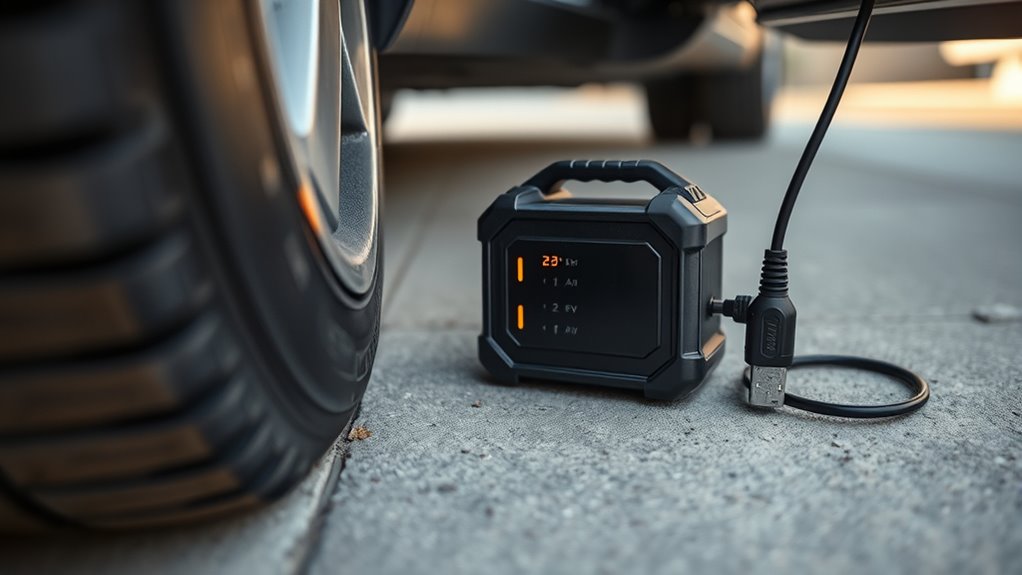
If your tire inflator runs on battery power but won’t operate from a 12V outlet, the inflator itself is often fine and the problem usually points to the vehicle’s power delivery.
You’re likely dealing with a blown fuse, a weak socket, or a 12V outlet that can’t supply enough current. Many tire inflators draw more than the standard 10 A limit, so the vehicle may cut them off before they start.
Corrosion, looseness, or heat damage in the plug can also interrupt power delivery and leave the unit inert. If the inflator works from a solar battery or another source, that result confirms the pump is functional and shifts suspicion to the car.
You don’t need to accept silent failure; isolate the fault, then restore dependable access to compressed air.
Check the Car’s 12V Outlet
With the inflator already proving it can run on battery, the next step is to check the car’s 12V outlet itself. Start by switching the ignition on, because many outlets stay dead until the vehicle wakes. Then test the 12V outlet with a known device, like a phone charger, to verify the power supply. If that device fails too, inspect for blown fuses tied to the outlet circuit.
| Check | What it tells you |
|---|---|
| Ignition on | Outlet may need vehicle power |
| Known device | Confirms outlet output |
| Fuse condition | Shows if the circuit is open |
| Outlet and plug condition | Reveals poor electrical connectivity |
Look closely for corrosion, melted plastic, or bent contacts on the outlet and the inflator’s plug. A secure fit matters; loose contact can interrupt current flow even when voltage is present. When you eliminate these faults, you reclaim control and narrow the diagnosis fast.
Test the Outlet, Plug, and Cord
Test the 12V outlet with a known-working device to confirm it’s supplying power.
Then inspect the plug for a blown fuse and check the cord for fraying, cuts, or loose connections.
If you find corrosion or damage at any contact point, clean or replace the failed part before retesting the inflator.
Check Outlet Power
A dead outlet can mimic a bad inflator battery, so start by checking the 12V source itself. To check outlet power, plug another device into the 12V outlet and confirm it lights or runs.
If nothing happens, inspect the vehicle’s plug fuse and replace it if blown; an open fuse blocks outlet output even when the inflator runs on battery.
If the outlet does supply power, test the inflator with a known-working 12V car charger to isolate the fault.
Also inspect the inflator’s plug for visible damage, and verify the metal contacts stay clean and corrosion-free.
Check the cord for kinks or breaks that could interrupt current. This method gives you a clean diagnosis and keeps you moving freely, without guesswork.
Inspect Plug And Cord
If the 12V outlet checks out, move on to the inflator’s plug and cord. Open the plug and inspect the internal fuse; if it’s blown, replace it before you test again.
Next, inspect the power cord from end to end for cuts, fraying, crushed sections, or heat damage that could break continuity. Push the plug firmly into the outlet and verify it seats without wobble; a loose fit can interrupt current and mimic a failed inflator.
If power still drops out, compare the inflator’s draw with the outlet’s rating. Most 12V outlets are limited to 10 A, and an overdrawn circuit will shut you down.
You’re not stuck—you’re tracing the fault and reclaiming reliable power.
Find the Tire Inflator Fuse
Check the fuse inside the inflator’s 12V plug by unscrewing the metal tip and removing the fuse for inspection.
Match the replacement fuse to the original amp rating and size, usually 10A or 15A for your model.
Replace it only with the correct fuse, and don’t use foil or a higher-amp substitute because that can overheat the plug or damage the outlet.
Locate Plug Fuse
One common cause of a tire inflator that won’t run from the vehicle’s power outlet is a blown fuse in the 12V plug. You can free the fault by unscrewing the metal tip of the 12V plug and inspecting the fuse in your tire inflator for cracks, darkening, or a broken element.
| Check | What you see | Meaning |
|---|---|---|
| Tip removed | Metal cap off | Access point |
| Fuse intact | Clear element | Likely okay |
| Fuse damaged | Burned strand | Replace it |
| Outlet test | Known-working device | Confirms power outlet |
If the plug fuse looks bad, the circuit can’t deliver power. Keep your inspection clean and direct. Also, verify the vehicle’s 12V outlet with another device so you know whether the fault lives in the inflator or the socket.
Match Fuse Rating
Match the replacement fuse to the original exactly, because the tire inflator’s 12V plug is only protected correctly when the amp rating and fuse size are the same.
You’ll usually find a 10A or 15A fuse in the plug tip, but you must verify your model’s spec before you replace anything. Unscrew the tip and inspect the fuse; a blown element is often visible.
If the fuse is intact, your 12V outlet or wiring may be the real fault. Don’t install a higher-rated fuse to force operation, since that can mask damage and create more failures.
Check the fuse regularly so you keep the inflator ready and avoid surprise outages. Precision here gives you control, protects the circuit, and keeps your gear working.
Replace Fuse Safely
If your tire inflator won’t power on, start at the 12V plug: unscrew the metal tip, because that’s where the fuse is often housed.
Pull out the fuse inside and inspect it under light. A broken filament or dark discoloration means it’s blown, which fits the symptom of no response at the 12V outlet.
Replace it only with an identical replacement fuse that matches the original amp rating and size, usually 10A or 15A, depending on your tire inflator model.
Don’t bypass the fuse or install a higher rating; that can overheat wiring and create a hazard.
Reassemble the plug firmly, then test the inflator again.
This simple check restores function without surrendering safety, and it keeps your power path controlled, compliant, and free.
Match the Fuse Rating Exactly
A blown fuse in the tire inflator’s 12V plug should always be replaced with one that matches the original amp rating and size exactly, because the fuse is designed to protect both the inflator and the vehicle’s power outlet from overcurrent.
If your tire inflator runs on battery but not the vehicle power source, check the cigarette lighter fuse first. A correct fuse rating keeps current within limits and prevents hidden damage.
- Match amperage exactly.
- Match physical size exactly.
- Replace any damaged fuse immediately.
- Recheck for power after installation.
Never install a higher amp fuse to force operation; that can overheat wiring, stress the outlet, and threaten the inflator. A blown fuse often gives you a dead 12V plug with no response at all.
Regular inspection helps you keep control of the system and avoid preventable failure. When you respect the fuse, you protect your gear and keep your electrical freedom intact.
Inspect the Adapter and Plug
After confirming the fuse is correct, inspect the adapter and plug for the next likely fault point. You need to verify that the adapter matches your vehicle’s 12V outlet and the inflator’s power rating, because some units only accept specific input levels.
Check the plug closely for cracks, bent contacts, or corrosion; any defect can block power flow and leave the compressor dead. Push the plug fully into the 12V outlet and confirm it fits firmly, since a loose connection can interrupt supply under load.
Test the outlet with another device to prove it’s live. If that device also fails, the outlet is the problem, not the inflator. If the outlet works and the inflator still won’t run, replace the plug or inspect the adapter for an internal blown fuse. That lets you isolate the fault and reclaim reliable 12V power on your terms.
Avoid Overheating Shutdowns
Continuous operation can push a portable tire inflator past its duty cycle, and many units will shut down automatically after about 10 to 15 minutes to prevent heat damage.
If your tire inflator stops, don’t assume failure; first suspect overheating. Let it rest until the casing feels cool, then restart it.
Keep airflow clear by using the unit in open air, not against carpet or a wall. Check the hose for kinks, pinches, or debris that can trap heat and strain the motor.
Routine maintenance matters: clean the air filter, inspect fittings, and verify that no moving parts bind.
- Respect the duty cycle.
- Cool the inflator between sessions.
- Maintain ventilation and hose flow.
- Perform regular maintenance.
These checks help you restore reliable inflation without needless repair costs.
When you manage heat, you keep control, protect the tool, and stay mobile on your own terms.
Diagnose Motor and Sensor Problems
If your tire inflator runs on battery but not from a 12V outlet, start by checking the vehicle’s power socket for proper voltage and amperage.
Then inspect the tire inflator’s 12V plug and internal fuse; a blown fuse can block current even when the battery mode works.
Inspect the inflator’s 12V plug and fuse; a blown fuse can stop current even if battery mode works.
Verify the connection at the 12V outlet is tight, clean, and free of corrosion or bent terminals, because resistance can interrupt the power supply.
If the outlet tests normal, look for sensor behavior inside the unit. Some inflators monitor load and shut down when they detect a fault, often tied to a weak motor or another internal component.
Since the battery circuit operates, the motor may be serviceable, and the fault may sit in the outlet path or control logic.
Use a meter, compare readings, and isolate the failure point before you act.
Replace the Faulty Part
Once you’ve confirmed the 12V outlet is supplying power, replace the failed component in the inflator’s power path. If the unit runs on battery but not from the vehicle, the fault is usually in the power plug, fuse, or connection, not the internal battery.
Use a known working 12V accessory to isolate the vehicle side, then inspect the inflator’s plug for heat damage, corrosion, or a blown fuse.
- Pull the plug and check continuity.
- Match any replacement fuse to the original amp rating.
- Reseat the plug firmly in the outlet.
- Replace the faulty part if tests still fail.
If the internal fuse is open, install a matching one and retest. If the plug assembly is damaged, swap it out rather than forcing marginal contact.
You deserve equipment that works cleanly, so replace the faulty part with precision and restore 12V independence.
Frequently Asked Questions
My 12V Tire Inflator Isn’t Working. What Can I Do to Troubleshoot This?
Check the 12V outlet first, then verify the pressure gauge reads normally.
You should inspect the power connection at the plug and inflator for looseness or corrosion.
Do a fuse check on the vehicle’s outlet circuit, and confirm the car’s ignition is on.
Test the air hose for kinks or leaks.
If another device works in the outlet, your inflator may draw too much current or have a failed adapter.
How to Reset Portable Tire Inflator?
To reset your portable tire inflator, unplug it, let it cool for 10 minutes, then power it off and on or remove the battery, if fitted.
Check the manual for the exact reset procedure and verify the PSI setting. Inspect the 12V plug, outlet, and fuses for damage.
These inflator safety steps protect the unit.
For maintenance tips, keep connections clean and replace fuses only with matching ratings.
What Are the Common Problems With Car Tire Inflators?
Common issues with car tire inflators can feel like a locked gate: weak power source, blown fuse, loose 12V plug, clogged hose, and failing seals.
You should also check pressure-sensor errors, auto shut-off faults, and user errors like wrong mode or overuse.
For solid inflator maintenance, test voltage, inspect connections, clean vents, and verify current draw.
If it powers on but won’t inflate, you’ve got a mechanical or electrical fault.
How Do I Know if My 12V Battery Needs Replacing?
You know your 12V battery needs replacing when battery health drops below spec.
Use voltage testing: a rested battery should read 12.6–12.8 volts; under 12.4 volts suggests weakness.
Watch for replacement indicators like corrosion, leaks, slow cranking, or hard starts.
If it’s over 3–5 years old, especially in harsh weather, plan a swap.
For maintenance tips, keep terminals clean and test regularly to avoid surprise failure.
Conclusion
If your tire inflator runs on battery but refuses the 12V outlet, the “simple” power source is probably the more suspicious one. Check the car socket first, then test the plug, cord, and fuse with a meter. Match the fuse rating exactly, and inspect the adapter for heat damage or loose contacts. If the motor or sensor still won’t cooperate, replace the failed part. Ironically, the easier power path may be the one hiding the fault.

