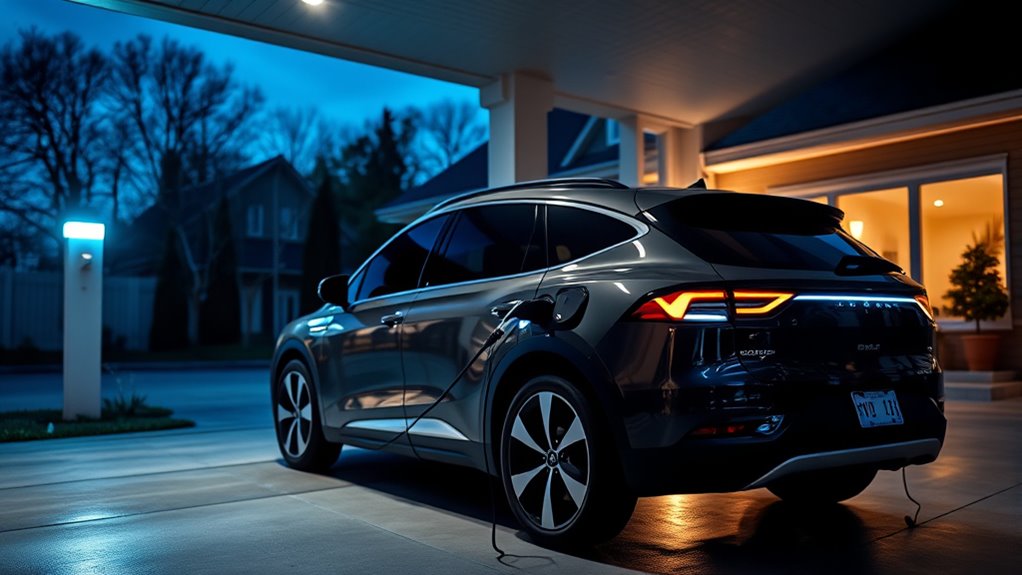
Charging your EV overnight is the easiest way to start each day with the range you need, but the best setup depends on your battery size, your charger output, your electrical panel, and your daily driving. A properly installed Level 2 home charger is the most practical choice for most EV owners because it can recover a normal day of driving while you sleep and let you schedule charging when electricity rates are lower.
Quick Answer
To charge your EV overnight for full range, use a safety-listed Level 2 charger on a dedicated 240-volt circuit, set your desired charge limit in the vehicle or charger app, and schedule charging during off-peak hours. For daily use, many drivers stop around 80% to 90% and charge to 100% only before longer trips.
Key Takeaways
- A Level 2 charger is the best overnight option for most EVs because it uses 240-volt home power and commonly adds about 10 to 25 miles of range per hour.
- Have a qualified electrician check your panel, wiring, breaker size, outlet, and local code requirements before installing a new circuit.
- Match the charger to your EV’s onboard AC charging limit so you do not pay for more output than your car can accept.
- Estimate cost by multiplying the kWh added by your utility’s per-kWh rate, then add a small allowance for charging losses.
- Charging may slow when the battery is cold, very hot, near full, or limited by the vehicle, charger, adapter, or circuit setting.
At a Glance
| Time Required | 5 to 10 minutes to set a nightly charging schedule; professional charger installation time varies by panel, wiring route, permit, and charger type. |
| Difficulty | Easy for daily charging settings; professional-only for new 240-volt electrical work. |
| Tools Needed | EV owner’s manual, charger manual, utility rate plan, vehicle or charger app, and a qualified electrician for installation. |
| Cost | Charging cost = kWh added × your electricity rate. Installation cost varies by home, circuit length, panel capacity, permit, and charger model. |
Choose the Best Charger for Overnight EV Charging
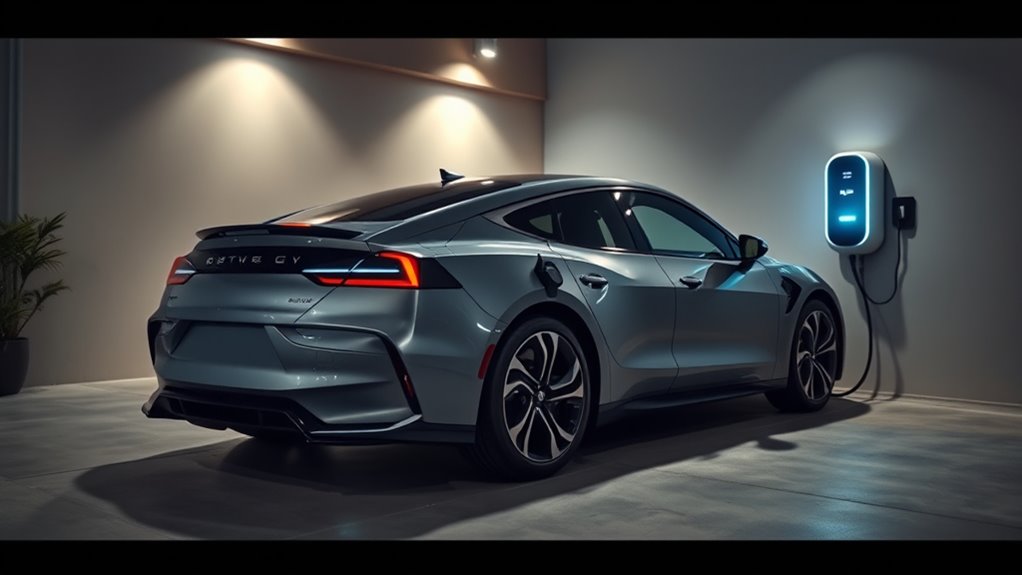
A Level 2 charger is usually the best choice for overnight EV charging because it uses 240-volt residential power and can refill most daily driving needs while your car is parked. Depending on the EV, charger amperage, battery state of charge, and efficiency, Level 2 charging commonly adds about 10 to 25 miles of range per hour. Some high-output setups and efficient vehicles may add more.
Start by checking your EV’s onboard AC charging limit. The wall charger does not push unlimited power into the vehicle. Your EV decides how much AC power it can accept. If your car accepts 7.2 kW on AC, buying a much larger charger will not make that car charge faster at home.
Also check the plug type. Many non-Tesla EVs use J1772 for Level 2 AC charging, while many newer EVs are moving toward J3400, also called NACS. Some vehicles work with adapters, but you should confirm the correct connector before buying a home charger.
Note: The charger, vehicle, circuit, plug, adapter, and software limit all affect charging speed. A high-power charger only helps if your EV and electrical setup can safely use that power.
Install a Level 2 Home Charger the Right Way
Install your Level 2 home charger on a dedicated 240-volt circuit sized for the charger’s continuous load. This is not a good DIY project unless you are legally qualified to do electrical work in your area. A licensed electrician should verify panel capacity, breaker size, wire gauge, grounding, outlet type or hardwired connection, local code, and permit needs.
Most residential Level 2 chargers are installed as either a hardwired wall unit or a plug-in unit using a proper 240-volt receptacle. A hardwired unit can be a cleaner choice outdoors or in a garage where you want fewer plug and outlet wear points. A plug-in unit may be easier to replace later, but the outlet must still be properly rated and installed.
Warning: Do not use a household extension cord, damaged outlet, loose adapter, overheated connector, or shared circuit for overnight EV charging. Stop charging and call a qualified electrician if a breaker trips repeatedly, a plug feels hot, or you smell burning plastic.
Choose charging equipment that is listed or certified for EV charging and suitable for your location. If the charger will be outside, make sure it is rated for outdoor use. ENERGY STAR certified EV chargers can also reduce standby energy use and may qualify for utility rebates in some areas.
Set Up Your Overnight Charging Schedule
Once the charger is installed, set your schedule in the vehicle app, charger app, or dashboard. The best routine is simple:
- Plug in when you park for the night.
- Set your daily charge limit, often around 80% to 90% unless your owner’s manual says otherwise.
- Use your utility’s off-peak window when available.
- Set a departure time if your EV supports cabin or battery preconditioning.
- Check the app before bed to confirm charging has started or is scheduled.
For a long trip, you can set the limit to 100% so the car finishes close to departure time. Avoid letting the car sit at 100% for long periods unless your manufacturer recommends it for your battery type or calibration routine.
Pro Tip: If your utility offers time-of-use rates, schedule charging for the lowest-price overnight window. This can lower charging cost without changing how much range you have in the morning.
Estimate How Long Overnight Charging Will Take
Use this simple formula to estimate charging time:
Charging time in hours = kWh needed ÷ charging power in kW, plus a small allowance for charging losses.
For example, if you need to add 40 kWh and your EV is charging at about 7.2 kW, the session may take roughly 5.5 to 6.5 hours after normal losses. If you need only 20 kWh after a normal commute, that same setup may finish in about 3 hours. If you are filling a large battery from very low to full, it can take much longer than a normal overnight top-off.
Your EV’s EPA label and owner’s manual can help you estimate energy use because the electric vehicle fuel economy label shows kWh per 100 miles, driving range, and charge-time information. A vehicle using 30 kWh per 100 miles needs about 15 kWh to recover 50 miles of driving, before charging losses.
Charge Your EV Overnight Safely
Safe overnight charging comes down to the right equipment, the right circuit, and regular inspection. Keep the cable off sharp edges, avoid closing doors on the cord, and make sure the connector seats fully in the charge port. Check the cable, plug, outlet, adapter, and vehicle port for cracks, corrosion, looseness, or heat marks.
Do not ignore charger alerts. If the charger stops repeatedly, the breaker trips, or the car reports reduced charging power, the system may be protecting itself from heat, ground faults, voltage drop, or a connection problem.
If you charge outdoors, keep the connector clean and dry according to the charger manufacturer’s instructions. Do not spray water into the charge port, and do not use damaged equipment after flooding, impact, overheating, or rodent damage.
How Much Overnight Charging Costs
Overnight EV charging cost depends on how much energy you add and what your utility charges per kWh. Use this formula:
Charging cost = kWh added × electricity rate
If you add 20 kWh at $0.16 per kWh, the energy cost is about $3.20 before charging losses. If you add 40 kWh, it is about $6.40. If you add 60 kWh, it is about $9.60. Your actual cost can be lower on an off-peak plan or higher in areas with expensive electricity.
- Find your electricity rate on your utility bill or app.
- Check your EV app to see how many kWh the session added.
- Multiply kWh added by your per-kWh rate.
- Add a small allowance for charging losses, especially in very cold or hot weather.
Home charging is often more predictable than public charging because you control the schedule and can use your own utility rate. Public DC fast charging is still useful on road trips, but it often costs more and is not usually needed for daily overnight charging.
Why Your EV Charges Slower Sometimes
Your EV may charge slower than expected because the vehicle, not just the wall charger, controls the session. The onboard charger sets the AC charging limit, and the battery management system may reduce power to protect the pack.
Common reasons charging slows include:
- High state of charge: Charging often slows near the top of the battery, especially close to 100%.
- Cold battery: A cold pack may accept less power until it warms up.
- Hot battery: Heat can also reduce charging speed to protect battery life.
- Vehicle limit: Your EV may accept less power than the charger can provide.
- Charger setting: Some chargers are set to a lower amp limit to match the circuit.
- Adapter or connector issue: A poor connection can trigger reduced power or a stopped session.
- Shared electrical load: Some smart panels or load-management systems reduce EV charging when the house is using more power.
DC fast charging is different from home Level 2 charging. A public DC fast charger bypasses the onboard AC charger and can add about 100 to 200+ miles in 30 minutes on many compatible EVs, depending on the station, battery temperature, state of charge, and vehicle limits. For daily overnight charging, Level 2 is usually gentler, cheaper, and more convenient.
Troubleshoot Overnight Charging Problems
If you plug in at night and wake up with less range than expected, check the simple causes first:
- Make sure the vehicle or charger app did not delay charging until a later off-peak window.
- Confirm the charge limit was not set too low.
- Check whether the charger lost Wi-Fi or power.
- Look for a tripped breaker or GFCI alert.
- Inspect the connector and adapter for dirt, looseness, or damage.
- Check whether cold weather reduced charging speed.
- Review the vehicle app for fault codes or reduced-current messages.
If the same problem repeats, stop using that charging setup until the charger, outlet, circuit, and vehicle port are inspected. Repeated heat, breaker trips, or fault warnings are not normal.
Charging If You Live in an Apartment or Condo
If you cannot install a private Level 2 charger, you still have options. Ask your property manager about shared Level 2 charging, assigned parking with an EV-ready outlet, or a load-managed charging system. Some drivers combine Level 1 charging at home with Level 2 charging at work or public charging during errands.
For apartment and condo charging, avoid running cords across sidewalks, hallways, landscaping, or common areas. Besides being unsafe, it may violate building rules or local code. A safer plan is to use approved charging equipment installed for the parking area.
Frequently Asked Questions
Can I charge my EV to 100% every night?
You can charge to 100% when you need full range, such as before a long trip. For normal daily driving, many EV owners set the charge limit around 80% to 90% unless the owner’s manual recommends something different for that battery type. The best rule is to follow your vehicle manufacturer’s guidance.
Is it okay to charge your EV overnight?
Yes, overnight charging is normal when you use proper EV charging equipment on a correctly installed circuit. Set a charge limit, use off-peak scheduling when available, keep the connector in good condition, and stop using the setup if you notice heat, damage, repeated faults, or breaker trips.
What drains an EV battery the most?
High speed, hard acceleration, cold weather, heavy cabin heat or air conditioning, low tire pressure, extra cargo, roof racks, towing, steep climbs, and poor route planning can all reduce range. Regenerative braking, moderate speed, proper tire pressure, and preconditioning while plugged in can help preserve range.
Are electric cars safe for pacemakers?
For most people with modern pacemakers or ICDs, normal EV driving and plug-in charging are generally considered low risk, but medical-device guidance should always be personal. Keep strong magnets and high-power electrical equipment away from the implant area, and ask your cardiologist or device manufacturer about any specific distance rules for your device.
Should I use Level 1 or Level 2 charging overnight?
Use Level 1 if you drive only a short distance each day and can recover enough range from a standard outlet. Use Level 2 if you need faster overnight charging, drive more miles, own a larger-battery EV, or want more control over off-peak charging.
How do I calculate my overnight EV charging cost?
Multiply the kWh added by your electricity rate. For example, 40 kWh at $0.16 per kWh costs about $6.40 before normal charging losses. Your utility bill, charger app, or EV app can help you track the exact kWh used.
Conclusion
To charge your EV overnight for full range, use the right charger, install it safely, set a smart schedule, and match your charge limit to your driving plans. A Level 2 charger on a properly installed dedicated 240-volt circuit is the best home setup for most EV owners. For daily driving, a lower charge limit often gives plenty of range, while 100% is useful before long trips. If charging slows, check temperature, charge limit, app schedule, circuit settings, and equipment condition before assuming the charger is faulty.
Sources
- U.S. Department of Energy Alternative Fuels Data Center: Electric Vehicle Charging Stations — charging levels, Level 2 power, connector types, and DC fast charging ranges.
- ENERGY STAR: Electric Vehicle Chargers — Level 1 and Level 2 buying guidance, charger efficiency, and certified EV charger information.
- U.S. EPA: Text Version of the Electric Vehicle Label — kWh per 100 miles, charge time, driving range, and annual fuel-cost label guidance.