
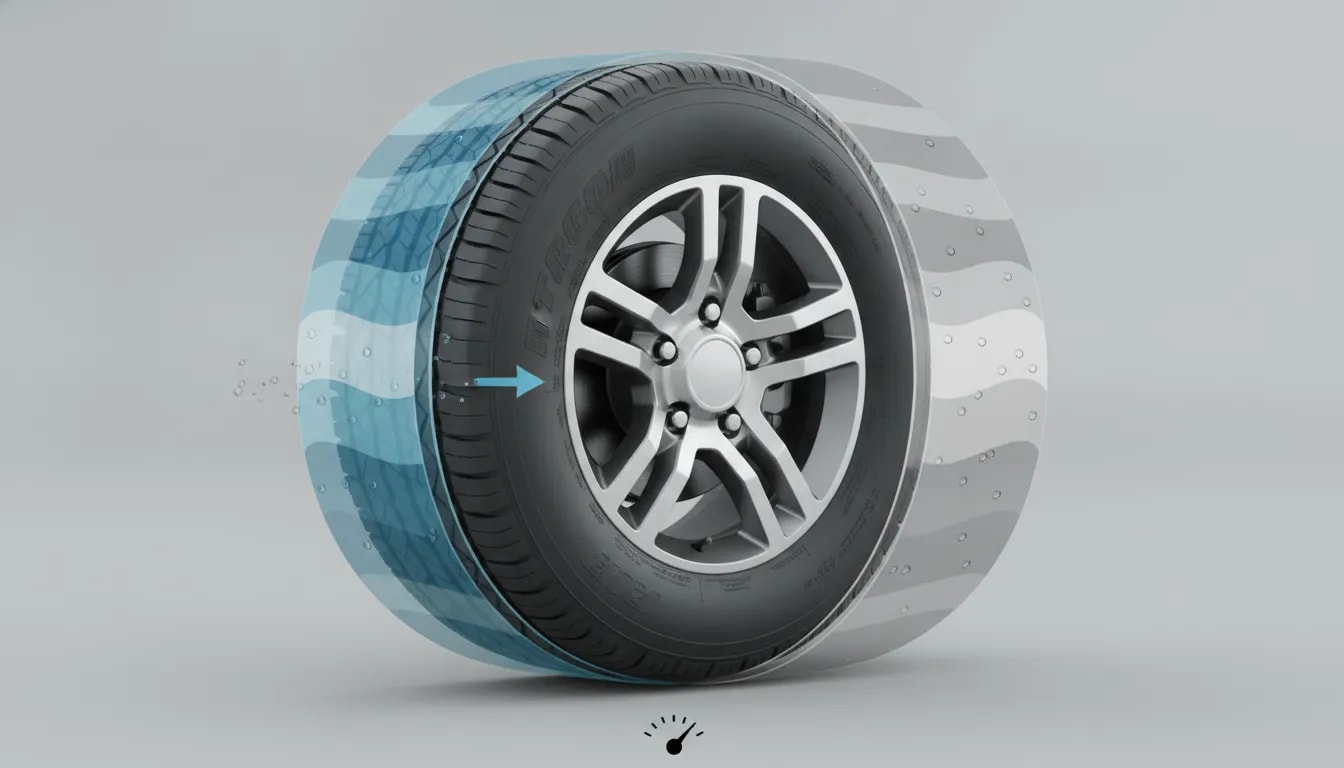
For most diesel car and personal truck owners, nitrogen-filled tires are not worth paying extra for. Nitrogen can slow pressure loss slightly, but it offers no special advantage because a vehicle has a diesel engine. Correct tire pressure matters much more than the gas used to achieve it.
Free nitrogen fills are fine to accept. A paid upgrade, especially one with ongoing refill fees, is harder to justify. The useful comparison is not nitrogen versus neglected air-filled tires. It is nitrogen versus regular air with proper monthly pressure checks.
Key Takeaways
- Nitrogen offers slightly better pressure retention but no special benefit for diesel engines.
- Consumer Reports measured a 1.3 psi average retention advantage over one year.
- Regular air can safely top up nitrogen-filled tires when pressure needs correcting.
- Monthly cold-pressure checks matter more than paying for nitrogen fills.
Table of Contents
- Do Diesel Vehicles Need Nitrogen-Filled Tires?
- What Is the Difference Between Nitrogen and Regular Air?
- What Independent Testing Shows About Nitrogen Tires
- How Much Does Nitrogen Tire Inflation Cost?
- Can You Add Regular Air to Nitrogen-Filled Tires?
- The Tire-Pressure Routine That Matters More Than Nitrogen
- When Nitrogen Can Make More Sense
- Bottom Line: Pay for Tire Care, Not a Diesel-Specific Upsell
Do Diesel Vehicles Need Nitrogen-Filled Tires?
No. Nitrogen affects gas retention and moisture inside a tire. Its behavior does not depend on whether the engine burns diesel or gasoline.
Diesel vehicles are often heavier, and underinflation is particularly concerning when tires carry heavier loads. Insufficient pressure can contribute to faster wear, excess heat, and tire failure. But those risks are addressed by maintaining the correct pressure, not by choosing nitrogen.
A properly inflated air-filled tire does not become less suitable simply because it is fitted to a diesel vehicle. Likewise, a nitrogen-filled tire with insufficient pressure is still underinflated.
The claim that a personal diesel truck needs nitrogen because commercial trucks use it confuses two different situations. Small benefits may become worthwhile across a high-mileage commercial fleet without making the same service necessary for a private vehicle.
What Is the Difference Between Nitrogen and Regular Air?
Nitrogen-filled tires are ordinary tires inflated with a high concentration of nitrogen instead of compressed air. The tire and wheel remain the same.
Regular air already contains approximately:
- 78% nitrogen
- 21% oxygen
- 1% other gases
A nitrogen tire service typically aims for roughly 95% to 99% nitrogen. It therefore changes the proportions of gases already present rather than introducing an entirely different inflation method.
| Factor | Regular air | High-purity nitrogen |
|---|---|---|
| Pressure retention | Loses pressure gradually | Can lose pressure more slowly |
| Fuel economy at correct pressure | No meaningful disadvantage established | No substantial direct advantage established |
| Moisture | Compressed air can contain moisture | Nitrogen supplied for inflation is dry |
| Availability | Widely available | Less widely available |
| Maintenance | Monthly cold-pressure checks | Monthly cold-pressure checks |
| Diesel-specific benefit | Suitable when correctly inflated | No special benefit from engine type |
What Independent Testing Shows About Nitrogen Tires
Pressure retention improves, but the difference is small
The strongest everyday argument for nitrogen is slower pressure loss through the tire material. Nitrogen permeates tire rubber more slowly than oxygen, so increasing its concentration can help retain pressure.
The important question is the size of that benefit. In a year-long Consumer Reports comparison, researchers tested 31 pairs of tires. One tire in each pair contained regular air; the other contained 95% nitrogen. Both began at 30 psi and were stored outdoors.
| Inflation gas | Starting pressure | Average pressure loss after one year |
|---|---|---|
| Regular air | 30 psi | 3.5 psi |
| 95% nitrogen | 30 psi | 2.2 psi |
Nitrogen retained an average of 1.3 psi more over an entire year. Spread across 12 months, that difference is about 0.11 psi per month. That calculation expresses the scale of the annual result; it does not mean pressure loss was identical every month.
Both groups lost pressure. The test supports a modest retention benefit, not the idea that nitrogen makes tires maintenance-free.
Fuel economy benefits depend on preventing underinflation
Underinflated tires hurt fuel economy. Nitrogen is sometimes promoted as a fuel-saving upgrade because its slower pressure loss may keep tires closer to their recommended pressure.
That is an indirect pressure-maintenance benefit, not a direct improvement caused by the gas itself. NHTSA testing found little or no direct effect from nitrogen on tire rolling resistance, a factor that influences fuel consumption.
If air-filled tires are checked monthly and topped up as needed, there is little opportunity for nitrogen’s retention advantage to produce a meaningful fuel-economy improvement.
Claims of fuel-economy gains of 6% or more should therefore be treated skeptically. Independent testing does not support that kind of routine improvement from switching properly maintained passenger-vehicle tires to nitrogen. The practical priority is proper inflation, as reflected in the U.S. Department of Energy’s vehicle-maintenance guidance.
Longer tire life is primarily a maintenance issue
Correctly inflated tires tend to wear better than underinflated ones, regardless of whether they contain nitrogen or air.
Nitrogen’s small retention advantage may help limit time spent below the recommended pressure when maintenance is neglected. It does not establish a dramatic tire-life improvement over regularly maintained air-filled tires.
For everyday ownership, quality tires, proper alignment, regular rotation, and pressure checks are more useful priorities than paying for a different inflation gas.
Dry nitrogen has limited practical value for most passenger vehicles
Nitrogen supplied for tire inflation is dry, while compressed air can contain moisture. This gives the moisture-reduction claim a genuine basis.
However, internal wheel corrosion caused by inflation moisture is unusual in modern passenger vehicles, particularly those with alloy wheels. A possible technical benefit is not necessarily a significant ownership benefit.
Temperature-stability claims also need perspective. An ExxonMobil comparison of air and nitrogen found negligible differences under ordinary conditions. Nitrogen does not make tire pressure immune to temperature changes, so seasonal changes still warrant attention.
How Much Does Nitrogen Tire Inflation Cost?
Pricing varies by provider and service package. Illustrative charges include:
- Initial nitrogen service: approximately $70 to $180.
- Converting existing tires: around $30 per tire, or $120 for four.
- Nitrogen refills: approximately $5 to $7 per tire.
These are examples, not guaranteed local prices. Some shops include nitrogen with tire purchases or offer free top-ups. Regular compressed air is widely available and often free at tire shops and some gas stations.
Convenience matters too. Finding a regular air pump is generally easier than finding a nitrogen service, especially away from home.
A practical decision checklist
- Nitrogen is included at no extra cost: accepting it is reasonable, but keep checking pressure monthly.
- A dealership charges a premium: the small pressure-retention benefit usually does not justify it for personal use.
- Refills carry recurring fees: consider both the expense and the inconvenience of returning for service.
- The sales pitch emphasizes your diesel engine: engine type is not a reason to require nitrogen.
- You operate a high-mileage commercial fleet: evaluate the costs and benefits across the fleet rather than applying a passenger-car conclusion automatically.
Can You Add Regular Air to Nitrogen-Filled Tires?
Yes. It is safe to top up nitrogen-filled tires with regular air. Mixing the two reduces the nitrogen concentration and may reduce the small pressure-retention benefit. It does not make the tire unsafe.
If a tire needs pressure and only regular air is available, use it. Maintaining correct inflation is more important than preserving nitrogen purity.
For example, if you discover low pressure during a road trip, restoring the recommended pressure with air is preferable to continuing underinflated while searching for nitrogen.
The Tire-Pressure Routine That Matters More Than Nitrogen
Neither inflation gas removes the need for maintenance. Use this routine for diesel cars and personal trucks:
- Check pressure at least once a month. Keep the same schedule whether your tires contain air or nitrogen.
- Measure when the tires are cold. This is the condition used for the manufacturer’s recommended cold pressure.
- Use an accurate tire-pressure gauge. Do not substitute appearance or the absence of a warning light for a measurement.
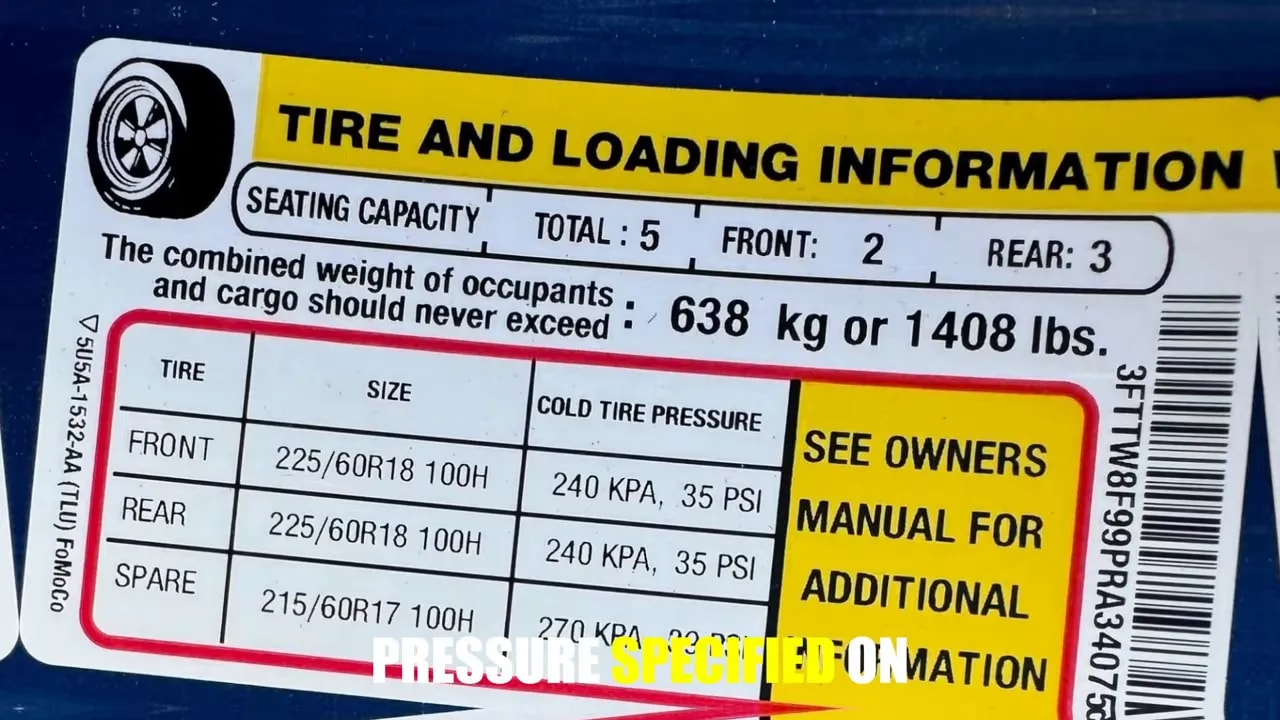
- Find the recommended pressure on the driver’s door-jamb label. Use your vehicle’s specified value, not a generic number.
- Top up as needed. Regular air is acceptable even if the tires originally received nitrogen.
Do not use the sidewall maximum as your target
The maximum pressure printed on the tire sidewall is not the same as the vehicle manufacturer’s recommended operating pressure. The door-jamb label is the appropriate reference for routine inflation.
Do not wait for the TPMS warning light
A tire-pressure monitoring system is a warning system, not a substitute for regular checks. Its low-pressure alert generally appears only after pressure has fallen significantly.
A tire can be below its recommended pressure before the warning activates. Nitrogen does not change that limitation.
Underinflation can cause uneven wear, excessive heat, poorer fuel economy, and compromised handling and braking. Those problems occur with either gas. The NHTSA tire-safety guidance provides additional information on pressure checks and tire care.
When Nitrogen Can Make More Sense
Nitrogen has legitimate specialized uses. Those applications operate under different conditions from a daily-driven diesel car.
- Race cars: extreme operating temperatures and close performance margins can make small differences important.
- Aircraft: safety requirements and extreme operating conditions provide reasons for nitrogen use.
- Long-haul commercial fleets: modest benefits can accumulate across many tires and very high mileage.
These applications explain why nitrogen is useful in some settings. They do not prove that a personal diesel truck needs a paid nitrogen package.
Bottom Line: Pay for Tire Care, Not a Diesel-Specific Upsell
Nitrogen is a valid inflation option with a small pressure-retention advantage. It is not a major fuel-economy upgrade, a guarantee of longer tire life, or a special requirement for diesel vehicles.
Accept it if it is free, but prioritize monthly cold-pressure checks over paid fills. If your tires need topping up, use available air rather than delaying maintenance. Money spent on quality tires, alignment, and rotation is generally a better priority for everyday ownership.