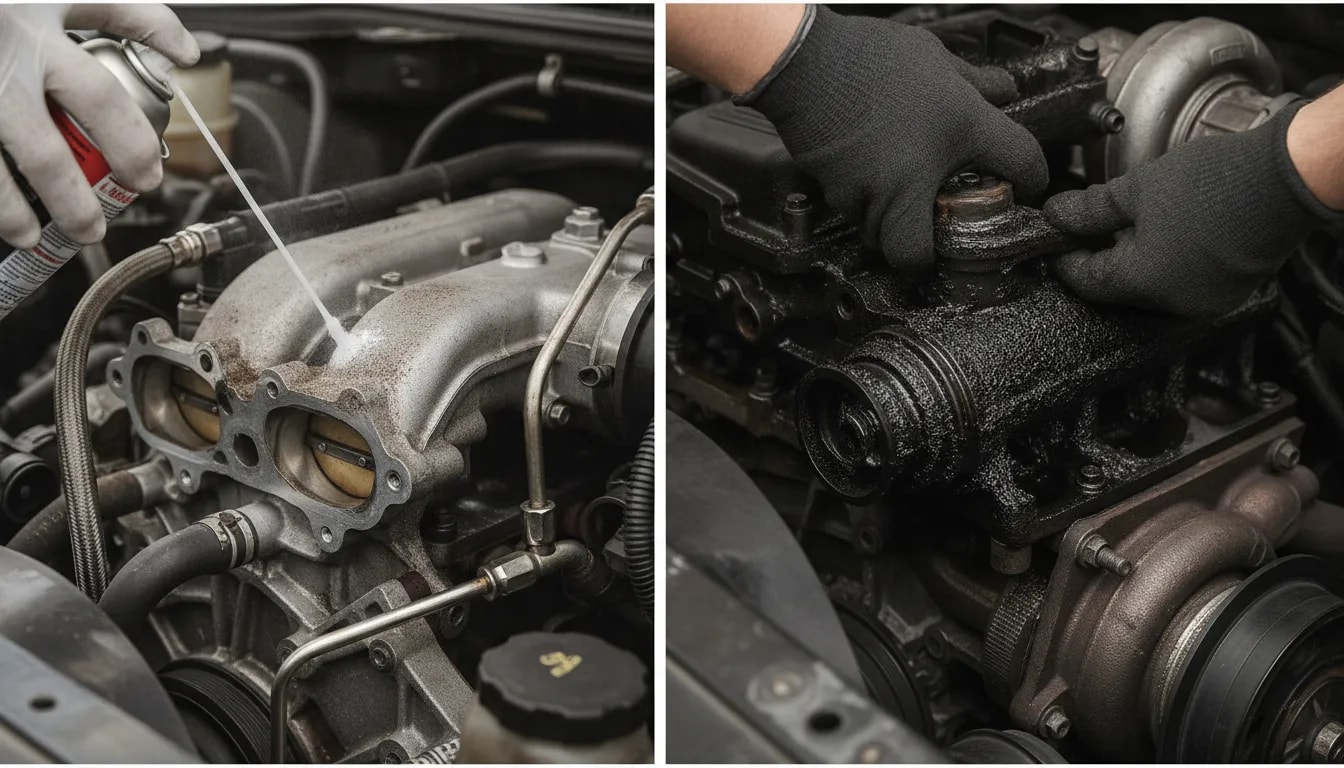
Spray cleaning may help with light deposits, but it is unlikely to repair a genuinely blocked diesel EGR system. If an EGR-related check-engine light is already on or the engine is running poorly, removing and inspecting the affected components is usually the more useful approach.
The important distinction is between cleaning the intake and restoring exhaust gas recirculation. An intake spray can produce smoother running without clearing the restriction in the EGR valve, cooler, or connecting passages. Understanding that difference helps you avoid repeated treatments that never address the underlying problem.
Key Takeaways
- No-removal spray cleaning is better suited to light maintenance than repairing a blocked EGR system.
- Smoother running after intake cleaning does not confirm that EGR flow has been restored.
- Effective blockage removal requires attention to the valve, cooler, pipes, and intake passages.
- Cleaning cannot repair mechanical wear or a failed EGR solenoid.
Table of Contents
- Which EGR Cleaning Approach Makes Sense?
- Why Diesel EGR Systems Become Clogged
- What EGR Cleaner Without Removal Actually Does
- When Preventive Spray Cleaning May Be Worth Considering
- How to Clean a Blocked EGR Valve Properly
- Why Cleaning Only the Valve May Not Solve the Problem
- EGR Cleaning and Replacement Costs
- When Replacing the EGR Valve Is Better Than Cleaning It
- Common EGR Cleaning Mistakes to Avoid
- The Bottom Line
Which EGR Cleaning Approach Makes Sense?
Choose the method according to the condition of the system, not simply how convenient the treatment sounds.
| Situation | Most useful next step | Main limitation |
|---|---|---|
| No EGR fault, with only light deposit buildup suspected | Consider a compatible preventive cleaner used according to its instructions | It is maintenance, not a repair for established blockages |
| EGR-related fault code or poor running | Diagnose the fault and inspect the valve and flow passages | A code does not establish which component needs attention |
| Accessible valve with substantial carbon deposits | Remove the valve and clean the contaminated passages directly | Valve cleaning alone may leave a blocked cooler or intake passage untouched |
| Severe restriction or recurring problems after cleaning | Arrange comprehensive EGR system inspection and cleaning | Access and disassembly can make the job time-consuming |
| Mechanical wear or failed solenoid | Replace the faulty valve | Cleaner cannot repair worn or failed hardware |
For a persistent fault, spend money on identifying the restriction before buying more cans of cleaner. A temporary improvement is not the same as a confirmed repair.
Why Diesel EGR Systems Become Clogged
EGR stands for exhaust gas recirculation. The system returns a controlled amount of exhaust gas to the intake, lowering combustion temperature and helping reduce emissions. For additional technical background, see DieselNet’s explanation of exhaust gas recirculation.
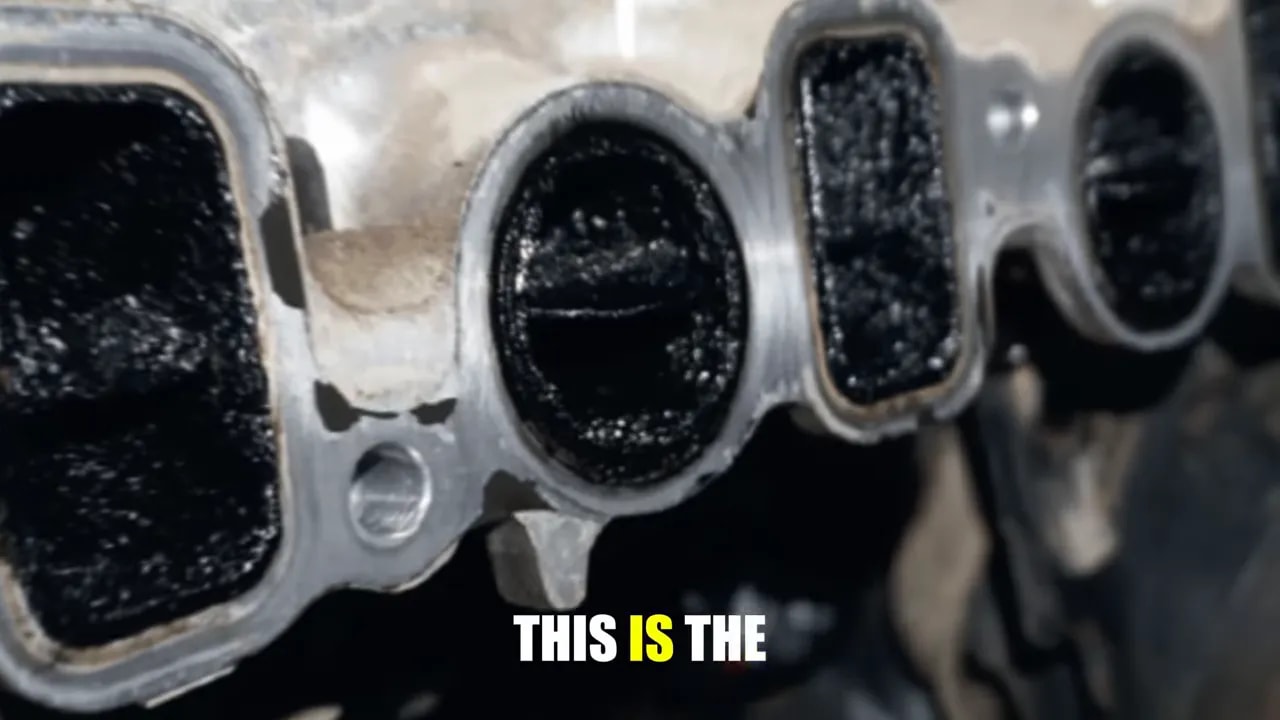
Exhaust carries soot and other combustion residues. Over time, these can accumulate in the EGR valve and associated passages. Deposits can become hard and crusted, while contamination in the intake can appear as thick, oily black sludge.
Frequent short journeys and city driving can encourage buildup because the engine spends more time operating without fully warming up. Poor-quality fuel can also contribute to deposit accumulation.
What happens when carbon interferes with the valve?
- A valve stuck open can contribute to rough idle and reduced performance.
- A valve stuck closed or restricted flow path can trigger an insufficient-flow fault.
- Blocked intake passages can restrict airflow even if the valve itself has been cleaned.
A code such as P0401 points to insufficient EGR flow. It should prompt inspection of the system rather than an automatic assumption that the valve alone is dirty.
What EGR Cleaner Without Removal Actually Does
The common no-removal method introduces an aerosol cleaner into the intake while the engine runs. Some procedures call for an engine speed around 2,000 rpm, but that is not a universal instruction. The product directions and vehicle-specific requirements must determine how, or whether, a cleaner can be used.
Products sold for this purpose include diesel EGR and intake cleaners from brands such as Wynn’s and Liqui Moly. Generic throttle-body cleaners are also sometimes used, but products should not be treated as interchangeable. A cleaner suitable for a removed metal component is not automatically suitable for spraying into a running diesel engine.
Why an intake spray may not reach the blockage
Cleaner introduced into the intake follows the incoming airflow toward the cylinders. It does not necessarily reach the EGR valve’s contaminated exhaust-side passages or the inside of the EGR cooler.
EGR flow moves exhaust toward the intake. Spraying into the intake therefore does not guarantee that solvent will travel back through the recirculation path. The amount of useful contact depends on the system layout, the application point, and where the deposits are located.
Even where cleaner reaches a deposit, a brief exposure may not remove hardened carbon. Heavy contamination often needs direct solvent contact combined with brushing or careful mechanical removal.
Why the engine can feel better afterward
An intake treatment may loosen oily sludge in the intake tract. Reducing that contamination can improve airflow and throttle response, which explains why some owners notice smoother running after treatment.
That result does not prove the EGR valve or cooler is clear. Reported outcomes range from no noticeable change to an improvement that lasts only a few hundred miles before the fault returns.
Where the loosened material goes
Unlike cleaning a removed part, an in-place treatment does not allow you to collect the deposits outside the engine. Loosened contamination travels downstream through the engine and exhaust system, potentially adding material to the diesel particulate filter, or DPF, where one is fitted.
This is another reason not to treat aggressive in-place cleaning as an equivalent substitute for removing heavily contaminated components.
When Preventive Spray Cleaning May Be Worth Considering
The most reasonable use for no-removal EGR cleaner is light preventive maintenance before a serious restriction develops, especially on a diesel used mainly for short trips.
It may help slow deposit accumulation, but it should not be presented as a guaranteed way to prevent EGR faults. Likewise, a suggestion to use cleaner every few thousand miles is not a vehicle-specific service interval. Follow the product guidance and the vehicle manufacturer’s maintenance requirements.
Before choosing a treatment, check that:
- The cleaner is intended for the proposed application on a diesel engine.
- The engine is not already showing a persistent EGR fault or substantial running problems.
- You understand the required application point and operating procedure.
- You are using it for maintenance rather than expecting it to dissolve a severe blockage.
If a correctly applied treatment produces no meaningful improvement, repeated applications are unlikely to resolve an established restriction. Move on to diagnosis and direct inspection.
How to Clean a Blocked EGR Valve Properly
Removing the valve allows you to see the contamination, apply cleaner directly, and remove deposits outside the engine. It also gives you an opportunity to inspect the connecting passages.
Access varies considerably. Some valves are held by a few readily accessible bolts; others require substantial disassembly. Check the vehicle-specific removal procedure before deciding whether the job is suitable for DIY work.
Tools and cleaning supplies
- Appropriate sockets or wrenches for the mounting fasteners.
- A screwdriver or suitable tool for hose clamps.
- A cleaner compatible with the component and its materials.
- An old toothbrush or another suitable cleaning brush.
- Carefully selected picks or scraping tools for stubborn deposits.
Carburetor, throttle-body, and brake cleaners are sometimes used on removed components. Their suitability depends on the formulation and the part being cleaned. Do not assume they are safe for every seal, coating, plastic part, or electrical assembly.
A practical removal-and-cleaning workflow
- Remove the valve using the vehicle-specific procedure. Work with the engine off and cool, and follow the relevant handling and cleaner safety instructions.
- Inspect the gas passages. Identify the heavy deposits and whether the valve shows signs of wear or damage.
- Apply compatible cleaner directly to the contaminated areas. Keep solvent away from electrical components unless the cleaning instructions explicitly permit contact.
- Brush and carefully remove softened carbon. The useful combination is chemical softening plus mechanical cleaning, not spraying alone.
- Repeat as necessary. Heavier contamination may require a longer cleaning process. Only soak components where their construction and the cleaner instructions allow it.
- Inspect the connected flow path. Check the EGR connection, cooler, pipes, and intake passages for remaining restrictions.
- Reassemble and verify operation. Confirm that the original flow problem has been resolved rather than relying only on a change in engine feel.
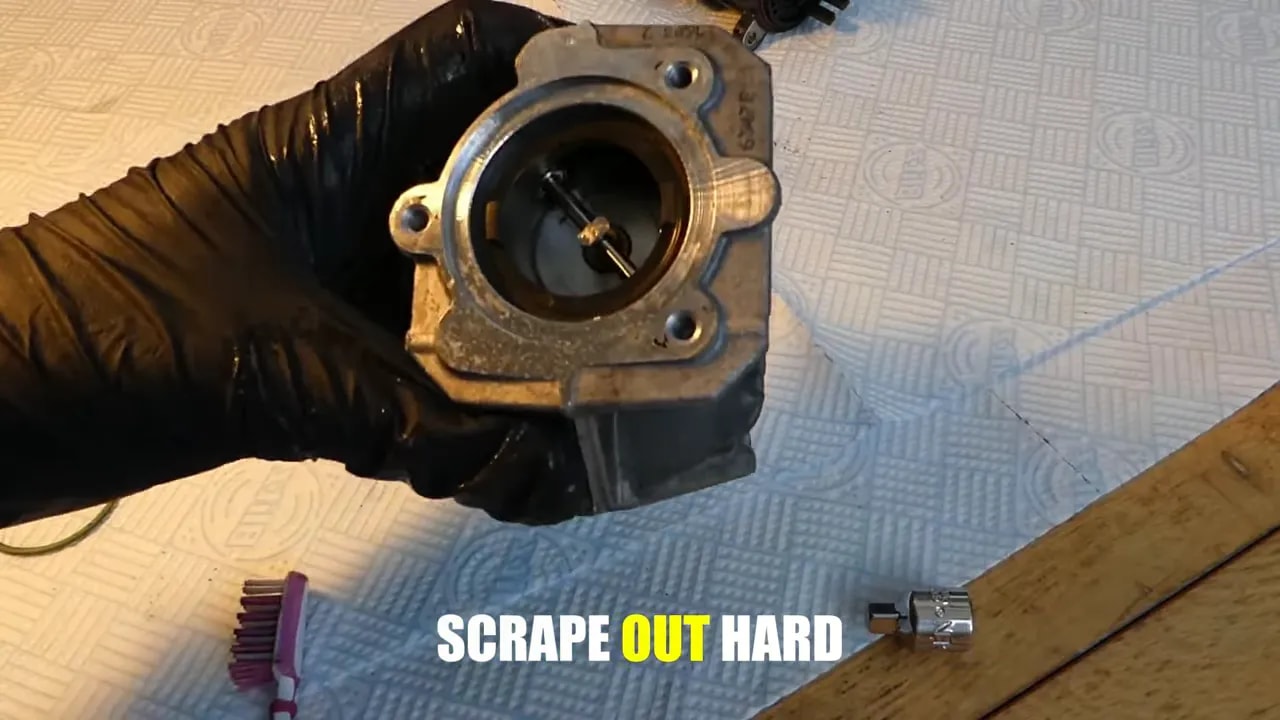
Do not scrape deposits into an open intake and leave them there. Where contamination cannot be safely removed and collected, further disassembly or professional service is more appropriate than blind scraping.
Why Cleaning Only the Valve May Not Solve the Problem
The EGR valve is only one part of the recirculation path. Significant restrictions can also develop in:
- The EGR cooler.
- Connecting pipes.
- The intake manifold’s EGR entry passage.
- Other contaminated intake passages.
A clean valve cannot restore proper flow through a blocked cooler or manifold passage. This explains why a valve-only cleaning can provide incomplete or short-lived improvement.
On some vehicles, the cooler and valve are integrated. On others, the cooler is a separate component that is difficult to access. Its narrow internal passages can also be much harder to clean thoroughly with ordinary hand tools.
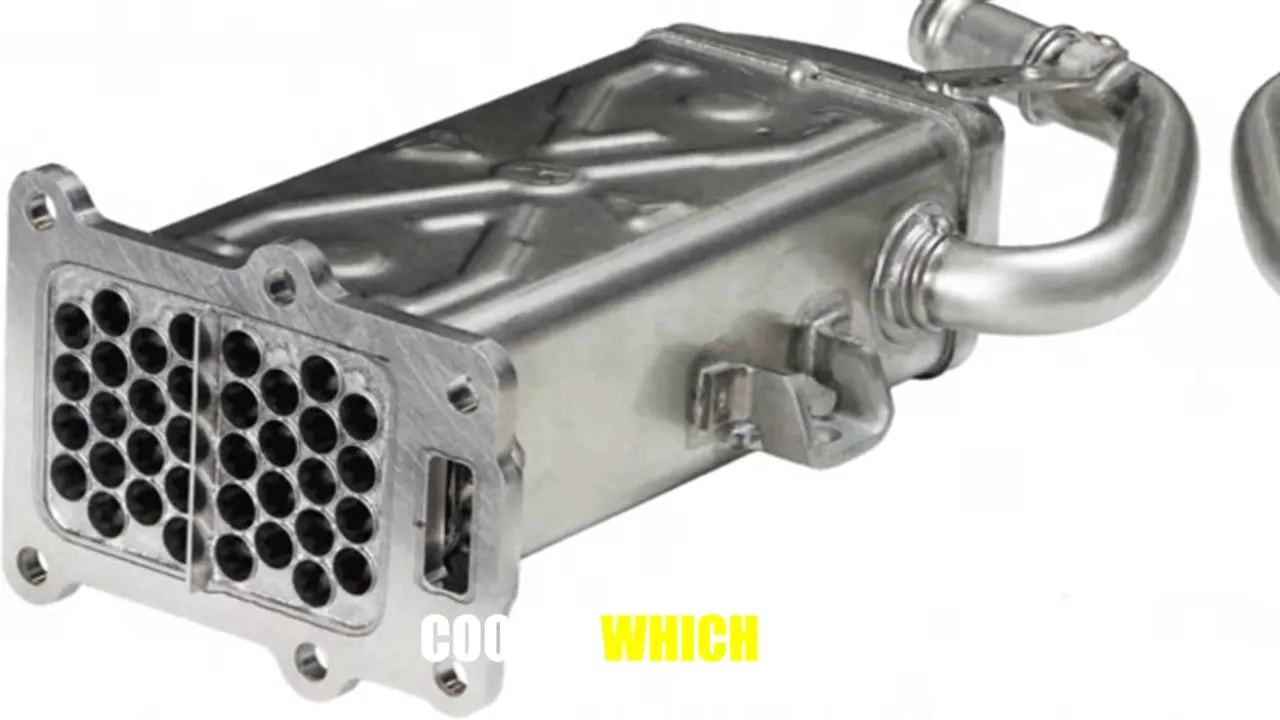
What comprehensive professional cleaning should address
A thorough service targets the components responsible for the restriction, rather than simply introducing cleaner into the intake. Depending on the vehicle and findings, that can include removing and cleaning the valve, cooler, connecting pipes, and intake manifold.
Specialist methods may include ultrasonic cleaning, chemical baths, or pressure cleaning appropriate to the removed component. After reassembly, diagnostic testing should verify EGR flow and system operation.
When requesting a quote, ask:
- Which components will be removed and inspected?
- Does the price include the cooler and intake passages?
- How will remaining restrictions be identified?
- Will EGR operation be checked after reassembly?
EGR Cleaning and Replacement Costs
The following figures are rough planning estimates, not guaranteed quotes. Vehicle access, the amount of disassembly, and the scope of the work matter substantially.
| Option | Approximate cost | Time or scope |
|---|---|---|
| DIY removal and cleaning | About $20 in cleaning supplies | Roughly 1 to 3 hours on a reasonably accessible system |
| Professional EGR cleaning | $150 to $300 as a starting estimate | Confirm exactly which components and labor are included |
| Aftermarket replacement valve | $100 to $300 for the part | Installation is additional if performed by a shop |
| OEM replacement valve | $200 to $600 for the part | Installation is additional if performed by a shop |
A straightforward DIY replacement may take around 1 to 2 hours, but those estimates should not be applied to a difficult-access engine. Similarly, a basic cleaning quote should not be assumed to cover extensive cooler and manifold removal.
When Replacing the EGR Valve Is Better Than Cleaning It
Cleaning makes sense when deposits are the problem and the component remains serviceable. Replacement becomes more reasonable when:
- The valve is mechanically worn.
- The solenoid has failed.
- Heavy deposits cannot be removed adequately.
- Repeated cleaning produces only temporary improvement.
High mileage, including more than 100,000 miles of service, can justify a closer assessment of the valve’s condition. It is not an automatic replacement threshold.
Inspect the rest of the system before blaming a repeatedly dirty valve. Replacing it will not remove a restriction left in the cooler or intake passages.
Common EGR Cleaning Mistakes to Avoid
- Assuming P0401 means the valve alone needs cleaning. The flow restriction may be elsewhere in the system.
- Mistaking smoother running for a completed repair. Intake cleaning can improve response while the EGR fault remains.
- Using a generic spray procedure. Cleaner compatibility and application requirements vary.
- Soaking the entire valve indiscriminately. Electrical assemblies and other sensitive materials need protection.
- Using oven cleaner as an engine treatment. It is an aggressive household chemical that can damage aluminum components and should not be introduced into the engine.
- Buying repeated cans instead of inspecting the blockage. More applications do not compensate for poor access to hardened deposits.
The Bottom Line
Cleaning a diesel EGR valve without removing it is best viewed as a limited maintenance option, not a dependable repair for a blocked system. If there is a persistent fault or poor running, direct inspection and cleaning of the affected components is the more useful path.
For an accessible, carbon-contaminated valve, DIY removal and cleaning may be worthwhile. For a severely restricted cooler or intake, seek a comprehensive service. If the valve itself is worn or has failed electrically, replacement is more appropriate than further cleaning.