
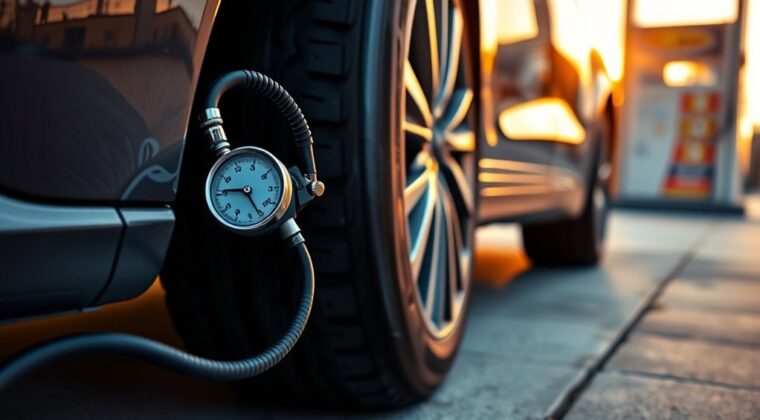
No, you shouldn’t assume your front and rear tires need the same PSI. You should follow the vehicle maker’s recommendation, found on the door placard or in the owner’s manual, because weight balance, tire size, and load can change the correct setting. Front tires often need slightly more pressure for steering and wear control. Check tires cold with a calibrated gauge, and keep PSI within range for safe handling and fuel efficiency. More details can help.
Key Takeaways
- Front and rear tires do not always need the same PSI; follow the vehicle manufacturer’s recommended pressures.
- Front tires often need slightly higher PSI because they carry more weight and affect steering response.
- Some vehicles with balanced weight and identical tire sizes can use the same PSI on both axles.
- Incorrect PSI causes uneven wear, poorer handling, reduced fuel economy, and can increase blowout risk.
- Check tire pressure when tires are cold and adjust for load, weather, and driving conditions.
What PSI Should Front and Rear Tires Use?
Front and rear tires often don’t use the same PSI because each axle carries a different load. You should set tire pressure to the automaker’s recommended tire pressure, not a generic number.
Front and rear tires often need different PSI, so follow the automaker’s recommended pressure, not a generic guess.
In many vehicles, front and rear tires use different proper psi values, such as about 35 PSI in front and 33 PSI in back. Follow the placard or owner’s manual so you match the vehicle’s design and preserve control, braking, and even tread.
Check both axles when the tires are cold, because heat raises readings and can hide underinflated tires. If you ignore specified tire pressures, you risk uneven wear, poor handling, and blowouts.
Your aim is safe, reliable motion: pressure that supports the load, keeps road contact stable, and helps you move with confidence. Recheck tire pressure regularly, especially before long trips or after temperature shifts, so you keep freedom from preventable failure.
Why Front Tires Often Need Slightly Higher PSI?
When the front and rear PSI aren’t identical, that’s usually by design: your front axle often carries more weight from the engine and handles steering forces, so it may need a slightly higher pressure, around 35 PSI versus about 33 PSI in the rear.
That higher pressure helps the front tires keep their shape under load, so you get sharper steering response and more stable braking.
Because weight distribution shifts forward during cornering and stops, proper inflation in the front supports predictable handling and reduces the chance of edge wear.
If you run the front tires too soft, they flex more, heat builds, and tread can wear unevenly, cutting control when you need it most.
Check tire pressure cold, and adjust for cargo, passengers, or hard driving conditions.
You’re not guessing; you’re tuning the vehicle’s balance so it can move safely, efficiently, and with the freedom that comes from confident control.
When Front and Rear PSI Should Be the Same?
Even so, front and rear tires should share the same PSI when the vehicle is engineered for balanced weight distribution and equal handling at both axles, such as some sports cars and certain motorcycles.
In these setups, matching pressure keeps response consistent and predictable, and tire pressure helps maintain even grip. Check the tire placard and owner’s manual before you adjust anything.
- You run identical tire sizes on both axles.
- You carry a steady load that doesn’t shift front to rear.
- You drive mostly on flat terrain or in light-load conditions.
When the front and rear specs match, you can set one precise pressure and preserve comfort, efficiency, and control.
Don’t guess; verify the manufacturer’s recommendation, because some vehicles still need different pressures for safe handling.
When you honor the published values, you protect stability, reduce rolling resistance, and keep the vehicle aligned with how it was designed to move.
How Vehicle Weight Affects Tire PSI?
Vehicle weight directly affects tire PSI because each axle supports a different load, and that load changes how much pressure the tire needs to maintain proper contact and control.
On most Front and Rear Tire setups, the front carries more engine weight, so you’ll usually need higher tire psi up front to preserve steering response and braking stability.
Front tires often need higher PSI to support engine weight and keep steering sharp and braking stable.
Rear tires often need less pressure because they support less mass, but they still must match the actual load to keep a proper tire footprint.
If your vehicle has uneven weight distribution, follow the placard and adjust tire pressures for that balance.
When you haul cargo, raise rear pressure to help the tires carry the added weight and maintain grip under acceleration.
Always check pressures cold, because heat skews readings.
What Happens When Tire PSI Is Too Low or Too High?
Too little tire PSI makes your tires flex too much, which wears the outer edges faster, hurts braking and handling, raises blowout risk in sharp turns, and can cut fuel efficiency by up to 10% from added rolling resistance.
Underinflated tires also create uneven tread wear that shortens tire life and erodes stability.
- You may feel slower response in lane changes.
- You can get more heat buildup in the sidewalls.
- You may lose traction sooner in emergency stops.
Overinflated tires do the opposite: they ride harshly, wear the center tread, and reduce contact patch grip.
That can make steering less predictable and compromise control. A psi difference of about 2 between front and rear is usually acceptable, but more than 3 should be corrected to protect traction and even wear.
Because tires lose pressure over time, your tire psi can drift into unsafe territory without you noticing.
How Do You Check Tire Pressure Correctly?
To keep front and rear tire PSI where it should be, check pressures when the tires are cold, ideally in the morning before you drive.
Use a calibrated tire gauge, not a guess, so your tire pressure reading is accurate. Remove the valve stem cap, press the gauge squarely on the stem, and confirm a tight seal if you’re using a compressor or air pump.
Read each tire separately; front and rear values can differ, and the correct psi per wheel comes from your owner’s manual or door placard. Add air only until each tire is properly inflated to spec, because pressure guarantees stable handling, even wear, and safer braking.
Recheck every other gas fill-up, or sooner if the car feels off. If you’re unsure, a tire store can verify the numbers and catch leaks before they cost you control, money, or freedom on the road.
When Should You Adjust Tire PSI for Load and Weather?
When your car is carrying extra weight or the weather turns colder, you should adjust tire PSI to keep handling, traction, and wear in check. For passenger cars, heavier loads can shift weight on the front or rear axle, so raise tire pressure about 1-2 PSI in the rear when passengers or cargo increase.
Cold air also lowers PSI: expect about 1 PSI loss for every 10°F drop, so check and adjust before driving, ideally in the morning when tires are cold.
- Add PSI only when load demands it.
- Recheck pressure during seasonal changes.
- Inspect before long trips.
Use the manufacturer’s recommended tire pressure from the owner’s manual or door placard, and follow it for your driving conditions.
Regular checks reduce uneven wear, improve fuel efficiency, and lower tire failure risk. If you stay attentive, you keep control and keep every mile freer and safer.
Where Can You Find Your Vehicle’s Correct PSI?
Where can you find the correct PSI for your vehicle? Start with the owner’s manual, where you’ll find the tire pressure specs your model requires for safe operation.
You can also check the sticker on the driver’s side door jamb; it usually lists the recommended PSI for the front and rear tires separately if they differ.
Don’t assume every vehicle uses the same number, because weight distribution, load, and design change the correct PSI. Follow your vehicle’s exact guidance, not a generic chart, so you can protect handling, braking, and ride stability.
Checking both sets of tires helps you prevent uneven tire wear, improve fuel efficiency, and maintain safer control on the road.
If your front and rear tires need different pressures, that’s normal. Stay informed, verify the numbers, and keep your vehicle running on your terms.
Frequently Asked Questions
Will It Ruin Tires if You Inflate Them to 40 PSI Instead of 35 PSI When the Recommended PSI Is 35?
Yes, 40 psi can damage your tires over time when you’ve been told to run 35 psi.
You’re raising Tire pressure effects, increasing Overinflation risks, and shifting Tire wear patterns toward the center.
That also hurts Handling performance, Fuel efficiency, and Safety implications.
If you keep exceeding the spec, you may shorten tire life, worsen ride quality, and risk blowouts.
Check the door placard and adjust them cold.
Should Front or Back Tires Be Higher PSI?
You’ll usually run the front tires slightly higher than the rear, because load distribution puts more weight over the engine and steering axle.
That tire pressure setup improves handling characteristics, braking, and vehicle stability.
If you ignore the factory spec, you can create uneven wear patterns and a performance impact.
Check your placard, then adjust for cargo, towing, and road conditions so you keep control and stay safe.
What Is the 4 PSI Rule on Tires?
The 4 psi rule means you can usually keep front and rear tire pressure within 4 psi of each other without raising safety concerns.
You don’t need identical readings; small differences help match load and handling, improving driving performance and limiting tire wear.
Check tire pressure regularly for fuel efficiency, and make seasonal adjustments as temperatures shift.
If the gap exceeds 4 psi, your risk of instability and blowouts climbs.
Is It Okay if One Tire Is One PSI Higher Than the Other?
Yes, one tire being 1 PSI higher than the other’s usually isn’t a problem.
You’ll rarely notice tire pressure effects, handling stability, or performance impact from that small gap, and safety concerns stay low if both tires are near spec.
Still, you should check pressures regularly to prevent uneven wear.
Follow your vehicle’s label, and use these maintenance tips: compare all four tires, adjust cold, and monitor changes over time.
Conclusion
In most vehicles, you should not assume front and rear tires need the same PSI. Your door-jamb placard gives the correct cold pressure for your exact load, and it may specify different values front to rear. Just 5 PSI underinflation can reduce fuel economy and increase heat buildup, while overinflation can cut tire contact with the road. Check pressures monthly and before trips so you keep handling, braking, and tire wear safe and consistent.