
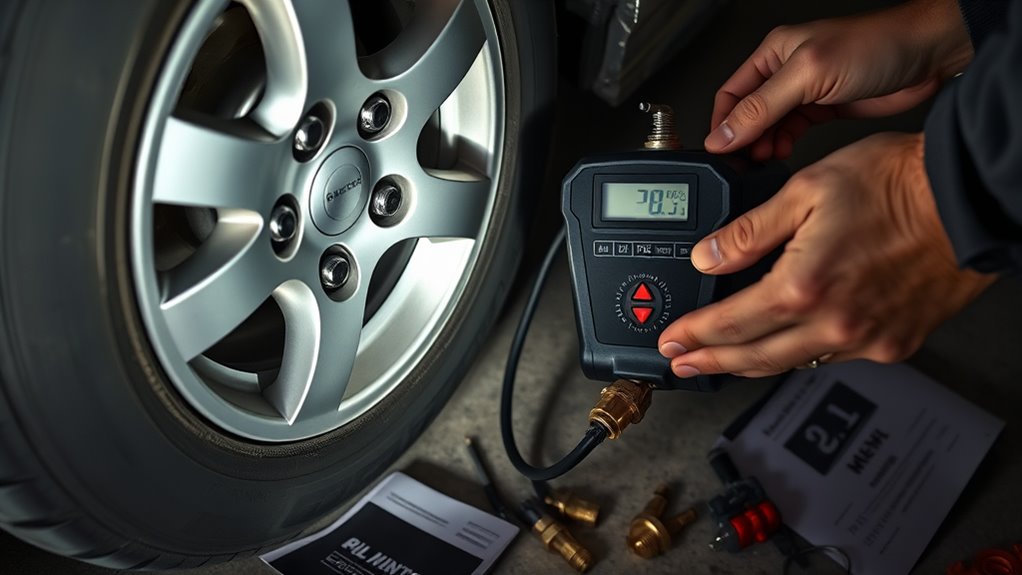
If your tire inflator’s automatic shut-off isn’t working, check the power source first. Make sure it’s fully seated in the outlet, the fuse isn’t blown, and the socket has about 12V. Next, inspect the hose, seals, and connections for leaks, kinks, or damage. Then confirm the PSI target is set correctly and reset or calibrate the sensor if needed. If it still fails, the unit may need repair or replacement, and there’s more to verify.
Key Takeaways
- Check the pressure sensor and PSI setting; a faulty sensor or incorrect target pressure can prevent auto shut-off.
- Inspect the power source, outlet fit, fuse, and voltage to ensure the inflator is receiving steady power.
- Examine the air hose and connections for cracks, kinks, leaks, or loose fittings that disrupt airflow.
- Reset or recalibrate the inflator’s PSI controls, then test it against a trusted tire gauge.
- If shut-off still fails, check for damaged seals, wiring issues, or replacement needs based on age and wear.
Why Auto Shut-Off Fails
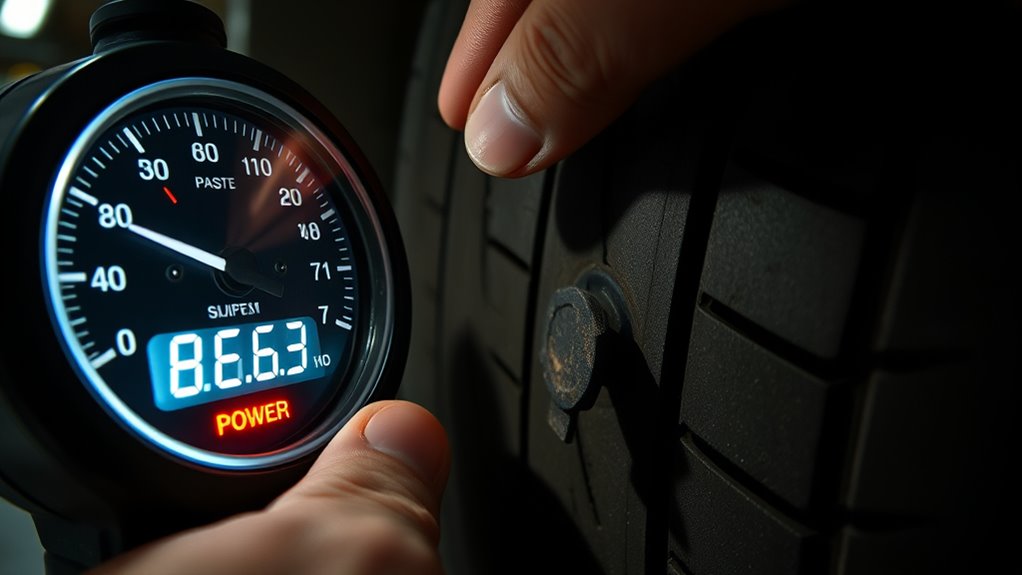
Auto shut-off can fail when the pressure sensor sends inaccurate readings, so the inflator never recognizes that the target PSI has been reached. You may be dealing with a malfunctioning pressure sensor that reports incorrect PSI and throws off auto shut-off timing.
A faulty pressure sensor can misread PSI, causing the inflator’s auto shut-off to miss the target entirely.
Wear and tear on the gauge or seals can drift calibration and reduce performance reliability. A clogged air hose creates an airflow impediment, raising heat and forcing a safety shut-off before inflation completes. Damaged internal seals can do the same.
Faulty wiring or loose connections can interrupt the shut-off circuit and stop command logic. Dust and extreme temperatures can further distort readings and weaken the system.
When you diagnose the unit, look for sensor error, airflow restriction, and electrical instability as separate failure points. Each one can prevent the inflator from stopping at the right pressure, so you lose control over fill accuracy and efficiency.
Check the Power Source and Fuse
If the inflator won’t power up consistently, start by checking the power source and fuse. Confirm the tire inflator is fully seated in the car’s cigarette lighter or another compatible outlet. Then check the fuse; a blown fuse breaks the circuit and leaves the inflator nonfunctional. Use a multimeter to verify outlet voltage is near 12V, which keeps the unit operational. If you use a portable battery, confirm it’s charged and able to deliver load. Inspect power connections for corrosion or looseness because poor contact can drop voltage and interrupt startup.
| Check | What to look for | Result |
|---|---|---|
| Power source | Secure outlet fit | Functional input |
| Fuse | Break, discoloration | Replace if blown |
| Battery | Charge status | Operational supply |
| Measurement | Target | Action |
| Outlet voltage | ~12V | Test again |
| Connections | Clean, tight | Restore contact |
| Inflator | Powers on | Proceed diagnosis |
Fix Hose Leaks and Loose Connections
A leak in the hose or a loose fitting can stop the inflator from building and holding pressure, so inspect the air hose for cracks, punctures, and worn spots first.
Your Portable Tire Inflator needs secure connections at every joint to keep air from escaping while you inflate tires. Check the valve connection, hose fittings, and chuck; tighten anything loose, and replace damaged parts.
Use soapy water on the hose and fittings. If bubbles appear, you’ve found the leak. Straighten any kinked hose so airflow stays open and the unit can reach target pressure. Clean the valve connection during regular maintenance to preserve the seal and support automatic shut-off.
- Inspect the air hose end-to-end for hidden leaks.
- Confirm each connection stays tight under pressure.
- Repair or replace worn parts before retesting.
Reset PSI Settings and Calibrate the Sensor
Reset the PSI setting on your tire inflator by holding the reset button or following the manufacturer’s button sequence, then set the target pressure to match the tire specification on the vehicle’s door jamb sticker. This keeps the automatic shut-off aligned with the recommended pressure and helps you avoid drift. If the pressure gauge still reads off, calibrate the sensor using the manual’s procedure. | Check | Action |
| — | — |
|---|---|
| Power path | Check the power source and inspect the fuse |
| PSI setup | Reset PSI settings to the correct target pressure |
| Sensor | Calibrate the sensor to guarantee accuracy |
Run a short test fill and confirm the inflator stops at the set PSI. Compare the reading with a trusted pressure gauge; small gaps point to calibration error, not freedom lost. Recheck the tire inflator after temperature swings or repeated use, since sensor performance can shift. If readings stay unstable, repeat the reset, then recalibrate. This method restores control, keeps inflation precise, and lets your system shut off exactly where you want it.
Repair or Replace the Inflator
When troubleshooting doesn’t restore automatic shut-off, inspect the pressure sensor and gauge first, since a failed sensor can stop the inflator from recognizing the target PSI.
If the tire inflator still misreads pressure, check the voltage supply and battery for consistency; weak power can trigger a malfunction in the automatic shut-off circuit.
Next, examine the air hose for leaks, kinks, or mechanical obstructions that skew airflow and readings. If you find damage, repair it only when the fix is simple and reliable.
- Test output against a known gauge.
- Compare repair cost to replacement cost.
- Review maintenance history and wear.
If the unit is old, heavily used, or keeps failing after maintenance, replace it. You gain better reliability, faster inflation, and fewer diagnostic delays.
When repair parts cost near a new unit, replacement is the freer choice.
Frequently Asked Questions
How to Reset Portable Tire Inflator?
To reset your portable tire inflator, press the reset button near the power switch, or unplug it for a few minutes if it doesn’t have one.
Check the target PSI first, then confirm with user manual insights.
Follow compressor troubleshooting steps, tire maintenance tips, and inflator safety precautions.
Review air pressure guidelines, battery life management, maintenance schedule importance, digital vs analog inflators, portable inflator reviews, and inflation speed comparison.
My Air Compressor Isn’t Automatically Shutting Off. What Could Be the Problem?
Your air compressor’s auto shutoff may fail because of pressure gauge accuracy errors, power source issues, internal wiring faults, or hose blockages.
You should run troubleshooting steps: check settings, inspect connections, and compare readings with a trusted gauge.
Follow user manual tips and safety precautions during air compressor maintenance.
If the switch, sensor, or relay’s damaged, you’ll need replacement parts.
Early diagnosis can protect compressor lifespan and restore reliable shutdown.
What Are the Common Problems With Car Tire Inflators?
Birds in the hand matter: you’ll often see power source faults, hose leaks, weak inflation efficiency, and bad tire pressure readings.
You may also face gauge accuracy errors, overheating issues, high noise levels, or portability concerns.
Check compressor maintenance, user manuals, and the car adapter first.
If the unit runs but won’t inflate, inspect the hose and motor.
If it stops early, suspect sensors, not freedom from duty.
Do Tire Air Pumps Turn off Automatically?
Yes, many tire air pumps do turn off automatically if you’re using automatic shutoff features.
You should verify pressure gauge accuracy, inflator power sources, and portable compressor types, because not every model behaves the same.
For tire inflator maintenance, follow inflator usage tips, practice inflator safety precautions, and watch compressor lifespan factors.
If it still won’t stop, you’re troubleshooting inflators; check tire pressure monitoring and the manual for calibration.
Conclusion
If your inflator’s auto shut-off still won’t stop at the target PSI, treat it like a bad thermostat: one faulty input throws off the whole system. I once saw a shop unit overshoot by 8 PSI because a cracked hose leaked pressure at the sensor. Check power, fuse, fittings, and calibration first, then repair or replace worn parts. When each signal is clean, the inflator can read accurately and shut off exactly when it should.