
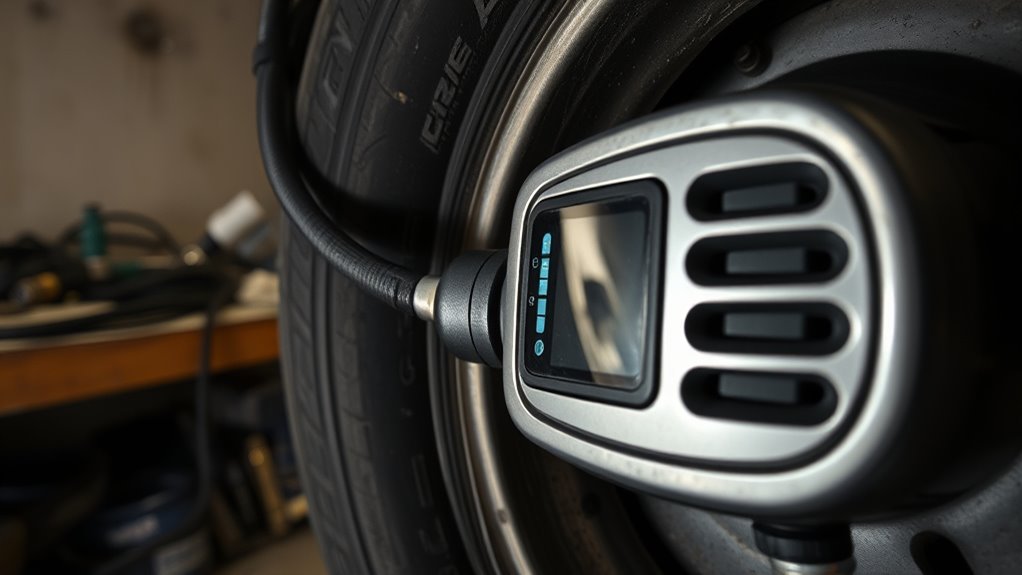
If your tire inflator takes longer than usual, check for weak airflow, a low battery, hose kinks, or leaks at the chuck or valve stem. Make sure you’re using the right target PSI from the door jamb, and inspect the tire for punctures or damage. Small portable units can struggle with large off-road tires, and overheating protection may pause inflation. Verify gauge accuracy and duty cycle, because the next steps can speed things up.
Key Takeaways
- Small or weak inflators may lack airflow for large tires, especially when battery or voltage is low.
- Check for hose, chuck, or valve leaks and restrictions, since they can slow inflation and distort pressure readings.
- Verify the target PSI on the driver’s door jamb to avoid overfilling, underfilling, and wasted time.
- Overheating protection may pause the compressor, so use cooling breaks and respect the duty cycle.
- Inspect tire condition, valve stems, and fittings for damage or dirt, and upgrade to a higher-output inflator if needed.
Why Tire Inflation Gets So Slow
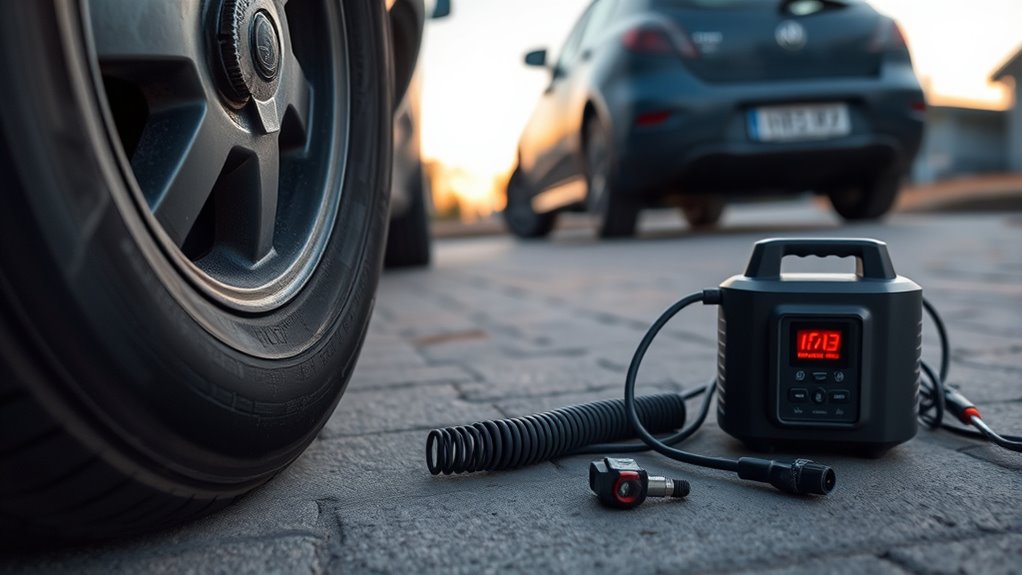
Tire inflation gets slow when the inflator can’t move enough air, and that’s common with smaller portable units trying to fill larger off-road tires. You may see low flow from a weak compressor, especially if your portable inflator runs on marginal battery power or low voltage. That cuts airflow and drags out the job.
Overheating protection can also pause the unit; it saves the motor, but it slows inflation until the compressor cools. Check the hose, chuck, and valve stem for air leaks or restrictions, since a poor seal bleeds pressure and distorts readings.
Dirt or damage at the valve can choke flow and force repeated corrections. When you watch tire pressure rise slowly, don’t assume the gauge is wrong; diagnose the delivery path first. A properly powered inflator with clean connections works faster and helps you keep control without waiting around.
Check the Tire and Target PSI
Before you assume the inflator is the problem, verify the tire and the target PSI. Check the sticker on the driver’s door jamb; it gives the manufacturer’s target pressure for safe, efficient inflation.
Don’t guess, because overfilling or underfilling wastes time and distorts your diagnosis. Inspect the tire for punctures, sidewall damage, or embedded debris that could let air escape and slow the rise in PSI.
Don’t guess: overfilling or underfilling wastes time, and leaks can slow the rise in PSI.
Look closely at the valve stem for cracks, dirt, or a weak seal. If the connection isn’t snug, air leaks out before the tire can build pressure.
Also confirm the hose isn’t kinked or clogged, since restricted flow can mimic a weak pump.
Finally, match expectations to tire size: a larger tire needs more air, so it’ll take longer to reach the target pressure than a standard passenger tire.
Measure, verify, then act.
Is Your Inflator Big-Tire Ready?
You need enough airflow for large tires, or inflation times will climb fast and the inflator may struggle to reach target PSI.
Check that your unit has sufficient power, a duty cycle that can handle sustained use, and thermal control that prevents heat-related shutdowns.
If battery output drops or the motor runs hot, your inflator isn’t big-tire ready.
Airflow For Large Tires
Large off-road tires need considerably more airflow than passenger-car tires, so a standard portable inflator can struggle if it doesn’t have enough power and CFM.
You need a Portable Tire Inflator that can move enough air fast enough for tire inflation without starving the bead area. If your unit was built for passenger cars, it may still reach pressure, but it’ll do it slowly and waste your time.
Look for a higher airflow rating; the ETENWOLF Vortex S7, for example, uses a dual-motor setup and delivers up to 1.85 CFM, which suits larger tires.
That extra flow helps you restore proper air faster, improve handling, and cut wear. If inflation drags, your inflator may be underqualified, not your tire.
Power, Duty Cycle, And Heat
Power and duty cycle determine whether an inflator is truly big-tire ready, because many portable units are built for passenger cars and can’t sustain the airflow larger off-road tires demand.
You need enough power to hold pressure delivery, not just start fast. Check the duty cycle: a typical 10-15 minute limit means continuous inflation past that point can spike heat and trigger performance drop.
If your tires are large, choose a unit rated around 1.85 CFM or higher, with cooling that controls heat under load. That extra airflow cuts wait time and keeps the motor working within spec.
Also, clean the intake and tighten hose fittings; restriction steals airflow and slows inflation.
When you match power, duty cycle, and heat control, you reclaim time and mobility.
Watch for Overheating and Shutdowns
If a tire inflator runs continuously past its 10- to 15-minute duty cycle, overheating can trigger an automatic shutdown to protect the motor. You’ll see this when the inflator gets hot, the motor sounds rough, or the cooling fan kicks on hard. That’s not failure; it’s a safeguard.
When you keep pushing without cooling breaks, heat builds, the motor strains, and performance drops. The unit may slow, shut off, or refuse to restart until it cools. Many inflators have built-in cooling systems, but they can’t beat nonstop use.
Give the tool rest periods between inflation cycles so internal temps fall back into range. Check the housing for excess heat and listen for unusual noise, since both signal the need to pause.
Fix Leaks at the Valve and Chuck
Check the valve stem first, because even a small leak can slow inflation and mask the real problem.
Inspect the stem for dirt or damage, then verify the chuck is fully seated and not bleeding air at the connection.
If the seal still seems weak, check the chuck’s O-ring and use a gauge to confirm the tire’s pressure is rising correctly.
Valve Stem Leaks
Valve stem leaks can slow inflation by letting air escape before the tire reaches target pressure, so you’ll see longer fill times and persistent low PSI.
Inspect the valve stem for dirt, corrosion, or damage; any restriction can drive air loss and cut inflation efficiency. Use a tire pressure gauge to verify the reading before and after filling.
If PSI stays low, the valve core may be failing. Replace the core to restore a tight seal and stop hidden leakage.
Keep the stem clean and secure, because routine maintenance prevents recurrent loss and keeps your system responsive.
When you diagnose a leak early, you reclaim control, reduce wasted effort, and keep inflation performance aligned with your standards.
Chuck Seal Checks
A worn brass chuck O-ring can leak air during inflation, so inspect it for cracks, flattening, or other damage before you start.
For reliable chuck seal checks, clean the valve stem and clear any grit, tape residue, or blockages that can break the seal. Press the chuck firmly onto the valve stem; if it feels loose, you’re losing pressure.
Watch for air leaks around the connection while the compressor runs. After inflation, bleed the hose to atmospheric pressure before you disconnect it, or escaping air can drop tire pressure.
If leaks keep returning, replace the chuck or valve stem before they waste time and weaken your inflation setup. Tight seals keep your system efficient, so you can work without surrendering energy to preventable loss.
Clean the Valve Stem and Hose Connection
When inflation slows down, clean the valve stem and inspect the hose connection for dirt, damage, kinks, or blockages that can restrict airflow. A dirty or damaged valve stem can choke air flow, so wipe it clean before you reconnect.
Check that the hose connection seats firmly on the valve; a loose fit can create air leakage and stretch inflation time. If the hose bends sharply, straighten it so air can move without resistance. Replace any cracked stem parts or worn hose ends before you keep going.
A press-on valve design can help you lock in a tighter seal and reduce air loss during inflation. Maintain both parts regularly, because a clean, intact valve stem and hose keep the system efficient and free from avoidable delays.
If inflation still feels slow after this, move on to the next diagnostic step.
Test the Gauge and Auto Shutoff
Next, verify the gauge and auto shutoff, because a bad reading can make inflation seem slower than it is. To test the gauge, compare the inflator’s pressure gauge with a separate, reliable tire pressure gauge after a fill. If the numbers drift, you’re not seeing the correct pressure, and the unit may keep running past target PSI or stop early.
| Check | Good Result | Problem Sign |
|---|---|---|
| Pressure gauge | Matches reference gauge | Off by several PSI |
| auto shutoff | Stops at set PSI | Stops late or early |
| PSI reading | Stable during fill | Fluctuates sharply |
| Target setting | Holds correct pressure | Needs reset often |
| Compare again | Same reading twice | Different each pass |
Watch for PSI swings; they point to gauge error or a weak connection. If auto shutoff misses the mark, reset the target PSI and retest. You’ll restore accurate inflation and move closer to liberation from wasted time.
Check Battery Level and Power Output
If the gauge and shutoff check out, inspect the battery level and power output, because low voltage can make the inflator slow or inconsistent.
Keep the battery at 50-60% charge or higher; below that, airflow drops and the air compressor works harder for less gain.
Check the charging port and terminals for corrosion, bent contacts, or damage, since any power supply issue can choke delivery and waste your troubleshooting air time.
Feel the housing after a short run; overheating can trigger a safety shut-off and pause inflation until the unit cools.
Verify the power supply connections are tight and stable, because loose leads cause voltage loss under load.
Finally, compare the inflator’s specs with your tire size. If the model needs higher airflow or output than it can provide, it’ll struggle no matter how well you maintain it.
Choose equipment that matches your needs, and keep control in your hands.
Pick a Faster Inflator for Off-Road Tires
For larger off-road tires, you’ll get better results with a high-output inflator like the ETENWOLF Vortex S7, which pushes up to 1.85 CFM for faster fill times.
You need air compressors built for heavy loads, not trimmed-down units that stall on big casings. A dual-motor design keeps airflow stable when you’re fighting low pressure after a trail run.
Check the lithium battery spec too; 38,400mAh or more lets you top off multiple tires without hunting for external power.
You should also choose a model with continuous operation and a 100% duty cycle so heat doesn’t cut your session short.
Connect it securely to the tire valve, set your target, and let automatic shut-off stop inflation at the right psi. Use digital pressure readouts to verify accuracy before you roll.
If your current inflator drags, upgrade now. Faster gear gives you control, reduces downtime, and keeps your setup free to move.
Frequently Asked Questions
What Are the Common Problems With Auto Air Tire Inflators?
You’ll usually see weak airflow from power issues, clogged hoses, overheating shutdowns, broken pistons, damaged valves, or wrong PSI settings. Those faults cut compressor efficiency factors and slow inflation.
You can avoid many failures with inflator maintenance tips: clean filters, check leaks, and inspect connections. Tire pressure monitoring helps you catch drift early.
Watch common user mistakes like overuse, poor setup, and ignoring battery or cord limits.
Why Is My Air Compressor Taking so Long to Fill?
Your air compressor’s filling slowly because you’re likely facing low power, restricted airflow, or a poor hose-to-valve seal.
Inflation speed factors also include tire size, overheating protection, and battery health. If you’re inflating larger off-road tires, a small unit may struggle.
Use air compressor maintenance to clear clogs, inspect valve stems, and tighten connections.
For compressor troubleshooting, follow tire pressure tips and keep your system clean for faster, freer inflation.
How Long Does It Take for a Portable Tire Inflator to Work?
You’ll usually wait a heartbeat to a few minutes: a portable tire inflator often fills an average car tire in 5–10 minutes, depending on inflator types and tire size.
Check the pressure gauge as you go to hit target tire pressure accurately. Faster models move air like a rushing stream, while low batteries, cold weather, or poor maintenance slow you down.
Use maintenance tips and proper connections to stay free from delays.
How to Reset Portable Tire Inflator?
To reset your portable tire inflator, unplug it, let it cool for 5 minutes, then power it back on.
Check your manual for model-specific resetting techniques, or use any reset button or button sequence. Re-enter pressure settings so auto shut-off works right.
If the display glitches, cycle power to clear it.
Keep inflator maintenance tight: clean hose and valve connections.
These troubleshooting tips support performance optimization and keep you in control.
Conclusion
If your tire inflator is taking longer than usual, the problem is usually not “mystery physics” but plain old limitations: low battery, a weak seal, a clogged valve, or a unit that simply isn’t built for big tires. Check PSI, inspect the chuck, watch for overheating, and verify the gauge before you chase a bad diagnosis. Ironically, the slowest fix is often the simplest one: clean, connect, and power it properly.

