
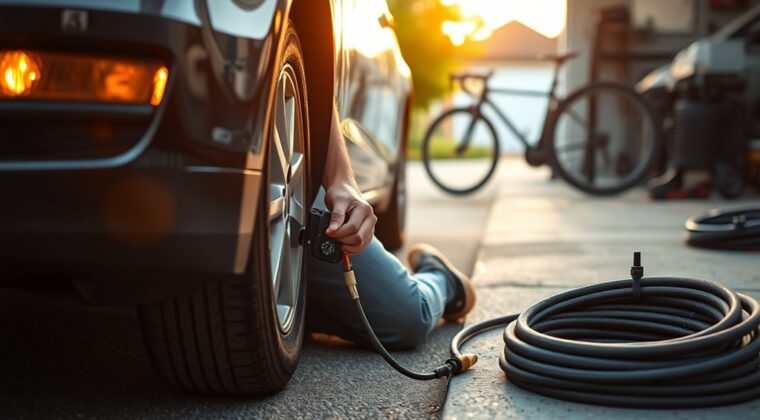
You should use a tire inflator when your tire pressure drops below the manufacturer’s recommended PSI, which you’ll find on the driver-side door jamb label. It’s especially useful in cold weather, after a slow leak, or before heading onto remote routes where help may be delayed. Keep the hose secure, watch the gauge closely, and stop at the target pressure to avoid overinflation. With a few more details, you can keep your tires safer and more reliable.
Key Takeaways
- Use a tire inflator when cold weather lowers tire pressure below the recommended PSI.
- Inflate tires when pressure checks show under-inflation affecting safety, fuel efficiency, or tire life.
- Use one after a flat tire, especially if you need quick roadside inflation.
- Keep a portable inflator handy for remote routes where repair help may be delayed.
- Check and adjust tire pressure regularly to maintain reliable handling and balanced performance.
When to Use a Portable Tire Inflator
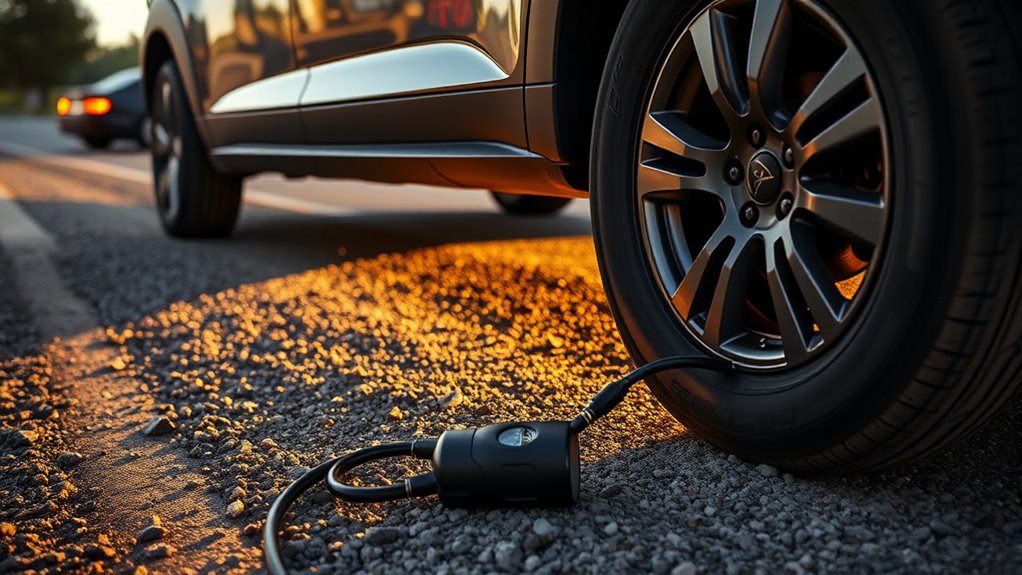
Use a portable tire inflator when temperature drops in cold weather and tire pressure falls below the recommended PSI, because under-inflation can reduce safety, fuel efficiency, and tire life.
Keep a portable tire inflator handy when cold weather drops tire pressure below recommended PSI.
You should also keep one in your vehicle if you drive field routes or remote terrain, where help may not arrive quickly. A cordless unit gives you immediate inflation after a flat, so you can move without waiting for a tow truck.
Use it for routine tire pressure maintenance, too, because stable inflation supports reliable handling and reduces uneven wear. When you inflate, follow the vehicle’s tire pressure label and restore pressure to the specified range.
That simple habit helps you stay mobile, protect your freedom of movement, and keep your vehicle performing at its best. In harsh conditions, a portable inflator isn’t optional gear; it’s practical self-reliance.
Check Your Tire’s Recommended PSI
Before you add air, check the tire pressure label inside the driver-side door jamb to find your vehicle’s recommended PSI. That specification tells you exactly how to check your tire’s recommended psi and set each tire for safe, efficient operation.
Use the manufacturer’s value, not a guess, because under-inflation reduces fuel efficiency and accelerates wear, while over-inflation can compromise handling.
When you use an inflator, compare the tool’s reading with the door-jamb label; some inflators can read 1.5 to 2 PSI higher when triggered, so don’t stop at the first number you see. Verify the pressure with care, then adjust until it matches the specification.
Make this a routine check, and you’ll keep your vehicle’s performance steady and your tires balanced. Precision here gives you control, protects your mobility, and helps you move with less waste and more freedom.
Inflate Tires in Cold Weather
When temperatures drop, your tire pressure can fall by about 1 PSI for every 10°F decrease, so winter checks matter. You should use a tire inflator to restore pressure before the loss affects handling, braking, and traction on icy roads.
Cold weather drops tire pressure fast—use a tire inflator before handling and traction suffer.
In cold weather, make sure you inflate each tire to the manufacturer-recommended PSI listed on the tire pressure label inside the driver side door jamb. That target keeps contact patches stable, supports even tread wear, and helps your engine avoid the drag of under-inflation.
Quick pressure adjustments also protect fuel economy when dense winter air would otherwise push your tires below spec. If you carry a portable cordless inflator, you can correct pressure anywhere and stay mobile instead of waiting for help or risking a flat from ignored low pressure.
In winter, routine inflation isn’t optional maintenance; it’s a practical way to keep control, reduce wear, and move on your own terms.
Use a Portable Tire Inflator Safely
To inflate safely with a portable tire inflator, check the recommended PSI on the label inside the driver side door jamb first, then attach the hose securely to the valve before pulling the lever. You control the process, so keep the gauge in view and don’t let haste override accuracy.
- Verify the target PSI before you start; inflating above spec reduces handling and tire life.
- Watch the display while pressing the trigger, but release it to read true pressure, because it can show 1.5 to 2 PSI higher.
- Stop at the recommended value, then let the unit cool for at least 5 minutes after use to prevent overheating.
A tight hose seal prevents leaks and keeps inflation exact.
Use this tool as a precise extension of your autonomy: fast, mobile, and dependable when you need pressure restored without surrendering control.
Maintain Your Inflator for Reliable Use
Keep your inflator ready by inspecting the hose and nozzle regularly for dirt buildup, since clean airflow supports faster, more efficient inflation. Wipe those parts after each use, and check for cracks or loose fittings that can reduce output.
After continuous operation, let the unit rest for at least 5 minutes so heat doesn’t damage internal components. Monitor the battery routinely; if it isn’t fully charged, you may lose performance when you need it most, far from a gas station.
Store the inflator in a dry, temperature-controlled place to block moisture, corrosion, and heat stress. Don’t leave it in a trunk that bakes or freezes.
Review the user manual for model-specific service intervals and care steps, then follow them exactly. When you maintain the tool well, you protect your freedom to inflate tires on your terms, without waiting, paying extra, or depending on roadside delays.
Frequently Asked Questions
Does a Car Need to Be Running to Use a Tire Inflator?
No, you don’t need to run your car to use a tire inflator. You can power a cordless unit from its battery and adjust Tire Pressure safely with the engine off.
That keeps you clear of heat, exhaust, and unnecessary noise, while giving you cleaner pressure readings on the display. You control inflation directly, save fuel, and stay independent from the vehicle’s power system during roadside or home use.
Should I Inflate My Car Tires When They Are Hot or Cold?
Inflate your car tires when they’re cold, not hot. You’ll get the most accurate reading because Tire Temperature rises after driving, and pressure can climb about 1 PSI for every 10°F increase.
Check them after the vehicle’s sat for at least three hours. Then set pressure to the manufacturer’s cold PSI spec. That keeps you safe, efficient, and free from avoidable under- or over-inflation.
Is a Tire Inflator Worth It?
Yes, a tire inflator’s worth it if you value Cost Analysis and control. You’ll cut tow-truck expenses, keep tires within spec, and avoid unsafe pressure drops in cold weather.
A cordless 18V unit gives you mobility in remote or hazardous areas, and its drill-battery compatibility improves utility. You’ll also inflate faster than relying on stations, with a simple interface that lets you act independently and precisely.
What Is the 4 PSI Rule on Tires?
The 4 PSI rule says you can lose up to 4 PSI from the recommended tire pressure before handling, wear, and fuel economy start to suffer.
You should verify that claim with a gauge, because Pressure Maintenance matters: a 10°F temperature drop can cut about 1 PSI.
If you’re more than 4 PSI low, inflate now. You’ll protect your freedom to drive safely, efficiently, and without avoidable wear.
Conclusion
You should use a tire inflator whenever your tire pressure drops below the manufacturer’s recommended PSI, especially in cold weather or before a long drive. A practical statistic to note: tires can lose about 1 PSI for every 10°F drop in temperature, which makes seasonal checks essential. By inflating your tires promptly and safely, you improve handling, fuel economy, and tire life. Keep your inflator maintained, and you’ll always be ready for pressure changes.