
Your tire pressure changes after the inflator stops because the air inside is still stabilizing. When you disconnect the hose, a small amount of air escapes at the valve, so PSI can drop slightly. Inflation also heats the air, which temporarily raises pressure; once the tire cools, that pressure falls, often by 1 to 2 PSI. For an accurate reading, wait for the tire to cool and settle, and you’ll see how the numbers really behave.
Key Takeaways
- Tire pressure can drop slightly when the inflator hose is removed because a small amount of air escapes at the valve.
- Inflating the tire heats the air, temporarily raising PSI, then pressure falls as the air cools and contracts.
- A reading taken immediately after inflation may be misleading because pressure has not yet stabilized.
- Cold ambient temperatures can lower tire pressure, often by about 1 PSI for every 10°F drop.
- Accurate pressure checks should be made on cold tires, ideally after the vehicle has sat for several hours.
Why Tire Pressure Changes After Inflation
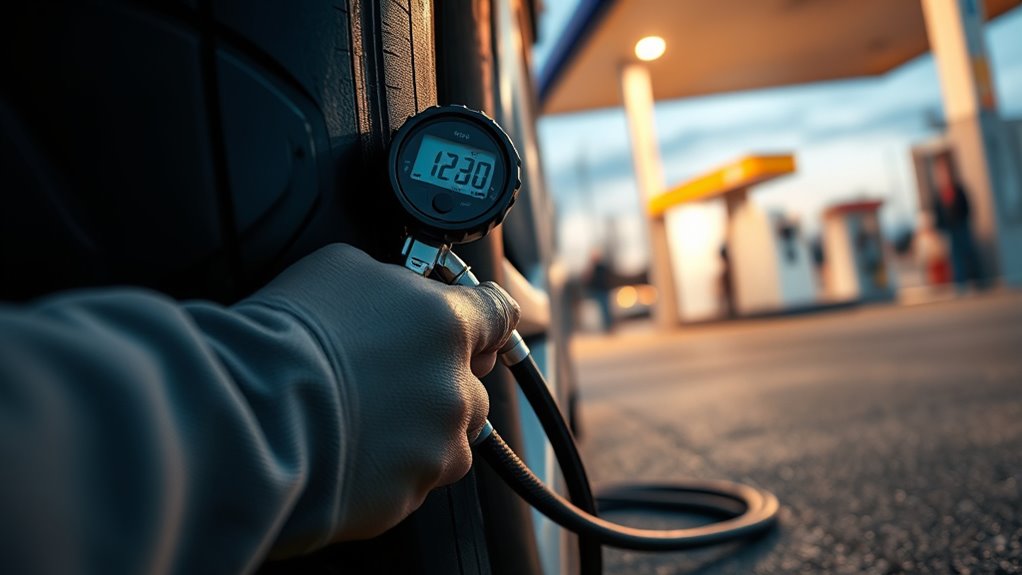
After you inflate a tire, the pressure can change slightly for a few normal reasons. When you remove the inflator hose, you can lose a small amount of air at the valve, and that alone can register as tire pressure changes.
During inflation, the air in your tires warms, so the gauge may show a higher value than it will once the tire cools. The inflator can also slow as it nears target PSI because resistance rises, much like a balloon near capacity.
These temperature changes and settling effects mean the reading may shift before it stabilizes. To stay grounded in reality, check your tire pressure when the tires are cold; heat from driving can distort the result.
Why Tire Pressure Drops After the Inflator Stops
After you stop inflating, the tire’s air temperature can begin to stabilize, and the pressure can fall as the air cools and contracts.
When you remove the hose, you may also lose a small amount of air at the valve, which can momentarily lower the reading.
To confirm the true pressure, you should recheck the tire once it’s cool and fully settled.
Air Temperature Stabilization
As the tire and the compressed air inside it cool, the pressure often settles slightly lower than the reading you saw immediately after inflation, usually by about 1-2 PSI.
During inflation, heat from compression and flexing raises air temperature, so your tire pressure looks higher than it will once the system stabilizes. When the tire returns toward ambient temperature, gas molecules slow, volume effects diminish, and PSI drops to its true operating value.
You shouldn’t treat the first reading as final. Wait a few minutes, then measure again for accuracy.
In cold weather, this effect becomes more pronounced, because lower air temperature accelerates pressure loss relative to the warm reading.
Valve Hose Air Loss
When you release the inflator hose, a small amount of air can escape at the valve, causing the tire’s PSI to drop slightly even if the inflation itself was correct. You’re seeing valve hose air loss, not a failed inflator.
As you disconnect, the valve stem briefly opens to the atmosphere, and that tiny gap lets pressurized air bleed off. This can shift tire pressure by a fraction, especially right after inflation, when the tire is still warm and unstable.
The reading may move because the system hasn’t fully settled, not because you underfilled the tire. For accurate assessment, you should let the pressure stabilize before trusting the gauge.
That brief pause gives you a clearer PSI and helps you manage inflation with precision, control, and freedom.
Cold Tire Pressure Check
A proper tire pressure check starts with a cold tire, because inflation heat can temporarily raise PSI and make a fresh reading look higher than the true resting pressure.
You should let tire pressure stabilize for a few minutes after inflating, then check tire PSI against the cold specification. When you drive, flex and heat expand the air, so a hot reading can mislead you.
In cold temperatures, air contracts, and you’ll often see about 1 PSI lost for every 10°F drop. That isn’t failure; it’s physics.
Why Inflators Slow Near Target PSI
Near the target PSI, an inflator often slows because the tire’s internal pressure rises and increases resistance to incoming airflow, much like blowing up a balloon gets harder as it fills. You’ll see inflators work harder as air pressure approaches the preset limit, and that deceleration is often deliberate. Built-in controls can trim airflow to reduce overinflation risk while keeping tire maintenance precise and independent.
| Factor | Effect | Result |
|---|---|---|
| Rising PSI | More resistance | Slower fill |
| Motor capacity | Limits airflow | Longer time |
| Safety logic | Reduces flow | Prevents overinflation |
| Valve seal | Minimizes loss | Better accuracy |
| Unit setting | Matches display | Correct target PSI |
If you set the units wrong or leave the valve loose, you’ll lose air and distort the reading. Bigger tires demand more effort, so your inflator may slow sooner under load. That’s not failure; it’s physics and protection working together.
Why Cold Tire Pressure Gives the Best Reading
Even a perfectly set inflator can’t account for heat, which is why you should check tire pressure when the tires are cold.
When you measure cold tire pressure, you get a more accurate baseline because the air inside hasn’t expanded from driving or recent inflation. That stable condition lets you compare your reading to the manufacturer’s recommended PSI without distortion.
Temperature changes matter: a drop of about 10°F can reduce pressure by roughly 1 PSI, so a warm tire can mislead you. Check before driving, or wait at least three hours after use, and you’ll avoid false high readings that push you toward under-inflation later.
Why Inflators Struggle With Larger Tires
When you inflate larger tires, you’re fighting a much greater air-volume demand, so the tire can take far longer to reach target pressure.
If your inflator’s airflow rate is low, it can’t move enough air fast enough to keep up with that demand or maintain pressure as resistance rises.
Even a high PSI rating won’t help much if the motor can’t deliver sufficient volume and sustained output.
Airflow Limits
Although an inflator may advertise a high maximum PSI, that figure alone doesn’t indicate how quickly it can move air into a larger tire. You need to examine airflow, because inflators with weak motors or low CFM often deliver pressure slowly, even when the gauge looks impressive.
For larger tires, that limitation matters: Tire pressure rises only as fast as airflow supports inflation. If your inflator can’t sustain volume, it may stop, cycle, or appear finished before the tire truly reaches target pressure.
You gain better control when you match inflators to larger tires by checking PSI and airflow capacity together. Inspect hoses, seals, and fittings for leaks, because losses reduce efficiency.
That precision helps you measure performance, not marketing, and keeps your vehicle ready.
Tire Volume Demand
Larger tires demand far more air volume than compact inflators are built to move, so a high PSI rating by itself can be misleading.
When you inflate larger tires, you aren’t just chasing tire pressure; you’re filling a bigger chamber, and that takes sustained airflow. A small inflator with low CFM may reach the target PSI on paper, yet it can’t deliver air fast enough to keep pace, so inflation drags on and pressure drops become more noticeable between checks.
Many standard units promise strength but lack the volume output you need. A heavy-duty inflator like the ETENWOLF Vortex S7, with 1.85 CFM, handles larger tires more efficiently.
Read the specs closely, because knowing your inflator’s true airflow frees you from confusion and wasted time.
How to Get an Accurate Tire Pressure Reading
For the most accurate tire pressure reading, check your tires when they’re cold, since driving heat can temporarily raise pressure and distort the result. You should also let the tire pressure stabilize for a few minutes after inflation before you measure, because the air inside can warm and read high. Use a calibrated digital gauge or analog gauge; a digital gauge often gives you a cleaner reading. Compare every measurement with the recommended tire PSI on the driver’s door sticker or in the owner’s manual.
| Step | Action | Purpose |
|---|---|---|
| 1 | Check pressure cold | Reduce heat bias |
| 2 | Wait a few minutes | Let pressure stabilize |
| 3 | Measure with a calibrated digital gauge | Improve accuracy |
If you see a small drop after removal, that can reflect brief air loss or temperature change, not a system failure. By measuring carefully, you keep tire pressure data precise and reclaim control over your vehicle.
How Auto Shut-Off Helps Prevent Overinflation
Auto shut-off inflators stop air flow automatically once the preset PSI is reached, which helps prevent overinflation and the tire damage it can cause.
You set the target tire pressure, and the inflator’s sensors monitor internal pressure in real time, so you don’t have to guess when to stop. That precision matters because over-inflated tires reduce contact patch area, which can lower grip, disturb handling, and waste fuel efficiency.
Auto shut-off also cuts human error: if you’re distracted, you won’t keep adding air past the safe limit. By holding pressure at the correct threshold, you preserve tire lifespan and reduce uneven wear.
You gain a controlled, repeatable inflation process that protects your tires and supports stable, efficient driving.
Frequently Asked Questions
Why Does My Tire Air Pressure Keep Changing?
Your tire air pressure keeps changing because you’re seeing real physical shifts in tire temperature, air humidity, altitude effects, and season changes.
Heat raises pressure; cold lowers it. Moist air and elevation alter the gas density inside your tire.
You may also have valve issues causing slow leaks or inconsistent readings.
Check pressure when tires’re cold, inspect the valve stem, and monitor regularly so you stay in control.
What Is the 4 PSI Rule on Tires?
The 4 PSI rule means you should expect tire pressure to rise about 4 PSI after driving, as heat changes inflation dynamics.
If you set your car at 32 PSI cold, a warm highway run might read 36 PSI.
You’ll also see temperature effects, altitude impact, and sensor accuracy shift readings, so check cold tires for precision.
This helps you prevent overinflation and maintain control.
Why Did My Tire Pressure Go Down After I Put Air in It?
Your tire pressure likely dropped because the air warmed during inflation, then cooled and settled, so the reading fell.
You may also lose a small amount at the valve when you disconnect the hose.
Check pressure cold, and trust a calibrated gauge for pressure gauge accuracy.
Use these tire inflation tips to avoid common tire myths, account for temperature effects, and inspect valve stem issues for hidden leaks.
Is It Normal for My Tire to Lose 2 PSI per Week?
Yes, losing 2 psi per week can be normal, and you should track it.
You’ll often see this from air permeation, seasonal temperature effects, or air pump differences. Use tire maintenance tips and pressure monitoring systems to compare readings over time.
If the loss stays above 2 psi weekly, check for common tire leaks, valve issues, or sidewall damage, because you deserve safe, self-directed mobility.
Conclusion
In the end, you can expect tire pressure to rise briefly after the inflator stops, then settle as the air cools and distributes evenly inside the tire. That’s why a cold measurement is the most reliable. One useful statistic: a 10°F temperature drop can reduce pressure by about 1 psi. If you rely on auto shut-off, you’ll reduce the risk of overinflation and get much more consistent results.

