
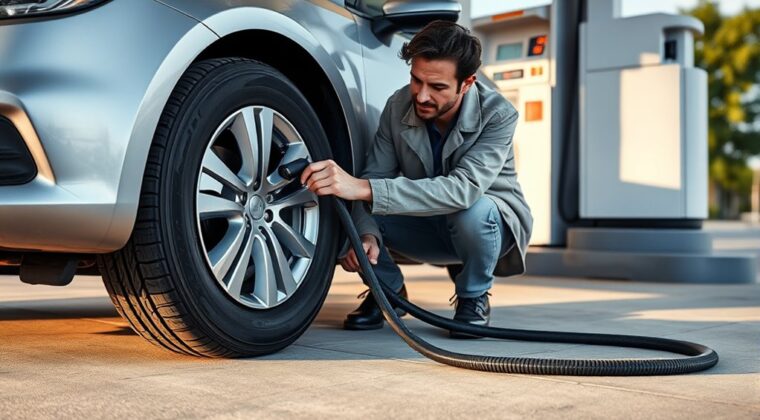
Find your vehicle’s recommended cold PSI on the driver’s door jamb sticker, then check the tire when it’s cold, ideally before driving. Remove the valve cap, attach the air chuck, and add air in short bursts. Recheck the pressure with a gauge after each burst. If you overinflate, press the valve pin to release air. Repeat for each tire until all match spec, and you’ll see how to keep them there.
Key Takeaways
- Check the recommended cold PSI on the driver’s door jamb sticker or owner’s manual before adding air.
- Measure tire pressure when the tires are cold, ideally before driving or after sitting for 2–3 hours.
- Remove the valve cap, attach the air hose securely, and add air in short bursts.
- Recheck pressure with a gauge after each burst to avoid overinflation and reach the target PSI.
- Replace the valve cap and inspect for leaks, then repeat for each tire as needed.
Find Your Tire’s Recommended PSI
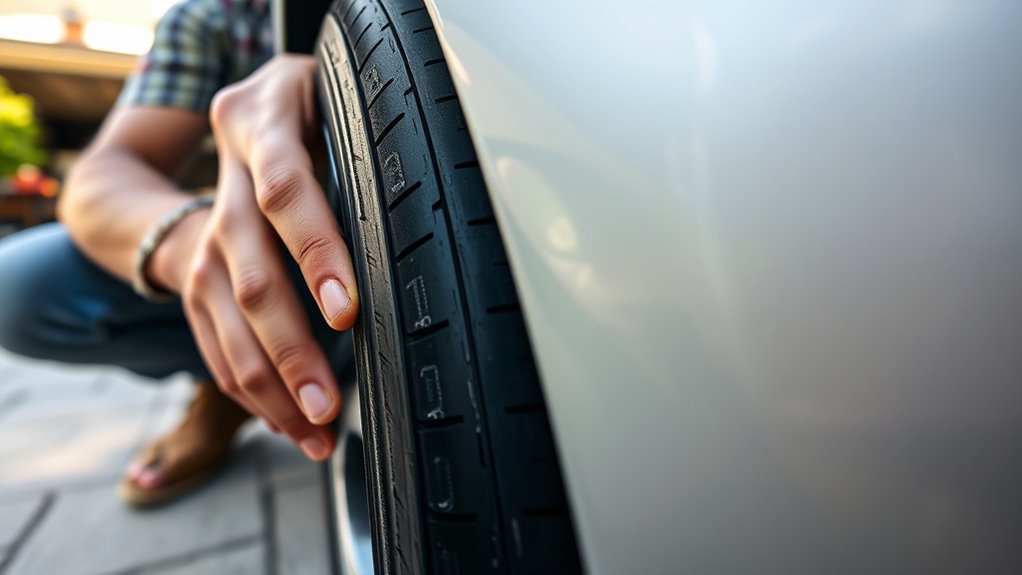
Before you add air, you need the correct cold PSI for your tires, which you’ll usually find on the sticker inside the driver’s side door jamb or on the fuel filler flap. That figure is your recommended tire pressure, and it tells you how to restore the tire to the manufacturers recommended level, not the maximum printed on the sidewall.
Use your owner’s manual too, because front and rear tires can need different PSI. When you check tire pressure, treat the door-jamb label as the primary source and the manual as backup.
Use your owner’s manual too, since front and rear tires may need different PSI.
Temperature changes can shift pressure by 1–2 PSI for every 10°F, so don’t guess; verify the spec before you inflate.
Correct PSI helps you reclaim fuel efficiency, up to 3.3%, and keeps the vehicle stable, responsive, and safe. Knowing the exact target puts you in control, so you can add air precisely and drive with confidence, without wasting time or losing performance.
Check Tire Pressure When Cold
Check your tire pressure when the tires are cold, ideally before you drive or at least 2-3 hours after parking.
Cold readings give you the most accurate PSI because heat from driving raises pressure and can mask underinflation.
Compare that reading to your vehicle’s recommended PSI, since checking warm can make you add too little air.
Best Time To Check
The best time to check tire pressure is when the tires are cold, ideally first thing in the morning or after the vehicle has been parked for at least 2 to 3 hours. This gives you the most reliable cold pressure reading and helps you spot underinflated tires before they limit control or efficiency.
Tires can lose about 1.45 psi each month, and temperature swings can change pressure by 1 to 2 psi for every 10°F shift, so stable conditions matter. If you check after driving, heat raises pressure and skews the result.
Make cold checks a routine, and you keep your vehicle safer, more responsive, and ready for the road.
Cold Tire Accuracy
When you check tire pressure on cold tires, you get an accurate reading before heat from driving changes the air inside. Park for at least 2-3 hours, then check tire pressure with a reliable gauge.
Look up your recommended pressure in the owner manual or the driver’s door sticker; don’t use the sidewall max. Cold tires naturally lose about 1.45 psi each month, and temperature swings can drop pressure 1-2 psi for every 10°F change, so regular checks matter.
If you inflate when the tire’s warm, it can read higher now and end up underinflated later. Staying on top of cold tire measurements helps you protect safety, preserve fuel efficiency, and keep your vehicle responsive.
Avoid Warm Readings
Warm tires can give you a false pressure reading because driving heats the air inside the tire, temporarily increasing psi.
To get an accurate result, check the pressure when the tire’s cold—before you drive or after it’s sat for 2-3 hours. Use a tire pressure gauge, compare the reading with your vehicle manufacturer’s specification, and set the pressure to the correct pressure listed in the owner’s manual or driver’s door sticker.
Don’t rely on the tire sidewall maximum. Cold checks also help you account for seasonal changes; a drop of 10°F can lower pressure by 1-2 psi.
If you add air to a warm tire, you can end up underinflated once it cools. Stay precise, stay safe, and keep your ride free.
Add Air in Short Bursts
Use the air hose in short bursts so you don’t overinflate the tire and can make precise pressure adjustments. Each time you add air in short bursts, pause and check the air pressure with a gauge. That simple rhythm keeps you aligned with the manufacturer’s recommended PSI and gives you control over every ounce of lift.
- A quick hiss of air entering the valve stem
- A gauge needle climbing in small, readable steps
- Your hand steady on the chuck, waiting between bursts
- A tire regaining shape without bulging or strain
Listen to the sound of airflow; it’ll help you judge how much air you’re adding. If you go past the target, press the small pin in the valve stem to release a little air.
Check the Pressure Again
Check the tire pressure again with a gauge and compare it to the manufacturer’s recommended PSI on the driver’s door sticker.
If it’s still low, add air in short bursts and recheck each time until you reach the correct level.
If the pressure is too high, release air at the valve pin until it’s within spec.
Recheck Tire Pressure
Once you’ve added air, recheck the tire with a pressure gauge to make sure it matches the vehicle manufacturer’s recommended PSI, which you’ll usually find on the sticker inside the driver’s door.
Keep the tire cold, so you get an accurate reading before driving or after waiting 2-3 hours. A clean gauge, a steady hand, and a calm pace help you verify tire pressure without guesswork or dependence.
- Gauge resting on the valve stem
- Digital numbers or needle settling
- Quiet wheel and cool rubber
- Sticker inside the doorframe
If the reading’s low, add air in short bursts and check again. If it’s high, press the valve stem pin to release air.
Recheck monthly and before long trips; tires lose about 1 psi each month.
Adjust Air As Needed
After adding air, grab the tire gauge again and confirm the pressure matches the vehicle manufacturer’s recommended PSI. If it’s still low, add air in short bursts, then check and inflate again until you reach proper pressure.
Work deliberately; small adjustments keep you in control and prevent overinflation. If you go past the target, press the small pin in the center of the valve stem to release a little air, then measure again.
For the most accurate reading, inflate tires when they’re cold, since driving can raise pressure. This habit protects your tires, improves handling, and can boost fuel efficiency by up to 3.3%.
When you stay precise, you keep your vehicle ready and your maintenance routine efficient.
Let Out Extra Air if Needed
If you’ve added too much air, gently press the valve pin in the center of the valve stem to release some pressure. To let out extra air, use short bursts and check the gauge after each one so you don’t overshoot the correct air pressure.
Work with purpose; you’re reclaiming control, not fighting the tire.
Work with purpose; you’re reclaiming control, not fighting the tire.
- A steady fingertip on the valve pin
- A brief hiss of air escaping
- A tire gauge showing PSI dropping in steps
- A calm, exact adjustment toward the target
Keep comparing the reading with the recommended pressure listed on the driver’s door sticker or in the owner’s manual.
Overinflation can reduce traction and handling, while the right setting supports safer, freer driving.
Stop as soon as the tire matches the specified PSI. Precision here protects the tire, the road feel, and your efficiency.
Repeat for Each Tire
Move from tire to tire, checking each one with a gauge while the tires are still cold, ideally before you drive or at least 2–3 hours after parking.
Remove each valve cap and set it aside so dirt can’t enter the stem. Connect the compressor fitting firmly to the valve stem; a tight seal keeps air from escaping while you add pressure.
Inflate in short bursts, then check tire pressure again with the gauge. Repeat this cycle for every tire until each matches the manufacturer’s recommendation. If you overshoot, release a small amount of air and recheck.
Work methodically, not hurriedly, so you keep control and avoid uneven inflation. Once a tire is set, replace the valve cap immediately to protect the valve and preserve tire pressure.
Then move to the next tire and do the same. This repeatable process helps you maintain balanced handling, extend tire life, and stay ready to travel with confidence.
Frequently Asked Questions
How to Add Air to a Low Tire?
Check your tire pressure with a gauge when the tire’s cold, then compare it with the PSI on the doorjamb sticker or owner’s manual.
Remove the valve cap, attach the air compressor firmly, and add air in short bursts. Recheck often so you don’t overinflate.
When you reach the target tire pressure, replace the cap.
These maintenance tips help you keep control, save fuel, and drive with confidence.
How Do You Let Air Out of Your Tire if You Put Too Much In?
You let air out by pressing the valve stem’s center pin with a tool or your finger.
Like a careful captain trimming sail, you release air in short bursts, then check tire pressure with a gauge.
Stay below the recommended PSI, and remember safety tips: work slowly, keep clear of air compressors, and recheck often.
Temperature can shift readings, so adjust as needed for your vehicle and driving conditions.
Can I Still Drive if Tire Pressure Is Low?
No, you shouldn’t drive far with low tire pressure. You risk poor tire safety, slower handling, excess wear, and possible blowouts.
Use pressure monitoring to confirm the reading, then add air or swap in a spare right away. If you must move, keep it short, slow, and cautious.
These driving tips protect your freedom to travel without losing control, wasting fuel, or turning a small problem into a roadside failure.
Is 29 Psi Too Low to Drive On?
Yes—29 psi is usually too low for safe driving. You might think it’s close enough, but tire pressure below the manufacturer’s spec can hurt driving safety, reduce fuel economy, and cause uneven wear.
Check the door-jamb placard, then add air with an air compressor until you hit the recommended level.
If you must drive briefly, keep speed down and inspect the tire soon so you stay in control.
Conclusion
Keeping your tires at the right pressure helps you drive safer and more efficiently. A tire just 10 PSI underinflated can reduce fuel economy by up to 3%, according to the U.S. Department of Energy. So after you find your recommended PSI, check tires cold, add air in short bursts, and recheck often. If you overfill, let some out. Then repeat for each tire. That small routine can save you money and reduce blowout risk.