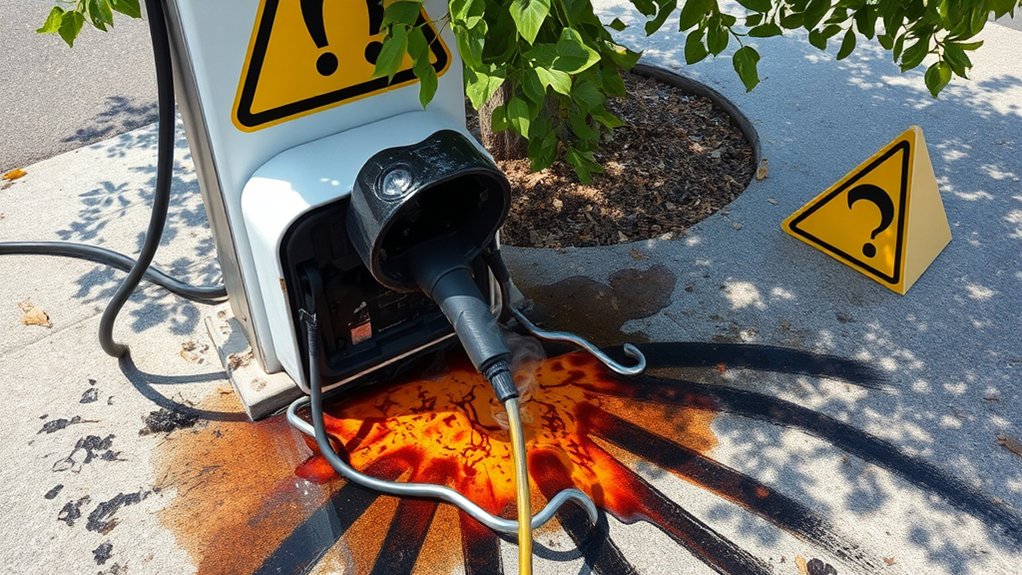
If your EV charger, plug, outlet, or charging connector starts melting, stop charging right away. Melting usually means heat is building at a poor contact point, undersized circuit, damaged receptacle, overloaded connection, or failing charger component. Treat it as an electrical safety problem, not a normal charging issue.
Quick Answer
An EV charger usually melts because high current is passing through a loose, worn, undersized, damaged, or poorly installed connection. That resistance creates heat at the plug, outlet, terminal, or connector. Stop using the charger, shut off power if it is safe, and have a licensed electrician inspect the circuit before you charge again.
Key Takeaways
- A melted EV charger plug or outlet is commonly caused by heat from resistance, often from loose contacts, worn receptacles, poor terminations, or undersized wiring.
- Do not keep charging, tape the cord, reset the breaker repeatedly, or reuse a melted outlet.
- Level 2 chargers need a properly sized 240-volt circuit, correct breaker, correct conductor size, grounding, and local-code compliance.
- Choose EV charging equipment tested by a nationally recognized testing laboratory and inspect plugs, cables, and outlets regularly.
- If you see melting, discoloration, smoke, a burning smell, buzzing, or repeated breaker trips, call a licensed electrician.
At a Glance
| Time Required | 5 minutes to stop charging and secure the area; 30 minutes to 2 hours or more for a professional inspection, depending on the issue. |
| Difficulty | Owner visual check: easy. Electrical diagnosis, outlet replacement, breaker work, or hardwired charger repair: professional only. |
| Tools Needed | For owners: phone camera, flashlight, charger manual, warranty information. For electricians: proper test equipment, torque tools, replacement receptacle or hardwired hardware as needed. |
| Cost | Visual documentation costs $0. Professional repair varies by local labor, outlet type, panel condition, wiring length, permit needs, and whether the charger must be replaced. |
Signs Your Charger Might Be Overheating
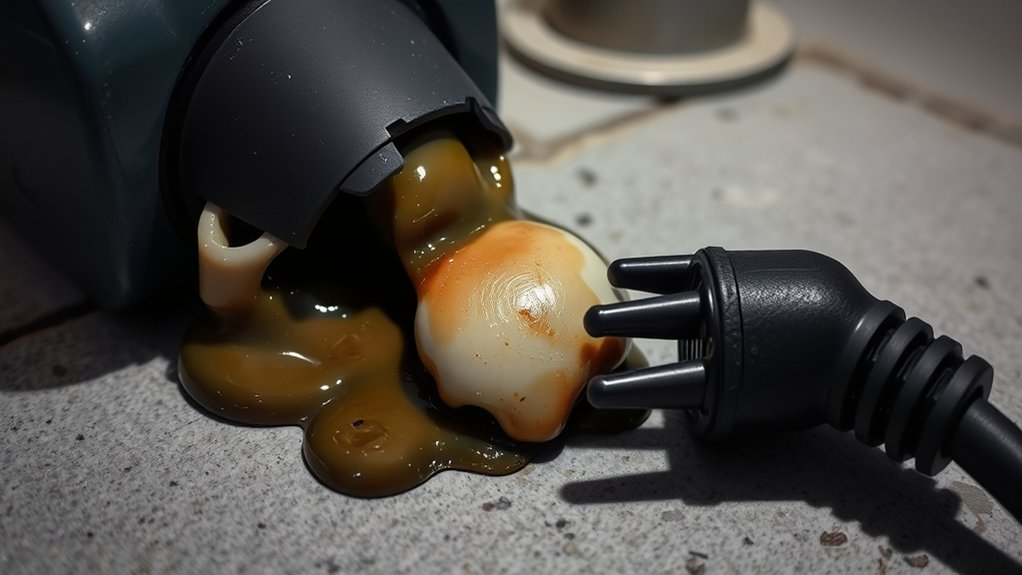
When your EV charger or plug feels too hot to touch, take it seriously. A slight warmth can be normal during charging, but painful heat, soft plastic, discoloration, or a burning smell is not normal.
Look for melted or discolored plastic on the charger handle, wall plug, outlet face, receptacle slots, cable jacket, or hardwired charger housing. Brown marks, black marks, bubbling, cracking, or a warped plug can point to excessive heat.
Warning: If you smell burning, see smoke, hear buzzing or crackling, or notice melting, stop charging immediately. If there is active smoke or fire, leave the area and call emergency services.
Frequent circuit breaker trips during charging are another warning sign. A breaker is designed to protect the circuit, so do not keep resetting it without finding the cause.
Also watch for charging that starts and stops on its own, a plug that no longer fits tightly, a charger that derates unexpectedly, or a cable that gets hot while the vehicle is charging. These symptoms can point to a loose connection, worn receptacle, damaged cable, poor installation, or failing EVSE.
What to Do Immediately If Your EV Charger Melts
If your EV charger melts, your first goal is safety, not diagnosis. Follow these steps before you inspect anything closely:
- Stop charging from the vehicle or charger app if you can do it safely.
- Do not touch hot plastic, exposed metal, or a smoking outlet. Let the equipment cool before anyone gets near it.
- Shut off the circuit breaker only if it is safe to reach the panel. Do not open the charger, outlet box, or electrical panel yourself.
- Keep people, pets, paper, cardboard, fuel containers, and other combustibles away from the charger and outlet.
- Take photos after the area is safe. Photograph the plug, outlet, charger label, breaker label, installation area, and any burn marks.
- Do not reuse the charger, outlet, or adapter until a licensed electrician has inspected the circuit and the charger maker has advised whether the unit can be used again.
Note: A melted plug can be a symptom of a bad wall receptacle, not just a bad charger. Replacing only the charging cord may leave the real hazard in place.
Common Causes of EV Charger Melting
EV charging draws current for a long time. If any part of the connection is weak, heat can build up at that point. The most common causes include:
- Loose plug or worn receptacle: A plug that wiggles in the outlet can create poor contact and heat.
- Loose terminal screws or poor wire terminations: Poorly tightened connections can become high-resistance points.
- Undersized wiring or wrong breaker size: The circuit must match the EVSE output and local electrical code.
- Low-quality or damaged receptacles: Some outlets are not suited for repeated high-load EV charging, especially if they are worn or cheaply made.
- Coiled or covered cables: A tightly coiled cable or a cable under a mat can trap heat.
- Damaged charger cable or connector: Crushed, kinked, cracked, or water-damaged equipment can overheat.
- High ambient temperatures: Hot garages, direct sun, and poor airflow can make thermal problems worse.
- Uncertified or counterfeit equipment: A charger with a fake or missing safety mark may lack proper protections.
For consumer guidance, ENERGY STAR explains that Level 2 chargers use a 240-volt heavy-duty circuit and require professional installation. It also notes that ENERGY STAR certified EV chargers are safety tested by a nationally recognized testing laboratory.
Why Proper Installation Is Crucial for Your EV Charger
Proper installation is one of the biggest factors in EV charging safety. A Level 2 charger is not the same as a phone charger or a small appliance. It can run for hours at a steady load, so small installation mistakes can become serious heat problems over time.
A licensed electrician should verify the panel capacity, circuit breaker size, conductor type, wire gauge, grounding path, receptacle rating, charger output setting, and local permit requirements. The electrician should also follow the charger manufacturer’s installation instructions, including torque requirements for terminals.
If you use a plug-in Level 2 charger, the receptacle must be in good condition and suitable for the load. If you use a hardwired charger, the junction and terminal connections must be installed correctly and protected from moisture, strain, and physical damage.
Pro Tip: Ask the electrician to label the breaker, record the charger amperage setting, and note the installed conductor size on your invoice. This helps with future maintenance, warranty questions, and resale documentation.
The Dangers of Loose Connections in EV Chargers
Loose connections are dangerous because they create resistance. When current flows through resistance at a small contact point, that point can heat up quickly. The plug, outlet, wire terminal, or connector can then discolor, soften, arc, or melt.
A breaker may not always trip right away if the total current is still within the breaker’s rating. That is why a localized hot spot at a worn outlet or loose terminal can become hazardous before the breaker reacts.
Causes of Loose Connections
Loose EV charging connections can come from several sources:
- Outlet contacts that have lost tension after repeated plug-ins.
- Terminals that were not tightened to manufacturer torque specifications.
- Vibration, thermal cycling, corrosion, or moisture inside the box.
- Using adapters or extension cords not approved by the charger maker.
- Plug blades that are dirty, pitted, bent, burned, or worn.
Never bend a plug blade back into shape, file a burned blade, or “make it fit” in a loose outlet. Those are signs that parts need inspection or replacement.
Impact on Charging Safety
A loose connection can reduce charging efficiency, damage the charger, damage the vehicle inlet, damage the wall receptacle, or create a fire risk. You may first notice heat, odor, or nuisance breaker trips. If the problem continues, the plastic around the connection can melt.
Once melting occurs, assume the charger and outlet are unsafe until inspected. Even if the charger still powers on, heat may have damaged internal contacts, insulation, or strain relief.
The Right Wiring Gauge for Safety
The right wiring gauge depends on the charger’s maximum output, breaker rating, conductor material, insulation rating, installation method, ambient temperature, local code, and manufacturer instructions. Do not size an EV charging circuit by guessing.
As a general example, many 30-amp copper branch circuits use 10 AWG copper conductors, while many 50-amp copper branch circuits use 6 AWG copper conductors. Those examples are not a substitute for a code-compliant calculation. Aluminum conductors, long runs, conduit fill, heat, and local amendments can change the correct choice.
The charger output setting also matters. For example, a charger set to deliver more current than the circuit can safely support can overheat the wiring or receptacle. A licensed electrician should confirm that the breaker, wire, receptacle, and charger setting all match.
You should also avoid using extension cords for EV charging unless the vehicle or charger manufacturer specifically allows a listed cord for that exact use. Most home EV charger makers do not recommend extension cords because extra connections add resistance and heat.
Is Fast Charging Worth the Risk?
Faster charging is useful, but it must be matched to safe equipment. For home charging, “faster” usually means Level 2 AC charging on a 240-volt circuit. Public DC fast charging is different equipment with different connectors, cooling, power electronics, and site-level electrical infrastructure.
ENERGY STAR explains that Level 1 chargers commonly add about 2 to 5 miles of range per hour, while Level 2 chargers commonly add about 10 to 20 miles of range per hour, with some 50-amp installations charging faster. That speed increase is helpful, but it also makes proper installation more important.
Charging Speed Vs. Safety
Charging speed should never be increased beyond what the circuit can safely handle. If your panel, breaker, receptacle, or wiring cannot support a higher-output charger, use a lower amperage setting or upgrade the circuit properly.
If your charger allows adjustable amperage, make sure the setting matches the installed circuit. Do not raise the amperage just because the charger app allows it.
Heat Generation Factors
Heat can increase when current is higher, but current is only one part of the problem. Heat risk rises when high current combines with poor contact, weak airflow, damaged equipment, or improper installation.
- Current: Higher amperage creates more heat if resistance is present.
- Contact quality: Tight, clean, rated connections stay safer than loose or corroded ones.
- Ventilation: Chargers, plugs, and cables need room to release heat.
- Environment: Direct sun, hot garages, and wet or dirty areas can stress equipment.
Equipment Quality Considerations
Choose charging equipment with a real safety certification mark from a nationally recognized testing laboratory, such as UL, ETL, or CSA. OSHA explains that an NRTL certification mark means the product was tested and certified to applicable product safety standards.
Be careful with unusually cheap chargers, unknown brands, counterfeit labels, damaged used equipment, or chargers that do not list a model number, electrical rating, safety mark, and manufacturer support information.
Warning: Do not use tape to repair a cracked, burned, or melted charger. Tape can trap heat, hide damage, and delay a proper repair.
Why Grounding Matters for Your EV Charger
Grounding helps provide a safe path for fault current and supports the charger’s built-in safety systems. If the equipment grounding path is missing, loose, corroded, or improperly connected, the charger may not operate safely.
Grounding is especially important for metal boxes, hardwired chargers, outdoor installations, and circuits exposed to moisture. A licensed electrician should verify grounding during installation and any repair after melting, overheating, nuisance tripping, or electrical damage.
Many EV chargers also use ground-fault protection and control signals to manage charging safely. Do not bypass these features, remove grounding pins, use unapproved adapters, or defeat a breaker or GFCI device that keeps tripping.
Essential Maintenance Tips for Your EV Charging Station
Regular maintenance helps you catch heat damage early. ENERGY STAR notes that EV chargers may require periodic inspection, testing, and preventive maintenance, often by a qualified electrical contractor.
| Maintenance Task | Frequency | What to Check |
|---|---|---|
| Inspect plug, connector, and cable | Monthly | Look for melting, cracks, cuts, pitting, discoloration, kinks, or burned odor. |
| Check fit at the outlet or vehicle inlet | Monthly | A plug should fit firmly. Stop using it if it wiggles, slips out, or feels loose. |
| Keep cable uncoiled during charging | Every session | Avoid tight coils, mats, covers, or pinched cable paths that trap heat. |
| Clean gently | As needed | Use the manufacturer’s instructions. Do not spray water into plugs, outlets, or connectors. |
| Schedule professional inspection | Annually or after any problem | Ask the electrician to check the receptacle, terminations, breaker, grounding, and charger settings. |
Store the cable so it is not crushed by a garage door, driven over, sharply bent, or exposed to standing water. If your charger is outdoors, confirm that the installation is rated for that location and protected according to the manufacturer’s instructions.
When to Hire an Electrician
Hire a licensed electrician any time you see signs of overheating or charging-related electrical trouble. Do not open an electrical panel or charger housing unless you are qualified to work on that equipment.
Call an electrician if you notice:
- Melted, brown, black, bubbled, or warped plastic.
- A burning smell near the outlet, plug, panel, or charger.
- A plug or outlet that feels painfully hot.
- Repeated breaker trips or GFCI trips during charging.
- Buzzing, crackling, arcing, sparks, or smoke.
- A loose outlet, loose plug, or charger that stops charging unexpectedly.
- Any previous DIY wiring, adapter use, extension cord use, or unknown installation history.
The electrician may recommend replacing the receptacle, hardwiring the charger, correcting the breaker or wire size, reducing the charger amperage setting, upgrading the circuit, repairing grounding, or replacing damaged EVSE.
What to Do Legally If Your EV Charger Melts?
This section is general information, not legal advice. If your EV charger melts and causes property damage, vehicle damage, injury, smoke damage, or a fire response, document the incident carefully before repairs erase evidence.
After the area is safe, take these steps:
- Photograph everything: the charger, plug, outlet, breaker panel label, installation area, vehicle charge port, burn marks, receipts, and charger label.
- Save damaged parts: do not throw away the charger, plug, outlet, breaker, or receptacle unless your insurer, electrician, or local authority tells you to.
- Write a timeline: include the date, charging start time, vehicle model, charger model, breaker trips, smells, sounds, app errors, and any earlier problems.
- Contact the installer and charger manufacturer: ask for written guidance and preserve all email or ticket numbers.
- Notify your insurer if there is damage: follow the claim process before replacing major parts.
- Report safety concerns when appropriate: if you suspect a product defect, keep records and consider filing a safety complaint with the proper agency or consumer-safety channel.
- Speak with a legal professional if the loss is serious: especially if there is fire damage, injury, denied warranty coverage, or a dispute over installation quality.
Do not authorize disposal of damaged equipment until you understand whether your insurer, manufacturer, installer, or attorney needs to inspect it.
Frequently Asked Questions
Why did my car charger start melting?
Your charger likely started melting because heat built up at a weak connection. Common causes include a loose outlet, worn receptacle contacts, poor wire termination, undersized circuit, damaged cable, unapproved adapter, or failing charger component.
What is the life expectancy of an EV charger?
An EV charger can last for many years when it is installed correctly, protected from damage, maintained, and used within its rating. Heat damage, water intrusion, recalls, cracked cables, loose plugs, or repeated faults can shorten its life and may require replacement.
Is it okay to put tape on a charger?
No. Do not put tape on a melted, cracked, cut, or overheated EV charger cable or plug. Tape can trap heat and hide damage. Stop using the charger and contact the manufacturer or a qualified electrician.
How do I make a charger not overheat?
Use certified equipment, install it on the correct circuit, keep connections tight and dry, avoid adapters and extension cords, uncoil the cable during charging, keep airflow around the charger, and schedule professional inspections. If overheating has already happened, stop using the charger until it is inspected.
Can I keep using the outlet if only the charger plug melted?
No. The outlet may be the cause of the melting, even if it looks less damaged than the plug. Do not reuse the outlet for EV charging until a licensed electrician inspects it and replaces any damaged parts.
Why does my EV charger trip the breaker?
A breaker trip can come from an overloaded circuit, ground fault, short, bad breaker, charger fault, wiring problem, or charger amperage setting that is too high for the circuit. Do not keep resetting the breaker. Have the circuit inspected.
Conclusion
A melting EV charger is a warning that heat is building where it should not. The cause may be a loose plug, worn receptacle, poor installation, wrong circuit sizing, damaged cable, grounding problem, or failing charger. Stop charging, avoid quick fixes, document the damage, and bring in a licensed electrician before using that charger or outlet again. Safe EV charging depends on certified equipment, correct installation, regular inspection, and quick action when warning signs appear.
Sources
- ENERGY STAR Electric Vehicle Chargers — Level 1 and Level 2 charging guidance, professional installation, certified charger safety, and maintenance context.
- OSHA Nationally Recognized Testing Laboratory Program — what NRTL certification marks mean for product safety testing.
- SAE J1772 Electric Vehicle Conductive Charge Coupler — EV conductive charging coupler and EVSE standard context.
- NFPA 70 National Electrical Code — electrical-code framework for safe wiring and equipment installation.
- AP report on NHTSA EV charger investigation — current safety context for documenting and reporting EV charger electrical malfunctions.