Disclosure: This roundup is reader-supported. We may earn a commission from qualifying purchases made through the Amazon links below, at no extra cost to you.
A good home charger should make your Genesis GV60 easier to own, not create new compatibility or installation problems. The best choice depends on your vehicle’s charging inlet, your electrical panel, your parking layout, and whether you prefer a permanent hardwired station or a plug-in setup.
For most daily drivers, a properly installed Level 2 charger offers the best balance of overnight charging speed and convenience. A lower-power portable charger can still be useful as a travel or emergency backup.
Compatibility Note
Check the charging inlet on your exact GV60 model year before ordering. The J1772 chargers in this guide connect directly to J1772-equipped vehicles. A GV60 with a native NACS inlet will need a properly rated AC adapter or a native NACS version of the charger. Your vehicle will only draw the power supported by its onboard charger and the installed circuit.
Quick Verdict
Choose the ChargePoint HomeFlex for a polished hardwired setup, the Emporia 48A for high-output smart control, the EVIQO 40A for plug-in convenience, or the EVDANCE Dual-Voltage as a slower portable backup.
Top Picks
|
Best For |
Product |
Why It Stands Out |
|---|---|---|
|
Best Overall Hardwired |
High-output smart charging with a permanent, tidy installation |
|
|
Best High-Power Smart |
Strong app controls, energy monitoring, and up to 48A when hardwired |
|
|
Best Plug-In Smart |
40A output, a 25-foot cable, and NEMA 14-50 plug-in installation |
|
|
Best Portable Backup |
Works from compatible 120V or 240V outlets for travel and temporary charging |
How We Chose
We focused on chargers that fit the main buyer intent: reliable home charging for a Genesis GV60. We prioritized connector compatibility, usable Level 2 output, recognized safety listings, installation clarity, cable reach, weather resistance, smart controls, and honest limitations.
We also separated full-time home stations from portable backup equipment. High-amperage claims do not automatically mean faster charging because the vehicle, circuit, breaker, wiring, and charger configuration all limit the final rate.
Best Home EV Chargers for the Genesis GV60
The ChargePoint HomeFlex is the strongest fit for a clean, permanent garage installation. Its adjustable output lets an electrician configure the station around the available circuit instead of forcing your home to support the charger’s maximum rating.
The app can handle schedules, charging history, and remote status checks. That is useful when your utility offers lower overnight rates. The main tradeoff is installation: the hardwired version should be installed and commissioned by a qualified electrician.
Why You’ll Like It
- High-output Level 2 charging for regular overnight use
- Adjustable current to suit different electrical-service limits
- Smart scheduling and charging-session tracking
- Permanent wall-mounted design with built-in cable management
Who Should Buy This
Choose it when you own your home, expect to charge most nights, and want a polished installation that can stay in place for years.
Who Should Avoid This
Skip it when you rent, regularly move the charger, or do not want to pay for a hardwired installation.
Before you buy: Confirm the connector type, cable reach, panel capacity, breaker size, wiring route, and local permit requirements with your electrician.
The Emporia charger is a practical choice when energy data matters as much as charging speed. Its smart controls can schedule charging and show usage through the companion app, helping you understand how much electricity the GV60 uses at home.
The charger can run at up to 48A when correctly hardwired. Plug-in configurations are generally limited to a lower continuous output. Your electrician should set the current according to the installed circuit and the vehicle’s onboard charging limit.
Why You’ll Like It
- Up to 48A output when professionally hardwired
- 25-foot charging cable for flexible parking
- Wi-Fi scheduling and real-time energy monitoring
- Available installation options for different home setups
Who Should Buy This
Pick it when you want a strong smart-charging feature set and plan to monitor energy use or coordinate charging with off-peak utility rates.
Who Should Avoid This
Skip it when your garage has unreliable Wi-Fi or when you prefer a charger with minimal app dependence.
The EVIQO 40A combines plug-in convenience with enough output for routine overnight charging. Its 25-foot cable helps when the outlet is not directly beside the GV60’s charging port, and the app supports schedules, current adjustment, and energy tracking.
A plug-in charger is removable, but the outlet and branch circuit still need to be designed for continuous EV charging. Do not assume an existing range or RV outlet is suitable without inspection.
Why You’ll Like It
- 40A, 240V Level 2 charging
- NEMA 14-50 plug for a removable installation
- 25-foot J1772 cable
- Wi-Fi app with scheduling and usage tracking
- Weather-resistant enclosure for appropriate indoor or outdoor mounting
Who Should Buy This
Choose it when you want strong Level 2 performance without permanently hardwiring the charger to the wall.
Who Should Avoid This
Skip it when your outlet is old, lightly built, shared with another load, or not installed for continuous EV charging.
The EVDANCE unit works from compatible 120V and 240V outlets, making it more flexible than a fixed wall station. At 240V and 16A, it can provide a modest Level 2 charge. At 120V, it is much slower and is best used for overnight top-ups.
This charger uses a NEMA 6-20 connection for its 240V mode, not a NEMA 14-50 outlet. Check the exact receptacle before buying and avoid improvised adapter chains.
Why You’ll Like It
- Supports compatible 120V and 240V outlets
- 25-foot cable and portable carrying format
- Useful for travel, temporary parking, and backup charging
- No permanent wall-mounted station required
Who Should Buy This
Choose it as a second charger for trips, rentals, or locations where a full-power home station is unavailable.
Who Should Avoid This
Skip it as your main charger when you drive long distances daily or regularly need a large overnight recharge.
Quick Comparison
| Product Name | Image | Maximum Advertised Output | Installation | Best Use |
|---|---|---|---|---|
| ChargePoint HomeFlex Level 2 EV Charger |
 |
Up to 50A, installation-dependent | Hardwired | Permanent daily home charging |
| EMPORIA Level 2 EV Charger |
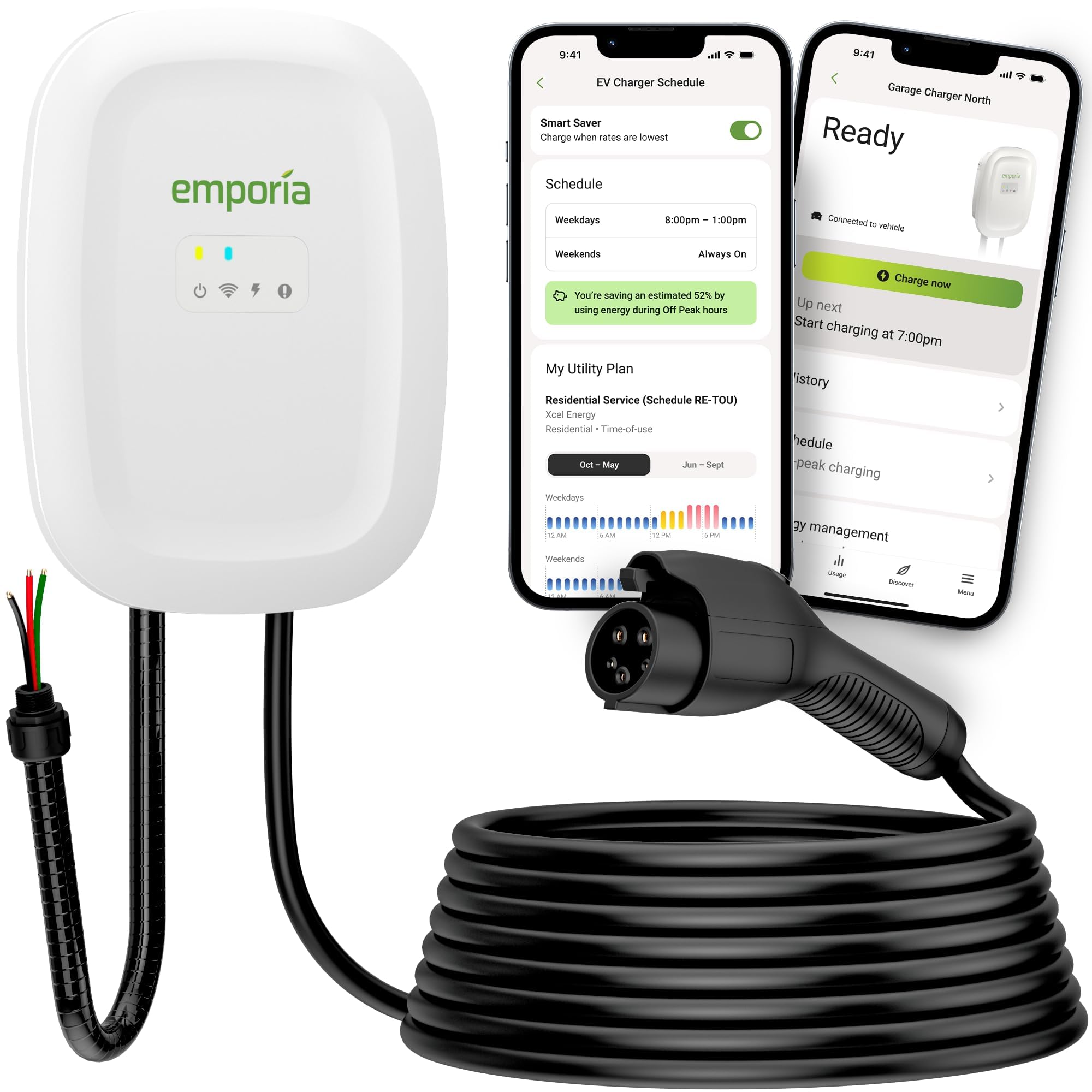 |
Up to 48A hardwired | Hardwired or model-dependent plug-in option | Smart energy monitoring |
| EVIQO Level 2 EV Charger |
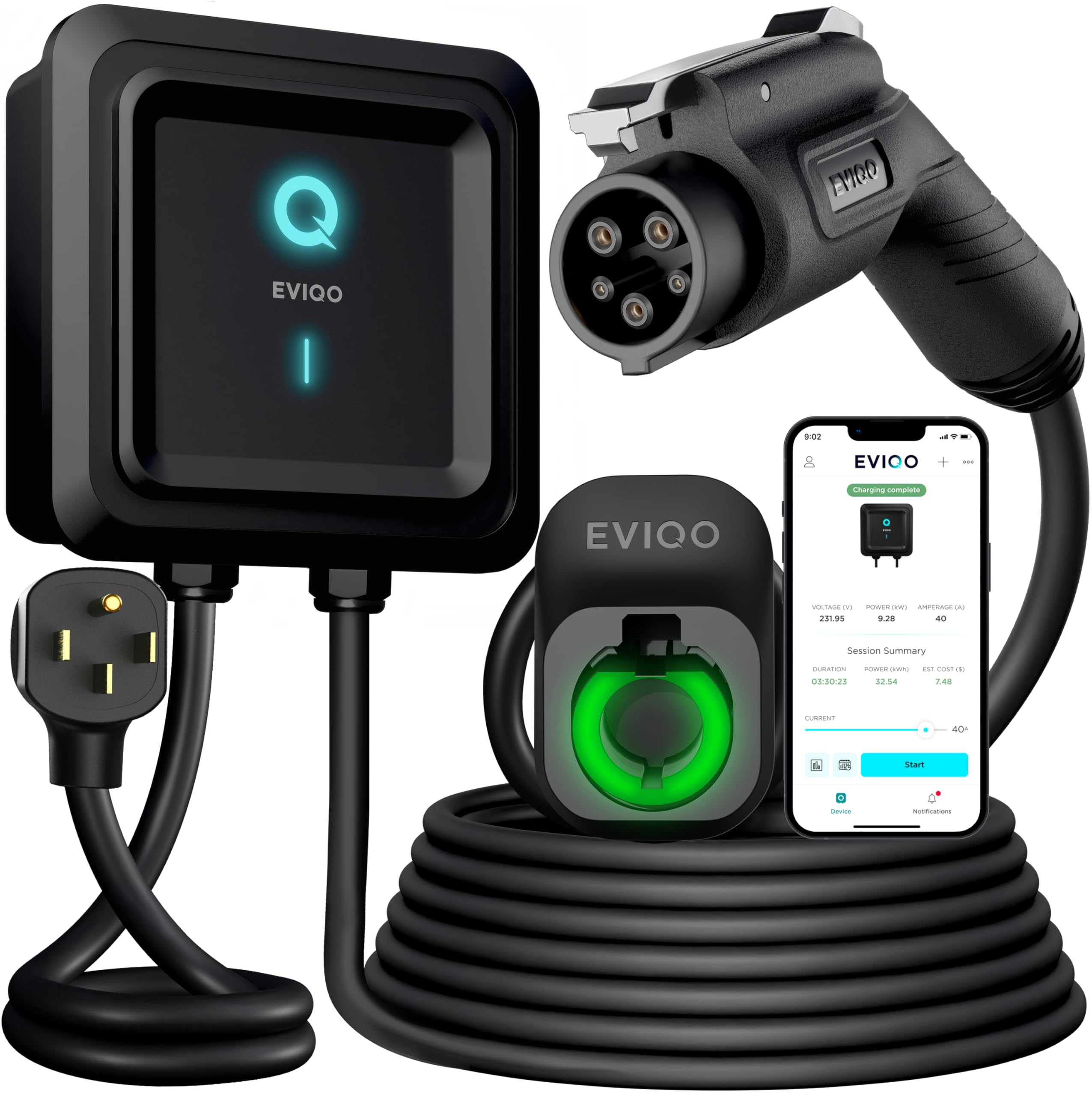 |
40A | NEMA 14-50 plug-in | Removable daily home charging |
| EVDANCE Level 1 & 2 EV Charger |
 |
12A at 120V or 16A at 240V | NEMA 5-15 and NEMA 6-20 | Travel and backup charging |
How to Choose a GV60 Home Charger
Check the Connector First
Do not buy only by vehicle name. Confirm whether your exact GV60 uses a J1772/CCS1 inlet or a native NACS inlet. The connector must match directly or through a properly rated AC adapter approved for your vehicle and charger.
Match the Charger to the Circuit
EV charging is a continuous electrical load. The breaker, wiring, receptacle, charger setting, and local code must work together. A charger rated for 40A or 48A cannot safely deliver that output from an undersized circuit.
Choose Hardwired or Plug-In
A hardwired station usually provides the cleanest permanent installation and avoids wear at a high-current receptacle. A plug-in station is easier to remove, but it requires a high-quality receptacle and a circuit designed for continuous charging.
Measure Cable Reach
Measure from the charger location to the GV60’s charge port in the vehicle’s normal parking position. Leave enough slack for comfortable connection without creating a trip hazard or tightly stretching the cable.
Decide Whether You Need Smart Features
Scheduling can help you use lower-cost utility periods, but the GV60 may already offer charging schedules. App-based energy tracking is most useful when you want household-level cost data or remote charger control.
Before You Buy Checklist
- Verify J1772 or NACS connector compatibility
- Ask an electrician to confirm panel and circuit capacity
- Choose hardwired, NEMA 14-50, or NEMA 6-20 installation
- Measure the required cable length
- Check safety listings and weather rating
- Confirm warranty terms on the current product page
FAQ
Will Every J1772 Charger Work With Every Genesis GV60?
No. A J1772 charger connects directly only to a GV60 equipped with a J1772-compatible AC inlet. A native NACS-equipped GV60 needs a suitable AC adapter or a charger with a native NACS connector. Always confirm your exact model year and market specification.
Is a 48A Charger Faster Than a 40A Charger for the GV60?
Not always. The vehicle’s onboard AC charger sets the maximum power it can accept. A higher-rated station may provide future flexibility, but the GV60 will not draw more than its own limit or the configured circuit allows.
Should You Choose Hardwired or Plug-In?
Choose hardwired for a permanent installation, higher-output capability, and fewer receptacle concerns. Choose plug-in when removability matters and a correctly installed continuous-duty outlet is already available.
Can a Portable 120V Charger Be Your Main Charger?
It can work for very light daily driving, but it is usually too slow for regular large recharges. Most GV60 owners will find Level 2 charging more practical for daily home use.
Do You Need an Electrician?
Use a qualified electrician for a new hardwired charger, a new 240V circuit, a NEMA receptacle installation, or any setup where panel capacity and breaker sizing are uncertain. Follow the charger manual and local electrical-code requirements.
Final Recommendation
The ChargePoint HomeFlex is the best all-around choice for a permanent hardwired installation. The Emporia 48A is a strong alternative when detailed energy monitoring matters, while the EVIQO 40A makes sense for a properly installed NEMA 14-50 setup.
Keep the EVDANCE Dual-Voltage in the portable-backup category. It offers useful outlet flexibility, but it does not replace a higher-output Level 2 station for drivers who regularly need substantial overnight charging.