
This roundup is reader-supported. When you click through links, we may earn a referral commission on qualifying purchases.
You want an EV charger that works for customers, fleet vehicles, and employees without creating headaches or surprise costs. Choosing the right station affects uptime, utility demand, parking flow, and your bottom line, so it pays to prioritize reliability, compatibility, safe installation, and total cost of ownership.
This guide helps you compare EV chargers for small business use, from high-output wall units to portable backup chargers. The best choice depends on your vehicles, electrical capacity, connector needs, cable reach, and whether you want smart controls or a simpler plug-and-charge setup.
Quick Verdict
Best overall: Choose the Tesla Universal Wall Connector if you need broad NACS and J1772 support for mixed drivers. Best smart value: the Emporia 48A is a practical pick when scheduling and app control matter. Best simple rugged pick: the Grizzl-E Classic keeps things straightforward for daily use.
Top Picks
|
Category |
Product |
Best For |
CTA |
|---|---|---|---|
|
Best Universal |
Mixed fleets, visitors, and customer charging |
||
|
Best App Ecosystem |
Businesses that want smart controls and flexible amperage |
||
|
Best Value Smart |
Value-focused smart charging |
||
|
Best Smart Hardwired |
Hardwired smart installations |
||
|
Best Pro-Grade |
Mixed-vehicle sites that need a longer cable |
||
|
Most Durable |
Rugged, simple charging |
||
|
Best 40A Portable |
Portable higher-output backup charging |
||
|
Best Lightweight Portable |
Moveable charging for temporary use |
||
|
Best Entry-Level |
Occasional Level 1 or Level 2 backup use |
||
|
Best Compact Backup |
Compact backup charging and remote sites |
Selection Criteria
You need chargers that balance charging speed, connector compatibility, durability, installation cost, and day-to-day management. We prioritized Level 2 chargers with useful amperage ranges, practical cable lengths, clear small-business use cases, and enough flexibility for employee charging, light fleets, customer amenities, events, or backup charging.
We also separated primary wall-mounted chargers from slower portable units. A 48A or 50A wall charger may be the better long-term station, while 16A to 40A portable chargers usually make more sense for backup, remote sites, or occasional top-ups.
Before You Buy
- Check electrical capacity first: A licensed electrician should confirm panel capacity, breaker size, wiring, permits, and whether hardwiring is required.
- Match the connector to your drivers: J1772 works with many non-Tesla EVs, while NACS support helps Tesla and newer NACS-equipped vehicles.
- Do not chase amperage alone: Higher output can cost more to install if your site needs upgrades.
- Decide how managed the charger needs to be: Smart chargers help with scheduling and monitoring, but simple chargers reduce app and network issues.
- Confirm warranty terms: Business or commercial use may have different warranty coverage than residential use.
Why You’ll Like It
- Broad connector support helps reduce compatibility questions at a shared parking space.
- High Level 2 output can shorten overnight or between-shift charging windows.
- Wall-mounted design keeps the cable organized for daily business use.
Keep In Mind
- Plan professional installation and confirm the circuit size before buying.
- Commercial warranty terms may be shorter than residential terms, so confirm coverage for your site.
Use Cases
|
Situation |
How It Helps |
|---|---|
|
Fleet Charging |
High output helps recover range overnight or between shifts. |
|
Customer Amenity |
Broad vehicle support makes it easier to serve visitors with different EVs. |
|
Employee Charging |
A fixed wall unit gives staff a predictable place to charge during work hours. |
Why You’ll Like It
- Adjustable amperage helps match the charger to your available electrical capacity.
- Wi-Fi controls support scheduling and remote monitoring.
- The longer cable helps when parking spots do not line up perfectly with the wall.
Keep In Mind
- It is still a home-style charger, so confirm that its features and warranty fit your business use.
- Network setup and app support can matter if staff will manage daily charging.
Use Cases
|
Situation |
How It Helps |
|---|---|
|
Fleet Top-Ups |
Higher amperage options help restore range faster when vehicles rotate through a shared spot. |
|
Visitor Charging |
Smart controls make it easier to manage sessions without constant supervision. |
|
Limited Electrical Service |
Adjustable power lets you start within existing capacity and avoid overspending. |
Why You’ll Like It
- App controls help you schedule charging sessions and reduce manual oversight.
- High output can work well for employee charging or light fleet use when properly installed.
- A 25 ft cable gives more flexibility across imperfect parking layouts.
Keep In Mind
- Full 48A output generally requires the right hardwired setup; plug-in use may run at a lower output.
- Confirm compatibility with your vehicles and the electrical plan before installation.
Use Cases
|
Situation |
How It Helps |
|---|---|
|
Fleet Operations |
Scheduling can help vehicles start each shift with usable range. |
|
Customer Charging |
Smart control helps manage charging without assigning staff to watch every session. |
|
Employee Perks |
A dependable on-site charger can reduce range anxiety for staff. |
Why You’ll Like It
- Adjustable power helps fit different electrical environments.
- Wi-Fi and Bluetooth features support monitoring and scheduling.
- The 25 ft cable improves reach for busy lots and awkward spaces.
Keep In Mind
- A licensed electrician should size the circuit and installation correctly.
- Smart features are useful only if your team will actually monitor and manage them.
Use Cases
|
Situation |
How It Helps |
|---|---|
|
Fleet Charging |
Adjustable output helps replenish vehicles while controlling site demand. |
|
Customer Amenity |
Remote monitoring can reduce the need for staff oversight. |
|
Limited Service Sites |
Dialing back power can help avoid immediate service upgrades. |
Why You’ll Like It
- J1772 and NACS support can serve mixed fleets and visitors more easily.
- The long cable helps reach vehicles without forcing drivers into one exact spot.
- Access-control features may help when you want to limit casual use.
Keep In Mind
- Confirm the warranty, certification details, and connector configuration on the current listing before purchase.
- It may be more charger than you need for a simple employee-only parking space.
Use Cases
|
Situation |
How It Helps |
|---|---|
|
Fleet Charging |
Adjustable output helps tailor charging to your panel and vehicle schedule. |
|
Customer Charging |
Dual connector support reduces adapter friction for visitors. |
|
Event Or Backup Use |
Long cable reach helps when parking layouts change. |
Why You’ll Like It
- A rugged enclosure and simple controls fit high-touch shared locations.
- The 24 ft cable gives useful reach for outdoor or semi-outdoor parking.
- No required app setup makes staff training easier.
Keep In Mind
- It does not offer the same remote reporting and scheduling tools as smart chargers.
- Confirm outlet, breaker, and mounting requirements before installation.
Use Cases
|
Situation |
How It Helps |
|---|---|
|
Busy Fleet Use |
Steady 40A charging helps keep light-duty vehicles moving. |
|
Outdoor Installations |
Rugged hardware and cable length help in exposed parking areas. |
|
Low-Maintenance Sites |
A simpler charger reduces network and app troubleshooting. |
Why You’ll Like It
- 40A capability can shorten charging windows compared with smaller portable units.
- The 25 ft cable helps reach vehicles in temporary parking setups.
- Plug-in use makes it easier to move between prepared locations.
Keep In Mind
- It still requires a suitable 240V outlet and correctly sized circuit.
- It is better as a flexible tool than a fully managed commercial charging hub.
Use Cases
|
Situation |
How It Helps |
|---|---|
|
Pop-Up Events |
Bring it to temporary sites that already have a suitable outlet. |
|
Backup Charging |
Keep vehicles moving when a fixed charger is unavailable. |
|
Small Fleet Use |
40A output helps recover range overnight for light-duty vehicles. |
Why You’ll Like It
- Portable design supports temporary locations and changing parking needs.
- Wi-Fi app control gives basic scheduling without a permanent station.
- The 25 ft cable helps in shared or uneven parking layouts.
Keep In Mind
- It is not the strongest option for heavy daily fleet use.
- Check outlet requirements and weather exposure before using it in a business setting.
Use Cases
|
Situation |
How It Helps |
|---|---|
|
Pop-Up Events |
Move the charger to offsite events with prepared electrical access. |
|
Backup Fleet Charging |
Use it to top off light-duty vehicles when a main charger is down. |
|
Shared Parking Areas |
Cable length and portability help when parking spots rotate. |
Why You’ll Like It
- Dual-voltage support can help when you only have basic outlet access.
- Built-in display and timer reduce dependence on an app.
- Portable setup makes it easy to store as a backup.
Keep In Mind
- The lower current means slower charging, especially for fleet needs.
- Use it for light-duty top-ups, emergencies, or overnight charging rather than fast turnaround.
Use Cases
|
Situation |
How It Helps |
|---|---|
|
Event Charging |
Bring it to temporary locations for slow top-ups when power is limited. |
|
Backup Station |
Keep it available when a primary charger is offline. |
|
Employee Overnight Charging |
Use it for slower charging when time is less urgent. |
Why You’ll Like It
- Adjustable current helps match basic outlet options.
- Physical controls are easy for staff to understand.
- Weather-resistant design can help in semi-exposed conditions when used safely.
Keep In Mind
- The 16A ceiling makes it too slow for most primary business charging needs.
- Confirm outlet type, adapter use, and safety requirements before relying on it.
Use Cases
|
Situation |
How It Helps |
|---|---|
|
Pop-Up Events |
Offer slow charging at temporary locations with suitable electrical access. |
|
Backup Charging |
Use it as a fallback for light-duty top-offs. |
|
Remote Sites |
Simple controls help staff use it without app setup. |
Detailed Comparison
| Product Name | Image | Current Rating | Connector Type | Best Use |
|---|---|---|---|---|
| Tesla Universal Wall Connector |
 |
Up to 48A | NACS plus J1772 support | Mixed fleets, visitors, and customer charging |
| ChargePoint HomeFlex |
 |
Up to 50A | J1772 | Businesses that want smart controls and flexible amperage |
| Emporia 48A |
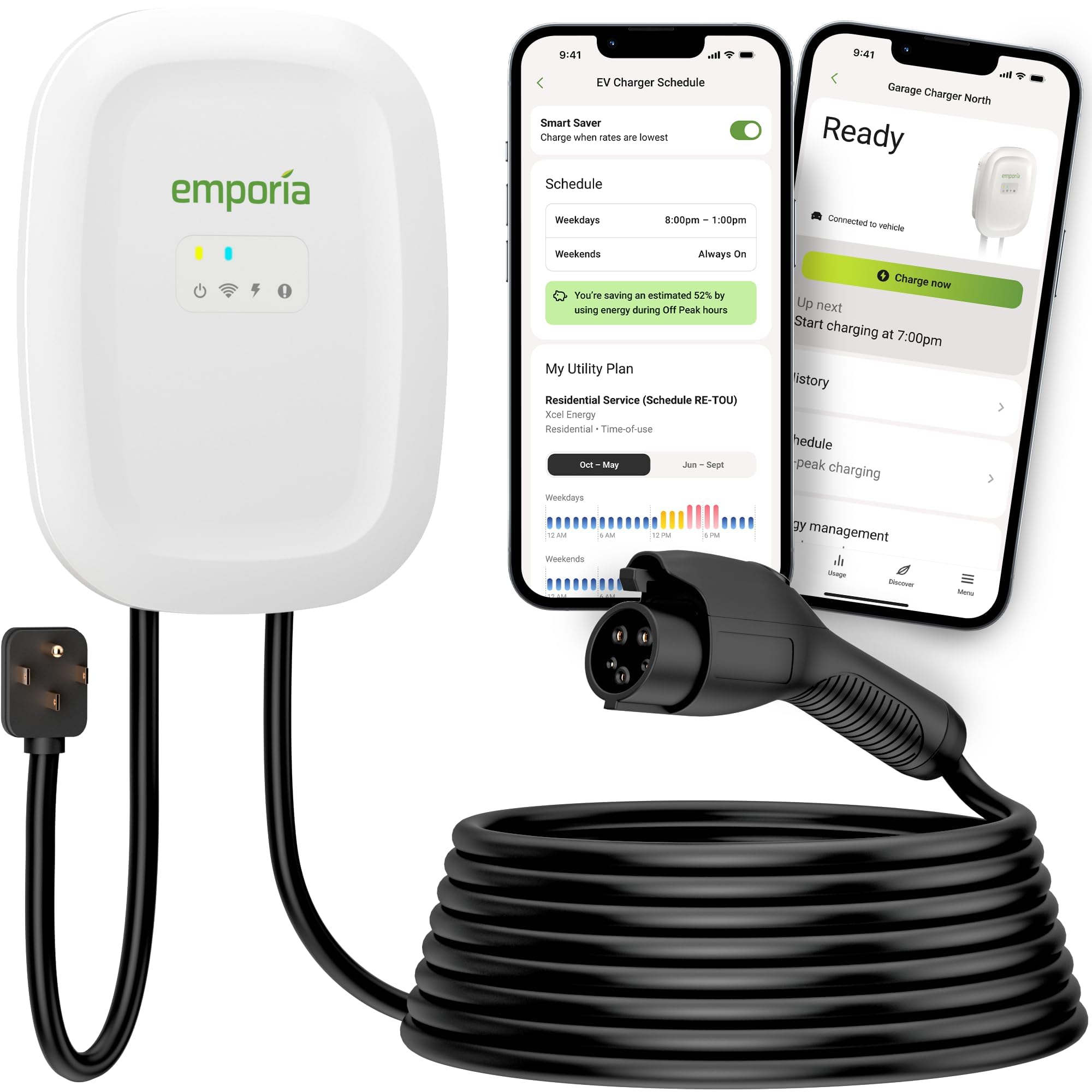 |
Up to 48A when hardwired | J1772 | Value-focused smart charging |
| Autel 50A |
 |
Up to 50A | J1772 | Hardwired smart installations |
| Apex Mach1 |
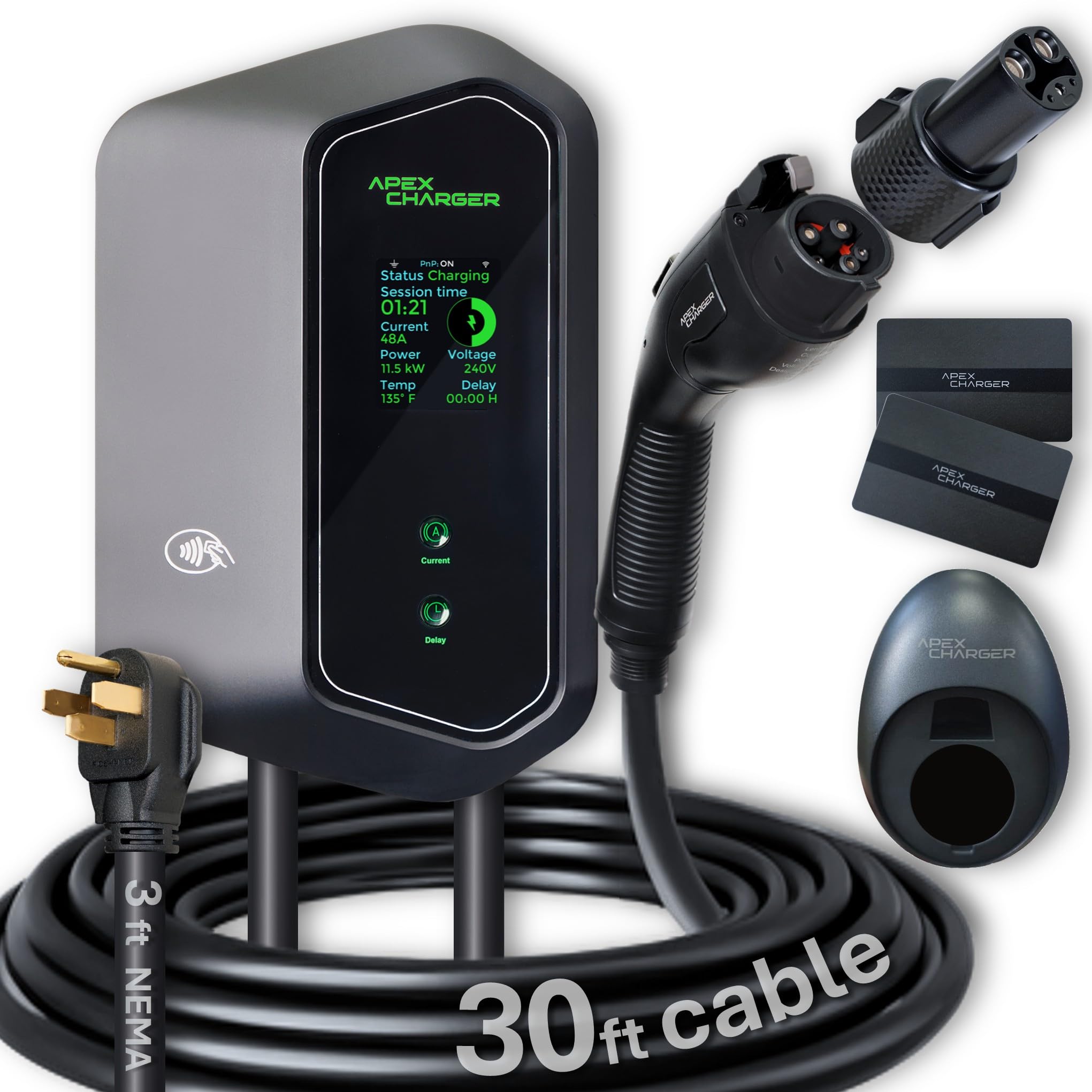 |
Up to 48A | J1772 and NACS support | Mixed-vehicle sites that need a longer cable |
| Grizzl-E Classic |
 |
Up to 40A | J1772 | Rugged, simple charging |
| ELEGRP 40A |
 |
Up to 40A | J1772 | Portable higher-output backup charging |
| Aimiler 32A |
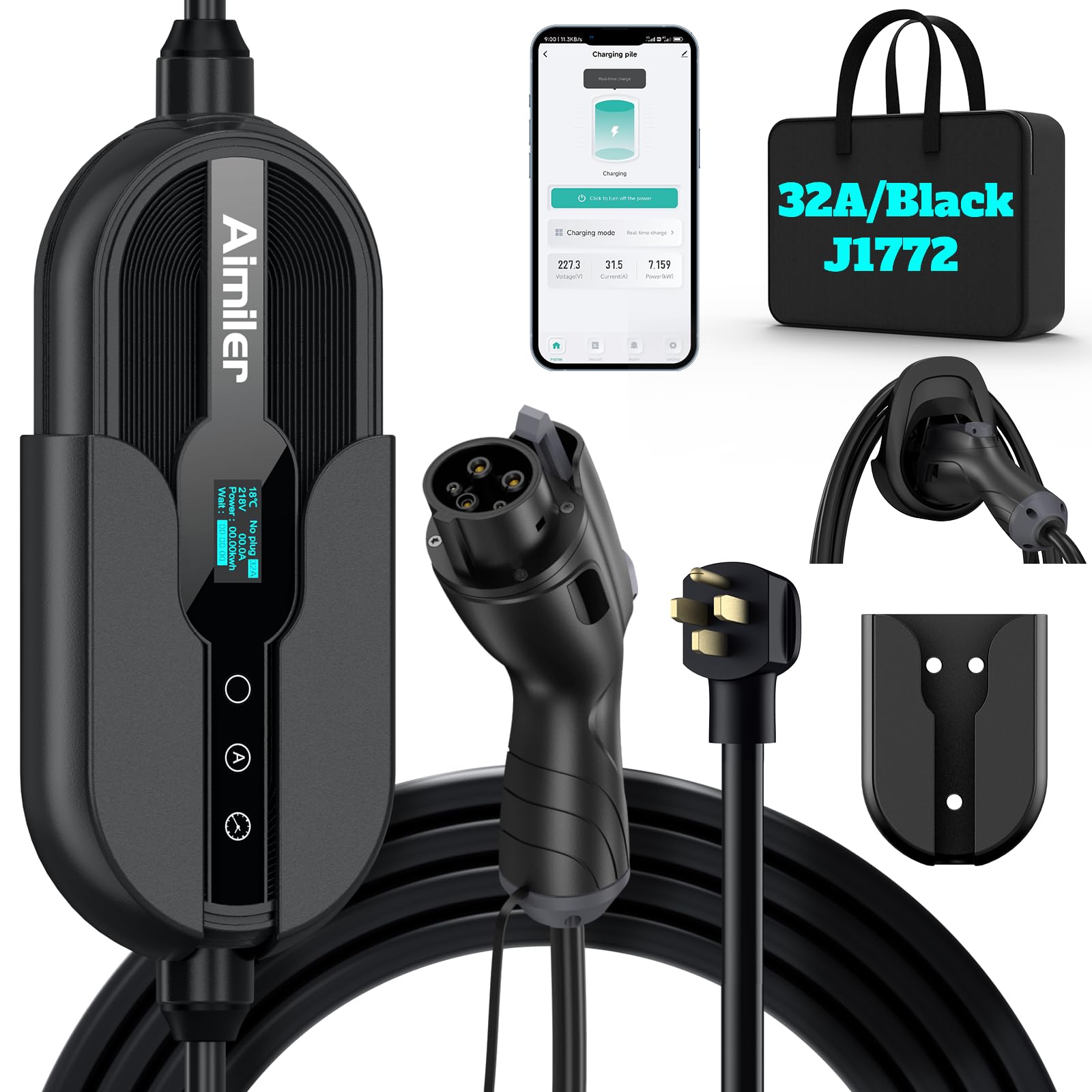 |
Up to 32A | J1772 | Moveable charging for temporary use |
| Raylix Portable |
 |
8A to 16A | J1772 | Occasional Level 1 or Level 2 backup use |
| bokman Portable |
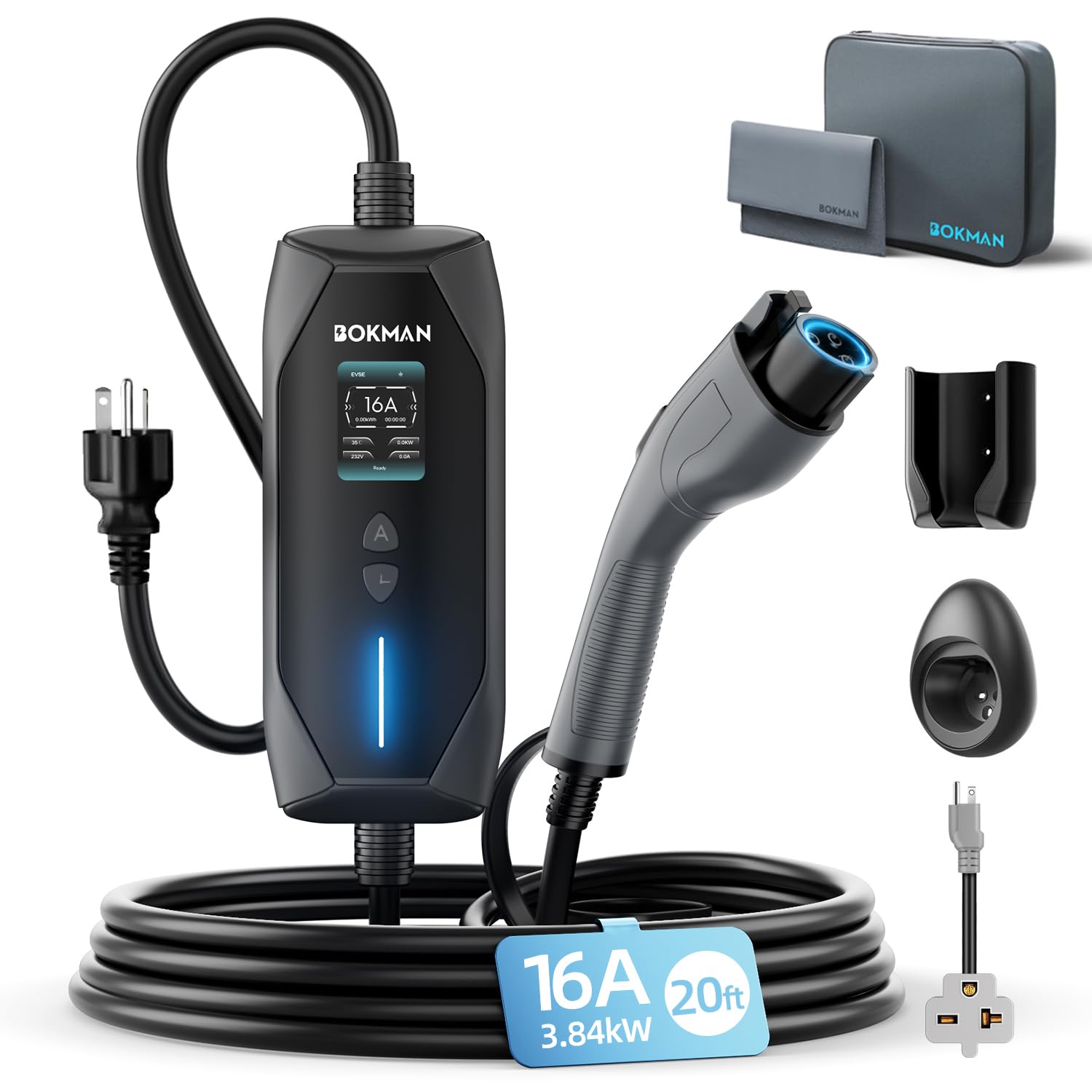 |
6A to 16A | J1772 | Compact backup charging and remote sites |
Which EV Charger Should You Pick?
If you need one fixed station that can serve a mixed group of customers, employees, or fleet vehicles, start with a universal or high-output wall charger. The Tesla Universal Wall Connector is the easiest pick for broad connector coverage, while ChargePoint HomeFlex and Autel 50A make sense when app control and adjustable power are important.
If you want a lower-fuss charger for daily use, the Grizzl-E Classic is the safer bet because it avoids network dependence. For backup use, pop-up events, or remote locations, choose a portable charger such as ELEGRP 40A, Aimiler 32A, Raylix Portable, or bokman Portable based on how much power your outlet can safely support.
FAQ
How do I choose the right EV charger for a small business?
Start with the vehicles and charging schedule. A higher-output wall charger makes sense for fleet vehicles, customer amenities, or busy employee parking. A lower-amp portable charger works better as a backup, event charger, or slow overnight option. Also compare connector support, cable length, weather exposure, warranty terms, and whether you need app control or access management.
Do I need a licensed electrician to install a Level 2 EV charger?
Yes, plan on using a licensed electrician for a Level 2 installation. The electrician can check panel capacity, breaker size, wiring, local code requirements, permitting, and whether the charger should be hardwired or plugged into a dedicated outlet.
Is a 48A or 50A charger always better for business use?
Not always. Higher amperage can reduce charge time, but it can also require a larger circuit and higher installation cost. Adjustable chargers are useful because you can set the output to match your electrical capacity, then increase it later if your site is upgraded.
Should a business choose a smart charger or a simple charger?
Choose a smart charger if you want scheduling, remote monitoring, usage visibility, or staff oversight. Choose a simple charger if uptime, rugged hardware, and fewer app or network issues matter more. Many small businesses use one smart primary charger and keep a simple portable charger as a backup.
Can portable EV chargers work for a business?
Yes, but use them for the right job. Portable chargers can help with pop-up events, remote locations, backup charging, and occasional employee top-ups. They are usually not the best choice for a busy public charging spot or a fleet that needs fast turnaround every day.
Wrapping Up
The best EV charger for a small business is the one that fits your electrical capacity, vehicle mix, parking layout, and management needs. High-output wall chargers are better for daily charging and shared business use, while portable chargers are useful for backup, events, and light-duty top-ups.
For most small businesses, start with a reliable 40A to 50A wall unit and add a portable charger only if you need flexibility. Confirm installation requirements, commercial warranty terms, and connector needs before buying so the charger supports your operations instead of creating extra work.