A well-maintained older diesel can be a sensible purchase if you value simpler engineering, understandable repairs, and fewer emissions-system complications. But age alone does not make a diesel reliable, inexpensive, or suitable for your daily driving.
The strongest case for buying an older diesel is not that old cars are better. It is that the right older car may offer an ownership experience that fits your needs better. That decision depends on its service history, structural condition, emissions equipment, and where you need to drive it.
Key Takeaways
- Older diesels can offer simpler ownership, but their condition matters more than their age.
- Repeated short trips can prevent a modern diesel’s DPF regeneration from completing.
- Service records, corrosion, injector condition, and aging rubber deserve close attention before purchase.
- Check local emissions restrictions before choosing an older diesel for regular urban use.
Table of Contents
- Older vs. Modern Diesel: Which Fits Your Driving?
- Why Some Drivers Prefer Older Diesel Engines
- What Modern Diesel Emissions Systems Add to Ownership
- Older Diesel Buying Checklist: What to Inspect Before Paying
- How to Judge the Real Cost of an Older Diesel
- Common Mistakes When Buying an Older Diesel
- When Buying an Older Diesel Makes Sense
Older vs. Modern Diesel: Which Fits Your Driving?
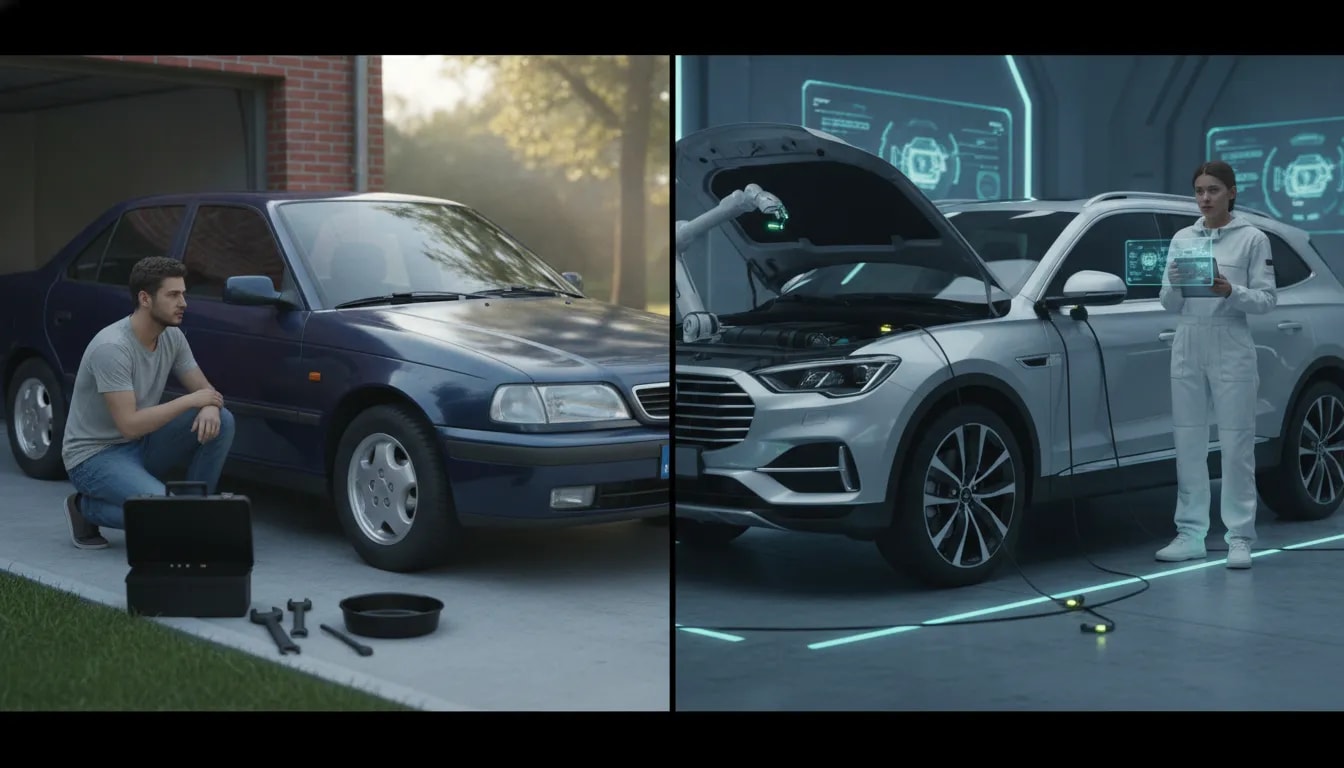
Before comparing engines or searching listings, consider how you actually use a car. Modern diesels can work very well on regular longer journeys. Their additional systems become more relevant when most journeys are short, interrupted, or spent in stop-start traffic.
| Ownership priority | Older diesel | Modern diesel |
|---|---|---|
| Simpler maintenance and diagnosis | May have fewer interconnected systems and more mechanically straightforward repairs | Additional emissions hardware and sensors can complicate fault diagnosis |
| Regular long-distance driving | Can provide useful efficiency and everyday drivability when maintained | Often a good match for the operating conditions its emissions systems need |
| Mostly short urban journeys | A car without a DPF avoids DPF regeneration requirements | Repeated short trips can prevent DPF cleaning from completing |
| Lower emissions | Generally less clean than newer diesels | Uses additional technology to reduce exhaust pollution |
| Access to restricted urban areas | Requires careful checks against local emissions rules | Check the individual vehicle against the applicable requirements |
| Age-related repairs | Rubber, suspension, corrosion, and interior wear need particular attention | May have less age-related deterioration, but greater system complexity |
An older diesel without a particulate filter can be more forgiving of interrupted journeys in that specific respect. That does not make every older diesel an ideal city car. Local access restrictions and the condition of the vehicle still matter.
Why Some Drivers Prefer Older Diesel Engines
The appeal is largely about reducing the number of systems involved in keeping the car operational.
Earlier diesel engines were mechanical, or closer to mechanical than many current designs. They generally used fewer sensors and had fewer systems communicating with one another. Later examples added electronic injection and basic engine management while retaining a relatively straightforward overall design.
That can bring several practical advantages:
- Fewer emissions-system dependencies: A vehicle that was built without a DPF or AdBlue system does not require maintenance of those systems.
- More understandable faults: Diagnosis and repair can be more mechanical and less dependent on tracing interactions between multiple electronic systems.
- Potentially more predictable upkeep: Owners can concentrate on the engine, fuel system, scheduled servicing, and the condition of the vehicle itself.
- Useful everyday operation: Some older electronically managed diesels combine straightforward engineering with good cold-start usability, efficiency, and drivability.
None of these advantages guarantees cheap repairs. Injectors, neglected servicing, or serious corrosion can still turn a seemingly inexpensive purchase into a costly one.
The late-1990s to mid-2000s appeal
A commonly attractive period is roughly the late 1990s through the mid-2000s. Many diesels from this era had developed beyond purely mechanical designs but had not acquired the full range of emissions equipment found on newer models.
This is a broad starting point for research, not a universal model-year cutoff. Check the actual equipment fitted to the individual car rather than assuming that its age means it has no DPF, EGR, or AdBlue system.
For example, a documented 2002 1.9 TDI with 380,000 kilometers, recorded timing-belt work, and completed injector work illustrates the attraction of a maintained, high-mileage older diesel. It does not establish that every 1.9 TDI, or every car from that year, will provide the same ownership experience.
What Modern Diesel Emissions Systems Add to Ownership
Modern diesel engineering is not simply complexity for its own sake. Much of the additional hardware exists to reduce pollution while maintaining efficient operation. The tradeoff is that these systems also introduce operating requirements and maintenance needs.
DPF: Soot filtration and regeneration
A diesel particulate filter, or DPF, captures soot particles from the exhaust. It needs appropriate operating conditions to clean itself through a process known as regeneration.
Repeated short journeys and stop-start use can prevent that process from completing. Over time, soot can accumulate and the filter can become blocked. The problem may arise because the driving pattern does not suit the system, rather than because a conventional mechanical component has suddenly broken.
Regular longer journeys give a modern diesel more opportunity to reach and maintain suitable operating conditions. However, there is no single driving duration or speed that should be treated as a universal instruction. Follow the vehicle’s own guidance rather than relying on a generic regeneration routine.
EGR: Exhaust recirculation and carbon buildup
Exhaust gas recirculation, or EGR, routes some exhaust gas back into the engine to help reduce emissions. Carbon deposits can build up within the system over time and require attention.
An important distinction is that older does not necessarily mean EGR-free. A simpler diesel may still have EGR and electronic engine management, even if it lacks later exhaust-treatment systems.
AdBlue: Fluid levels and sensor-dependent operation
AdBlue-equipped systems help reduce harmful exhaust gases. Their operation depends on the fluid supply and associated sensors functioning correctly.
When an emissions system develops a problem, the consequences can include warning messages, restricted performance, and expensive diagnosis or repair. These are ownership considerations worth understanding before purchase, not reasons to dismiss modern diesels altogether.
Older Diesel Buying Checklist: What to Inspect Before Paying
Buying an older diesel means evaluating the entire car, not just choosing an engine with a durable reputation. Use the following checks to distinguish a maintained example from one carrying years of deferred work.
1. Establish whether it can go where you need it
Check emissions restrictions before spending time or money inspecting a candidate. A mechanically excellent car may still be unsuitable if you regularly need access to an area that restricts it.
Use the relevant local authority’s rules or vehicle checker. For example, the UK government’s Clean Air Zones guidance provides an official starting point for checking applicable areas and vehicles. Elsewhere, consult the authority responsible for your city or region.
Do not assume that being legally available for sale means a car can enter every urban area without restrictions or charges.
2. Give service records more weight than the odometer alone
A diesel with 300,000 kilometers and detailed maintenance receipts can be a better prospect than one with 150,000 kilometers and no useful history. Mileage remains relevant, but it does not show whether essential work was completed.
Look for evidence of:
- Scheduled servicing: Records showing that routine maintenance was not repeatedly ignored.
- Timing-belt replacement: Where the engine uses a belt, documentation showing work completed according to its schedule.
- Injector work: Receipts or records explaining what was checked, maintained, or replaced.
- Age-related repairs: Evidence that worn suspension parts, hoses, seals, and bushings have been addressed.
A seller’s reassurance is not equivalent to a receipt. Where important work cannot be verified, treat it as an unresolved item rather than assuming it has been done.
3. Have the underside inspected for corrosion
Rust can determine whether an older diesel is worth buying, regardless of how well its engine runs. A strong engine offers little value if the structure or subframe is badly corroded.
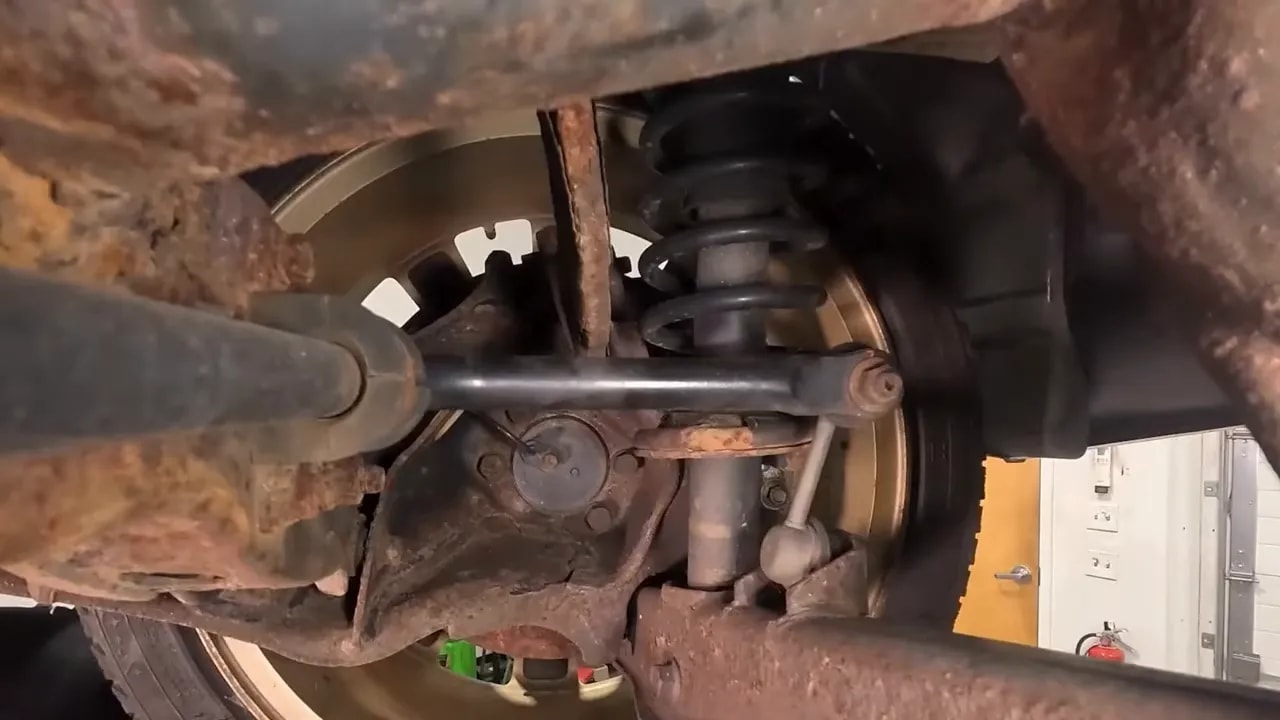
Arrange an inspection on a lift before committing, particularly for cars used in colder climates or coastal areas. An underbody inspection provides a much better basis for judging corrosion than appearance from above.
Do not allow a smooth-running engine or tidy interior to distract from structural condition. Corrosion is a separate buying decision, not a minor detail to revisit after purchase.
4. Check the injectors and fuel system
Fuel-system condition is central to diesel ownership. Worn injectors can contribute to rough running, smoking, and poor fuel economy, and replacement is not always inexpensive.
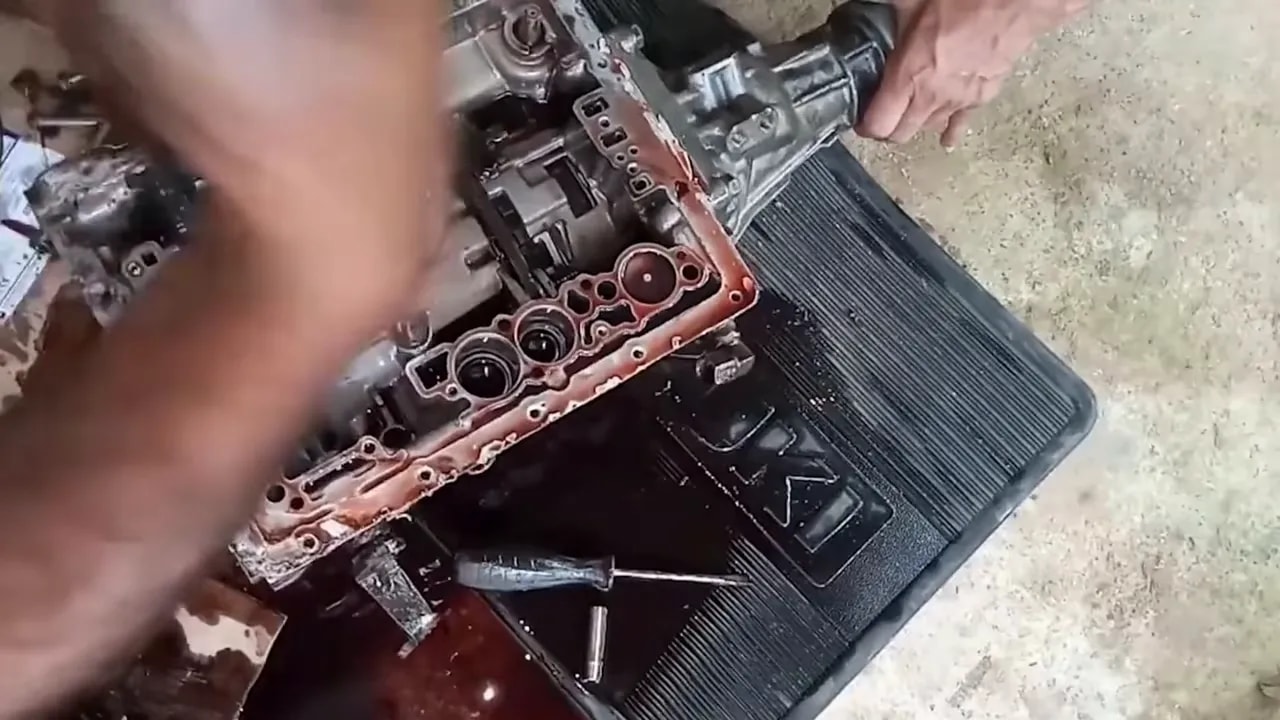
During inspection and a test drive, pay attention to uneven running and noticeable smoke. Ask what injector work has been carried out and request supporting records.
These symptoms justify further investigation, but they do not establish a diagnosis by themselves. Have unresolved running problems assessed before agreeing on a price.
5. Inspect rubber parts and suspension wear
After many years, hoses, bushings, and seals can dry out, crack, or deteriorate. Suspension components also wear, while interior condition may reflect the car’s overall age and use.
These issues are not automatically reasons to reject a car. They are reasons to establish what needs replacing and allow for that work in the purchase budget.
A well-sorted example should have evidence that age-related deterioration has been addressed. If it has not, the asking price should be evaluated alongside the outstanding work.
6. Assess the fitted emissions equipment
Confirm which systems the car has and whether their condition is understood. Do not buy on the assumption that every early-2000s diesel has the same specification.
If emissions equipment has been altered, check the vehicle’s compliance with the rules that apply where it will be used. A buying decision should be based on a suitable, compliant car, not on the expectation that removing equipment will solve future ownership problems.
How to Judge the Real Cost of an Older Diesel
A low purchase price is only one part of the decision. A simpler engine may reduce some maintenance complications, while the rest of the car needs substantial catch-up work.
A useful budgeting framework is:
- Start with the asking price.
- Add overdue or undocumented scheduled maintenance.
- Add identified injector, fuel-system, rubber, and suspension work.
- Resolve corrosion concerns before treating the car as a viable purchase.
- Account for access restrictions or charges on the routes you actually use.
This approach makes comparisons more meaningful. A more expensive car with documented work may be the better buy than a cheaper example needing immediate repairs.
There is no sound basis for assuming that an older diesel will always cost less to maintain. Its advantage is the possibility of simpler ownership, not freedom from maintenance.
Common Mistakes When Buying an Older Diesel
- Buying the engine’s reputation instead of the car: A durable engine cannot compensate for serious corrosion or neglected maintenance.
- Assuming all older diesels are mechanical: Many desirable examples use electronic injection, sensors, and engine management.
- Treating low mileage as proof of good condition: Records and inspection are needed to understand what the car has received and what it still needs.
- Assuming no DPF means no emissions-related upkeep: An older car may still have EGR or other equipment requiring attention.
- Checking urban restrictions after purchase: Confirm suitability for your regular destinations first.
- Rushing because good examples seem scarce: A limited choice does not make a neglected car a sensible purchase.
Well-maintained older diesels can take patience to find as cars age and neglected examples leave service. That makes careful searching valuable, but it is not a reason to skip inspection or compromise on structural condition.
When Buying an Older Diesel Makes Sense
An older diesel is most worth considering when you want a relatively straightforward machine, accept less refinement and higher emissions, and can find a maintained example that remains suitable for your routes.
A modern diesel can be the better fit when your driving regularly includes longer journeys and you value its efficiency, refinement, and lower-emissions technology.
Choose by condition, driving pattern, and access requirements, not by age alone. The sensible next step is to check local restrictions, shortlist cars with credible service records, and arrange a thorough inspection before negotiating.